
Contextual Overview of Tesla’s Cybercab Initiative In a recent development, Tesla has generated significant interest in its innovative Cybercab project, signaling a potential shift in urban transportation dynamics. The company’s latest communication, characterized by the phrase “no steering wheel, no pedals,” alludes to its forthcoming driverless vehicle technology designed for urban mobility. This initiative aims to enhance its nascent Robotaxi business, particularly as it prepares for an invitation-only event in Austin, Texas, showcasing its autonomous vehicle capabilities. Influencers and industry analysts alike have noted the potential for Tesla’s Cybercab to disrupt traditional taxi services, thereby prompting speculation about its implications for investors and stakeholders in the transportation sector. Main Goal of the Cybercab Initiative The primary objective of Tesla’s Cybercab initiative is to establish a fully autonomous taxi service that operates without human intervention. Achieving this goal necessitates the development of advanced artificial intelligence (AI) systems capable of navigating urban environments safely and efficiently. Tesla’s commitment to innovation is evident in its testing of “unsupervised” vehicles across various markets, which lays the groundwork for broader commercial deployment. The successful rollout of such technology could position Tesla favorably against competitors like Waymo, which currently holds a substantial market share in the autonomous vehicle sector. Advantages of the Cybercab Project Enhanced Urban Mobility: By eliminating the need for a steering wheel or pedals, Tesla’s Cybercab is designed to optimize passenger space and enhance user experience. Market Disruption: Tesla’s entry into the robotaxi market could challenge existing transportation models, providing users with a more convenient and potentially cost-effective alternative to traditional ride-hailing services. Investor Confidence: Positive developments surrounding the Cybercab, such as successful trials and operational milestones, may bolster Tesla’s stock performance, as indicated by analysts’ predictions of market momentum should the rollout be substantial. Operational Efficiency: The automation of ride-hailing services promises to reduce operational costs associated with human drivers, potentially leading to lower fares for consumers. However, it is essential to acknowledge certain limitations. The transition to fully autonomous vehicles faces regulatory hurdles, public acceptance issues, and ongoing safety concerns that could impede rapid implementation. Future Implications of AI in Autonomous Transportation As Tesla continues to refine its Cybercab technology, the implications for the transportation sector and beyond are profound. The integration of AI in autonomous vehicles is expected to enhance real-time decision-making capabilities, reduce accident rates, and improve traffic management through data analytics. Furthermore, as regulatory frameworks evolve to accommodate these innovations, we may witness a paradigm shift in urban planning, with cities designed to prioritize autonomous vehicle infrastructure. Moreover, the proliferation of AI-driven transportation solutions is likely to spur advancements in related fields, such as insurance, logistics, and urban mobility. Financial professionals must remain vigilant to these developments, as they will influence investment strategies and market dynamics in the coming years. Disclaimer The content on this site is generated using AI technology that analyzes publicly available blog posts to extract and present key takeaways. We do not own, endorse, or claim intellectual property rights to the original blog content. Full credit is given to original authors and sources where applicable. Our summaries are intended solely for informational and educational purposes, offering AI-generated insights in a condensed format. They are not meant to substitute or replicate the full context of the original material. If you are a content owner and wish to request changes or removal, please contact us directly. Source link : Click Here

Context and Overview The recent high school football matchup between Council Rock South and Perkiomen Valley showcased a thrilling display of athletic prowess and strategic gameplay. Council Rock South (CR South), led by senior Brody Walker, emerged victorious with a narrow 13-10 win. Walker’s performance, which included two touchdowns—one notably on a 79-yard return of a blocked field goal—symbolizes the growing significance of individual skill and strategic execution in high school football. This event not only reflects the competitive nature of the sport but also offers insights into the application of AI in sports analytics, particularly for sports data enthusiasts and analysts. Main Objectives of the Original Content The primary goal of the original post is to inform readers about the outcome of the high school football game while highlighting key performances and strategic elements that contributed to the victory of CR South. This can be achieved through detailed analysis and commentary on player performances, tactical decisions, and team dynamics. For sports data enthusiasts, the implications of such analyses extend beyond mere scores; they provide a framework for understanding how data-driven insights can enhance decision-making processes in sports management and performance optimization. Advantages of the Insights Provided Enhanced Player Performance Analysis: The detailed account of Brody Walker’s performance exemplifies how individual contributions can be quantified and analyzed. This data can be leveraged to identify strengths and areas for improvement. Strategic Decision-Making: Understanding the tactical maneuvers leading to specific plays, such as the blocked field goal return, aids coaches and analysts in refining game strategies for future encounters. Increased Fan Engagement: Providing in-depth reporting on player performances and game strategies enhances fan engagement by offering insights that go beyond the final score, fostering a deeper connection to the sport. Data-Driven Coaching: Coaches can utilize performance analytics derived from such games to inform training regimens and game strategies, ultimately enhancing team performance. Future Implications of AI in Sports Analytics The evolving landscape of AI technology is poised to significantly impact sports analytics, particularly in high school sports. Future developments may include advanced predictive analytics, which can forecast player performance and injury risks based on historical data. Machine learning algorithms could refine game strategy by analyzing vast datasets from past games, providing coaches with actionable insights tailored to opponent weaknesses. Furthermore, AI-driven platforms may enhance the accessibility and usability of data for coaches and analysts, allowing for real-time adjustments during games. As data collection becomes more sophisticated, the integration of AI in sports analytics will likely revolutionize how teams prepare for and analyze competition, benefiting players, coaches, and fans alike. Disclaimer The content on this site is generated using AI technology that analyzes publicly available blog posts to extract and present key takeaways. We do not own, endorse, or claim intellectual property rights to the original blog content. Full credit is given to original authors and sources where applicable. Our summaries are intended solely for informational and educational purposes, offering AI-generated insights in a condensed format. They are not meant to substitute or replicate the full context of the original material. If you are a content owner and wish to request changes or removal, please contact us directly. Source link : Click Here

Context: The Evolution of Content Operations in an AI-Driven Environment The landscape of content operations has experienced significant transformation due to the ever-increasing demands placed on modern marketing teams. This pressure is compounded by evolving global regulations, such as the EU AI Act and changes in copyright laws, which necessitate a more sophisticated approach to content management. As organizations strive to maintain authenticity in their brand voice, traditional methods of managing digital assets are proving inadequate. The conversation featuring Misti Vogt, SVP of Engagement at Orange Logic, highlights the pressing need for a paradigm shift towards “agentic” systems that can effectively manage this complexity. Main Goal: Transitioning to Agentic Systems for Enhanced Content Management The primary objective emphasized in the original discourse is the transition from conventional digital asset management (DAM) systems toward more advanced agentic frameworks. This evolution is essential to address the challenges posed by the burgeoning volume of content and the intricate regulatory landscape. To achieve this goal, organizations must prioritize the development of “self-aware” content that includes structured metadata, which provides essential context about each asset’s purpose, audience, lineage, and performance metrics. This shift not only improves operational efficiency but also aligns with the strategic imperatives of modern marketing. Advantages of Adopting Agentic Systems 1. **Increased Efficiency in Content Management**: By implementing agentic systems, organizations can streamline their content operations, reducing the time and resources spent on locating and verifying assets. This efficiency is achieved through automated compliance checks and intelligent querying capabilities. 2. **Enhanced Data Contextualization**: The shift towards self-aware content allows for richer metadata, which facilitates better understanding and utilization of digital assets. This enhanced data contextualization is crucial in aligning content with marketing strategies and audience needs. 3. **Improved Collaboration Among Teams**: The deployment of brand agents enables creative teams to access guidelines and assets directly, thereby minimizing confusion and fostering more effective collaboration. This accessibility reduces bottlenecks and accelerates the creative process. 4. **Adaptability to Regulatory Changes**: Agentic systems can be designed to adapt to evolving regulations, ensuring that content remains compliant without necessitating extensive manual oversight. This adaptability is particularly valuable in industries subject to stringent legal frameworks. 5. **Data-Driven Decision Making**: With structured data embedded within content, marketers can derive actionable insights regarding asset performance. This data-driven approach supports more informed decision-making in content strategies. Future Implications: The Role of AI in Shaping Content Operations As artificial intelligence continues to advance, its integration into content operations will likely deepen, leading to even more sophisticated agentic systems. Future developments may include enhanced predictive analytics, allowing organizations to anticipate content trends and consumer behaviors more accurately. Additionally, AI capabilities may facilitate the creation of fully autonomous content agents capable of generating, curating, and optimizing content based on real-time data inputs. However, it is essential to recognize that the reliance on AI also presents challenges, including ethical considerations surrounding data privacy and the potential for over-automation, which could dilute the human touch that is vital in brand storytelling. Thus, while the future of content operations is poised for significant improvement through AI, a balanced approach that incorporates both technological advancements and human creativity will be crucial for sustained success. Disclaimer The content on this site is generated using AI technology that analyzes publicly available blog posts to extract and present key takeaways. We do not own, endorse, or claim intellectual property rights to the original blog content. Full credit is given to original authors and sources where applicable. Our summaries are intended solely for informational and educational purposes, offering AI-generated insights in a condensed format. They are not meant to substitute or replicate the full context of the original material. If you are a content owner and wish to request changes or removal, please contact us directly. Source link : Click Here

Context of PlusAI’s SPAC Deal in Autonomous Trucking PlusAI Inc., a pioneer in the field of AI-driven virtual driver software for autonomous trucking, has announced its plan to go public through a merger with Texas Ventures Acquisition III Corp., a special-purpose acquisition company (SPAC). This strategic move represents a significant milestone for PlusAI, reflecting a year of operational achievements and the successful establishment of autonomous freight routes in Texas. The company, founded in 2016, has developed advanced systems such as SuperDrive and HyperFoundry, which facilitate the efficient development and deployment of autonomous vehicles. Their partnerships with leading global vehicle manufacturers and technology firms further underline their commitment to innovation in the transportation sector. David Liu, co-founder and CEO of PlusAI, emphasized that the merger validates the company’s achievements and positions it for long-term growth by leveraging proprietary data and operational insights gained over the years. Their initiatives are expected to address pressing industry challenges, including labor shortages and rising operational costs, thereby enhancing fleet profitability. Main Goals of PlusAI’s Public Offering The primary goal of PlusAI’s merger with Texas Ventures Acquisition III is to secure capital for the commercialization of its autonomous trucking solutions. This goal can be achieved by utilizing the funds raised through the SPAC deal to accelerate the integration of their technology with original equipment manufacturers (OEMs) and advance the commercial launch of their factory-built autonomous trucks targeted for 2027. By establishing a solid financial foundation, PlusAI aims to expand its operations and solidify its position as a leader in the autonomous trucking market. Advantages of PlusAI’s Autonomous Trucking Solutions 1. **Addressing Labor Shortages**: Autonomous trucking solutions are poised to mitigate the ongoing driver shortages affecting the logistics industry. By implementing AI-driven systems, companies can maintain operational continuity even in the face of labor market challenges. 2. **Cost Efficiency**: PlusAI’s technology promises to lower labor costs and enhance fleet utilization, resulting in improved profitability. The company’s commitment to a capital-efficient software business model further strengthens this advantage. 3. **Real-World Validation**: The operation of autonomous freight routes in Texas provides PlusAI with invaluable operational data and validation. Collaborations with major logistics partners such as Ryder and International Motors enhance credibility and practical applicability. 4. **Revenue Generation**: The HyperFoundry platform is already generating revenue, providing a solid financial base that supports ongoing development. PlusAI aims to achieve an aggregate revenue target of $40 to $50 million by 2026, demonstrating financial viability. 5. **Innovative Partnerships**: Collaborations with global manufacturers like Scania, NVIDIA, and Bosch facilitate technological advancements and broaden market reach, which is essential for sustaining competitive advantage. 6. **Regulatory Compliance**: The company’s adherence to SAE Level 4 automation standards ensures compliance with regulatory requirements, facilitating smoother market entry for its autonomous vehicles. Future Implications of AI in Autonomous Trucking The advancements in AI technology herald a transformative era for the autonomous trucking industry. As AI continues to evolve, the integration of sophisticated algorithms will enhance the capabilities of autonomous vehicles, improving decision-making processes in dynamic environments. This progression is likely to result in increased safety, efficiency, and reliability in transportation logistics. Furthermore, the ongoing development of AI-driven solutions will facilitate the emergence of new business models, such as Driver-as-a-Service, which harnesses the power of AI to optimize transportation services. As companies like PlusAI continue to innovate, the market for autonomous trucking is expected to expand, providing significant economic opportunities while addressing critical industry challenges. In conclusion, PlusAI’s strategic move to go public through a SPAC merger serves as a pivotal step toward realizing the full potential of autonomous trucking. By leveraging AI technologies to enhance operational efficiencies, the company is well-positioned to lead the charge in addressing labor shortages and rising operational costs in the logistics sector. As the industry evolves, the implications of such advancements are profound, promising a future where autonomous trucking becomes an integral component of smart manufacturing and logistics systems. Disclaimer The content on this site is generated using AI technology that analyzes publicly available blog posts to extract and present key takeaways. We do not own, endorse, or claim intellectual property rights to the original blog content. Full credit is given to original authors and sources where applicable. Our summaries are intended solely for informational and educational purposes, offering AI-generated insights in a condensed format. They are not meant to substitute or replicate the full context of the original material. If you are a content owner and wish to request changes or removal, please contact us directly. Source link : Click Here

Context: The Role of AI in Healthcare Deployment In an era marked by rising competitive pressures, constrained budgets, and a scarcity of clinical talent, health plans and systems are increasingly turning to artificial intelligence (AI) agents as a viable solution to enhance operational efficiency and patient care. The integration of AI into healthcare processes presents an opportunity to streamline workflows, reduce costs, and improve service delivery. However, the critical challenge lies in ensuring that these AI agents meet healthcare-grade standards—characterized by safety, reliability, and compliance with regulatory frameworks. The deployment of AI agents involves rigorous evaluation processes, the establishment of governance models, and adherence to security protocols that satisfy both Chief Information Security Officers (CISOs) and regulatory bodies. The complexities inherent in this process necessitate collaboration among stakeholders from various sectors within the healthcare ecosystem, including national health plans, large health systems, and specialized AI platforms. Main Goals and Their Achievements The primary goal articulated in the original content is to provide healthcare leaders with a practical framework for deploying AI agents that adhere to healthcare-grade standards. This objective can be achieved through the following strategies: 1. **Implementing Evaluation Frameworks**: Establishing robust evaluation processes that assess the efficacy and safety of AI agents prior to their deployment in clinical settings. 2. **Developing Governance Models**: Creating comprehensive governance structures that outline roles, responsibilities, and accountabilities throughout the AI implementation lifecycle. 3. **Ensuring Security and Compliance**: Maintaining a focus on security measures and compliance with regulatory requirements to protect patient data and uphold ethical standards in AI utilization. By systematically addressing these components, healthcare organizations can facilitate the deployment of AI agents that deliver tangible benefits while ensuring patient safety and regulatory compliance. Advantages of Healthcare-Grade AI Agents The deployment of AI agents in healthcare offers several key advantages, which are supported by evidence from the original content: 1. **Enhanced Operational Efficiency**: AI agents can automate routine tasks, allowing healthcare professionals to focus on higher-level clinical decision-making. This can lead to improved workflow efficiency and reduced operational costs. 2. **Improved Patient Outcomes**: By utilizing AI for predictive analytics and personalized treatment plans, healthcare providers can enhance patient care quality, leading to better health outcomes. 3. **Faster Decision-Making**: The implementation of AI technologies can expedite the decision-making process in clinical settings, allowing for quicker responses to patient needs and emerging healthcare challenges. 4. **Comprehensive Risk Management**: With established guardrails and evaluation processes, healthcare organizations can mitigate risks associated with AI deployment, ensuring that agents operate within safe and ethical boundaries. While these advantages are significant, it is essential to acknowledge certain caveats, such as the initial investment required for AI implementation, the need for ongoing training and education of staff, and the potential for algorithmic bias if not properly managed. Future Implications of AI in Healthcare The future trajectory of AI in healthcare promises transformative changes that will reshape the landscape of medical practice. As AI technologies continue to evolve, several implications can be anticipated: 1. **Integration with Other Technologies**: The convergence of AI with other emerging technologies, such as telemedicine and blockchain, could lead to more comprehensive and secure healthcare solutions, enhancing patient engagement and data interoperability. 2. **Increased Personalization of Care**: As AI systems become more sophisticated, they will enable more personalized healthcare solutions tailored to individual patient profiles, potentially improving compliance and health outcomes. 3. **Regulatory Evolution**: As AI applications expand, regulatory frameworks will need to adapt to address new ethical and safety concerns, ensuring that patient care standards are maintained. 4. **Workforce Transformation**: The integration of AI will likely redefine the roles of healthcare professionals, necessitating new skill sets and training programs to equip staff for a technology-enhanced work environment. In conclusion, the deployment of healthcare-grade AI agents presents a multifaceted opportunity for health plans and systems to innovate while addressing critical challenges in patient care and operational efficiency. As the field evolves, continuous evaluation and adaptation will be essential to harness the full potential of AI in healthcare. Disclaimer The content on this site is generated using AI technology that analyzes publicly available blog posts to extract and present key takeaways. We do not own, endorse, or claim intellectual property rights to the original blog content. Full credit is given to original authors and sources where applicable. Our summaries are intended solely for informational and educational purposes, offering AI-generated insights in a condensed format. They are not meant to substitute or replicate the full context of the original material. If you are a content owner and wish to request changes or removal, please contact us directly. Source link : Click Here

Contextual Overview of the SAD Scheme in Legal Proceedings The recent legal proceedings surrounding the SAD Scheme, particularly the case of CJB Global v. Schedule A Defendants, have highlighted significant issues within the realm of intellectual property litigation. Presided over by Judge Naomi Reice Buchwald, this case serves as a crucial example of the legal system’s response to potentially exploitative practices in the enforcement of design patents and copyrights. Judge Buchwald’s critical assessment of the plaintiff’s requests reveals the inherent risks associated with ex parte relief, which could lead to broad and potentially unjust asset freezes without adequate notice to defendants. The judge’s observations underscore the necessity for a rigorous evidentiary standard in cases involving multiple defendants, particularly when claims hinge on comparative analysis of products. Main Goals and Achievements in Addressing the SAD Scheme The primary objective of Judge Buchwald’s ruling is to establish a more equitable framework for adjudicating intellectual property disputes, specifically those involving multiple defendants under the SAD Scheme. Achieving this goal requires a stringent adherence to evidentiary standards, which includes the necessity for plaintiffs to substantiate their claims through tangible evidence rather than mere allegations or screenshots. The judge’s insistence on test buys as a means to validate claims against a significant number of defendants illustrates a commitment to ensuring that the legal process does not become a tool for harassment or unfounded claims, thereby enhancing the integrity of intellectual property law. Advantages of a Rigorous Approach to Intellectual Property Claims 1. **Enhanced Judicial Scrutiny**: By rejecting the plaintiff’s request for ex parte relief, Judge Buchwald emphasizes the importance of judicial oversight in cases involving multiple defendants. This approach mitigates the risk of wrongful asset freezes and protects defendants from potential abuse of the legal system. 2. **Requirement for Substantive Evidence**: The insistence on “test buys” as a necessary component of the evidentiary framework ensures that claims are substantiated by actual product comparisons. This requirement not only strengthens the credibility of the claims but also fosters a more just legal environment. 3. **Clarification of Copyright Enforcement**: The judge’s critique of the plaintiff’s copyright claims highlights the need for precise and accurate claims in copyright enforcement. By acknowledging that a significant number of defendants may not have violated copyright, it underscores the importance of responsible litigation practices. 4. **Judicial Precedent for Future Cases**: The ruling sets a precedent that may deter frivolous claims in the future, potentially leading to a decrease in the number of SAD Scheme cases that exploit legal loopholes. This could foster a more balanced landscape for intellectual property enforcement. Future Implications in the Context of AI and LegalTech The ongoing advancements in AI technology and LegalTech are poised to significantly reshape the landscape of intellectual property litigation. AI’s capabilities in data analysis and pattern recognition could facilitate the identification of legitimate claims against infringing products more effectively than traditional methods. As AI tools become increasingly integrated into legal workflows, they may enhance the ability of legal professionals to conduct thorough investigations and gather substantive evidence prior to litigation. Moreover, the use of AI could streamline the process of identifying potential defendants and assessing the viability of claims, thus reducing the burden on courts and ensuring that only well-founded cases proceed. However, as AI becomes more prevalent, it will be essential for legal professionals to remain vigilant regarding the ethical implications of automated decision-making in the legal domain. The balance between efficiency and due process will be crucial in maintaining the integrity of the judicial system as it adapts to new technological realities. Disclaimer The content on this site is generated using AI technology that analyzes publicly available blog posts to extract and present key takeaways. We do not own, endorse, or claim intellectual property rights to the original blog content. Full credit is given to original authors and sources where applicable. Our summaries are intended solely for informational and educational purposes, offering AI-generated insights in a condensed format. They are not meant to substitute or replicate the full context of the original material. If you are a content owner and wish to request changes or removal, please contact us directly. Source link : Click Here

Introduction The integration of technology in various sectors has transformed conventional practices, and AgriTech is no exception. In recent years, advancements in technology have allowed for innovative solutions in agriculture, leading to better productivity, sustainability, and the overall enhancement of farming practices. A significant focus has been placed on empowering young innovators to take part in this evolution, as demonstrated by initiatives that create pathways for students to attain skills in STEM (Science, Technology, Engineering, and Mathematics) fields. These initiatives not only equip students with the necessary knowledge but also embed a sense of community and cultural awareness, which is crucial for fostering an inclusive environment in the AgriTech sector. Main Objective The primary goal of initiatives such as those undertaken by young leaders in AgriTech is to increase accessibility to STEM education and opportunities, particularly for underrepresented groups. By providing students with hands-on experiences and mentorship, these programs aim to cultivate the next generation of innovators who will contribute to sustainable agricultural practices through technology. Achieving this goal involves creating collaborative environments where students can learn, innovate, and engage with experienced professionals in the field. Structured Advantages Engaging students in STEM through AgriTech initiatives offers several benefits: Skill Development: Participants gain practical skills in technology applications relevant to agriculture, enabling them to contribute effectively to the industry. Networking Opportunities: These programs connect students with industry professionals and thought leaders, fostering relationships that can lead to internships and employment opportunities. Cultural Relevance: Integrating cultural elements into STEM education helps students appreciate the historical significance of agriculture within their communities, enhancing their learning experience. Increased Diversity: By targeting underrepresented groups, such initiatives promote diversity within the AgriTech sector, which is essential for developing solutions that cater to a broader population. Community Engagement: Programs that involve local communities encourage collaboration and support, leading to a more robust agricultural ecosystem. While the advantages are substantial, it is essential to acknowledge potential limitations, such as funding constraints and varying levels of commitment from stakeholders, which can impede the effectiveness of these initiatives. Future Implications The advent of Artificial Intelligence (AI) is poised to significantly reshape the landscape of AgriTech. As AI applications become increasingly integrated into agricultural practices, the need for a workforce equipped with the requisite skills becomes paramount. AI can optimize crop management, enhance yield predictions, and streamline supply chains, thus presenting new opportunities for innovation within the sector. Consequently, educational initiatives must adapt to include AI training, ensuring that students are not only consumers of technology but also creators. This transition will facilitate the development of intelligent agricultural systems that are sustainable and efficient, aligning with the global push towards environmentally friendly practices. In conclusion, empowering young innovators through STEM and AgriTech initiatives is crucial for cultivating a diverse and skilled workforce that can meet the challenges of modern agriculture. As technology continues to evolve, the integration of AI into these educational frameworks will be vital for fostering a future where innovative solutions thrive, ultimately benefiting both the agricultural sector and society at large. Disclaimer The content on this site is generated using AI technology that analyzes publicly available blog posts to extract and present key takeaways. We do not own, endorse, or claim intellectual property rights to the original blog content. Full credit is given to original authors and sources where applicable. Our summaries are intended solely for informational and educational purposes, offering AI-generated insights in a condensed format. They are not meant to substitute or replicate the full context of the original material. If you are a content owner and wish to request changes or removal, please contact us directly. Source link : Click Here

Contextual Overview In the rapidly evolving field of AgriTech and Smart Farming, the integration of advanced data capabilities and autonomous maneuvers is crucial for enhancing operational efficiency. Agtonomy, a leader in physical AI technology, is at the forefront of this transformation by enhancing its autonomy stack and introducing innovative functionalities such as autonomous multi-point turning. This technological advancement allows Agtonomy-enabled units to execute complex maneuvers with high precision, thereby expanding the operational capabilities of agricultural equipment in challenging environments. Main Goal and Achievement Strategies The primary objective of Agtonomy’s advancements is to facilitate the seamless integration of automation in off-road equipment to improve agricultural productivity. This goal can be achieved through the continuous collection and analysis of operational data, which informs iterative improvements in system performance. By leveraging over 2 terabytes of data generated per hour from each vehicle, Agtonomy can refine its algorithms and enhance the autonomy of its equipment, ensuring that growers have access to reliable and efficient solutions in real-time. Advantages of Enhanced Data Capabilities Improved Operational Efficiency: The use of anonymized data aids in optimizing fleet management and operational analytics, as evidenced by the significant reduction in manual data collection efforts, as highlighted by Joel Carter, Orchard Operations Manager at Okanagan Specialty Fruits. Greater Maneuverability: The introduction of autonomous multi-point turning enhances the ability of equipment to navigate tight spaces, enabling operations in previously inaccessible areas, which can considerably increase task completion rates on varied terrain. Scalable Data Collection: With passive data collection capabilities, Agtonomy enables continuous gathering of field intelligence, which builds a robust foundation for future technological applications and partnerships. Versatile Implement Support: The Agtonomy Implement Library™ allows for standardized integration of over 500 implements, catering to diverse agricultural tasks and enhancing the adaptability of the platform to different operational needs. Caveats and Limitations While the advancements presented by Agtonomy indicate significant strides in AgriTech, it is essential to acknowledge potential limitations. The reliance on large datasets necessitates robust data security measures to safeguard sensitive operational information. Additionally, the effectiveness of autonomous systems can be influenced by varying environmental conditions, which may require continual adjustments and updates to the AI algorithms. Future Implications of AI Developments The ongoing advancements in AI technologies are poised to redefine the landscape of AgriTech. As machine learning algorithms become increasingly sophisticated, the potential for predictive analytics in agriculture will expand, providing growers with invaluable insights into crop management and yield optimization. Furthermore, the integration of AI-driven solutions will likely lead to more sustainable farming practices by enabling precise resource allocation and minimizing waste. The future of AgriTech lies in the embrace of these intelligent systems, which will empower growers to make data-driven decisions that enhance productivity and sustainability in the agricultural sector. Disclaimer The content on this site is generated using AI technology that analyzes publicly available blog posts to extract and present key takeaways. We do not own, endorse, or claim intellectual property rights to the original blog content. Full credit is given to original authors and sources where applicable. Our summaries are intended solely for informational and educational purposes, offering AI-generated insights in a condensed format. They are not meant to substitute or replicate the full context of the original material. If you are a content owner and wish to request changes or removal, please contact us directly. Source link : Click Here

Contextual Overview: The Intersection of Technology and Daily Life In the modern landscape of technology, practical solutions often enhance our daily experiences, particularly for parents managing the complexities of travel and entertainment for children. The convenience of portable devices, such as tablets, has become a staple in family outings, allowing for distraction during lengthy wait times. However, the associated challenges of device management, particularly in terms of charging, necessitate reliable accessories. The emergence of high-quality retractable cables has provided a solution that is both functional and efficient, exemplifying how technology can alleviate everyday stressors. This premise resonates within the context of artificial intelligence (AI) applications in cybersecurity, where tools must remain efficient and reliable to protect sensitive information while navigating complex environments. Main Goal: Enhancing User Experience Through Practical Solutions The principal objective discussed in the original content is to highlight the utility of a retractable USB-C cable that simplifies charging for everyday scenarios, particularly in the context of family travel. Achieving this goal involves selecting a product that combines quality with functionality, ensuring that users experience minimal inconvenience. In the realm of cybersecurity, similar principles apply; professionals must employ tools that optimize security without sacrificing user experience. The integration of AI in cybersecurity solutions aims to enhance efficiency, automate threat detection, and streamline incident responses, making it imperative to choose reliable tools that support these goals effectively. Advantages of Retractable Cables in Everyday Use Portability: The compact design of retractable cables allows for seamless transportation, making them ideal for individuals who require on-the-go charging solutions. Efficiency: High power output, such as the 240W supported by the Talix cable, ensures rapid charging of devices, which is particularly beneficial during travel. Durability: The construction materials, including rubber-coated ends, prevent fraying and enhance the longevity of the cable, ensuring it withstands frequent use. Organizational Benefits: The retractable feature minimizes cable tangling, contributing to a more organized space in bags or vehicles, which is advantageous for maintaining a clutter-free environment. User-Friendly Mechanism: The straightforward tug-and-release mechanism simplifies usage, making it accessible for individuals of all ages, similar to the need for intuitive cybersecurity tools. Limitations and Considerations While the advantages are noteworthy, certain limitations must be acknowledged. For instance, the ability to pull only one end of the cable at a time may not be feasible due to the design of the retractable mechanism, which could hinder some user experiences. Additionally, while the cable is robust, the durability of retractable mechanisms can vary across products, indicating a need for thorough research before purchase. In cybersecurity, the rapid evolution of AI technologies also presents challenges, as reliance on automated systems without human oversight can lead to potential vulnerabilities if not managed correctly. Future Implications of AI in Cybersecurity The ongoing advancements in AI technology are poised to significantly influence the field of cybersecurity. As machine learning algorithms become more sophisticated, they will enhance threat detection capabilities, allowing for real-time responses to complex cyber threats. Furthermore, the integration of AI tools is expected to foster a more proactive approach to cybersecurity, shifting from reactive measures to preventative strategies. This evolution necessitates continuous training and adaptation for cybersecurity experts, ensuring they remain adept at utilizing new technologies effectively. The future landscape will likely see a hybrid model where human expertise is complemented by AI-driven insights, ultimately leading to a more secure digital environment. Disclaimer The content on this site is generated using AI technology that analyzes publicly available blog posts to extract and present key takeaways. We do not own, endorse, or claim intellectual property rights to the original blog content. Full credit is given to original authors and sources where applicable. Our summaries are intended solely for informational and educational purposes, offering AI-generated insights in a condensed format. They are not meant to substitute or replicate the full context of the original material. If you are a content owner and wish to request changes or removal, please contact us directly. Source link : Click Here
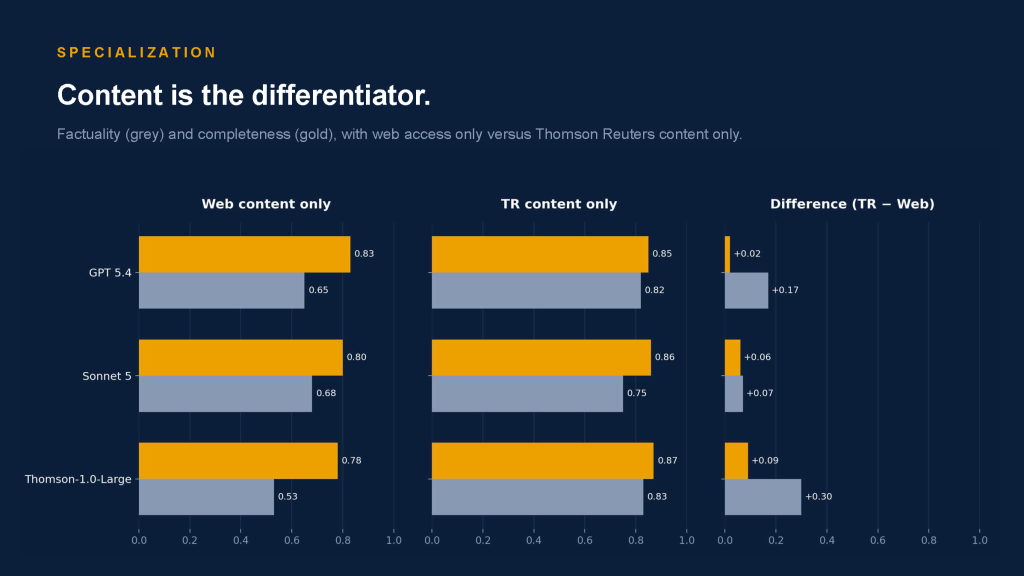
Contextual Overview Thomson Reuters has officially launched its proprietary large language model (LLM), named Thomson, which has been developed utilizing its extensive repository of proprietary legal content from Westlaw and Practical Law. This initiative comes in an era where the integration of artificial intelligence in the legal sector is transforming traditional workflows and enhancing efficiency. According to CEO Steve Hasker, the model has been designed with a foundational focus on specialized legal applications, contrasting with the general-purpose models prevalent in the market, such as ChatGPT and Claude. The development of Thomson is not merely a technological advancement but a strategic positioning within the LegalTech landscape, emphasizing cost-effectiveness and a profound understanding of legal nuances. Main Goal and Achievement Strategy The primary objective of developing the Thomson model is to establish a specialized AI that can address the unique demands of legal professionals while maintaining ownership and control over the intellectual property involved. To achieve this, Thomson Reuters has invested approximately $40 million over two years, significantly lower than the billions typically allocated for leading AI models. This strategic investment underscores the company’s intent to redefine the economics of professional AI by leveraging its proprietary content and expertise, thus fostering a model that is not only efficient but also aligned with the specific needs of the legal industry. Advantages of the Thomson Model Cost Efficiency: Thomson Reuters has demonstrated the potential for significant cost savings in AI development, having invested only $450,000 in the final training run of the Thomson model, compared to the billions spent on other leading models. Specialization in Legal Content: Unlike general-purpose LLMs, Thomson was trained using proprietary legal content, ensuring that the model is finely tuned to meet the specific needs of legal professionals. Enhanced Control: By developing Thomson in-house, Thomson Reuters retains full ownership and control over the model, allowing for tailored adjustments and improvements based on feedback from legal practitioners. Proven Performance: Internal testing has indicated that Thomson outperforms its competitors when evaluated on legal-specific queries, showcasing its capability to provide comprehensive and factual answers. Collaboration Opportunities: The company is open to partnerships with large law firms and corporations that seek to fine-tune the model with their own data, thereby enhancing the model’s applicability and relevance. Future Implications The introduction of Thomson marks a pivotal moment in the legal AI landscape, suggesting a shift towards models that prioritize specialization over sheer scale. As the legal sector increasingly adopts AI technologies, it is anticipated that Thomson will continue to evolve, integrating more proprietary data and refining its capabilities. The implications of this development extend beyond just improved efficiency; they herald a future where legal professionals can leverage AI to enhance their decision-making processes, streamline workflows, and ultimately deliver better outcomes for clients. Furthermore, the potential for licensing Thomson to other organizations may foster a broader ecosystem of specialized legal AI applications, thus propelling the industry towards greater innovation and effectiveness. Disclaimer The content on this site is generated using AI technology that analyzes publicly available blog posts to extract and present key takeaways. We do not own, endorse, or claim intellectual property rights to the original blog content. Full credit is given to original authors and sources where applicable. Our summaries are intended solely for informational and educational purposes, offering AI-generated insights in a condensed format. They are not meant to substitute or replicate the full context of the original material. If you are a content owner and wish to request changes or removal, please contact us directly. Source link : Click Here


