
Context: The Intersection of Marketing, Engineering, and AI The traditional landscape of marketing has long been characterized by creativity, intuition, and a seemingly instinctual connection with target audiences. Marketing campaigns were often the result of brainstorming sessions, executed over extended timelines, and evaluated only after results were obtained. However, the advent of digital transformation has fundamentally altered this paradigm. The shift towards a more data-driven approach has given rise to a new marketing model, which integrates engineering principles and artificial intelligence (AI) into its core functions. This evolution is framed within the concept of “The Digital Helix,” which illustrates modern businesses as adaptive systems driven by continuous data flow and customer feedback. Main Goal: Transitioning to a Data-Driven Marketing Model The primary objective of this transformation is to shift marketing from a series of isolated campaigns to a continuous, data-driven engine of growth. This new model emphasizes the importance of real-time data analysis and customer signals, enabling marketing teams to respond dynamically to consumer behaviors and preferences. Achieving this goal requires adopting engineering practices, such as continuous integration and agile methodologies, which enhance the adaptability and effectiveness of marketing efforts. Advantages of an Engineering Mindset in Marketing 1. Enhanced Data Utilization: Marketing operates on the premise that data is the fundamental material for decision-making. By leveraging real-time data analytics, marketers can tailor their strategies to meet evolving consumer demands and preferences. This enables the creation of highly personalized experiences that resonate with audiences. 2. Modular, Reusable Assets: The adoption of modular design principles allows marketers to create reusable content components that can be quickly deployed across various campaigns. This efficiency not only saves time but also enhances brand consistency, as assets can be easily adapted to different contexts. 3. Agility in Marketing Operations: Embracing agile methodologies fosters a culture of rapid experimentation and iterative learning. Marketing teams can pivot quickly in response to performance data, refining messages and strategies on-the-fly rather than adhering to rigid planning cycles. 4. Dynamic Customer Journeys: The focus on experience architecture enables marketers to create interconnected pathways that evolve based on user interactions. This approach allows for real-time adjustments, ensuring that customer experiences are seamless and relevant. 5. Integration of AI and Automation: The implementation of AI-driven tools and automation frameworks streamlines marketing processes and enhances the efficiency of campaign execution. This enables marketers to focus on strategic decision-making while routine tasks are managed by intelligent systems. While these advantages are compelling, it is important to note that the successful transition to this new marketing model requires careful consideration of several caveats. Organizations must invest in the necessary technology and training to ensure that their teams are equipped to utilize these new tools effectively. Furthermore, there is a risk that an over-reliance on data may overshadow the essential human elements of empathy and creativity that are vital to effective marketing. Future Implications: The Role of AI in Marketing Looking ahead, the continued development of AI technologies will significantly influence the future of marketing. As AI systems become more sophisticated, they will enable deeper insights into consumer behavior, allowing for even more personalized and predictive marketing strategies. The rise of agent-based marketing, where intelligent agents autonomously manage customer interactions, is likely to change the landscape further, creating opportunities for marketers to enhance efficiency and effectiveness. Moreover, the integration of AI and automation will necessitate a reevaluation of traditional marketing roles. Marketers will need to evolve into hybrid professionals, embodying both creative and technical skills, which will be essential for navigating this new marketing ecosystem. This evolution underscores the importance of continuous learning and adaptability in the face of rapid technological advancements. Conclusion In summary, the future of marketing is increasingly intertwined with engineering principles and AI technologies. By embracing a data-driven, agile approach, marketers can enhance their effectiveness and responsiveness to consumer needs. While the journey towards this new model presents challenges, the advantages it offers make it a necessary evolution in the marketing landscape. As AI continues to develop, marketers must prepare to adapt and thrive in an ever-changing environment, ensuring that they maintain the human connection that is crucial to building lasting customer relationships. Disclaimer The content on this site is generated using AI technology that analyzes publicly available blog posts to extract and present key takeaways. We do not own, endorse, or claim intellectual property rights to the original blog content. Full credit is given to original authors and sources where applicable. Our summaries are intended solely for informational and educational purposes, offering AI-generated insights in a condensed format. They are not meant to substitute or replicate the full context of the original material. If you are a content owner and wish to request changes or removal, please contact us directly. Source link : Click Here
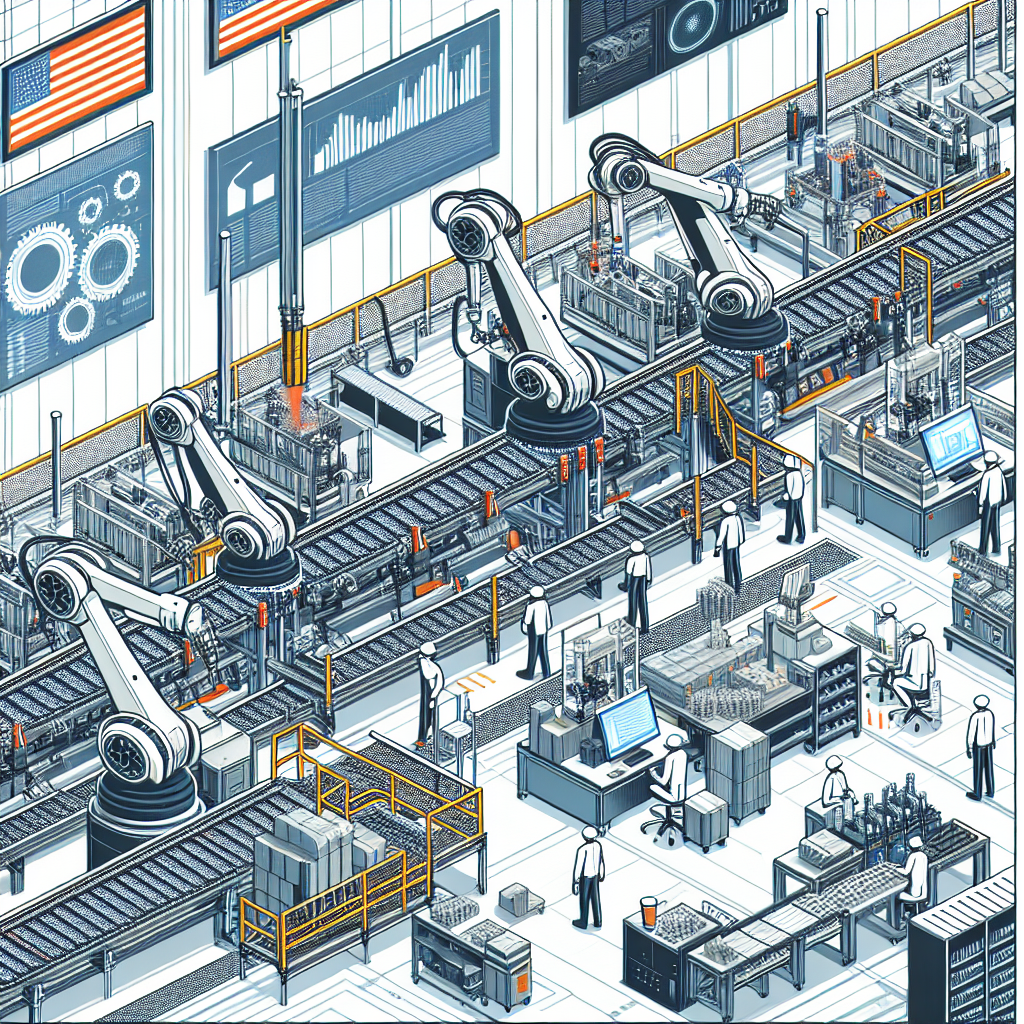
Contextualizing the Partnership between Foxconn and Intrinsic The recent collaboration between Foxconn, a leading contract manufacturer, and Intrinsic, an Alphabet subsidiary focused on robotics development tools, represents a significant advancement in the realm of Smart Manufacturing and Robotics. Announced during Foxconn’s Hon Hai Tech Day in Taipei, this partnership seeks to revolutionize manufacturing processes in the United States by integrating artificial intelligence (AI), robotics, and digital twin technologies into modular automation systems. The aim is to transition Foxconn’s operations from rigid automation paradigms to more flexible, adaptable robotics capable of performing a variety of tasks, including assembly, inspection, machine tending, and logistics. Main Goal and Its Achievability The primary objective of this alliance is to enhance the efficiency and flexibility of manufacturing operations by deploying AI-driven robotics solutions. Achieving this goal involves the development of modular, AI-enabled robotic workcells tailored to Foxconn’s specific production needs. By leveraging Intrinsic’s advanced robotics software and Foxconn’s extensive manufacturing expertise, the partnership aims to facilitate the rapid deployment of intelligent automation across Foxconn’s facilities. This integration is expected to yield significant improvements in operational efficiency, ultimately enabling high-mix, high-volume production models that are both economically and technically viable. Advantages of the Foxconn-Intrinsic Collaboration Enhanced Operational Efficiency: By utilizing AI-driven robotics, the partnership aims to significantly reduce production time and costs, streamlining various manufacturing processes. Increased Flexibility: The modular nature of the proposed robotic systems allows for rapid reconfiguration to meet changing production demands, which is critical in today’s fast-paced manufacturing environment. Cost Reduction: Intrinsic’s advanced AI Vision Model (IVM) is anticipated to lower hardware costs by five to twenty times compared to traditional depth-sensing technologies, thereby improving the overall economics of robotic systems. Scalability: The collaboration is expected to enable scalable solutions that can be adapted across various production lines and facilities, enhancing Foxconn’s manufacturing capabilities. Innovation in Robotics: The integration of AI technologies will likely lead to more sophisticated robotic functionalities, including enhanced motion planning and object detection, which are vital for complex manufacturing tasks. Limitations and Caveats While the partnership holds substantial promise, several limitations must be acknowledged. The complexity of integrating advanced AI systems with existing manufacturing processes poses challenges that could hinder the speed of implementation. Additionally, reliance on a single technology platform may create vulnerabilities in operational resilience should any unforeseen issues arise with the AI models. Furthermore, the initial investment in developing these advanced robotics systems may be considerable, potentially limiting accessibility for smaller manufacturers. Future Implications of AI Developments in Manufacturing The implications of ongoing advancements in AI for the manufacturing sector are profound. As AI technologies continue to evolve, the capabilities of robotic systems will expand, enabling more intricate and precise operations that were previously unattainable. These advancements could lead to a paradigm shift in manufacturing, with AI becoming integral to every aspect of production—from design and prototyping to manufacturing and supply chain management. Moreover, as AI systems become more adept at handling complex tasks, the demand for skilled Industrial Technologists will increase, necessitating ongoing education and training in AI and robotics to ensure workforce readiness for the factory of the future. Disclaimer The content on this site is generated using AI technology that analyzes publicly available blog posts to extract and present key takeaways. We do not own, endorse, or claim intellectual property rights to the original blog content. Full credit is given to original authors and sources where applicable. Our summaries are intended solely for informational and educational purposes, offering AI-generated insights in a condensed format. They are not meant to substitute or replicate the full context of the original material. If you are a content owner and wish to request changes or removal, please contact us directly. Source link : Click Here

Contextualizing Current Federal Reserve Policy Recent remarks by Beth Hammack, President of the Cleveland Federal Reserve, underscore the significance of maintaining interest rates at their current “barely restrictive” levels. Hammack has indicated that the Federal Reserve is potentially nearing the conclusion of a brief rate-cutting cycle. This assertion comes at a critical juncture where policymakers are grappling with the dual challenges of inflation and labor market dynamics. The prevailing interest rate, targeted within the range of 3.75% to 4%, is perceived by Hammack as nearly neutral, suggesting minimal need for further reductions. The concept of restrictiveness in monetary policy is pivotal for Federal Reserve officials, who remain divided on prioritizing inflation control versus addressing labor market weaknesses. Hammack aligns more closely with the hawkish perspective, advocating for sustained higher rates to mitigate inflationary pressures. Main Goals of Monetary Policy and Their Achievement The primary goal articulated by Hammack revolves around the necessity of retaining a modestly restrictive monetary policy to guide inflation back toward the Federal Reserve’s 2% target. This objective can be achieved through careful monitoring of economic indicators and strategic decision-making by the Federal Open Market Committee (FOMC). By sustaining current interest rates, the Federal Reserve aims to curtail excessive inflation while ensuring economic stability. Furthermore, Hammack’s remarks highlight the importance of understanding local economic conditions based on insights gathered from regional interviews. This qualitative data complements quantitative analysis, enabling a more nuanced approach to policy formulation. Advantages of Maintaining Current Interest Rates 1. **Inflation Control**: By keeping rates moderately high, the Federal Reserve aims to combat inflation. Hammack emphasizes the importance of this strategy, as inflation remains a pressing concern for households, where rising prices have substantially diminished purchasing power. 2. **Economic Stability**: A modestly restrictive policy fosters a stable economic environment, which is crucial for long-term growth. By avoiding drastic cuts, the Fed can mitigate risks that may arise from sudden policy shifts. 3. **Labor Market Insights**: Hammack’s approach incorporates qualitative feedback from local workers, revealing the ongoing struggles they face with cost-of-living increases. This perspective allows for more informed decision-making that considers the real-world implications of monetary policy. 4. **Confidence in Policy Direction**: Maintaining a clear stance on interest rates instills confidence among financial professionals and market participants, reinforcing expectations around future economic conditions. 5. **Adaptability to Economic Shifts**: By positioning rates at a neutral level, the Federal Reserve retains the flexibility to respond to changing economic conditions without resorting to abrupt policy changes. While these advantages are compelling, caveats exist, including the potential for prolonged inflationary pressures and the risk of stifling economic growth if rates remain too high for too long. Future Implications of AI in Finance and FinTech The integration of artificial intelligence (AI) in finance and FinTech is poised to significantly impact the landscape of monetary policy and economic analysis. As AI technologies evolve, they will enhance the ability of financial professionals to analyze vast datasets, leading to more precise forecasting and real-time economic assessments. In particular, AI can facilitate more effective monitoring of inflationary trends and labor market conditions, allowing policymakers to make data-driven decisions that are responsive to emerging economic realities. Furthermore, AI’s predictive capabilities may enable the Federal Reserve to simulate various economic scenarios, optimizing their responses to potential inflationary threats. Moreover, as financial services increasingly leverage AI for operational efficiencies, there will be a shift in focus toward compliance and regulatory implications. Financial professionals will need to navigate these developments, ensuring that AI systems align with the regulatory frameworks governing monetary policy. In conclusion, the future of monetary policy will likely be characterized by an interplay between traditional economic strategies and innovative AI technologies, fostering a more resilient and adaptive financial ecosystem. Disclaimer The content on this site is generated using AI technology that analyzes publicly available blog posts to extract and present key takeaways. We do not own, endorse, or claim intellectual property rights to the original blog content. Full credit is given to original authors and sources where applicable. Our summaries are intended solely for informational and educational purposes, offering AI-generated insights in a condensed format. They are not meant to substitute or replicate the full context of the original material. If you are a content owner and wish to request changes or removal, please contact us directly. Source link : Click Here

Introduction The landscape of operating systems is evolving rapidly, particularly with the emergence of immutable Linux distributions designed for enhanced reliability and security. A notable example is ShaniOS, an Arch-based Linux distribution that promises to deliver a seamless user experience without the traditional vulnerabilities associated with system updates and configurations. This post aims to elucidate the significance of ShaniOS in the context of technology and its implications for software engineers and innovators in various fields. Main Goal of ShaniOS The primary objective of ShaniOS is to provide users with an immutable operating system that never breaks, thereby ensuring a reliable computing environment. This goal is achieved through a unique blue/green deployment strategy that allows users to seamlessly switch between two operational states of the system. By doing so, ShaniOS minimizes downtime and potential disruptions, making it an attractive option for both novice and experienced users alike. Advantages of ShaniOS Immutable Architecture: The core of ShaniOS is designed to remain unchanged, which significantly reduces the risk of system corruption due to errant updates or application installations. This robustness is crucial for environments where uptime is paramount. Blue/Green Deployment: Utilizing Btrfs subvolumes, the system maintains two simultaneous environments, enhancing the reliability of updates. Users can deploy updates to a passive environment, test them, and switch to it only when they are certain everything functions correctly, thus ensuring a fail-safe mechanism. Enhanced Security Features: ShaniOS incorporates stringent security measures such as AppArmor profiles, firewalled configurations, and full-disk encryption. These features protect against unauthorized access and potential data breaches, which is vital in today’s cybersecurity landscape. Application Management via Flatpak: The inclusion of Flatpak for application management allows users to install software in a sandboxed environment, further mitigating security risks. This is particularly beneficial for developers who need to manage dependencies and ensure compatibility across different environments. Performance Optimizations: ShaniOS is optimized for performance, with features like dynamic swap file creation and support for Nvidia GPUs. This ensures that users experience fast and efficient system operations, enhancing productivity. Limitations and Caveats While ShaniOS presents a range of advantages, it is essential to consider potential limitations. The reliance on a specific deployment strategy may require users to adapt their workflows, particularly those accustomed to conventional Linux distributions. Furthermore, the initial setup may be daunting for users unfamiliar with Linux environments. It is also crucial to note that, although the system is designed to be robust, no operating system is entirely impervious to issues, and users should maintain regular backups of their data. Future Implications of AI Developments As the fields of artificial intelligence and machine learning continue to evolve, the implications for operating systems like ShaniOS are profound. Future iterations could incorporate AI-driven monitoring tools that proactively manage system health, predict potential failures, and automate recovery processes. Additionally, AI could enhance security protocols, adapting to new threats in real time and providing users with a more secure computing environment. The integration of AI capabilities may also streamline application management, enabling more intuitive package installations and updates based on user behaviors and preferences. Conclusion ShaniOS represents a significant advancement in the realm of Linux distributions, particularly for users and developers seeking a stable and secure operating system. Its innovative blue/green deployment strategy, combined with robust security features and performance optimizations, positions it as a compelling choice for the modern computing landscape. As technology continues to evolve, particularly with the integration of AI, the potential for ShaniOS and similar distributions to adapt and thrive remains promising. Disclaimer The content on this site is generated using AI technology that analyzes publicly available blog posts to extract and present key takeaways. We do not own, endorse, or claim intellectual property rights to the original blog content. Full credit is given to original authors and sources where applicable. Our summaries are intended solely for informational and educational purposes, offering AI-generated insights in a condensed format. They are not meant to substitute or replicate the full context of the original material. If you are a content owner and wish to request changes or removal, please contact us directly. Source link : Click Here

Context and Overview The transformation of the Chinese agrochemical sector, particularly with the recent revisions to pesticide export regulations, represents a pivotal shift within the global agriculture landscape. The Department of Crop Production Management under China’s Ministry of Agriculture and Rural Affairs has initiated new policies aimed at enhancing China’s competitiveness in the agrochemical market. These changes are not merely regulatory; they signal a broader shift towards innovation and global integration within the agricultural technology (AgriTech) and smart farming sectors. The implications of these developments extend beyond China, potentially reshaping agricultural practices and supply chains worldwide. Main Goals and Achievements The primary goal of China’s new pesticide policy is to facilitate the registration of pesticides intended solely for export, thus fostering innovation and enhancing global competitiveness among Chinese agrochemical firms. This is achieved through significant regulatory adjustments, including the introduction of export-only registrations, relaxed formulation restrictions, reduced toxicology data requirements, and expedited review processes. These advancements aim to streamline the entry of new products into international markets, enabling Chinese enterprises to leverage their existing reserves of active ingredients and formulation technologies effectively. By creating a more conducive environment for innovation, the policy encourages domestic companies to develop products that meet global standards and consumer demands. Advantages of the New Pesticide Policy Enhanced Global Competitiveness: The revised regulations allow for the registration of active ingredients not previously registered in China, enabling firms to introduce innovative products to international markets more quickly. Increased Export Volumes: Data from ICAMA indicates a robust increase in pesticide exports, with a 17.5% rise in volume and a 14% increase in export value in early 2025, showcasing the positive impact of the new regulations on trade. Boost to Innovation: By reducing bureaucratic hurdles related to toxicological data and registration timelines, companies are incentivized to invest in research and development, fostering a culture of innovation within the Chinese agrochemical sector. Market Responsiveness: The relaxed formulation ratios cater to diverse international market demands, allowing Chinese firms to produce customized solutions for various agricultural challenges faced globally. Caveats and Limitations While the new pesticide regulations present numerous advantages, several caveats must be acknowledged. First, there is a risk of insufficient market understanding among Chinese firms, particularly regarding pricing and channel management, which could hinder their competitiveness in sophisticated international markets. Additionally, the regulatory changes may not immediately translate to operational effectiveness, as companies must adapt their business models to align with the new export-driven strategies. Lastly, there remains a challenge in establishing mutual recognition of data between Chinese and OECD standards, which could impact the global acceptance of Chinese products. Future Implications and AI Developments As the agricultural landscape continues to evolve, the integration of artificial intelligence (AI) within AgriTech holds significant promise for the future. AI can enhance precision agriculture practices, optimize supply chains, and improve decision-making processes for farmers and agrochemical firms alike. With AI-driven insights, companies can better predict market trends, manage resources efficiently, and develop targeted marketing strategies that resonate with international audiences. Furthermore, AI can facilitate innovation by streamlining R&D processes, thereby accelerating the development of new agricultural solutions tailored to specific environmental and economic contexts. Conclusion The ongoing transformation of China’s pesticide policy is a harbinger of significant changes within the global agricultural sector. By fostering innovation and enhancing competitiveness, these regulatory reforms present a unique opportunity for AgriTech innovators to navigate and leverage the evolving landscape. As the industry adapts to these changes, the integration of AI technologies will further propel growth, ensuring that Chinese agrochemical companies can effectively compete on the global stage. Disclaimer The content on this site is generated using AI technology that analyzes publicly available blog posts to extract and present key takeaways. We do not own, endorse, or claim intellectual property rights to the original blog content. Full credit is given to original authors and sources where applicable. Our summaries are intended solely for informational and educational purposes, offering AI-generated insights in a condensed format. They are not meant to substitute or replicate the full context of the original material. If you are a content owner and wish to request changes or removal, please contact us directly. Source link : Click Here

Contextualizing NASA’s Innovative Approach to Supersonic Flight The recent advancements in aviation technology, particularly with NASA’s X-59 Quiet Supersonic Technology (QueSST) aircraft, illustrate a pivotal shift in aerospace engineering. The design of the X-59 is not merely an exercise in aerodynamics; it is a strategic effort to mitigate the disruptive sonic booms traditionally associated with supersonic flight. By incorporating a long, slender nose and a uniquely positioned engine, NASA aims to generate a reduced “sonic thump,” effectively transforming the supersonic travel experience. This initiative parallels the ongoing evolution in the realm of cybersecurity, where innovative AI solutions are being developed to address increasingly complex security challenges. Main Goal and Its Achievement The primary objective of the X-59 project is to gather critical data that can be utilized by aircraft manufacturers to design quieter supersonic planes. Achieving this goal entails extensive testing and validation of the aircraft’s design, particularly its aerodynamic features and sound wave management. Similar to the X-59’s focus on empirical data collection, the implementation of AI in cybersecurity aims to enhance threat detection and response capabilities. By leveraging machine learning algorithms, cybersecurity experts can analyze vast amounts of data to identify vulnerabilities and predict potential breaches, ultimately fostering a more secure digital environment. Advantages of Implementing AI in Cybersecurity Enhanced Threat Detection: AI systems can process and analyze data at unprecedented speeds, allowing for real-time identification of anomalies that may signify security threats. Predictive Analytics: By utilizing historical data, AI can forecast potential vulnerabilities and attacks, enabling organizations to proactively implement preventive measures. Automated Responses: AI-driven solutions can automate response protocols, significantly reducing the time taken to neutralize threats and minimizing potential damage. Scalability: As organizations grow, so do their security needs. AI systems can easily scale to accommodate increasing data volumes, ensuring consistent security posture. Cost Efficiency: By automating routine security tasks, organizations can redirect valuable human resources towards more strategic initiatives, optimizing operational efficiency. Caveats and Limitations Despite the numerous advantages, it is essential to acknowledge the limitations associated with AI in cybersecurity. First, AI systems are only as effective as the data they are trained on; biases in data can lead to inaccurate threat assessments. Additionally, the dynamic nature of cyber threats necessitates continuous updates and training of AI models to remain relevant. Finally, there is a risk of over-reliance on automated systems, which may overlook nuanced threats requiring human intuition and expertise. Future Implications of AI Developments in Cybersecurity The ongoing advancements in artificial intelligence hold significant implications for the future of cybersecurity. As AI technologies mature, we can anticipate a more integrated approach to cybersecurity, where AI systems will work alongside human experts to create a robust defense mechanism against cyber threats. The convergence of AI with next-generation technologies, such as quantum computing and blockchain, promises to revolutionize data security, enabling organizations to safeguard sensitive information more effectively. As seen with the X-59’s groundbreaking design, innovation in technology has the potential to reshape industries, and the field of cybersecurity is poised for transformative change driven by AI. Disclaimer The content on this site is generated using AI technology that analyzes publicly available blog posts to extract and present key takeaways. We do not own, endorse, or claim intellectual property rights to the original blog content. Full credit is given to original authors and sources where applicable. Our summaries are intended solely for informational and educational purposes, offering AI-generated insights in a condensed format. They are not meant to substitute or replicate the full context of the original material. If you are a content owner and wish to request changes or removal, please contact us directly. Source link : Click Here

Context of Current Trends in Biotech and Pharmaceuticals As the biotechnology landscape evolves, industry stakeholders must remain informed of the latest developments that shape both scientific and political dimensions. The ongoing acquisitions, such as Merck’s recent agreement to purchase Cidara Therapeutics for $9.2 billion, exemplify the strategic maneuvers pharmaceutical companies are employing to bolster their product pipelines. This is particularly crucial as established products like Merck’s Keytruda face impending patent expirations, which can significantly impact revenue streams. Therefore, professionals in health technology must stay informed through reliable resources, including specialized newsletters that deliver timely updates and insights into market dynamics. Main Goals and Achievements in the Biotech Sector The primary goal of recent mergers and acquisitions in the biotech field is to enhance competitive positioning and mitigate the risks associated with patent expirations. By acquiring innovative companies and their experimental therapies, pharmaceutical giants aim to diversify their offerings and ensure sustained revenue growth. For instance, the acquisition of Cidara Therapeutics not only adds to Merck’s portfolio but also aligns with the industry’s broader trend of integrating advanced therapeutics to address unmet medical needs. Achieving this goal requires a focused strategy that prioritizes research and development (R&D) investments, fostering collaboration between established firms and emerging biotech entities. Advantages of Current Pharmaceutical Strategies 1. **Enhanced Product Pipelines**: Acquisitions enable companies to rapidly expand their therapeutic offerings, thereby addressing diverse patient needs. Evidence from recent transactions indicates that firms like Merck are actively seeking innovative solutions to maintain market relevance. 2. **Risk Mitigation**: By diversifying their portfolios through strategic acquisitions, pharmaceutical companies can reduce dependency on single products, particularly those nearing patent expiration. This strategy is critical in maintaining financial stability during transitions. 3. **Innovation Acceleration**: Merging with biotech firms allows pharmaceutical companies to leverage cutting-edge research and technologies, expediting the development of novel therapies. This can lead to faster time-to-market for essential medications. 4. **Access to Expertise**: Acquiring specialized firms provides pharmaceutical companies with access to advanced scientific knowledge and capabilities, enhancing their internal R&D functions. While these advantages are substantial, it is essential to recognize potential caveats. For example, integration challenges can arise post-acquisition, including cultural mismatches and operational inefficiencies that may hinder the anticipated benefits. Future Implications of AI in Health and Medicine Looking ahead, the integration of artificial intelligence (AI) within the health sector is poised to revolutionize how pharmaceutical companies approach R&D, patient care, and operational efficiency. As AI technologies advance, they will enable more precise drug discovery processes, predictive modeling for patient outcomes, and personalized medicine approaches. This evolution will likely lead to increased collaboration between tech firms and pharmaceutical companies, fostering innovations that align with evolving patient needs. Furthermore, as AI tools become more sophisticated, they will facilitate better data analytics capabilities, allowing health tech professionals to derive actionable insights from vast datasets. However, this transition will require careful consideration of ethical implications, data privacy concerns, and the need for regulatory frameworks to ensure responsible AI deployment. In conclusion, the current landscape of pharmaceutical acquisitions highlights the critical need for health tech professionals to stay informed and adaptable. By understanding the motivations behind these strategic decisions and recognizing the transformative potential of AI, professionals can position themselves to thrive in a rapidly evolving industry. Disclaimer The content on this site is generated using AI technology that analyzes publicly available blog posts to extract and present key takeaways. We do not own, endorse, or claim intellectual property rights to the original blog content. Full credit is given to original authors and sources where applicable. Our summaries are intended solely for informational and educational purposes, offering AI-generated insights in a condensed format. They are not meant to substitute or replicate the full context of the original material. If you are a content owner and wish to request changes or removal, please contact us directly. Source link : Click Here

Introduction The Arizona Cardinals have faced significant challenges in recent NFL seasons, particularly under the leadership of head coach Jonathan Gannon. Despite possessing a roster with considerable talent, the team’s performance has not met expectations, culminating in a notable defeat by the Seattle Seahawks. This situation prompts a critical evaluation of Gannon’s coaching efficacy and raises questions about the future direction of the franchise. In this discourse, we will explore the implications of such underachievement in the context of sports analytics, particularly through the lens of artificial intelligence (AI), and its relevance to sports data enthusiasts. Identifying the Main Goal The primary objective highlighted in the original post is to assess whether the Arizona Cardinals should contemplate a change in coaching leadership if their performance continues to decline. Achieving improved results on the field necessitates a thorough examination of both player execution and coaching strategies. This evaluation can be enriched by the integration of AI technologies that analyze performance metrics and game strategies, thereby providing actionable insights for better decision-making. Advantages of AI in Sports Analytics Enhanced Performance Analysis: AI algorithms can process vast amounts of data, enabling coaches and analysts to identify patterns and trends that inform strategic adjustments. For instance, understanding player fatigue levels or identifying effective formations can lead to more tailored training and game plans. Injury Prediction and Management: AI can contribute to predicting injury risks by analyzing historical data and player workloads. This capability is crucial for teams like the Cardinals, who have struggled with key player injuries, thus providing insights that could enhance player longevity and team performance. Game Simulation and Strategy Optimization: By simulating various game scenarios, AI tools can assist coaches in optimizing play-calling and in-game decision-making. This could help mitigate fourth-quarter collapses and enhance overall team resilience. Fan Engagement and Experience: AI can also revolutionize how fans interact with the game. Enhanced data visualization and predictive analytics allow fans to better understand team dynamics and performance, fostering a deeper connection with the franchise. Caveats and Limitations While the advantages of AI in sports analytics are compelling, there are important caveats to consider. The reliance on data-driven insights does not negate the fundamental need for human intuition and experience in coaching. Additionally, the implementation of AI tools requires substantial investment in technology and training, which may not be feasible for all franchises. Furthermore, there is the risk of over-reliance on algorithms, potentially leading to decisions that overlook the human elements of the game. Future Implications of AI in Sports The evolving landscape of AI technology promises to further transform sports analytics in the coming years. As machine learning models become more sophisticated, their capacity to analyze real-time data during games will likely enhance coaching strategies and player performance assessments. Future implications may include the development of personalized training regimens tailored to individual player metrics, ultimately contributing to a more competitive edge in the league. Conclusion The narrative surrounding Jonathan Gannon’s tenure as head coach of the Arizona Cardinals serves as a critical case study in the intersection of sports management and analytics. By leveraging AI technologies, teams can harness data-driven insights to inform strategic decisions and improve overall performance. As the sports industry continues to embrace AI advancements, the potential for enhanced team dynamics and competitive performance remains significant, offering a pathway for teams to rise above mediocrity and attain success. Disclaimer The content on this site is generated using AI technology that analyzes publicly available blog posts to extract and present key takeaways. We do not own, endorse, or claim intellectual property rights to the original blog content. Full credit is given to original authors and sources where applicable. Our summaries are intended solely for informational and educational purposes, offering AI-generated insights in a condensed format. They are not meant to substitute or replicate the full context of the original material. If you are a content owner and wish to request changes or removal, please contact us directly. Source link : Click Here

Contextual Shift in Data Management In an era where businesses increasingly rely on data to understand their customer base, the traditional approach has been to create numerous dashboards, integrate various systems, and establish metrics to gauge customer behavior. However, these data-centric strategies often reflect the company’s perspective rather than the actual customer experience. The advent of artificial intelligence (AI) is catalyzing a crucial transition from this system-centric view to a context-centric paradigm, where customer interactions and experiences drive data interpretation and usage. This shift necessitates a re-evaluation of how organizations perceive and manage data. AI demands context—defined by customer interactions—to derive meaningful insights. Each action taken by a customer, whether a click, comment, or purchase, contributes to a narrative that transcends isolated data points. In this context, AI acts as an integrative force, bridging the gaps between disparate functions like marketing, sales, product development, and customer service, thus fostering a holistic understanding of customer behavior. Understanding the Transition: From System-Centric to Context-Centric Data The primary goal of this transition is to foster a collaborative environment where cross-functional teams can work together to optimize customer experiences rather than operating in silos. This structural reorientation emphasizes shared understanding and cooperation among departments, ensuring that data flows seamlessly across various customer touchpoints. AI’s role in this transformation is critical, as it enhances the interpretive capabilities of data, allowing organizations to derive actionable insights that are rooted in customer context. Advantages of Embracing Context-Centric Data Enhanced Meaning Extraction: Traditional data analytics often focus on quantifiable metrics, leaving out the qualitative nuances of customer behavior. Context-centric data allows organizations to decipher not just what customers do but why they do it, leading to deeper insights. Improved Integration: Moving from disparate systems to a unified operational framework fosters better alignment. AI facilitates this by ensuring that data flows according to the customer journey, rather than being constrained by departmental processes. Actionable Insights: Insight generation shifts from merely reporting what has occurred to understanding the underlying motivations behind customer actions. This narrative-driven approach equips organizations to respond more effectively to customer needs. Coordinated Responses: By interpreting signals across various systems, AI enables organizations to synchronize their responses to customer interactions, transforming isolated actions into a cohesive strategy. Shared Accountability: Context-centric models promote collective responsibility for customer experience outcomes. This blurs traditional departmental boundaries and fosters a culture of shared stewardship. While the transition to a context-centric approach presents numerous advantages, it is important to recognize potential limitations. Organizations may face challenges in aligning diverse teams around a shared customer context, particularly if entrenched silos and departmental KPIs remain prevalent. Moreover, the effective implementation of AI technologies requires an investment in training and infrastructure, which may pose initial hurdles for some organizations. Future Implications of AI in Marketing Looking ahead, the continued evolution of AI technologies promises to further enhance the capabilities of context-centric data management. As AI systems become more sophisticated, they will be able to analyze and interpret customer behaviors in real time, allowing organizations to proactively address customer needs and preferences. This proactive approach could lead to more personalized marketing strategies, improved customer satisfaction, and ultimately, increased loyalty. Additionally, as AI continues to permeate various aspects of business operations, organizations that embrace this shift will likely gain a competitive advantage. By prioritizing customer context over internal processes, businesses can create more meaningful connections with their audiences, leading to enhanced brand loyalty and long-term success. In conclusion, the transition from data silos to a shared customer context, driven by AI, represents a significant evolution in how organizations interact with and understand their customers. By adopting a context-centric approach, companies can unlock deeper insights, foster collaboration, and enhance overall customer experience, ultimately positioning themselves for future success in an increasingly competitive marketplace. Disclaimer The content on this site is generated using AI technology that analyzes publicly available blog posts to extract and present key takeaways. We do not own, endorse, or claim intellectual property rights to the original blog content. Full credit is given to original authors and sources where applicable. Our summaries are intended solely for informational and educational purposes, offering AI-generated insights in a condensed format. They are not meant to substitute or replicate the full context of the original material. If you are a content owner and wish to request changes or removal, please contact us directly. Source link : Click Here

Introduction The recent announcement of Carbon’s successful acquisition of $60 million in new funding marks a significant milestone in the additive manufacturing sector. Led by prominent investors such as Sequoia Capital and adidas, this funding round underscores the increasing confidence in the growth potential of domestic additive manufacturing. As the industry continues to evolve, the implications for Smart Manufacturing and Robotics become increasingly relevant, particularly for industrial technologists who are at the forefront of these advancements. Main Goal of the Funding Announcement The primary goal of Carbon’s funding initiative is to enhance its capabilities in digital manufacturing, positioning itself as a leader in the additive manufacturing landscape. By leveraging this capital, Carbon aims to expand its portfolio of innovative products and strengthen its network of suppliers and collaborators. Achieving this goal will involve scaling production capabilities, improving manufacturing processes, and enhancing product quality through advanced technologies. Advantages of Carbon’s New Funding Enhanced Production Capabilities: With increased investment, Carbon can optimize its manufacturing processes, leading to faster production times and reduced costs. This is particularly important in industries such as sportswear, where speed and efficiency are critical. Innovation in Product Development: Funding will facilitate research and development, allowing Carbon to introduce novel materials and methods that can improve product performance. For instance, their collaboration with Riddell has resulted in highly rated football helmets, showcasing the potential of 3D printing in safety equipment. Market Expansion: The investment positions Carbon to extend its reach into new markets, thereby diversifying its client base. With existing partnerships in sportswear, including notable companies like adidas and CCM, Carbon is well-positioned to leverage its technology across different sectors. Positive Cash Flow Prospects: Carbon’s statement regarding its trajectory towards cash flow-positive operations indicates a sustainable business model, enhancing investor confidence and long-term viability. Limitations and Caveats While the funding represents significant opportunities, there are inherent challenges. The competitive landscape of additive manufacturing is intensifying, with numerous startups and established companies vying for market share. Additionally, the reliance on investor support can introduce volatility, particularly in economic downturns or shifts in market demand. Future Implications of AI Developments The integration of artificial intelligence in Smart Manufacturing and Robotics will undoubtedly reshape the landscape of additive manufacturing. As AI technologies evolve, they will enhance predictive analytics, streamline production workflows, and improve the customization of products. For industrial technologists, this means adapting to new tools and methodologies that can optimize manufacturing processes and enhance decision-making capabilities. Furthermore, AI-driven innovations will likely lead to the development of more autonomous systems, reducing manual intervention and increasing efficiency across manufacturing operations. Conclusion The recent funding secured by Carbon exemplifies the growing momentum in the additive manufacturing sector. As the company seeks to expand its operational capabilities and product offerings, the implications for industrial technologists are profound. By embracing these advancements and the potential of AI, the industry can look forward to a future characterized by enhanced efficiency, innovation, and market adaptability. Disclaimer The content on this site is generated using AI technology that analyzes publicly available blog posts to extract and present key takeaways. We do not own, endorse, or claim intellectual property rights to the original blog content. Full credit is given to original authors and sources where applicable. Our summaries are intended solely for informational and educational purposes, offering AI-generated insights in a condensed format. They are not meant to substitute or replicate the full context of the original material. If you are a content owner and wish to request changes or removal, please contact us directly. Source link : Click Here


