Contextualizing the Challenge of Creative Testing in Marketing The contemporary landscape of performance marketing is characterized by an insatiable demand for creative assets. As brands navigate the complexities of consumer behavior, the phenomenon of ad fatigue has emerged as a significant challenge. In an age marked by dwindling attention spans, platforms and algorithms compel marketers to consistently refresh their content. Failure to do so results in escalated acquisition costs, creating a precarious cycle for businesses striving to maintain their competitive edge. This dilemma epitomizes the ‘velocity trap’ inherent in Business-to-Consumer (B2C) marketing. While the need for creative experimentation is paramount, the financial sustainability of expanding in-house teams to meet peak demands is questionable. Internal creative teams, already burdened by extensive responsibilities such as product launches and ongoing website optimization, often find themselves overwhelmed by the sheer volume of required creative outputs. Defining the Core Objective The primary aim of sustaining creative testing without augmenting headcount revolves around enhancing marketing agility while minimizing operational costs. This can be achieved through the strategic integration of flexible staffing solutions, which allows organizations to scale their creative capabilities dynamically in response to market demands. By leveraging external talent and advanced technologies, businesses can maintain a continuous flow of innovative content without the extensive overhead associated with permanent hires. Advantages of Flexible Staffing and AI Integration Enhanced Agility: Establishing a pre-vetted network of freelancers facilitates rapid response to creative demands. This proactive approach allows brands to activate talent swiftly, reducing the time traditionally required for hiring. Specialized Expertise: Utilizing freelancers proficient in advanced tools such as generative AI not only enhances creative outputs but also introduces specialized skills that may not be required on a full-time basis. This strategic deployment of talent can significantly bolster campaign effectiveness. Cost Efficiency: By reframing the financial narrative from asset costs to opportunity costs, organizations can justify investments in flexible staffing. This perspective emphasizes the potential revenue generated through successful creative iterations, thereby highlighting the value of agile marketing strategies. Operational Streamlining: Incorporating automated workflows and project management tools alleviates the administrative burden on in-house teams. By facilitating the initial draft processes through automation, senior management can focus on strategic decisions rather than tactical executions. Continuous Iteration: The integration of AI-driven tools ensures a continuous loop of testing and refinement. This dynamic allows businesses to remain responsive to real-time market feedback, optimizing their creative strategies effectively. Caveats and Limitations While the advantages of flexible staffing and AI integration are compelling, several caveats warrant consideration. The reliance on external freelancers may introduce challenges concerning brand consistency and quality control. Furthermore, the effective utilization of AI tools mandates a clear strategic direction; without it, there is a risk of generating off-brand or ineffective content. Organizations must also be mindful of the administrative complexities associated with managing a diverse pool of freelance talent, which can occasionally hinder operational efficiency. Future Implications of AI in Creative Marketing The future trajectory of AI in marketing is poised to reshape the creative landscape significantly. As advancements in AI technologies continue to evolve, the capability to generate high-quality content through natural language processing and other innovative methods will expand. This evolution will empower marketers to harness AI not just as a tool for optimization but as a pivotal component of their creative strategy. Moreover, the increasing sophistication of AI will likely lead to a shift in the skill sets required within marketing teams. As routine creative tasks become automated, the emphasis will shift toward strategic oversight, creative direction, and the integration of AI insights into overarching marketing strategies. Consequently, organizations that adapt to these changes will not only enhance their efficiency but also solidify their competitive positioning in an increasingly crowded marketplace. Disclaimer The content on this site is generated using AI technology that analyzes publicly available blog posts to extract and present key takeaways. We do not own, endorse, or claim intellectual property rights to the original blog content. Full credit is given to original authors and sources where applicable. Our summaries are intended solely for informational and educational purposes, offering AI-generated insights in a condensed format. They are not meant to substitute or replicate the full context of the original material. If you are a content owner and wish to request changes or removal, please contact us directly. Source link : Click Here

Context of the D585 Pro Depth Camera in Smart Manufacturing and Robotics The unveiling of the RealSense D585 Pro AI-native depth camera at Automate 2026 represents a significant advancement in the realm of smart manufacturing and robotics. This cutting-edge device, which integrates depth sensing with edge AI acceleration, is designed to cater to a variety of robotic applications, including humanoids, autonomous mobile robots (AMRs), and collaborative robotic arms. The D585 Pro’s sophisticated capabilities are anticipated to facilitate enhanced navigation, manipulation, and inspection tasks, which are critical for efficiency in modern manufacturing environments. With an expected shipping date in Q1 2027, this technology promises to redefine the standards of depth perception and AI integration within the industry. Main Goals and Achievements of the D585 Pro The primary goal of the RealSense D585 Pro is to establish a new standard for perception platforms in robotics by integrating advanced depth sensing, AI capabilities, and a flexible software-defined architecture. Achieving this goal involves the development of a camera that functions effectively at both short (under 15 cm) and long ranges (over 10 m), allowing for versatile applications in various operational environments. The D585 Pro is expected to evolve over time through software updates, thereby enhancing its functionality without necessitating hardware replacements, which is a crucial aspect for long-term deployment in industrial settings. Advantages of the D585 Pro Depth Camera Enhanced Depth Quality: The D585 Pro delivers over 2x better depth quality compared to its predecessors, significantly improving the precision of robotic tasks such as navigation and human-robot interaction. Minimum Range Capability: With a sub-15 cm minimum range, the D585 Pro supports close-range applications such as cobot arm inspection and bin picking, which traditional cameras struggle to achieve. High Frame Rate: Operating at 60 FPS ensures that the camera sustains full-resolution capture, which is vital for fast-moving robotic applications and high-speed conveyors. Robust Operating Range: The camera’s ability to operate optimally at distances greater than 10 meters makes it suitable for extensive navigation tasks within warehouses and factories. Weather Resistance: The IP65 rating ensures the camera’s resilience in various environments, eliminating the need for premium variants for enhanced protection. On-device AI Processing: By integrating AI processing directly on the camera, reliance on external computing resources is minimized, thus streamlining the operation of robotic systems. Future Implications of AI Developments in Robotics The introduction of the D585 Pro is poised to have far-reaching implications in the field of robotics and smart manufacturing. As AI technologies continue to advance, the integration of intelligent perception capabilities will enable robots to perform increasingly complex tasks with greater autonomy and efficiency. The D585 Pro’s software-defined architecture allows for continuous improvement of its functionalities through SDK updates, which will likely lead to innovations in areas such as Visual-Inertial Odometry (VIO) and occupancy grid generation. This adaptability is essential for keeping pace with the rapidly evolving demands of the industry. Moreover, as industrial technologists increasingly adopt AI-driven solutions, the landscape of manufacturing will shift towards more automated and intelligent systems, where robots not only assist humans but also make autonomous decisions based on real-time data. This evolution will necessitate ongoing education and training for professionals in the field to harness the potential of these advanced technologies effectively. Disclaimer The content on this site is generated using AI technology that analyzes publicly available blog posts to extract and present key takeaways. We do not own, endorse, or claim intellectual property rights to the original blog content. Full credit is given to original authors and sources where applicable. Our summaries are intended solely for informational and educational purposes, offering AI-generated insights in a condensed format. They are not meant to substitute or replicate the full context of the original material. If you are a content owner and wish to request changes or removal, please contact us directly. Source link : Click Here
Context In a recent episode of The Geek in Review podcast, Greg Dickason, Chief Technology Officer of LexisNexis, addressed the transformative potential of agentic legal AI, particularly with the introduction of Lexis+ AI Protégé and features like Shepard’s Verify. The discussion highlights a significant shift in the legal industry, where traditional AI systems that merely responded to inquiries are evolving into agentic workflows capable of executing complex, multi-step tasks. This evolution not only enhances legal research and drafting but also integrates risk management into the legal workflow. The emphasis on trust and verification in AI-generated outputs is critical in mitigating the risk of inaccuracies, thus aligning technology with the needs of legal professionals. Main Goal and Achievement The primary goal discussed in the podcast is to enhance the efficiency and reliability of legal work through the integration of agentic AI. This can be achieved by leveraging AI technologies that not only conduct research but also perform tasks such as drafting documents and verifying citations. By embedding verification mechanisms like Shepard’s Verify into the workflow, legal professionals can ensure the accuracy of AI-generated content, thereby fostering greater trust and reducing reliance on potentially flawed outputs. Advantages of Agentic Legal AI 1. **Increased Efficiency**: Agentic legal workflows can automate multi-step tasks that traditionally required significant manual effort. This allows legal professionals to focus on more complex aspects of their work while the AI handles routine tasks. 2. **Enhanced Accuracy through Verification**: The integration of features like Shepard’s Verify ensures that AI-generated texts are cross-checked against authoritative legal databases, minimizing the risk of hallucinated citations or incorrect references. 3. **Customizable Workflows**: Legal firms can upload their own playbooks and processes into the AI system, tailoring the technology to fit specific operational needs and improving overall workflow efficiency. 4. **Improved Training and Development**: AI can facilitate the training of junior associates, helping them to gain experience more quickly through simulated tasks such as mock trials and depositions. 5. **Robust Security Measures**: The implementation of “bring your own key” (BYOK) protocols allows legal firms to maintain control over their sensitive data, ensuring that client documents are securely stored and accessed only by authorized users. 6. **Cost Control and Resource Management**: By providing insights into efficient token usage and model selection, legal professionals can manage costs associated with AI tools more effectively, avoiding unexpected overages. Limitations and Caveats While the benefits of agentic legal AI are substantial, there are certain limitations to consider: – **Initial Learning Curve**: Legal professionals may require time to adapt to new technologies and workflows, which can create temporary disruptions in productivity. – **Dependence on AI Quality**: The effectiveness of agentic AI depends on the underlying models and data quality. Any deficiencies in these areas can lead to inaccuracies in output. – **Security Vulnerabilities**: As with any technology, the increasing reliance on AI systems introduces potential security risks, particularly regarding sensitive legal data. Future Implications The trajectory of AI development within the legal sector suggests profound changes on the horizon. As AI systems become increasingly sophisticated and integrated into legal workflows, the roles of legal professionals will evolve. The expectation is not a reduction in the number of lawyers but rather a transformation of their roles, with AI enabling them to work more efficiently and effectively. Legal professionals will need to adapt to these changes, embracing new technologies as tools for innovation and improved service delivery. The legal industry must also proactively address the regulatory and ethical challenges posed by AI advancements to ensure that these technologies are used responsibly and effectively. Disclaimer The content on this site is generated using AI technology that analyzes publicly available blog posts to extract and present key takeaways. We do not own, endorse, or claim intellectual property rights to the original blog content. Full credit is given to original authors and sources where applicable. Our summaries are intended solely for informational and educational purposes, offering AI-generated insights in a condensed format. They are not meant to substitute or replicate the full context of the original material. If you are a content owner and wish to request changes or removal, please contact us directly. Source link : Click Here

Context: The Role of Engineering in Food Security According to the U.N. World Food Program, nearly 750 million individuals globally are currently facing hunger. Projections indicate that by 2050, the demand for food is expected to increase by 50 percent from 2010 levels, as reported by the World Resources Institute. To meet this rising demand, a recent special report by the IEEE Smart Agri-Food Initiative emphasizes that advancements in technology are crucial for expanding food production. This report encompasses research findings, case studies, and innovative applications of technology aimed at assisting farmers, engineers, and policymakers in tackling the challenges of food security. Main Goal and Its Achievement The primary objective of the original post is to highlight the critical role of engineering in enhancing food security through innovative technologies. Achieving this goal necessitates a multifaceted approach that integrates various technological advancements, including automation, data analytics, and sustainable practices. As emphasized by John Verboncoeur, chair of the IEEE Smart Agri-Food Initiative, addressing food security has evolved into a systems-engineering problem that requires the collaboration of multiple disciplines. By harnessing the collective expertise of engineers, agricultural scientists, and policymakers, we can create effective solutions that not only increase food production but also promote sustainability and resilience in agricultural practices. Advantages of Technological Integration in Agriculture Enhanced Efficiency: The integration of smart agriculture systems, which utilize sensors, artificial intelligence, and robotics, can significantly improve operational efficiency across farms. These technologies enable precise monitoring and management of resources, ultimately leading to reduced waste and increased yield. Precision Agriculture: The application of GPS-guided equipment allows farmers to make location-specific decisions. This capability minimizes the overuse of water, fertilizers, and pesticides, thereby mitigating environmental impact while optimizing crop health. Digital Twins: The use of digital twins creates virtual replicas of agricultural environments, allowing farmers to simulate various scenarios. This predictive capability aids in making informed decisions, ultimately increasing productivity and reducing resource consumption. Automation in Harvesting: Robotics in agriculture can address labor shortages and improve harvesting efficiency. Innovations like autonomous harvesting robots are designed to handle crops delicately, thus reducing waste while maintaining quality. Data-Driven Decision Making: The implementation of wireless sensor networks facilitates continuous monitoring of environmental conditions. The data collected can be analyzed using machine learning algorithms, providing actionable insights that enhance crop management strategies. Caveats and Limitations Despite the numerous advantages, several caveats must be considered. The initial investment costs for advanced agricultural technologies may be prohibitive for small-scale farmers. Additionally, the successful implementation of these technologies often hinges on the availability of reliable electricity and communication infrastructure in rural areas. Moreover, the complexity of integrating multiple systems can lead to inefficient practices if not managed properly. Addressing these challenges is essential to ensure that the benefits of technological advancements are accessible to all sectors of agriculture. Future Implications: The Role of AI in Agriculture The future of agriculture is poised for significant transformation, particularly with the advancements in artificial intelligence (AI). AI technologies are expected to enhance the capabilities of existing agricultural systems by providing deeper insights through data analytics and machine learning. For instance, AI can improve predictive analytics for crop yields, optimize resource allocation, and enhance pest management strategies. Furthermore, as AI systems continue to evolve, they will increasingly facilitate the integration of various agricultural technologies, leading to more cohesive and effective agricultural practices. This convergence of AI with smart agriculture technologies will likely redefine productivity benchmarks, enabling farmers to meet the growing food demands of the future while promoting sustainability. Disclaimer The content on this site is generated using AI technology that analyzes publicly available blog posts to extract and present key takeaways. We do not own, endorse, or claim intellectual property rights to the original blog content. Full credit is given to original authors and sources where applicable. Our summaries are intended solely for informational and educational purposes, offering AI-generated insights in a condensed format. They are not meant to substitute or replicate the full context of the original material. If you are a content owner and wish to request changes or removal, please contact us directly. Source link : Click Here

Contextual Overview Tomatoes represent a vital aspect of agricultural markets during late spring and early summer, captivating both consumers and producers with their diverse heirloom varieties. For many regions in North America, particularly those with prolonged winters, the cultivation of tomato seeds necessitates an indoor start, typically four to six weeks prior to the last frost. This indoor sowing approach is crucial for maximizing the yield potential of tomato crops in areas where direct sowing is impractical due to climatic constraints. This discussion aims to elucidate the critical strategies for successful tomato seed propagation, providing actionable insights for farmers and AgriTech innovators alike. Main Goal of Successful Tomato Seed Propagation The primary objective of the original post is to equip growers with practical strategies for initiating tomato seeds effectively, thereby enhancing their overall agricultural productivity. Successful propagation can be achieved through a series of methodical practices that include selecting appropriate varieties, optimizing indoor seed-starting setups, ensuring adequate warmth and moisture, and implementing timely transplanting techniques. Advantages of Effective Tomato Seed Propagation Varietal Selection: Choosing the right tomato variety—indeterminate or determinate—can significantly influence yield outcomes. Determinate varieties are advantageous in regions with shorter growing seasons as they produce a concentrated harvest, while indeterminate varieties offer extended production over the growing season. Optimized Seed-Starting Environment: Employing seed cells with proper drainage and utilizing grow lights can enhance germination rates and seedling health. These methods foster robust root systems and vigorous foliage, essential for healthy plant development. Controlled Temperature: Utilizing heat mats to maintain optimal soil temperatures (65 to 85°F) can drastically improve germination rates. This method mirrors the natural warm climates of tomato origins, thus promoting more reliable seedling emergence. Moisture Management: Maintaining consistent soil moisture, without over-saturation, supports rapid growth and development of tomato plants. Incorporating moisture-retentive materials such as peat or coco coir can enhance water retention, crucial for seedlings in arid conditions. Timely Up-Potting: Transplanting seedlings into larger containers once they develop true leaves can prevent root crowding and promote healthy growth. This technique is essential for maximizing the potential yield of each plant. Future Implications of AI in Tomato Cultivation As the AgriTech sector continues to evolve, the integration of artificial intelligence (AI) technologies presents significant opportunities for enhancing tomato cultivation. Future developments may include AI-driven systems for monitoring environmental conditions, automating irrigation, and predicting optimal planting times based on climate data. Such innovations can lead to more efficient resource utilization, thus improving overall crop yields and sustainability. Additionally, AI can facilitate precision agriculture practices, allowing for tailored interventions that meet the specific needs of tomato plants throughout their growth cycle. Disclaimer The content on this site is generated using AI technology that analyzes publicly available blog posts to extract and present key takeaways. We do not own, endorse, or claim intellectual property rights to the original blog content. Full credit is given to original authors and sources where applicable. Our summaries are intended solely for informational and educational purposes, offering AI-generated insights in a condensed format. They are not meant to substitute or replicate the full context of the original material. If you are a content owner and wish to request changes or removal, please contact us directly. Source link : Click Here

Context The rise of ransomware groups has become a pressing concern in cybersecurity, with entities like The Gentlemen emerging as prominent threats. This group has quickly established itself as the second most active ransomware organization, primarily due to an enticing revenue-sharing model that offers affiliates a 90% share of the ransom collected. This aggressive recruitment strategy has attracted skilled hackers, significantly bolstering The Gentlemen’s operational capabilities. Recent investigations have unveiled the identity of the group’s administrator, previously operating under the alias Hastalamuerte, who is believed to manage the entire ransomware-as-a-service (RaaS) infrastructure. Main Goal Explanation The primary goal highlighted in the original post is to identify and analyze the key individuals behind sophisticated ransomware operations like The Gentlemen. By delving into the digital footprints of these cybercriminals, cybersecurity experts can better understand their methodologies, recruitment strategies, and operational tactics. Achieving this goal requires comprehensive data analysis and collaboration among cybersecurity firms, law enforcement, and intelligence agencies to track the evolving landscape of cybercrime effectively. Advantages of Understanding Ransomware Groups Enhanced Threat Intelligence: Gaining insights into ransomware group dynamics aids in predicting potential victim targets and understanding attack vectors. For instance, The Gentlemen’s focus on Internet-facing devices reveals critical areas for defensive measures. Improved Incident Response: By identifying the tools and techniques used by groups like The Gentlemen, cybersecurity teams can enhance their incident response strategies, thereby mitigating the impact of ransomware attacks. Collaboration Opportunities: The examination of ransomware groups facilitates cross-organizational collaboration among cybersecurity firms, fostering a unified defense against common threats. Awareness and Training: Understanding the recruitment tactics and operational methods of ransomware groups can lead to better training programs for cybersecurity professionals, enhancing their ability to combat these threats effectively. Future Implications of AI in Cybersecurity The integration of artificial intelligence (AI) into cybersecurity is poised to revolutionize how organizations defend against ransomware threats. AI technologies can analyze massive datasets swiftly, identifying anomalies that indicate potential ransomware activity. As demonstrated by The Gentlemen’s use of AI in developing and maintaining their ransomware infrastructure, adversaries are also leveraging advanced technologies for malicious purposes. The implications for cybersecurity experts are profound: Proactive Defense Mechanisms: AI can facilitate real-time threat detection and response, allowing organizations to react preemptively to potential ransomware attacks. Evolution of Cybercriminal Techniques: As AI continues to evolve, so too will the tactics employed by ransomware groups. Experts must remain vigilant and adaptive in their strategies to counteract these advancements. Resource Allocation: With AI handling routine threat analysis, cybersecurity professionals can focus on more complex problem-solving tasks, optimizing resource allocation within organizations. Disclaimer The content on this site is generated using AI technology that analyzes publicly available blog posts to extract and present key takeaways. We do not own, endorse, or claim intellectual property rights to the original blog content. Full credit is given to original authors and sources where applicable. Our summaries are intended solely for informational and educational purposes, offering AI-generated insights in a condensed format. They are not meant to substitute or replicate the full context of the original material. If you are a content owner and wish to request changes or removal, please contact us directly. Source link : Click Here

Introduction The ongoing dynamics in the oil market are significantly influenced by geopolitical events, particularly those involving major players such as the United States and Iran. Recent statements from U.S. President Donald Trump have indicated a potential framework agreement with Iran, which has generated optimism regarding the resolution of long-standing conflicts in the Middle East. These developments have immediate repercussions on oil prices, particularly for benchmarks like West Texas Intermediate (WTI) and Brent crude oil. This post explores the implications of these geopolitical shifts, with a focus on the integration of Artificial Intelligence (AI) in the finance and fintech sectors, and how they affect financial professionals navigating these turbulent waters. Understanding the Main Goal The primary goal derived from the aforementioned developments is the stabilization of oil prices amid geopolitical tensions. Achieving this entails fostering a diplomatic resolution between the U.S. and Iran, which, if successful, could lead to the reopening of critical shipping routes such as the Strait of Hormuz. Financial professionals can leverage AI tools to analyze market data and geopolitical intelligence, enhancing their capacity to predict market movements and manage risks associated with oil price fluctuations. Advantages of AI in Finance and FinTech 1. **Enhanced Data Analysis**: AI algorithms can process vast amounts of market data in real-time, enabling financial professionals to derive insights that inform trading strategies. For instance, AI can quickly analyze the implications of statements from political leaders, such as Trump’s recent comments regarding Iran. 2. **Risk Management**: With the oil market being subject to volatility due to geopolitical factors, AI can assist in developing risk assessment models that account for a range of scenarios. This enables financial professionals to implement proactive measures to mitigate potential losses. 3. **Market Predictability**: AI can enhance the predictability of market trends by integrating various data sources, including historical price movements, news articles, and social media sentiment analysis. This can help in forecasting how geopolitical events might influence oil prices. 4. **Operational Efficiency**: Automation through AI reduces the time required for manual data processing and analysis, allowing financial professionals to focus on strategic decision-making rather than routine tasks. Despite these advantages, it is essential to recognize limitations. AI models are only as good as the data they are fed; inaccurate or biased data can lead to flawed predictions. Moreover, geopolitical events can be unpredictable, and AI may struggle to account for sudden changes in political landscapes. Future Implications of AI Developments As AI technology continues to evolve, its integration into the finance and fintech sectors will likely deepen. We can anticipate more sophisticated models that not only analyze historical data but also incorporate real-time geopolitical analysis. This will empower financial professionals to make more informed decisions and react swiftly to market changes. In the context of the oil market, future AI advancements could facilitate better understanding of the interconnectedness of geopolitical events and market dynamics. For instance, AI could analyze the impacts of sanctions, trade agreements, and military actions on oil supply and demand in real-time, providing invaluable insights for investment strategies. Furthermore, the potential for AI to predict longer-term trends will enhance strategic planning for financial professionals, allowing them to position themselves advantageously in a rapidly changing market environment. Conclusion The interplay of geopolitical events and oil prices necessitates a robust analytical framework for financial professionals. AI presents a powerful tool to navigate these complexities, offering enhanced data analysis, risk management capabilities, and operational efficiencies. As the technology continues to advance, its role in shaping the future of finance and fintech will be paramount, particularly in the context of volatile markets influenced by international relations. Disclaimer The content on this site is generated using AI technology that analyzes publicly available blog posts to extract and present key takeaways. We do not own, endorse, or claim intellectual property rights to the original blog content. Full credit is given to original authors and sources where applicable. Our summaries are intended solely for informational and educational purposes, offering AI-generated insights in a condensed format. They are not meant to substitute or replicate the full context of the original material. If you are a content owner and wish to request changes or removal, please contact us directly. Source link : Click Here

Introduction The recent debut of Braden Montgomery, marked by a historic walk-off home run, has captured significant attention in the realm of Major League Baseball (MLB). This moment not only signifies a personal achievement for Montgomery but also highlights the broader implications of athlete analytics and performance data in sports. The integration of Artificial Intelligence (AI) within sports analytics is increasingly influencing how athletes are evaluated, how teams strategize, and how fans engage with the sport. Context and Significance of AI in Sports Analytics AI in sports analytics is revolutionizing the way data is processed and interpreted. By leveraging machine learning algorithms, teams can analyze vast amounts of performance data to identify trends, predict outcomes, and inform training regimens. The case of Montgomery’s debut exemplifies how a single performance can be dissected through advanced analytics, providing insights that were previously inaccessible. The historical context of such feats, like Wilson Álvarez’s no-hitter debut, is now enriched by data that illustrates player trajectories, tendencies, and game conditions. Main Goal of AI in Sports Analytics The primary goal of AI in this context is to enhance performance evaluation and decision-making processes within sports organizations. By employing AI technologies, teams can achieve a more nuanced understanding of player capabilities and game dynamics, thereby optimizing their strategies. For instance, AI can analyze Montgomery’s swing mechanics to provide tailored coaching that maximizes his potential. Advantages of AI Implementation in Sports 1. **Enhanced Performance Insights**: AI technologies analyze player data at a granular level, allowing for personalized training and strategy adjustments. For example, Montgomery’s debut could be evaluated not just on outcome but on swing efficiency and pitch recognition metrics. 2. **Injury Prevention**: Predictive analytics can identify injury risks based on player performance data, leading to better health management and reduced downtime. This is critical for maintaining player longevity and team competitiveness. 3. **Fan Engagement**: AI-driven analytics democratize access to information, enabling fans to engage more deeply with the sport. Through detailed statistics and predictive modeling, fans can appreciate the complexities behind player performances like Montgomery’s. 4. **Strategic Decision-Making**: Teams can utilize AI to develop more effective game strategies by analyzing opponent weaknesses and player matchups. The historical performance of players, as seen with Montgomery’s predecessors, can inform tactical decisions for upcoming games. Caveats and Limitations While the advantages are significant, there are limitations inherent in AI applications: – **Data Quality**: The effectiveness of AI is contingent on the quality of the data being analyzed. Inaccurate or incomplete data can lead to misleading conclusions. – **Over-Dependence on Technology**: Teams may become overly reliant on AI insights, potentially undermining traditional scouting and coaching methods that consider intangible factors such as player morale and teamwork. – **Accessibility**: Not all teams have equal access to advanced analytics platforms, which can exacerbate competitive imbalances within leagues. Future Implications of AI in Sports As AI technology continues to evolve, its impact on sports analytics is expected to expand significantly. Future developments may include: – **Real-Time Data Processing**: Enhanced capabilities in real-time data analysis during games could allow coaches to make immediate adjustments based on ongoing performance metrics. – **Increased Integration of Wearable Technology**: Wearables that track player movements and biometrics will provide richer datasets, allowing for more detailed analytics and personalized training plans. – **Ethical Considerations**: As AI becomes more pervasive, ethical concerns regarding player data privacy will need to be addressed. Ensuring that analytics do not infringe on athletes’ rights will be paramount. Conclusion The intersection of AI and sports analytics is fundamentally reshaping how athletes like Braden Montgomery are evaluated and how games are strategized. By enhancing performance insights, promoting injury prevention, engaging fans, and informing strategic decisions, AI offers substantial advantages, albeit with some limitations. As the technology continues to advance, its implications for sports will only deepen, promising a future where data-driven decisions become increasingly integral to athletic success. Disclaimer The content on this site is generated using AI technology that analyzes publicly available blog posts to extract and present key takeaways. We do not own, endorse, or claim intellectual property rights to the original blog content. Full credit is given to original authors and sources where applicable. Our summaries are intended solely for informational and educational purposes, offering AI-generated insights in a condensed format. They are not meant to substitute or replicate the full context of the original material. If you are a content owner and wish to request changes or removal, please contact us directly. Source link : Click Here
Contextualizing Signal Orchestration in AI-Powered Marketing In the contemporary landscape of B2B marketing, the challenge of lead quality often supersedes the issue of lead volume. Sales teams frequently express dissatisfaction with the leads generated by marketing, attributing this to insufficient signal quality rather than sheer quantity. This discrepancy arises when marketing practices focus on contact activity rather than comprehensive account readiness. For instance, a sales representative may engage a contact who merely viewed the pricing page while neglecting a buying committee that has actively researched the product for months. Signal orchestration serves as an effective solution to this gap by integrating behavioral, firmographic, and intent signals to evaluate account readiness, thereby enabling sales teams to initiate timely engagements with the right stakeholders. Main Goals of Signal Orchestration The primary objective of signal orchestration is to convert raw data into actionable intelligence that reveals which accounts are actively in-market and which stakeholders are engaged. This transformation is pivotal for optimizing sales engagements and enhancing conversion rates. Achieving this goal involves employing advanced methodologies that automate the assessment of account readiness, allowing for more strategic and informed sales interventions. Advantages of Signal Orchestration Enhanced Conversion Rates: Utilizing AI-driven predictive models can yield a conversion uplift of over 35% compared to traditional rule-based methods. Comprehensive Account Engagement Scoring: By aggregating engagement metrics across the entire buying committee rather than focusing solely on individual contacts, organizations can develop a holistic view of account engagement. Integration of Third-Party Intent Data: Collaborating with intent data providers like Bombora and 6sense allows for enriched insights into potential buyer behavior and interests. Dynamic Scoring Updates: Real-time adjustments to scoring based on a combination of signals—such as website visits and executive interactions—enhance the accuracy of readiness assessments. Robust Multi-Channel Engagement: Signal orchestration facilitates personalized experiences across diverse marketing channels, thereby increasing the likelihood of meaningful interactions with potential buyers. Limitations and Caveats Despite its advantages, signal orchestration is not without limitations. Scoring models can become obsolete as market conditions and buyer behaviors evolve, necessitating regular audits to maintain their relevance. Furthermore, while AI enhances predictive capabilities, it may misinterpret signals in complex enterprise environments, emphasizing the need for human oversight in automation processes. Future Implications of AI Developments The future of signal orchestration and AI-powered marketing is poised for transformative advancements. As AI technologies continue to evolve, their integration into marketing strategies will likely lead to even more sophisticated predictive analytics and personalized customer experiences. The increasing ability to track and analyze signals across various channels will empower marketers to make data-driven decisions that align closely with consumer behaviors and preferences, ultimately fostering stronger relationships between brands and their audiences. Disclaimer The content on this site is generated using AI technology that analyzes publicly available blog posts to extract and present key takeaways. We do not own, endorse, or claim intellectual property rights to the original blog content. Full credit is given to original authors and sources where applicable. Our summaries are intended solely for informational and educational purposes, offering AI-generated insights in a condensed format. They are not meant to substitute or replicate the full context of the original material. If you are a content owner and wish to request changes or removal, please contact us directly. Source link : Click Here
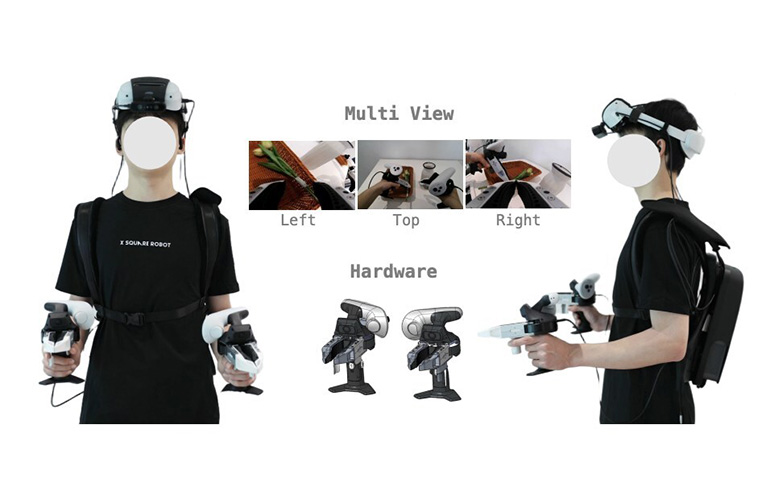
Introduction Within the rapidly evolving landscape of Smart Manufacturing and Robotics, the advent of innovative datasets and frameworks is paramount. The XRZero-G0 system developed by X Square Robot exemplifies this trend, addressing significant challenges in the field of robotics research. By offering an open-source, multimodal dataset comprising 2,000 hours of data, XRZero-G0 seeks to alleviate the data bottleneck that has hindered the advancement of embodied AI technologies. This initiative not only facilitates enhanced data collection but also fosters a seamless integration between human and machine perception, thereby paving the way for more capable and adaptable robotic systems. Main Goal and Achievement The primary objective of the XRZero-G0 initiative is to revolutionize the way training data for robotics is collected and utilized. The framework aims to reduce the reliance on extensive real-robot training data by up to 20 times under controlled conditions. This is accomplished through a systematic approach that incorporates robot-free data collection, ensuring a robust foundation for training AI algorithms. By standardizing the data collection process and allowing for reliable quality checks, XRZero-G0 enables the transfer of human-demonstrated tasks to novel robotic platforms, ultimately enhancing the effectiveness of robotic training methodologies. Advantages of XRZero-G0 Reduction in Data Requirements: The XRZero-G0 system significantly minimizes the volume of real-robot training data needed, which can streamline research and development processes. High-Quality Data Collection: With its advanced hardware-software integration, XRZero-G0 ensures that data is captured with remarkable precision, enhancing the overall quality of training datasets. Cross-Embodiment Policy Transfer: The framework allows for the transfer of learned tasks across different robotic platforms, which is crucial for the adaptability of robots in various operational environments. Automated Quality Inspection: The built-in automated inspection pipeline enhances data reliability by ensuring that all collected information meets stringent quality standards. Open Resource Availability: By open-sourcing the XRZero-G0 framework and the accompanying G0-Dataset, X Square Robot promotes collaboration and innovation within the robotics research community. Caveats and Limitations While the XRZero-G0 system presents numerous advantages, it is crucial to acknowledge certain limitations. The reliance on specific experimental conditions for achieving the stated reductions in data requirements may not universally apply across all robotic applications. Additionally, while the framework enhances data collection quality, the inherent complexity of real-world environments may still pose challenges that require further refinement of the data collection methodologies. Future Implications The integration of AI developments continues to shape the future landscape of Smart Manufacturing and Robotics. As embodied AI technologies advance, the potential for more sophisticated and responsive robotic systems increases. The XRZero-G0 framework not only supports current research endeavors but also lays the groundwork for future innovations that could lead to the development of general-purpose robots capable of performing complex tasks with minimal human intervention. Furthermore, as data generation approaches become more systematic and scalable, the role of AI in optimizing robotic performance will be pivotal, fostering a new era of automation that enhances productivity and efficiency across various industries. Conclusion The XRZero-G0 initiative by X Square Robot marks a significant step forward in addressing the challenges of data collection in robotics research. By emphasizing the importance of high-quality, standardized datasets, the framework facilitates the advancement of embodied AI technologies, ultimately contributing to the evolution of more capable and versatile robotic systems. As the field continues to progress, the integration of such innovative solutions will be essential in realizing the full potential of Smart Manufacturing and Robotics. Disclaimer The content on this site is generated using AI technology that analyzes publicly available blog posts to extract and present key takeaways. We do not own, endorse, or claim intellectual property rights to the original blog content. Full credit is given to original authors and sources where applicable. Our summaries are intended solely for informational and educational purposes, offering AI-generated insights in a condensed format. They are not meant to substitute or replicate the full context of the original material. If you are a content owner and wish to request changes or removal, please contact us directly. Source link : Click Here


