
Context In the pursuit of developing fair and responsible artificial intelligence (AI), measuring bias in machine learning models is of paramount importance. One key metric that has emerged in this context is the Bias Score, which serves as a framework for data scientists and AI engineers to identify and address hidden biases that often permeate language models. This metric is crucial for organizations striving to create equitable AI solutions, as it allows for early detection of biases that can adversely affect performance across diverse applications in Natural Language Processing (NLP). Understanding the Main Goal The primary objective of employing the Bias Score is to facilitate the development of AI systems that are not only effective but also equitable. Achieving this goal involves integrating the Bias Score into the model development lifecycle, enabling teams to proactively identify and mitigate biases in their AI systems. By recognizing these biases at early stages, organizations can enhance the fairness of their language models, increasing trust and reliability in AI applications. Advantages of Using Bias Score Quantitative Measurement: The Bias Score provides a numerical framework that allows for objective comparisons of bias levels across various models and datasets. This quantification aids teams in tracking improvements over time. Systematic Detection: Implementing the Bias Score enables the identification of biases that may be overlooked by human reviewers. Its structured approach captures subtle patterns that contribute to overall bias. Standardized Evaluation: The consistency of the Bias Score allows for comparative assessments across different AI models, supporting benchmarking efforts within the industry. Actionable Insights: The results derived from the Bias Score analysis provide clear indications of areas that require improvement, guiding specific strategies for bias mitigation. Regulatory Compliance: Utilizing the Bias Score can assist organizations in adhering to emerging AI regulations, demonstrating a commitment to ethical AI development. Enhanced Client Trust: Transparent reporting of bias metrics fosters confidence among clients and stakeholders, enhancing relationships through accountability. Caveats and Limitations Despite its advantages, the Bias Score is not without its limitations. Context sensitivity can lead to missed nuances that affect bias interpretation, especially in culturally diverse settings. Moreover, the effectiveness of the Bias Score is contingent upon the definitions of bias adopted by various stakeholders, which can lead to discrepancies in evaluation. Additionally, establishing appropriate benchmarks for what constitutes an unbiased model remains a challenge, as societal norms and perceptions of bias evolve over time. Future Implications The field of AI is continuously evolving, and the implications of developments in AI technologies are profound for bias measurement. As models become increasingly complex, the methodologies for bias detection, including the Bias Score, will need to adapt accordingly. Future advancements may see the integration of more sophisticated techniques that account for intersectionality and context sensitivity, enhancing the accuracy of bias assessments. Furthermore, the growing emphasis on ethical AI will likely drive organizations to prioritize fairness in their AI systems, reinforcing the role of metrics like the Bias Score in the development of responsible AI technologies. Conclusion In summary, the Bias Score serves as a critical tool for evaluating and mitigating bias in AI systems. By establishing a systematic approach to bias detection, organizations can foster greater equity in their AI solutions, leading to more reliable and inclusive technologies. As the landscape of AI continues to evolve, the importance of rigorous bias evaluation will only increase, underscoring the need for continuous improvement and adaptation in bias measurement practices. Disclaimer The content on this site is generated using AI technology that analyzes publicly available blog posts to extract and present key takeaways. We do not own, endorse, or claim intellectual property rights to the original blog content. Full credit is given to original authors and sources where applicable. Our summaries are intended solely for informational and educational purposes, offering AI-generated insights in a condensed format. They are not meant to substitute or replicate the full context of the original material. If you are a content owner and wish to request changes or removal, please contact us directly. Source link : Click Here

Context and Relevance In the realm of software management, Microsoft has announced the emergency release of the Windows 10 KB5072653 out-of-band update. This measure aims to address persistent installation issues associated with the November extended security updates (ESUs). As Windows 10 reached its end of support on October 14, 2025, the absence of new features or free security updates necessitates alternative solutions for both individual users and business clients. To facilitate ongoing usage, Microsoft offers ESUs, which are critical for ensuring continued security and compliance for systems still operating on Windows 10. Primary Objective and Implementation The primary goal of the KB5072653 update is to rectify installation errors that users have faced while attempting to apply the November 2025 security updates. Organizations affected by these issues can implement the KB5072653 preparation package to resolve the 0x800f0922 errors encountered during the ESU update installation. Upon successful installation of this package, users are expected to seamlessly deploy the November security update, thereby enhancing the security posture of their Windows 10 environments. Advantages of the KB5072653 Update Enhanced Security: The installation of KB5072653 allows organizations to apply critical security updates, thus safeguarding their systems against vulnerabilities. Improved Compliance: By addressing installation errors, this update helps businesses maintain compliance with security standards and practices mandated within their industry. Cost-Effective Solution: Extended Security Updates provide a financially viable option for organizations reluctant to transition to newer operating systems. The cost for enterprise customers is structured to ensure access to necessary updates over a three-year period. User Convenience: The automated installation procedure enhances user experience, minimizing the need for extensive technical intervention. Limitations and Considerations Despite the advantages, there are caveats. Some corporate administrators have encountered issues with Windows Server Update Services (WSUS) and System Center Configuration Manager (SCCM), which may not accurately reflect the need for the ESU even when devices are properly enrolled. This inconsistency necessitates ongoing vigilance from IT teams to manually verify compliance and update statuses. Future Implications of AI Developments As artificial intelligence continues to evolve, its integration into software management processes, including patch management and update deployment, is anticipated. AI-driven analytics could enhance the identification of vulnerabilities and streamline update processes, thereby minimizing downtime and improving system resilience. Furthermore, predictive analytics could offer insights into potential issues before they arise, allowing organizations to proactively address challenges associated with software updates and system compliance. Disclaimer The content on this site is generated using AI technology that analyzes publicly available blog posts to extract and present key takeaways. We do not own, endorse, or claim intellectual property rights to the original blog content. Full credit is given to original authors and sources where applicable. Our summaries are intended solely for informational and educational purposes, offering AI-generated insights in a condensed format. They are not meant to substitute or replicate the full context of the original material. If you are a content owner and wish to request changes or removal, please contact us directly. Source link : Click Here

Contextualizing VMware Migration in the Era of AI In recent years, the field of enterprise IT has undergone significant transformations, particularly concerning VMware-to-cloud migration strategies. Historically, chief information officers (CIOs) approached these migrations with caution, primarily due to the labor-intensive processes involved in dependency mapping and the challenges associated with rewriting legacy applications during the transition. However, the dynamics surrounding VMware platforms have shifted dramatically, driven by recent licensing changes that have introduced a new layer of uncertainty regarding their long-term viability. Concurrently, the acceleration of cloud-native innovations has prompted organizations to reassess their migration strategies. The CNCF’s 2024 Annual Survey reveals that an impressive 89% of organizations have begun to integrate cloud-native techniques into their operations. Moreover, the proportion of companies reporting that nearly all of their development and deployment processes are cloud-native has increased notably from 20% in 2023 to 24% in 2024. This trend is further corroborated by findings from IDC, highlighting that cloud service providers are emerging as crucial partners for organizations pursuing generative AI initiatives. Main Goal: Streamlining Migration Processes with AI The primary objective of enhancing VMware migration workflows through the incorporation of agentic AI lies in the pursuit of efficiency and cost-effectiveness. By leveraging AI technologies, enterprises can automate the mapping of dependencies and the adaptation of legacy applications, thereby minimizing the manual labor traditionally associated with these processes. This can lead to a more seamless transition to cloud environments, ultimately reducing operational risks and fostering innovation. Advantages of AI-Enhanced VMware Migration Increased Efficiency: AI can automate complex processes, significantly speeding up migration timelines and reducing the need for extensive human intervention. Cost-Effectiveness: By minimizing manual labor and reducing errors, organizations can lower their operational costs associated with migrations. Adaptability: AI systems can quickly analyze and adapt to changing environments, allowing for more agile responses to unforeseen challenges during migration. Enhanced Data Insights: AI can provide deeper analytical insights into data dependencies and application performance, enabling better decision-making throughout the migration process. Future-Proofing: By adopting cloud-native practices and leveraging AI, organizations can better prepare for future technological advancements and evolving market demands. Limitations and Considerations Despite the numerous advantages of integrating AI into VMware migration workflows, organizations must remain cognizant of potential limitations. These include the initial costs associated with implementing AI systems, the need for skilled personnel to oversee AI operations, and the potential for data security concerns during the migration process. Furthermore, organizations should evaluate the compatibility of existing applications with new AI technologies to ensure a smooth transition. Future Implications of AI in Migration Workflows The ongoing developments in AI technology are poised to significantly impact VMware migration strategies in the foreseeable future. As cloud computing continues to evolve, organizations that harness the power of AI will likely maintain a competitive edge in the marketplace. The integration of AI will not only enhance the migration process but also facilitate the creation of more innovative, agile, and responsive IT environments. Consequently, enterprises will be better equipped to meet the demands of an increasingly AI-driven economy, positioning themselves for sustainable growth and success. In conclusion, the convergence of AI and cloud-native technologies presents a compelling opportunity for organizations to revolutionize their VMware migration workflows. By embracing these advancements, enterprises can navigate the complexities of digital transformation with greater confidence and efficiency. Disclaimer The content on this site is generated using AI technology that analyzes publicly available blog posts to extract and present key takeaways. We do not own, endorse, or claim intellectual property rights to the original blog content. Full credit is given to original authors and sources where applicable. Our summaries are intended solely for informational and educational purposes, offering AI-generated insights in a condensed format. They are not meant to substitute or replicate the full context of the original material. If you are a content owner and wish to request changes or removal, please contact us directly. Source link : Click Here

Context The advent of artificial intelligence (AI) has heralded a transformative era in various domains, including healthcare, finance, and creative industries. However, the rapid integration of AI technologies, particularly in the realm of computer vision and image processing, raises significant questions regarding accountability and regulatory frameworks. For instance, consider a scenario where an AI diagnostic tool flags a patient as cancer-free, but a subsequent human examination reveals a late-stage tumor. This predicament underscores the critical disconnect between the capabilities of advanced AI systems and the existing legal structures designed to govern them. As AI continues to evolve, the pressing challenge remains: how do we establish accountability in a landscape where human oversight and algorithmic decision-making intersect? Main Goal and Achievements The primary goal articulated in the original post is to bridge the gap between the rapid advancements in AI technology and the existing legal frameworks governing its application, particularly in the context of computer vision and image processing. This goal can be achieved by developing adaptive regulatory approaches that are responsive to the unique characteristics of AI systems. Policymakers must create frameworks that account for the dynamic nature of AI, allowing for continuous monitoring and adjustments as these technologies evolve. By fostering collaboration between technologists, legal experts, and ethicists, we can establish governance structures that ensure both innovation and accountability. Advantages of AI in Computer Vision and Image Processing Enhanced Diagnostic Precision: AI algorithms can analyze vast datasets of medical images, identifying patterns and anomalies often imperceptible to human observers. Studies have shown that AI can outperform radiologists in detecting certain cancers, which can lead to earlier interventions and improved patient outcomes. Operational Efficiency: AI systems streamline workflows in healthcare settings by automating image analysis processes. This reduces the burden on healthcare professionals, allowing them to focus on patient care rather than routine diagnostic tasks. Consistent Performance: Unlike human practitioners, AI systems do not suffer from fatigue or cognitive biases. This consistency can lead to more reliable diagnostic results over time. Scalability: AI technologies can be scaled to analyze large volumes of images across multiple healthcare facilities, potentially improving access to high-quality diagnostics in underserved regions. Data-Driven Insights: The integration of AI in image processing allows for the extraction of actionable insights from historical data, enabling healthcare providers to make informed decisions based on comprehensive analytics. Caveats and Limitations While the advantages of AI in the field of computer vision and image processing are substantial, several caveats and limitations warrant consideration: Liability Gaps: As highlighted in the original post, determining accountability when AI systems contribute to diagnostic errors remains a significant challenge. Existing legal frameworks often do not adequately address scenarios involving AI, creating uncertainty about who is liable. Data Privacy Concerns: The use of large datasets for training AI models raises ethical questions around patient consent and privacy. AI systems may unintentionally reveal sensitive information about patients, necessitating robust data protection measures. Algorithmic Bias: Machine learning models can inherit biases present in the training data, leading to disparities in diagnostic accuracy across different demographic groups. Addressing these biases is critical to ensure equitable healthcare outcomes. Transparency Issues: The “black box” nature of many AI systems complicates efforts to provide clear explanations for automated decisions, raising concerns about compliance with regulations like the GDPR’s “right to explanation.” Future Implications The future of AI in computer vision and image processing is poised for significant evolution. As AI technologies continue to advance, we can anticipate several implications: Regulatory Evolution: Policymakers will need to adapt legal frameworks to accommodate the unique challenges posed by AI. This may include the development of new standards for accountability and liability specific to AI applications in healthcare. Increased Interdisciplinary Collaboration: The integration of AI into healthcare will necessitate ongoing collaboration among technologists, clinicians, legal experts, and ethicists to ensure that AI systems are developed and deployed responsibly. Greater Demand for AI Literacy: As AI becomes more embedded in professional practice, there will be a growing need for healthcare professionals to develop AI literacy, enabling them to effectively interact with and leverage AI technologies. Enhanced Patient Engagement: The incorporation of AI into diagnostic processes may empower patients through improved access to information and understanding of their health conditions, fostering more informed decision-making. Global Standardization: The international nature of AI development may lead to calls for standardized regulations that transcend national borders, facilitating a more cohesive approach to AI governance. “` Disclaimer The content on this site is generated using AI technology that analyzes publicly available blog posts to extract and present key takeaways. We do not own, endorse, or claim intellectual property rights to the original blog content. Full credit is given to original authors and sources where applicable. Our summaries are intended solely for informational and educational purposes, offering AI-generated insights in a condensed format. They are not meant to substitute or replicate the full context of the original material. If you are a content owner and wish to request changes or removal, please contact us directly. Source link : Click Here

Contextualizing the Legal Action Against Phishing Operations In a significant legal development, Google has initiated a lawsuit against a network of unidentified individuals engaged in promoting a sophisticated mobile phishing service known as Lighthouse. This service, rooted in China, facilitates the impersonation of numerous reputable brands, enabling scammers to disseminate fraudulent text messages that lure unsuspecting victims into revealing their payment card information. Filed in the Southern District of New York, Google’s complaint specifically targets 25 “John Doe” defendants, asserting that the Lighthouse phishing kit has perpetrated harm against over one million victims across 120 countries. Main Goal of the Legal Action The primary objective of Google’s lawsuit is to dismantle the operational framework of the Lighthouse phishing service. This legal action aims to unmask the identities of the alleged perpetrators and hold them accountable for their fraudulent activities. By leveraging the Racketeer Influenced and Corrupt Organizations (RICO) Act, Google seeks to illustrate the interconnected nature of the various threat actor groups involved in this extensive scheme, which collectively contribute to the execution of widespread phishing attacks. Advantages of Addressing Phishing Operations Protection of Consumer Trust: By targeting phishing operations like Lighthouse, Google aims to safeguard consumer trust in digital platforms. A reduction in phishing attacks fosters a more secure online environment, essential for the continued growth of e-commerce. Legal Precedent for Future Actions: This lawsuit could set a legal precedent that empowers other companies to pursue similar actions against phishing services, thereby enhancing collective cybersecurity efforts. Disruption of Criminal Networks: Google’s initiative may disrupt established networks engaged in phishing, making it increasingly challenging for fraudsters to operate efficiently. Awareness and Education: The visibility of this legal case raises awareness about the prevalence of phishing attacks, potentially leading to increased educational efforts aimed at informing consumers about online safety practices. Future Implications and the Role of AI The evolving landscape of cybercrime, especially in relation to phishing operations, is likely to be significantly influenced by advancements in artificial intelligence (AI). As AI technologies become more sophisticated, so too will the tactics employed by cybercriminals. For instance, AI can enhance the personalization and effectiveness of phishing attacks, making them more convincing to potential victims. Consequently, organizations must continually adapt their cybersecurity strategies to counteract these evolving threats. Moreover, as AI develops, it may also offer innovative solutions for detecting and mitigating phishing attempts. Machine learning algorithms could analyze patterns of phishing behavior, allowing for more proactive measures in identifying and neutralizing threats before they reach potential victims. This duality of risk and opportunity underscores the need for ongoing vigilance and innovation within the cybersecurity landscape. Disclaimer The content on this site is generated using AI technology that analyzes publicly available blog posts to extract and present key takeaways. We do not own, endorse, or claim intellectual property rights to the original blog content. Full credit is given to original authors and sources where applicable. Our summaries are intended solely for informational and educational purposes, offering AI-generated insights in a condensed format. They are not meant to substitute or replicate the full context of the original material. If you are a content owner and wish to request changes or removal, please contact us directly. Source link : Click Here
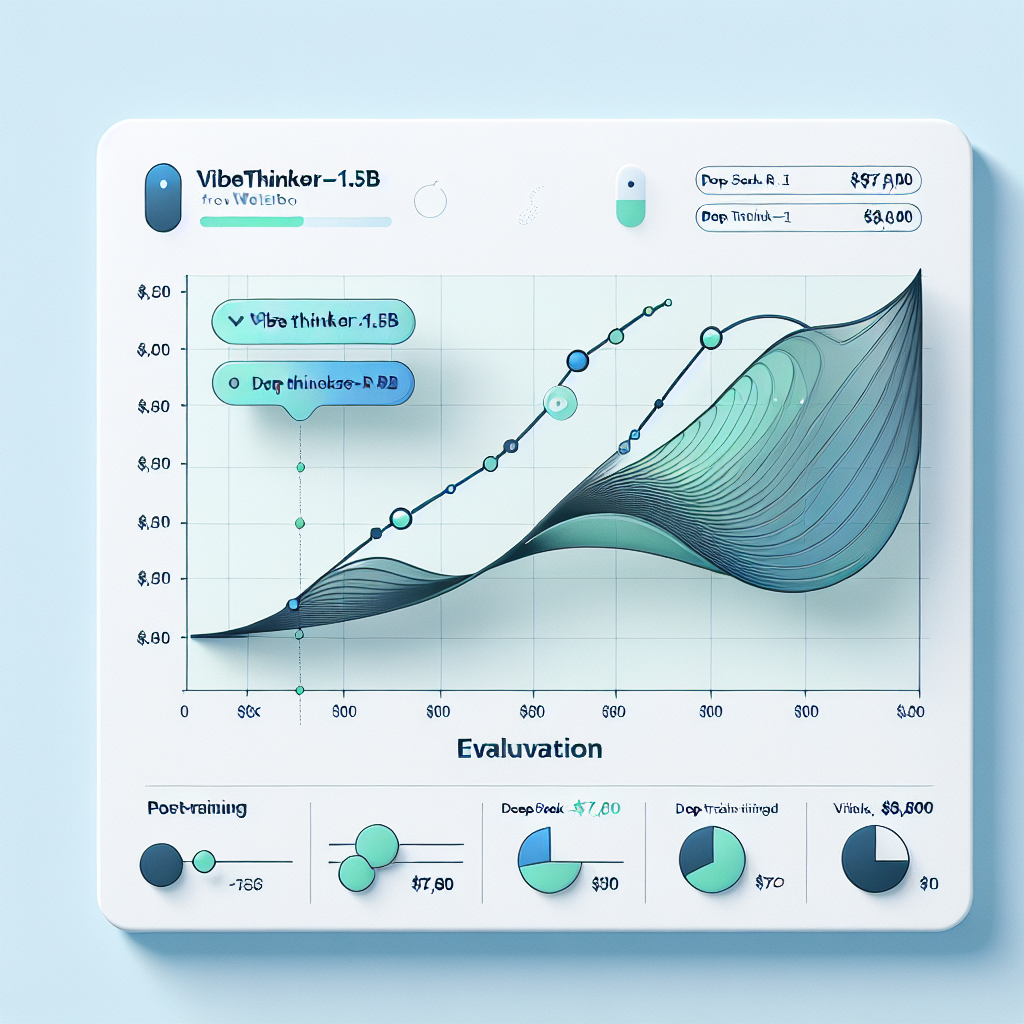
Introduction In late 2025, Weibo, a prominent Chinese social media platform, made a significant advancement in the field of open-source artificial intelligence (AI) with the release of its new language model, VibeThinker-1.5B. This 1.5 billion parameter model has emerged as a notable competitor within the generative AI landscape, particularly against other high-capacity models such as DeepSeek-R1. The release of VibeThinker-1.5B is not just a technological milestone; it represents a paradigm shift in how AI models can be structured, trained, and deployed, especially considering its effective post-training budget of only $7,800. Context and Main Goal The primary goal of Weibo’s VibeThinker-1.5B is to challenge the conventional wisdom surrounding the scale and resource requirements of high-performance language models. Traditional models often rely on extensive parameters and significant computational resources to achieve superior reasoning capabilities. VibeThinker-1.5B, however, demonstrates that compact models can achieve exceptional performance in reasoning tasks with efficient training methodologies. This goal is achieved through innovative approaches in training that prioritize diversity in responses and effective reinforcement learning techniques. Advantages of VibeThinker-1.5B The advantages of VibeThinker-1.5B are manifold, as evidenced by its performance metrics and resource efficiency: 1. **Cost Efficiency**: With a post-training budget of merely $7,800, VibeThinker-1.5B is 30–60 times less expensive to train compared to larger models like DeepSeek-R1, which can cost between $294,000 and $535,000. This affordability opens new avenues for smaller enterprises and researchers who may have limited budgets. 2. **High Performance**: Despite its smaller size, VibeThinker-1.5B has achieved benchmark-topping performance in reasoning tasks, even outperforming models that are hundreds of times larger. For instance, it excelled in structured reasoning benchmarks, demonstrating that size is not the sole determinant of model effectiveness. 3. **Diversity-First Training Approach**: Utilizing the Spectrum-to-Signal Principle (SSP), VibeThinker-1.5B enhances its learning by maximizing diversity in potential solutions. This approach allows it to explore reasoning spaces more effectively and achieve superior reasoning capabilities without relying on massive parameter counts. 4. **Cross-Domain Reasoning**: The model has shown remarkable performance across various domains, illustrating its versatility. For example, it achieved high scores in benchmarks such as AIME25 and LiveCodeBench v6, indicating its capability to handle different types of reasoning tasks successfully. 5. **Deployment Flexibility**: VibeThinker-1.5B is small enough for deployment on edge devices, such as mobile phones, while also being cost-effective in terms of inference. This flexibility allows organizations to integrate AI capabilities into everyday applications without incurring substantial infrastructure costs. Limitations and Caveats While VibeThinker-1.5B offers impressive capabilities, it is essential to consider its limitations: – **General Knowledge Reasoning**: Although it excels in structured logical tasks, VibeThinker-1.5B lags behind larger models in general knowledge reasoning tasks (e.g., GPQA). This limitation suggests that while smaller models can outperform larger ones in specific areas, they may not possess the same breadth of knowledge. – **Specialization Trade-offs**: The model’s focus on structured reasoning may come at the cost of its ability to handle wide-ranging encyclopedic recall, a common trait found in larger architectures. Organizations must weigh these trade-offs when selecting models for specific applications. Future Implications The advancements represented by VibeThinker-1.5B are indicative of a broader shift in the AI landscape towards more efficient and accessible models. As AI technology continues to evolve, several implications can be anticipated: 1. **Increased Accessibility**: The success of compact models like VibeThinker-1.5B may encourage more organizations, especially startups and academic institutions, to engage with AI technologies, fostering innovation and research in the field. 2. **Shift in Training Methodologies**: The emphasis on diverse training approaches could lead to the development of new training paradigms that prioritize efficiency and performance over sheer size. This shift may redefine best practices in model development. 3. **Enhanced Deployment Opportunities**: As models become more resource-efficient, the potential for deploying AI in various settings—ranging from mobile applications to edge devices—will expand, thereby enhancing user experiences and accessibility. 4. **Regulatory Considerations**: As AI models become more prevalent, the need for robust frameworks governing their use will intensify. Companies will need to navigate regulatory landscapes while ensuring ethical deployment and use of AI technologies. Conclusion Weibo’s release of VibeThinker-1.5B marks a critical juncture in the generative AI models and applications industry. By demonstrating that smaller models can achieve high-performance outcomes, Weibo challenges prevailing assumptions about model size and resource requirements. The implications of this development extend beyond technical achievements, potentially reshaping the market landscape and influencing future AI research and deployment strategies. For Generative AI scientists, VibeThinker-1.5B is not merely a milestone; it represents a new frontier in the pursuit of intelligent, efficient, and accessible AI solutions. Disclaimer The content on this site is generated using AI technology that analyzes publicly available blog posts to extract and present key takeaways. We do not own, endorse, or claim intellectual property rights to the original blog content. Full credit is given to original authors and sources where applicable. Our summaries are intended solely for informational and educational purposes, offering AI-generated insights in a condensed format. They are not meant to substitute or replicate the full context of the original material. If you are a content owner and wish to request changes or removal, please contact us directly. Source link : Click Here
Context In the contemporary corporate landscape, the dialogue surrounding Artificial Intelligence (AI) has evolved significantly. The prevalent concern is no longer whether to integrate AI into business operations but rather the urgency and methodology of such an integration. However, a pervasive challenge exists, particularly for Chief Information Officers (CIOs) and Chief Financial Officers (CFOs): the reliance on legacy Enterprise Data Warehouses (EDWs). This reliance poses a formidable barrier to the deployment of AI capabilities. The focus has traditionally been on the costs associated with migrating to a modern data architecture, yet this perspective is fundamentally flawed. The true financial threat lies in the hidden costs incurred from inaction, which culminates in a substantial accumulation of technical debt that severely undermines competitive viability in the age of AI. Main Goal and Its Achievement The primary objective articulated in the original content is to advocate for a shift in perspective regarding data modernization. It emphasizes the need for organizations to recognize the Total Cost of Inaction (TCI)—a comprehensive framework that quantifies the financial repercussions of delaying the adoption of AI technologies. To achieve this goal, organizations must adopt a holistic approach that transcends conventional maintenance cost assessments. By embracing this new framework, businesses can better articulate the strategic value of modernization, thus reframing it as an investment with tangible returns rather than a mere expense. The implementation of a robust data modernization strategy is essential for organizations seeking to harness the full potential of AI technologies. Advantages of Embracing AI-Ready Infrastructure Reduced Direct Costs: Transitioning from legacy EDWs to modern data architectures can significantly lower ongoing licensing and maintenance fees that burden organizations. Enhanced Operational Efficiency: Modern systems streamline processes, reducing the time data teams spend on manual interventions and allowing them to focus on value-added activities. Improved Integration Capabilities: Modern cloud-based architectures facilitate seamless integration with AI and machine learning services, promoting agility and innovation. Mitigated Security Risks: Upgrading to contemporary systems enhances security protocols, thereby reducing compliance risks associated with stringent data privacy regulations. Increased Revenue Opportunities: Organizations that leverage AI can unlock new revenue streams by improving customer insights and enabling predictive analytics. Caveats and Limitations While the advantages of modernization are compelling, it is crucial to acknowledge certain limitations. Legacy systems often present significant sunk costs that can deter organizations from making the necessary transition. Additionally, the migration process itself can be complex and fraught with risks if not managed properly. Therefore, organizations must engage in thorough planning and risk assessment to navigate the transition effectively. Future Implications of AI Developments The trajectory of AI development is poised to have profound implications for businesses. As AI technologies continue to evolve, organizations that remain tethered to legacy systems will increasingly find themselves at a competitive disadvantage. The ability to leverage AI for data-driven decision-making will become a critical differentiator in the market. Furthermore, advancements in AI capabilities will likely necessitate ongoing adaptations in data architecture to accommodate new tools and methodologies. Thus, organizations must not only modernize their infrastructure but also cultivate a culture of continuous innovation to remain relevant in an ever-evolving technological landscape. Disclaimer The content on this site is generated using AI technology that analyzes publicly available blog posts to extract and present key takeaways. We do not own, endorse, or claim intellectual property rights to the original blog content. Full credit is given to original authors and sources where applicable. Our summaries are intended solely for informational and educational purposes, offering AI-generated insights in a condensed format. They are not meant to substitute or replicate the full context of the original material. If you are a content owner and wish to request changes or removal, please contact us directly. Source link : Click Here

Contextualizing Communication in Data Analytics and Insights In the realm of Data Analytics and Insights, effective communication is paramount for fostering collaboration among data engineers and other stakeholders. A common challenge faced by professionals in this domain is the frequent reliance on screenshots to convey complex information, such as code snippets or error logs. These visual representations, while seemingly convenient, often lack the necessary context and detail required for thorough comprehension and effective problem-solving. For instance, when a colleague shares a screenshot of a code segment, critical questions arise: How is a particular variable defined? What is the role of that variable in a broader context? Without the ability to engage directly with the text, data engineers may be forced to manually extract information, relying on their memory or external tools to piece together the relevant context. This can significantly hinder efficiency and increase the likelihood of miscommunication. Main Goal of Effective Communication The primary goal of enhancing communication practices within the Data Analytics and Insights field is to facilitate clarity and reduce ambiguity in technical discussions. This can be achieved by promoting the use of text-based communication methods over screenshots. By encouraging colleagues to copy and paste relevant code or error messages, data engineers can quickly access the necessary information, enabling them to analyze issues more effectively and respond promptly. Advantages of Textual Communication Enhanced Clarity: Textual communication allows for the inclusion of additional context, which is often lost in screenshots. Data engineers can examine the surrounding code or error messages, leading to more informed analyses. Improved Efficiency: Copying and pasting text eliminates the need for manual transcription, saving valuable time and reducing the cognitive load on data engineers who must decipher screenshots. Facilitation of Collaboration: Text-based communication encourages seamless sharing of information through platforms like GitHub, enabling team members to access the same resources and collaborate more effectively. Reduction of Miscommunication: By providing complete text rather than fragmented snippets, the potential for misunderstandings is minimized, leading to quicker resolutions to technical issues. However, it is essential to acknowledge that there are limitations to this approach. Situations may arise where visual representations are necessary to illustrate specific aesthetic issues or when the layout of the text significantly contributes to understanding. Thus, screenshots should be used judiciously, only when they serve a clear purpose in communication. Future Implications in the Era of AI As artificial intelligence (AI) continues to evolve, its impact on communication within the Data Analytics and Insights industry is expected to be profound. AI-driven tools may facilitate the automatic extraction of contextual information from code and error logs, thus reducing the reliance on screenshots. For instance, intelligent coding assistants could analyze code snippets and provide relevant context or suggestions, streamlining the debugging process for data engineers. Moreover, advancements in natural language processing could enhance text-based communications by allowing for more intuitive searches and queries, enabling data engineers to locate relevant information more effectively. As AI becomes increasingly integrated into workflows, the potential for more efficient and accurate communication will likely reshape the landscape of collaboration in data analytics. Disclaimer The content on this site is generated using AI technology that analyzes publicly available blog posts to extract and present key takeaways. We do not own, endorse, or claim intellectual property rights to the original blog content. Full credit is given to original authors and sources where applicable. Our summaries are intended solely for informational and educational purposes, offering AI-generated insights in a condensed format. They are not meant to substitute or replicate the full context of the original material. If you are a content owner and wish to request changes or removal, please contact us directly. Source link : Click Here

Context and Relevance to Applied Machine Learning The rapid evolution of technology necessitates that hardware and software systems remain current to function effectively. This principle is especially pertinent in the realm of Applied Machine Learning (ML), where outdated tools can severely hinder operational performance. A recent advisory regarding Starlink hardware exemplifies this urgency, as users are prompted to update their devices to avoid permanent inoperability. Similarly, ML practitioners must ensure that their tools, algorithms, and models are consistently updated to leverage advancements in data processing and computational efficiency. Main Goal and Achievement Strategies The central objective of the original advisory is to inform users of Starlink dishes about the impending obsolescence of outdated firmware. Specifically, hardware utilizing the 2024.05.0 firmware must be updated by November 17, 2025, to maintain functionality. This can be achieved through a straightforward three-step process: powering up the dish outdoors, ensuring a clear view of the sky, and using the accompanying application to monitor the update progress. By following these steps, users can prevent their devices from becoming permanently inoperable, thereby maximizing their investment in technology. Advantages of Timely Updates Prevention of Obsolescence: Regular updates protect hardware from becoming obsolete. In Applied ML, this principle holds true as outdated algorithms may lead to decreased accuracy and relevance in predictions. Enhanced Connectivity: Maintaining updated firmware ensures that devices remain connected to necessary networks. In ML applications, connectivity is vital for data retrieval and processing, which directly impacts model performance. Cost-Effectiveness: By avoiding the costs associated with replacing outdated devices, users can allocate resources more effectively. This is particularly crucial for ML practitioners who may face significant expenses in acquiring new hardware or software tools. Increased Performance: Updates often include enhancements that improve device functionality, much like how ML updates can improve algorithm performance through optimized code or new features. Future Implications for Applied Machine Learning As the field of AI continues to advance, the implications for Applied Machine Learning are profound. The integration of more sophisticated algorithms and hardware capabilities will demand that practitioners remain vigilant about updates. Continuous learning and adaptation will be essential, particularly as AI models evolve to process larger datasets and incorporate more complex functionalities. The ability to leverage updated technologies will not only enhance operational efficiency but also foster innovation in ML applications, thereby shaping future industry standards. Disclaimer The content on this site is generated using AI technology that analyzes publicly available blog posts to extract and present key takeaways. We do not own, endorse, or claim intellectual property rights to the original blog content. Full credit is given to original authors and sources where applicable. Our summaries are intended solely for informational and educational purposes, offering AI-generated insights in a condensed format. They are not meant to substitute or replicate the full context of the original material. If you are a content owner and wish to request changes or removal, please contact us directly. Source link : Click Here

Contextual Overview The ongoing evolution of artificial intelligence (AI) necessitates robust frameworks for evaluating the performance of AI agents within practical environments. The recent release of Terminal-Bench 2.0 and Harbor represents a significant advancement in this area, offering a comprehensive benchmarking suite and a versatile framework for testing AI agents in containerized environments. This dual release is designed to alleviate persistent challenges in the assessment and optimization of AI agents, particularly those intended for autonomous operation in real-world developer settings. Main Goal of the Releases The primary objective of Terminal-Bench 2.0 and Harbor is to standardize the evaluation process of AI agents by providing a set of rigorously defined tasks and a scalable infrastructure for testing. By introducing a more challenging and thoroughly validated task set, Terminal-Bench 2.0 replaces its predecessor, enhancing the assessment of frontier model capabilities. Harbor complements this by facilitating the deployment and evaluation of AI agents across extensive cloud infrastructures, promoting efficiency and consistency in testing. Advantages of Terminal-Bench 2.0 and Harbor Improved Task Validation: Terminal-Bench 2.0 includes 89 meticulously validated tasks, enhancing the reliability and reproducibility of benchmark results. This focus on task quality ensures that the performance metrics are meaningful and actionable. Scalability: Harbor’s architecture supports large-scale evaluations, allowing researchers to deploy and assess AI agents across thousands of cloud containers. This scalability is crucial for accommodating the growing complexity of AI applications. Integration with Diverse Architectures: Harbor is designed to work seamlessly with both open-source and proprietary agents, supporting various architectures and fostering innovation across the AI landscape. Standardization of Evaluation Processes: The combination of Terminal-Bench 2.0 and Harbor promotes a unified evaluation framework, paving the way for consistent methodologies in AI agent assessment. Accessibility for Researchers: The public availability of Harbor and its supporting documentation enables researchers and developers to easily test and submit their agents, fostering collaboration and knowledge sharing within the AI community. However, potential limitations include the reliance on cloud infrastructure, which may pose accessibility issues for smaller research groups or those in resource-limited settings. Additionally, the evolving nature of AI technologies may necessitate ongoing updates to the benchmark tasks to maintain relevance. Future Implications The advancements represented by Terminal-Bench 2.0 and Harbor signal a transformative shift in the landscape of AI research and development. As AI models become increasingly complex and integrated into diverse applications, the need for robust evaluation frameworks will grow. This will likely lead to the establishment of standardized benchmarks across various domains, facilitating comparison and collaboration among researchers and practitioners. Furthermore, as generative AI models continue to evolve, their deployment in operational settings will require even more rigorous testing processes to ensure reliability and safety. Disclaimer The content on this site is generated using AI technology that analyzes publicly available blog posts to extract and present key takeaways. We do not own, endorse, or claim intellectual property rights to the original blog content. Full credit is given to original authors and sources where applicable. Our summaries are intended solely for informational and educational purposes, offering AI-generated insights in a condensed format. They are not meant to substitute or replicate the full context of the original material. If you are a content owner and wish to request changes or removal, please contact us directly. Source link : Click Here


