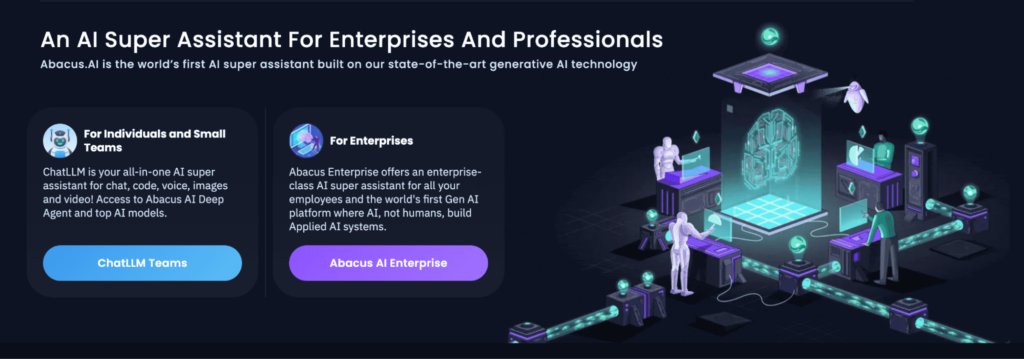
Context As the landscape of artificial intelligence (AI) continues to evolve, tools that facilitate Natural Language Understanding (NLU) and Language Understanding (LU) are becoming increasingly crucial for professionals in the field. Abacus AI, with its offerings like ChatLLM, DeepAgent, and the Enterprise platform, stands out as a comprehensive solution that integrates multiple AI models and functionalities. This review synthesizes insights from user experiences to evaluate how Abacus AI addresses the diverse needs of NLU scientists, providing a nuanced approach to understanding and leveraging AI capabilities. Primary Goal and Achievements The main objective highlighted in the original review is to present an accessible yet powerful AI solution that serves both individual developers and enterprise-level applications. Abacus AI achieves this by consolidating multiple AI models and functionalities into a single platform, significantly reducing costs while enhancing usability. This not only empowers users to engage with various AI models but also allows for seamless integration of advanced features that assist in automating tasks and conducting comprehensive analyses. Advantages of Abacus AI Cost-Effectiveness: For a subscription fee of $10/month, users gain access to a wide array of advanced AI models, which significantly undercuts the costs associated with purchasing individual subscriptions for similar services. This value proposition is particularly beneficial for small teams or individual developers. Comprehensive Toolset: The platform encompasses numerous features, including document analysis, web search integration, image, and video generation. These tools enhance the ability of NLU scientists to process and analyze diverse types of content efficiently. Team Collaboration: The unlimited team member functionality promotes collaborative efforts, making it easier for teams to share projects and resources. This feature is essential for NLU scientists who often work in interdisciplinary teams. Autonomous Capabilities: DeepAgent introduces a level of autonomy that allows users to automate complex processes, such as building functional applications and conducting detailed research. This autonomy can save time and reduce the burden on NLU scientists, allowing them to focus on more strategic tasks. Enterprise Features: The platform’s enterprise-level offerings include end-to-end MLOps capabilities, predictive analytics, and compliance with security standards. These features are crucial for organizations that require robust AI solutions for large-scale operations. Caveats and Limitations While the platform offers a range of functionalities, its complexity may overwhelm absolute beginners who seek straightforward AI solutions. Users with a need for maximum GPU control or those in academic settings may find the platform lacking in certain advanced features necessary for high-performance computing. Some users have reported occasional hiccups in performance, which could pose challenges for teams that rely on consistent and immediate support. Future Implications The ongoing advancements in AI technology, particularly in NLU and LU, suggest a promising trajectory for platforms like Abacus AI. As AI models continue to develop, the potential for enhanced collaboration and automation will likely redefine the workflows of NLU scientists. The integration of machine learning operations with real-time data processing will facilitate more sophisticated analyses, enabling researchers and developers to derive insights that were previously unattainable. Furthermore, as AI becomes more ingrained in various industries, the demand for tools that efficiently manage and leverage these technologies will only increase, reinforcing the relevance of comprehensive platforms like Abacus AI. Disclaimer The content on this site is generated using AI technology that analyzes publicly available blog posts to extract and present key takeaways. We do not own, endorse, or claim intellectual property rights to the original blog content. Full credit is given to original authors and sources where applicable. Our summaries are intended solely for informational and educational purposes, offering AI-generated insights in a condensed format. They are not meant to substitute or replicate the full context of the original material. If you are a content owner and wish to request changes or removal, please contact us directly. Source link : Click Here

Context The study of toponymy, or the investigation of place names, plays a significant role in understanding geographical data and its implications within the field of Data Analytics and Insights. This discipline encompasses the analysis of various geographical identifiers, offering profound insights into cultural, historical, and linguistic aspects of specific locations. The relevance of toponymy extends to data engineers, who leverage this information to enhance data quality and facilitate more effective data modeling techniques. Main Goal and Achievement The primary goal articulated in the original post revolves around the utilization of the BDTOPO database, France’s most comprehensive topographic Geographic Information System (GIS), which provides access to detailed place names. Data engineers can achieve this goal by harnessing the vast dataset to enrich their spatial analyses and support decision-making processes. By integrating toponymic data into their projects, they can create more contextually relevant data visualizations, improve geospatial queries, and enhance the overall robustness of their analyses. Advantages of Utilizing Toponymy in Data Analytics Enhanced Data Contextualization: Toponymy allows for a richer understanding of geographical data, enabling data engineers to incorporate cultural and historical significance into their analyses. Improved Geospatial Queries: By understanding the linguistic patterns in place names, data engineers can refine their geospatial queries, potentially leading to more accurate results and insights. Informed Decision Making: The integration of toponymic data can lead to more informed decision-making processes by providing a deeper context for geographical trends and patterns. Support for Advanced Visualizations: Utilizing toponymic data enhances the quality of visualizations, making them more informative and user-friendly for stakeholders. Historical Analysis: Toponymy offers insights into historical changes in geographical names, which can be instrumental in longitudinal studies and trend analysis. Caveats and Limitations While the advantages of utilizing toponymy are substantial, there are inherent limitations. The accuracy of place names may vary based on the source, and discrepancies can arise in data interpretation. Furthermore, the massive size of databases like BDTOPO can present challenges in terms of data processing and management, necessitating robust computational resources and skilled personnel. Future Implications The evolution of artificial intelligence (AI) holds significant promise for the field of toponymy and its applications in data analytics. As machine learning algorithms become more sophisticated, they will enable data engineers to automate the extraction and analysis of toponymic data, increasing efficiency and accuracy. Additionally, AI can facilitate the identification of patterns and trends within vast datasets, thereby enhancing predictive analytics capabilities. The future landscape of data analytics will likely see an increased integration of AI-driven tools that leverage toponymic insights, leading to more nuanced and actionable data interpretations. Conclusion In summary, the incorporation of toponymy into data analytics presents numerous advantages for data engineers, from enhanced contextualization of data to improved decision-making processes. Despite certain limitations, the future of this field, especially with the advent of AI developments, is poised for significant advancements that will further enrich the understanding of geographical data and its implications. Disclaimer The content on this site is generated using AI technology that analyzes publicly available blog posts to extract and present key takeaways. We do not own, endorse, or claim intellectual property rights to the original blog content. Full credit is given to original authors and sources where applicable. Our summaries are intended solely for informational and educational purposes, offering AI-generated insights in a condensed format. They are not meant to substitute or replicate the full context of the original material. If you are a content owner and wish to request changes or removal, please contact us directly. Source link : Click Here

Introduction The rapid advancement of specialized AI agents is transforming the landscape of modern business operations. As organizations increasingly adopt agentic AI technologies, they are tasked with determining the most effective AI agents to develop in order to address their unique challenges. This blog post explores the implications of specialized AI agents within the Generative AI Models & Applications sector, highlighting their significant impact on operational efficiency and innovation. Main Goals of Specialized AI Agents The primary goal of specialized AI agents is to enhance business processes through tailored solutions that leverage proprietary data and domain expertise. Organizations are transitioning from generic, one-size-fits-all AI models to customized systems that can better understand and address specific use cases. This shift aims to drive faster outcomes and foster long-term AI adoption by aligning AI capabilities with the unique demands and workflows of various industries. Structured Advantages of Specialized AI Agents Increased Efficiency: Specialized AI agents automate routine tasks, thereby allowing human personnel to concentrate on complex decision-making. For instance, CrowdStrike’s AI agents significantly improve the accuracy of alert triage, enhancing productivity while reducing manual efforts. Enhanced Customization: By developing agents that cater to specific business needs, organizations can achieve performance levels that generic models cannot match. Companies like PayPal utilize specialized agents to facilitate conversational commerce, resulting in reduced latency and improved user experiences. Scalability: The modular design of specialized AI agents allows businesses to scale their solutions effectively. This is evident in Synopsys’s implementation of agentic AI frameworks that boost productivity in chip design workflows, enabling rapid adaptation to evolving engineering tasks. Long-term Viability: Specialized agents promote sustainable AI adoption by continuously improving through iterative training and fine-tuning. This ensures that as business needs evolve, the AI systems remain relevant and effective. While the advantages of specialized AI agents are substantial, organizations must also consider limitations such as the initial investment required for development and the ongoing need for data management and model retraining. Future Implications of Specialized AI Agents The trajectory of AI development suggests that the adoption of specialized AI agents will continue to rise, leading to profound changes within various industries. As companies increasingly leverage generative AI models, the integration of these agents will likely result in more sophisticated applications across sectors such as finance, healthcare, and cybersecurity. Furthermore, advancements in AI technologies will facilitate the creation of agents capable of performing complex tasks, thereby enhancing their utility in real-world applications. This evolution will not only redefine operational efficiency but also reshape the workforce dynamics as AI agents become collaborative partners within organizational ecosystems. Conclusion In summary, the emergence of specialized AI agents represents a significant advancement in the application of generative AI models. By focusing on tailored solutions that leverage proprietary knowledge and domain expertise, organizations can harness the full potential of AI technologies. As the landscape of business continues to evolve, the ongoing refinement and development of specialized AI agents will be crucial in driving innovation and maintaining competitive advantage in an increasingly complex marketplace. Disclaimer The content on this site is generated using AI technology that analyzes publicly available blog posts to extract and present key takeaways. We do not own, endorse, or claim intellectual property rights to the original blog content. Full credit is given to original authors and sources where applicable. Our summaries are intended solely for informational and educational purposes, offering AI-generated insights in a condensed format. They are not meant to substitute or replicate the full context of the original material. If you are a content owner and wish to request changes or removal, please contact us directly. Source link : Click Here

Contextual Overview of Digital Resilience in the Agentic AI Era As global investments in artificial intelligence (AI) are projected to reach $1.5 trillion in 2025, a significant gap persists between technological advancement and organizational preparedness. According to recent findings, less than half of business leaders express confidence in their organizations’ ability to ensure service continuity, security, and cost management during unforeseen disruptions. This lack of assurance is compounded by the complexities introduced by agentic AI, which necessitates a comprehensive reevaluation of digital resilience strategies. Organizations are increasingly adopting the concept of a data fabric—an integrated architectural framework that interlinks and governs data across various business dimensions. This approach dismantles silos and allows for real-time access to enterprise-wide data, thereby equipping both human teams and agentic AI systems to better anticipate risks, mitigate issues proactively, recover swiftly from setbacks, and sustain operational continuity. Understanding Machine Data: The Foundation of Agentic AI and Digital Resilience Historically, AI models have predominantly relied on human-generated data such as text, audio, and video. However, the advent of agentic AI necessitates a deeper understanding of machine data—comprising logs, metrics, and telemetry produced by devices, servers, systems, and applications within an organization. Access to this data must be seamless and real-time to harness the full potential of agentic AI in fostering digital resilience. The absence of comprehensive integration of machine data can severely restrict AI capabilities, leading to missed anomalies and the introduction of errors. As noted by Kamal Hathi, senior vice president and general manager of Splunk (a Cisco company), agentic AI systems depend on machine data for contextual comprehension, outcome simulation, and continuous adaptation. Thus, the management of machine data emerges as a critical element for achieving digital resilience. Hathi describes machine data as the “heartbeat of the modern enterprise,” emphasizing that agentic AI systems are driven by this essential pulse, which requires real-time information access. Effective operation of these intelligent agents hinges on their direct engagement with the intricate flow of machine data, necessitating that AI models are trained on the same data streams. Despite the recognized importance of machine data, few organizations have achieved the level of integration required to fully activate agentic systems. This limitation not only constrains potential applications of agentic AI but also raises the risk of data anomalies and inaccuracies in outputs and actions. Historical challenges faced by natural language processing (NLP) models highlight the importance of foundational fluency in machine data to avoid biases and inconsistencies. The rapid pace of AI development poses additional challenges for organizations striving to keep up. Hathi notes that the speed of innovation may inadvertently introduce risks that organizations are ill-equipped to manage. Specifically, relying on traditional large language models (LLMs) trained on human-centric data may not suffice for maintaining secure, resilient, and perpetually available systems. Strategizing a Data Fabric for Enhanced Resilience To overcome existing shortcomings and cultivate digital resilience, technology leaders are encouraged to adopt a data fabric design tailored to the requirements of agentic AI. This strategy involves weaving together fragmented assets spanning security, information technology (IT), business operations, and network infrastructure to establish an integrated architecture. Such an architecture connects disparate data sources, dismantles silos, and facilitates real-time analysis and risk management. Main Goal and Its Achievement The primary objective articulated in the original content is the enhancement of digital resilience through the effective integration of machine data within a data fabric framework. Achieving this goal involves fostering a seamless connection among various data sources, which enables both human and AI systems to engage with real-time data analytics effectively. This integration is vital for anticipating risks and ensuring operational continuity in an increasingly complex AI landscape. Advantages of Implementing a Data Fabric Enhanced Decision-Making: Integrated real-time data empowers both human teams and AI systems to make informed decisions, thus reducing the likelihood of errors. Proactive Risk Management: Access to comprehensive machine data allows for the identification and mitigation of potential risks before they escalate into significant issues. Operational Continuity: Organizations can sustain operations even in the face of unexpected disruptions, thereby maintaining service continuity and customer trust. Scalability: A well-designed data fabric allows organizations to scale their operations and integrate new technologies without significant disruption. Limitations and Considerations Despite the numerous advantages, organizations must also consider potential limitations, such as the initial investment required to develop a robust data fabric and the ongoing need for data governance and management. Furthermore, organizations must ensure that the AI systems are trained on high-quality, comprehensive machine data to avoid inaccuracies and biases. Future Implications for AI Research and Innovation The ongoing evolution of AI technologies will significantly impact the realm of digital resilience. As AI systems become more autonomous and integrated into critical infrastructure, the necessity for organizations to invest in data fabric architectures will become paramount. Future advancements in AI will likely necessitate even more sophisticated data management practices, emphasizing the importance of machine data oversight to preempt operational risks. As organizations strive to keep pace with rapid technological advancements, those that successfully implement comprehensive data fabrics will likely lead in operational resilience and competitive advantage. Disclaimer The content on this site is generated using AI technology that analyzes publicly available blog posts to extract and present key takeaways. We do not own, endorse, or claim intellectual property rights to the original blog content. Full credit is given to original authors and sources where applicable. Our summaries are intended solely for informational and educational purposes, offering AI-generated insights in a condensed format. They are not meant to substitute or replicate the full context of the original material. If you are a content owner and wish to request changes or removal, please contact us directly. Source link : Click Here

Context In the evolving landscape of software development, Large Language Models (LLMs) have emerged as pivotal assets for developers, particularly those working on Apple platforms. However, the integration of LLMs remains a significant challenge due to disparate APIs and varying requirements across different model providers. This complexity often leads to heightened development friction, deterring developers from fully exploring the potential of local, open-source models. The introduction of AnyLanguageModel aims to streamline this integration process, thereby enhancing the usability of LLMs for developers targeting Apple’s ecosystem. Main Goal and Its Achievement The primary objective of AnyLanguageModel is to simplify the integration of LLMs by providing a unified API that seamlessly supports various model providers. This is achieved by allowing developers to replace existing import statements with a single line of code, thereby maintaining a consistent interface regardless of the underlying model. This streamlined approach not only reduces the technical overhead associated with switching between different model providers but also encourages the adoption of local, open-source models that can operate effectively on Apple devices. Advantages of AnyLanguageModel Simplified Integration: Developers can switch from importing Apple’s Foundation Models to AnyLanguageModel with minimal code alteration, thus enhancing productivity. Support for Multiple Providers: The framework accommodates a diverse set of model providers, including Core ML, MLX, and popular cloud services like OpenAI and Anthropic, offering developers the flexibility to choose models that best fit their needs. Reduced Experimentation Costs: By lowering the technical barriers and enabling easier access to local models, developers can experiment more freely, discovering new applications for AI in their projects. Optimized Local Performance: The focus on local model execution, particularly through frameworks like MLX, ensures efficient use of Apple’s hardware capabilities, maximizing performance while preserving user privacy. Modular Design: The use of package traits allows developers to include only the necessary dependencies, thereby mitigating the risk of dependency bloat in their applications. Caveats and Limitations Despite its advantages, AnyLanguageModel does come with certain limitations. The reliance on Apple’s Foundation Models framework means that any inherent constraints or delays in its development may directly impact AnyLanguageModel’s capabilities. Furthermore, while it aims to support a wide range of models, the performance and functionality can vary based on the specific model used and its integration with Apple’s hardware. Future Implications As the field of artificial intelligence continues to advance, the implications for tools like AnyLanguageModel are profound. The ongoing development of more sophisticated LLMs and their integration into diverse applications will likely transform how developers approach software design. Future enhancements may include improved support for multimodal interactions, where models can process both text and images, thus broadening the scope of applications. Furthermore, as AI technology matures, the demand for more intuitive and less cumbersome integration frameworks will increase, positioning AnyLanguageModel as a potentially critical player in the developer ecosystem for AI on Apple platforms. Disclaimer The content on this site is generated using AI technology that analyzes publicly available blog posts to extract and present key takeaways. We do not own, endorse, or claim intellectual property rights to the original blog content. Full credit is given to original authors and sources where applicable. Our summaries are intended solely for informational and educational purposes, offering AI-generated insights in a condensed format. They are not meant to substitute or replicate the full context of the original material. If you are a content owner and wish to request changes or removal, please contact us directly. Source link : Click Here

OpenCV.js, a JavaScript/WebAssembly port of the OpenCV library, is revolutionizing the way computer vision applications are built and deployed, particularly in the context of real-time webcam filters. By leveraging WebAssembly, OpenCV.js enables robust visual processing directly in the browser, eliminating the need for complex installations or native dependencies. This capability allows for a wide range of visual effects, from face blurring to artistic transformations, facilitating a seamless user experience across various devices. The following sections will delve into the significance of OpenCV.js in the domain of computer vision and image processing while addressing its applications and implications for vision scientists. 1. Understanding OpenCV.js OpenCV.js serves as a bridge between traditional computer vision techniques and modern web technologies. By compiling the OpenCV library into WebAssembly, it allows for advanced operations such as image filtering, matrix manipulations, and video capture to be executed in the browser environment. This innovation has the potential to democratize access to sophisticated computer vision applications, making them available to a broader audience. 2. The Importance of Real-Time Processing Prior to the advent of OpenCV.js, many computer vision tasks were constrained to backend environments, typically requiring languages like Python or C++. This limitation not only introduced latency but also posed challenges for real-time interaction. In contrast, OpenCV.js facilitates instant image and video processing directly within the browser, thereby enhancing user engagement and interaction. This immediate processing capability is particularly beneficial for applications in fields such as teleconferencing, gaming, and online education, where real-time feedback is essential. 3. Key Advantages of OpenCV.js Cross-Platform Compatibility: OpenCV.js operates across all modern browsers that support WebAssembly, ensuring accessibility and ease of use regardless of the underlying operating system. Real-Time Performance: The integration of WebAssembly enables near-native execution speeds, allowing for smooth and efficient processing of complex visual transformations at high frame rates. User-Friendly Deployment: By running entirely in the browser, OpenCV.js eliminates the need for extensive installation processes, thereby simplifying deployment for end-users and developers alike. Enhanced Interactivity: The framework integrates seamlessly with HTML and Canvas elements, promoting the development of interactive user interfaces that can respond dynamically to user inputs. However, it is crucial to acknowledge certain limitations. Performance can vary significantly depending on the device and browser in use. Additionally, certain advanced features available in native OpenCV may be absent in the JavaScript version, and WebAssembly may struggle on lower-end hardware. 4. Future Implications of AI Developments The intersection of OpenCV.js with burgeoning AI technologies heralds a transformative era for computer vision applications. As AI continues to evolve, the integration of deep learning models into web-based platforms will enhance the capabilities of real-time image processing. For instance, incorporating neural networks for object detection and recognition will enable more sophisticated filtering effects and user interactions. Furthermore, advancements in AI will likely lead to more optimized algorithms, improving the performance and responsiveness of real-time applications. 5. Conclusion OpenCV.js stands at the forefront of the computer vision revolution, offering powerful tools for real-time image processing directly within web browsers. By making advanced visual effects accessible without the need for extensive setups or installations, it paves the way for innovation in various industries. As developments in AI continue to shape this landscape, the potential for even more sophisticated applications will expand, providing exciting opportunities for vision scientists and developers alike. Disclaimer The content on this site is generated using AI technology that analyzes publicly available blog posts to extract and present key takeaways. We do not own, endorse, or claim intellectual property rights to the original blog content. Full credit is given to original authors and sources where applicable. Our summaries are intended solely for informational and educational purposes, offering AI-generated insights in a condensed format. They are not meant to substitute or replicate the full context of the original material. If you are a content owner and wish to request changes or removal, please contact us directly. Source link : Click Here

Context of Production-Ready Data Applications Building production-ready data applications poses significant challenges, particularly due to the complexity of managing multiple tools involved in hosting the application, managing the database, and facilitating data movement across various systems. Each of these components introduces additional overhead in terms of setup, maintenance, and deployment. Databricks addresses these challenges by providing a unified platform that integrates these functionalities. This consolidation is achieved through the Databricks Data Intelligence Platform, which encompasses Databricks Apps for running web applications on serverless compute, Lakebase for managed PostgreSQL database solutions, and the capability to use Databricks Asset Bundles (DABs) for streamlined deployment processes. The synergy between these components allows for the building and deployment of data applications that can seamlessly sync data from Unity Catalog to Lakebase, thereby enabling efficient and rapid access to governed data. Main Goals and Achievements The primary goal articulated in the original blog post is to simplify the process of building and deploying data applications. This is accomplished through the integration of Databricks Apps, Lakebase, and DABs, which collectively reduce the complexities associated with separate toolsets. By consolidating these functionalities, organizations can achieve a streamlined development process that facilitates rapid iteration and deployment without the cumbersome overhead typically involved in managing disparate systems. Advantages of Using Databricks for Data Applications 1. **Unified Platform**: The integration of hosting, database management, and data movement into a single platform minimizes the complications usually associated with deploying data applications. This reduces the need for multiple tools and the resultant complexity. 2. **Serverless Compute**: Databricks Apps enable the deployment of web applications without the need to manage the underlying infrastructure, allowing developers to focus on application development rather than operational concerns. 3. **Managed Database Solutions**: Lakebase offers a fully managed PostgreSQL database that syncs with Unity Catalog, ensuring that applications have rapid access to up-to-date and governed data. 4. **Streamlined Deployment with DABs**: The use of Databricks Asset Bundles allows for the packaging of application code, infrastructure, and data pipelines, which can be deployed with a single command. This reduces deployment times and enhances consistency across development, staging, and production environments. 5. **Real-Time Data Synchronization**: The automatic syncing of tables between Unity Catalog and Lakebase ensures that applications can access live data without the need for custom Extract, Transform, Load (ETL) processes, thereby enhancing data freshness and accessibility. 6. **Version Control**: DABs facilitate version-controlled deployments, allowing teams to manage changes effectively and reduce the risk of errors during deployment. Considerations and Limitations While the advantages are compelling, certain considerations must be taken into account: – **Cost Management**: Utilizing serverless architecture and a managed database may incur costs that require careful monitoring to avoid overspending, particularly in high-demand scenarios. – **Complexity of Migration**: Transitioning existing applications to the Databricks platform may involve significant effort, particularly for legacy systems that require re-engineering. – **Training Requirements**: Teams may need to undergo training to effectively leverage the Databricks ecosystem, which could introduce initial delays. Future Implications and AI Developments As artificial intelligence (AI) continues to evolve, its integration within data applications is poised to enhance the capabilities of platforms like Databricks. Future advancements in AI may lead to: – **Automated Data Management**: AI-driven tools could automate the monitoring and optimization of data flows, further reducing the need for manual intervention and enhancing operational efficiency. – **Predictive Analytics**: Enhanced analytics capabilities could enable organizations to derive insights and predictions from data in real-time, fostering more informed decision-making. – **Natural Language Processing (NLP)**: AI advancements in NLP could allow non-technical users to interact with data through conversational interfaces, democratizing data access and usability. In conclusion, the landscape of data application development is rapidly evolving, with platforms like Databricks leading the charge in simplifying complexities and enhancing productivity. As the integration of AI progresses, the potential to further streamline processes and elevate the capabilities of data applications will be significant, positioning organizations to leverage their data assets more effectively. Disclaimer The content on this site is generated using AI technology that analyzes publicly available blog posts to extract and present key takeaways. We do not own, endorse, or claim intellectual property rights to the original blog content. Full credit is given to original authors and sources where applicable. Our summaries are intended solely for informational and educational purposes, offering AI-generated insights in a condensed format. They are not meant to substitute or replicate the full context of the original material. If you are a content owner and wish to request changes or removal, please contact us directly. Source link : Click Here

Introduction The emergence of Lightfield, an AI-native customer relationship management (CRM) platform, represents a significant pivot in the approach to managing customer interactions. Initially developed from a viral presentation application that gained 20 million users, Lightfield’s evolution underscores the growing recognition of the limitations inherent in traditional CRM architectures. This shift is particularly relevant for professionals in the Generative AI Models & Applications industry, as it exemplifies how AI-driven solutions can fundamentally transform business practices. Understanding the Main Goal The primary goal of Lightfield is to redefine customer relationship management by leveraging artificial intelligence to automatically capture and organize customer interactions. This approach seeks to eliminate the cumbersome manual data entry processes that have traditionally defined CRM systems. By utilizing AI to analyze unstructured data from various customer interactions, Lightfield aims to enhance the quality of insights that sales teams can derive from their customer engagement efforts. Advantages of AI-Native CRMs Automation of Data Capture: Lightfield’s architecture allows for the automatic recording and organization of customer interactions. This capability reduces the reliance on manual data entry, thereby increasing efficiency and minimizing errors. Contextual Understanding: By capturing complete conversations and customer behaviors, Lightfield provides sales teams with a comprehensive understanding of their customer dynamics. This contrasts sharply with traditional CRMs, which often compress rich interactions into predefined fields. Dynamic Data Management: The platform’s ability to evolve its data schemas in real-time allows organizations to adapt their data models without extensive rework, facilitating agile responses to changing business needs. Enhanced Communication Efficiency: Users report significant improvements in response times to customer inquiries, with automation tools assisting in follow-up communications and meeting preparations. This capability allows sales teams to focus on closing deals rather than administrative tasks. Cost-Effectiveness for Startups: Lightfield’s pricing structure, which eliminates per-seat fees, makes it an attractive option for startups, particularly those in the early stages of growth. This model allows them to consolidate multiple tools into one platform, minimizing costs associated with maintaining disparate systems. Considerations and Limitations While the benefits of AI-native CRMs such as Lightfield are apparent, there are caveats worth considering. The reliance on AI models introduces risks related to data privacy and accuracy. Storing comprehensive interaction histories raises privacy concerns, while AI-generated insights may occasionally suffer from inaccuracies, referred to as “hallucinations” in AI terminology. As such, businesses must implement robust oversight mechanisms to ensure that human judgment complements AI capabilities, particularly in customer-facing interactions. Future Implications for AI in CRM The implications of the advancements in AI-native CRM systems extend beyond mere operational efficiency. As organizations increasingly adopt AI technologies, there will likely be a shift in how sales teams perceive their tools—from viewing CRMs as burdensome to recognizing them as strategic assets. This transition will necessitate a reevaluation of existing CRM architectures, with potential ramifications for established players like Salesforce and HubSpot, who may struggle to adapt their legacy systems to meet modern demands. Furthermore, as Generative AI continues to evolve, the capabilities of platforms like Lightfield could expand to encompass broader functions, such as customer intelligence and product development insights. This evolution signals a transformative period for enterprise software, where AI not only augments existing processes but also reshapes the foundational structures of customer relationship management. Conclusion Lightfield exemplifies a paradigm shift in the CRM landscape, driven by the integration of Generative AI technologies. As businesses increasingly embrace these innovations, the potential for enhanced customer engagement and operational efficiency will redefine the role of sales teams, ultimately shaping the future of enterprise software. Disclaimer The content on this site is generated using AI technology that analyzes publicly available blog posts to extract and present key takeaways. We do not own, endorse, or claim intellectual property rights to the original blog content. Full credit is given to original authors and sources where applicable. Our summaries are intended solely for informational and educational purposes, offering AI-generated insights in a condensed format. They are not meant to substitute or replicate the full context of the original material. If you are a content owner and wish to request changes or removal, please contact us directly. Source link : Click Here

Contextual Overview of AI Transformation in Legal Tech In the winter of 2022, the technological landscape was irrevocably altered with the introduction of OpenAI’s ChatGPT, a groundbreaking large language model (LLM). Benjamin Alarie, the CEO of Blue J, a legal tech startup, confronted a critical juncture. Blue J had established a commendable business utilizing traditional AI methodologies to assist accounting firms with predictive tax models. However, the company faced stagnation, prompting Alarie to reevaluate the trajectory of his enterprise. Recognizing the potential of LLMs, despite their nascent and imperfect nature, Alarie resolved to pivot Blue J’s entire operation. This strategic shift aimed at harnessing the capabilities of generative AI to revolutionize tax research, an industry burdened by inefficiencies and a looming talent shortage. The bold move has since yielded substantial dividends, culminating in a valuation exceeding $300 million and a dramatic increase in customer acquisition, illustrating the transformative potential of generative AI in professional services. Main Goal and Methodology The primary objective underlying Blue J’s transformation was to enhance comprehensiveness in tax research, moving beyond the limitations of previous predictive models. By integrating generative AI, the goal was to deliver rapid, accurate responses to a broader range of tax inquiries, thus addressing the needs of tax professionals more effectively. This objective was achieved through a multifaceted approach: Leveraging Proprietary Content: By securing exclusive licenses with esteemed tax information sources, Blue J ensured access to unparalleled data, elevating the quality of its AI outputs. Employing Domain Expertise: The integration of seasoned tax professionals into the development process allowed for continuous refinement of the AI’s performance, bridging the gap between technology and practical application. Implementing Feedback Mechanisms: By analyzing millions of queries, Blue J created a feedback loop that enhanced the system’s accuracy and responsiveness, ultimately leading to higher user satisfaction. Structured Advantages of the Approach The strategic pivot undertaken by Blue J yielded several advantages, substantiated by both qualitative and quantitative evidence: Significantly Reduced Research Time: The AI’s ability to condense what traditionally required hours of manual research into mere seconds has proven invaluable, enhancing productivity for tax professionals. Improved Customer Acquisition: The transformation attracted over 3,500 organizations, indicating a robust demand for solutions that address existing inefficiencies. High Engagement Rates: Weekly active user engagement rates between 75% to 85% significantly outpace traditional platforms, highlighting the effectiveness of the AI-driven approach. Financial Growth: The company’s valuation soared to over $300 million, showcasing the financial viability of integrating generative AI into established business models. However, it is essential to acknowledge caveats, including the ongoing challenges associated with AI hallucinations and the potential economic risks linked to variable compute costs. Despite significant advancements, the possibility of errors in automated outputs remains a concern that necessitates continuous oversight. Future Implications of AI in Legal Tech The implications of Blue J’s experience extend beyond its immediate successes, signaling broader trends in the legal and professional services sectors. As generative AI continues to evolve, it is poised to reshape various facets of tax research and other domains: Increased Sophistication Among Users: As clients become more adept at utilizing AI tools, there will be a shift toward higher-value strategic roles for human experts, necessitating a reevaluation of professional training and expertise. Expansion of AI Capabilities: Future developments may enable AI to handle more complex tasks, such as automated document drafting and contextual conversation management, further streamlining workflows. Global Reach: The ambition to extend services across multiple jurisdictions underscores the potential for AI to facilitate international tax compliance and research, addressing global challenges faced by professionals. Overall, the trajectory of generative AI within the legal tech sphere suggests a future where technology not only enhances efficiency but also transforms the roles of professionals, pushing them toward more strategic and impactful contributions. Disclaimer The content on this site is generated using AI technology that analyzes publicly available blog posts to extract and present key takeaways. We do not own, endorse, or claim intellectual property rights to the original blog content. Full credit is given to original authors and sources where applicable. Our summaries are intended solely for informational and educational purposes, offering AI-generated insights in a condensed format. They are not meant to substitute or replicate the full context of the original material. If you are a content owner and wish to request changes or removal, please contact us directly. Source link : Click Here

Introduction In the realm of machine learning, understanding the underlying mechanisms of algorithms, particularly Convolutional Neural Networks (CNNs), is paramount for practitioners aiming to leverage deep learning effectively. CNNs, often perceived as complex black boxes, offer profound insights into image recognition and classification tasks. This blog post seeks to elucidate the foundational principles of CNNs, illustrating their functionality through a straightforward implementation in Excel. By demystifying CNNs, we aim to enhance comprehension and foster practical skills among machine learning professionals. 1. The Representation of Images in Machine Learning 1.1 Detecting Objects: Two Distinct Approaches Object detection in images can be approached through two primary methodologies: deterministic rule-based systems and machine learning paradigms. The deterministic approach relies on manually encoded rules to identify features, such as defining a cat’s characteristics (e.g., round face, triangular ears). In contrast, the machine learning approach utilizes extensive datasets of labeled images, allowing the algorithm to learn defining features autonomously. This flexibility enables the system to adapt to various contexts, enhancing its predictive capabilities. 1.2 Understanding Image Structure An image is fundamentally a grid of pixels, where each pixel’s value corresponds to brightness levels ranging from black (0) to white (255). To facilitate understanding, this grid can be represented in a structured format, such as a table in Excel, aiding in visualizing how models process image data. For example, the MNIST dataset, which contains handwritten digits, can be reduced to a smaller grid for practical calculations without losing essential shape characteristics. 1.3 Classic Versus Deep Learning Approaches Before the advent of CNNs, traditional machine learning methods, including logistic regression and decision trees, were employed for image recognition tasks. Each pixel in an image was treated as an independent feature, which allowed for the identification of simple patterns with reasonable accuracy. However, this approach lacks the ability to account for spatial relationships among pixels, a significant limitation when dealing with complex images. 2. Constructing a CNN in Excel: A Step-by-Step Guide 2.1 Simplifying CNN Architectures When discussing CNNs, it is common to encounter intricate architectures, such as VGG-16, characterized by multiple layers and parameters. To demystify these networks, we can begin with a simplified structure that employs a single hidden layer and larger filters, enhancing clarity in understanding the pattern detection process. 2.2 Designing Filters: A Manual Approach In practical scenarios, filters within CNNs are learned via training processes. However, to grasp their functionality, we can manually design filters based on known patterns, such as the average shapes of handwritten digits. This method emphasizes the interplay between human insight and machine learning, illustrating the foundational role of feature engineering in model design. 2.3 The Mechanism of Pattern Detection The core operation of a CNN is cross-correlation, which quantitatively assesses how well an image aligns with predefined filters. This process involves multiplying pixel values from the image and the filter, followed by summing the results to produce a similarity score. Understanding this mechanism is crucial for practitioners aiming to optimize CNN performance. 2.4 Implementing the CNN A structured implementation of a CNN in Excel involves defining the input matrix, creating filters, applying cross-correlation, and determining the predicted class based on the highest score. This practical exercise not only reinforces theoretical knowledge but also equips practitioners with hands-on experience in model development. 2.5 Clarifying Terminology: Convolution vs. Cross-Correlation It is essential to distinguish between convolution and cross-correlation in CNNs. While convolution involves flipping filters, the operation typically performed in CNNs is cross-correlation. Understanding this distinction aids in clarifying terminologies commonly used in machine learning literature. 3. Advancements and Future Implications 3.1 Utilizing Smaller Filters for Detail Detection In advancing beyond the initial examples, employing smaller filters allows for the detection of intricate patterns within images. This approach enhances the model’s ability to recognize local features, which is pivotal in complex image recognition tasks. 3.2 Addressing Object Positioning One challenge in image recognition is managing the positioning of objects within images. By sliding filters across the image, CNNs can maintain robustness against variations in object placement, allowing for more generalized learning and improved accuracy. 3.3 Additional Components in CNNs CNNs often incorporate various layers and non-linear activation functions to enhance flexibility and robustness. Understanding the role of these components is vital for practitioners seeking to develop more sophisticated models capable of learning richer patterns. Conclusion Simulating a CNN within Excel provides an accessible and engaging method to grasp the fundamental principles of image recognition in machine learning. By demystifying the operations of CNNs through practical exercises, practitioners can enhance their understanding of deep learning and its applications in real-world scenarios. As the field of artificial intelligence continues to evolve, a solid comprehension of CNNs will be invaluable for professionals navigating the complexities of applied machine learning. Disclaimer The content on this site is generated using AI technology that analyzes publicly available blog posts to extract and present key takeaways. We do not own, endorse, or claim intellectual property rights to the original blog content. Full credit is given to original authors and sources where applicable. Our summaries are intended solely for informational and educational purposes, offering AI-generated insights in a condensed format. They are not meant to substitute or replicate the full context of the original material. If you are a content owner and wish to request changes or removal, please contact us directly. Source link : Click Here


