
Introduction The integration of Explainable Artificial Intelligence (XAI) within the realm of Computer Vision and Image Processing has emerged as a pivotal advancement, particularly concerning the detection of anomalies in visual data. As technology propels the proliferation of digital imagery and real-time video feeds, the intricacy and volume of potential threats—including security breaches and fraudulent activities—have escalated. Traditional methods of anomaly detection often fall short when faced with the multidimensional nature of visual datasets, necessitating innovative approaches that not only enhance detection accuracy but also provide interpretability. Recent developments in deep learning models, notably Convolutional Neural Networks (CNNs) and Generative Adversarial Networks (GANs), have shown promising capabilities in discerning normal patterns from abnormal ones in visual inputs. Yet, the inherent opacity of these models raises significant concerns in domains requiring transparency, such as healthcare, security, and finance. As a result, the amalgamation of XAI techniques with deep learning methodologies presents a viable solution for achieving robust anomaly detection while satisfying the demands for explanation and interpretability. How Explainable AI (XAI) Assists in Anomaly Detection The rapid evolution of imaging technologies has improved usability across various sectors, but it has concurrently increased the complexity of detecting anomalies and threats. With millions of visual transactions and images processed daily, the automatic identification of irregular patterns indicative of fraud or security risks becomes critical. Specifically, deep learning architectures, such as CNNs, are adept at recognizing complex patterns within high-dimensional datasets, yet their decision-making processes often lack transparency. To mitigate these challenges, researchers are incorporating XAI methodologies, such as Layer-wise Relevance Propagation (LRP) and Integrated Gradients, into existing anomaly detection frameworks. These tools enhance the interpretability of model outputs by elucidating the features influencing the model’s decisions. Such clarity is invaluable for practitioners who require assurance regarding the validity of flagged anomalies, thereby fostering trust in automated systems. This dual approach not only amplifies detection efficacy but also aligns with regulatory requirements and ethical considerations, which emphasize the necessity of explainability in decision-making processes within sensitive applications. Advantages of Explainable AI in Image Processing 1. **Enhanced Trust and Accountability**: By providing insight into the decision-making processes of AI models, practitioners gain confidence in the outcomes. This is particularly important in high-stakes environments such as healthcare diagnostics or security surveillance. 2. **Improved Model Performance**: Integrating XAI techniques can refine the accuracy of anomaly detection models by highlighting the most relevant features, thus allowing for targeted improvements. 3. **Regulatory Compliance**: As industries face increasing scrutiny regarding the transparency of AI systems, incorporating explainability into model architectures can facilitate adherence to legal and ethical standards. 4. **User-Centric Interpretability**: Making model decisions understandable to non-technical stakeholders promotes better collaboration between data scientists and end-users, enhancing the overall effectiveness of AI deployments. 5. **Fostering Innovation**: By enabling a deeper understanding of model behavior, XAI encourages further research and development in AI methodologies, leading to more sophisticated and capable systems. While the advantages are substantial, it is important to acknowledge potential limitations, such as the computational overhead introduced by explainability frameworks and the risk of oversimplification in explanations that may lead to misinterpretation of model outputs. Future Implications of AI Developments in Vision Science As the field of AI continues to evolve, the implications for Computer Vision and Image Processing are profound. The incorporation of XAI techniques is anticipated to become standard practice, particularly in industries where interpretability is paramount. Future advancements may see the development of more intuitive frameworks that not only enhance accuracy but also provide real-time, comprehensible feedback on model decisions. Furthermore, as AI systems gain complexity, the demand for explainability will likely intensify, driving research into novel interpretability methods that can scale alongside model capabilities. This evolution will be critical in ensuring that AI systems remain trustworthy and effective in addressing the increasingly sophisticated challenges presented by visual data in various domains. In conclusion, the intersection of explainability and anomaly detection in Computer Vision presents a transformative opportunity for enhancing the reliability and transparency of AI systems, ultimately fostering greater trust and efficacy in their applications. Disclaimer The content on this site is generated using AI technology that analyzes publicly available blog posts to extract and present key takeaways. We do not own, endorse, or claim intellectual property rights to the original blog content. Full credit is given to original authors and sources where applicable. Our summaries are intended solely for informational and educational purposes, offering AI-generated insights in a condensed format. They are not meant to substitute or replicate the full context of the original material. If you are a content owner and wish to request changes or removal, please contact us directly. Source link : Click Here

Context and Overview In the evolving landscape of big data engineering, optimizing performance has become a critical focus for organizations leveraging large-scale data processing frameworks. The recent advancements in Amazon EMR (Elastic MapReduce) 7.12 have demonstrated significant performance enhancements for Apache Spark and Iceberg workloads, achieving speeds up to 4.5 times faster than conventional open-source Spark setups. This enhancement is crucial for data engineers who require efficient, scalable solutions for processing large datasets. The Amazon EMR runtime for Apache Spark maintains full API compatibility with open-source Apache Spark and Apache Iceberg, making it an attractive choice for enterprises looking to enhance their data processing capabilities. By utilizing optimized runtimes across various EMR platforms, including Amazon EMR on EC2 and Amazon EMR Serverless, organizations can leverage improvements in metadata caching, query planning, and data handling. Main Goal and Achievement Strategy The primary objective highlighted in the original content is the ability of Amazon EMR 7.12 to significantly enhance the performance of Spark and Iceberg workloads, thereby facilitating faster data processing and analytics. This goal can be realized through a series of optimizations incorporated within the EMR runtime that are specifically designed to improve query execution and resource utilization. Advantages of Amazon EMR 7.12 Performance Optimization: Amazon EMR 7.12 has demonstrated benchmarks showing a 4.5x performance increase over open-source Spark 3.5.6 with Iceberg 1.10.0, particularly for TPC-DS 3 TB workloads. This enhancement allows organizations to complete data queries more efficiently, thus reducing computational costs and time. Cost Efficiency: The benchmarking results indicate that the overall cost of running workloads on Amazon EMR 7.12 is significantly lower, with a reported cost efficiency improvement of 3.6x compared to the open-source alternatives. This is particularly beneficial for data engineers tasked with managing budget constraints while ensuring high performance. Enhanced Features: Users can benefit from advanced features such as ACID transactions, time travel, and schema evolution, which are fundamental for maintaining data integrity and flexibility in large-scale applications. Reduced Data Scanning: Data from Spark event logs reveal that Amazon EMR scans approximately 4.3x less data from Amazon S3 compared to open source versions, which contributes to cost savings and improved performance. Considerations and Limitations While the advantages are substantial, it is important to note that the results derived from the TPC-DS dataset may not be directly comparable to official TPC-DS benchmarks due to variances in setup configurations. Additionally, users must ensure proper configuration and understanding of the underlying architecture to fully realize these benefits. Future Implications in Big Data Engineering The integration of AI technologies into big data frameworks is poised to further transform data engineering practices. As AI models continue to evolve, the capabilities of data processing frameworks like Amazon EMR may expand to include automated optimization features, predictive analytics, and enhanced data governance capabilities. These developments could lead to even greater efficiencies in handling large datasets, enabling data engineers to focus on higher-level analytical tasks rather than routine performance tuning. In conclusion, the enhancements brought by Amazon EMR 7.12 signify a substantial leap forward for data engineers working with Spark and Iceberg. By capitalizing on these advancements, organizations can optimize their data processing workflows, reduce operational costs, and maintain a competitive edge in the data-driven landscape. Disclaimer The content on this site is generated using AI technology that analyzes publicly available blog posts to extract and present key takeaways. We do not own, endorse, or claim intellectual property rights to the original blog content. Full credit is given to original authors and sources where applicable. Our summaries are intended solely for informational and educational purposes, offering AI-generated insights in a condensed format. They are not meant to substitute or replicate the full context of the original material. If you are a content owner and wish to request changes or removal, please contact us directly. Source link : Click Here

Contextualizing B2H in AI-Powered Marketing The evolving landscape of marketing has transitioned from traditional paradigms of Business-to-Business (B2B) and Business-to-Consumer (B2C) to a more nuanced approach termed Business-to-Human (B2H). This shift acknowledges the essential human element in marketing communications, recognizing that behind every transaction, there is a person with emotions, preferences, and unique experiences. In a rapidly changing digital environment, characterized by the rise of artificial intelligence (AI), brands are compelled to rethink their strategies to foster genuine connections with their audiences. In an era where authenticity is paramount, the prevalence of AI-generated content necessitates a human touch in marketing efforts. This humanization is crucial in an age where trust is waning, and consumers are increasingly discerning about the brands they engage with. The integration of B2H principles into marketing strategies allows for more meaningful interactions that resonate on a personal level. Main Goal and Its Achievement The primary goal articulated in the context of B2H marketing is to enhance audience engagement by fostering emotional connections. To achieve this, marketers must prioritize storytelling that evokes emotions while providing logical support through data and proof points. This dual approach not only enhances engagement but also solidifies trust between the brand and its audience. Marketers can implement this by crafting narratives that begin with emotional resonance, followed by logical evidence to support their claims. By doing so, they create a framework that invites consumers to engage with the brand on a deeper level, ultimately leading to increased loyalty and advocacy. Structured Advantages of B2H Marketing Increased Engagement: Combining emotional and logical elements in marketing content significantly boosts audience engagement. This is evidenced by the assertion that “if you combine emotion and logic in any sort of format, you will have exponentially increased engagement with your content.” Enhanced Trust: Emotional storytelling, supported by data, cultivates trust. Consumers are more likely to trust brands that present relatable narratives backed by evidence. Flexibility in Marketing Strategies: The 85/15 rule allows for a structured yet experimental approach, whereby 85% of marketing efforts adhere to established templates while 15% encourages creativity and innovation, fostering a culture of experimentation. Contextual Relevance: By moving away from nostalgia-driven campaigns toward participatory storytelling, brands can connect more deeply with consumers, engaging them in co-creating narratives that reflect their evolving identities. Considerations and Limitations While the B2H approach offers numerous advantages, it is essential to acknowledge certain limitations. The effectiveness of emotional engagement may vary across different demographics and platforms, requiring marketers to tailor their strategies accordingly. Additionally, the reliance on emotional resonance can be a double-edged sword; if not executed authentically, it may lead to consumer skepticism rather than trust. Future Implications of AI Developments in Marketing The trajectory of AI in marketing suggests an increasing reliance on data-driven insights to enhance personalization and engagement. As AI technologies continue to evolve, they will enable marketers to analyze consumer behavior more intricately, allowing for hyper-personalized content delivery. However, this raises critical questions about the balance between automation and human touch. The success of future marketing strategies will hinge on the ability to integrate AI capabilities while maintaining the authenticity and emotional resonance that defines effective B2H marketing. In conclusion, the shift from B2B and B2C to B2H signifies a profound transformation in marketing practices, emphasizing the need for emotional connection and authenticity. As AI technologies develop, marketers must strategically harness these tools to foster genuine relationships with consumers, ensuring that the human element remains at the forefront of their marketing endeavors. Disclaimer The content on this site is generated using AI technology that analyzes publicly available blog posts to extract and present key takeaways. We do not own, endorse, or claim intellectual property rights to the original blog content. Full credit is given to original authors and sources where applicable. Our summaries are intended solely for informational and educational purposes, offering AI-generated insights in a condensed format. They are not meant to substitute or replicate the full context of the original material. If you are a content owner and wish to request changes or removal, please contact us directly. Source link : Click Here

Introduction The logistics industry is undergoing a transformative shift with the integration of artificial intelligence (AI) technologies, as exemplified by DHL Group’s recent enterprise-wide AI rollout. This initiative, particularly within its contract logistics division, aims to enhance operational efficiency through the deployment of agentic AI. The collaboration with AI startup HappyRobot represents a significant step forward in streamlining communication, improving customer experiences, and enhancing employee engagement. This blog post will elucidate how these advancements resonate within the Smart Manufacturing and Robotics sectors, particularly benefiting Industrial Technologists. Main Goal of the AI Rollout The primary objective of DHL’s AI strategy is to leverage agentic AI to optimize various operational processes. This is achieved through the automation of routine tasks, thereby allowing human workers to concentrate on more strategic initiatives. By implementing AI agents that autonomously handle communication tasks such as appointment scheduling and follow-up calls, DHL aims to create a more efficient and responsive operational model. Advantages of Agentic AI in Logistics Increased Operational Efficiency: The deployment of AI agents has shown measurable success in reducing manual effort and improving responsiveness. These agents manage tasks across multiple channels—phone, email, and messaging—thus ensuring a seamless flow of information. Enhanced Employee Engagement: By automating repetitive tasks, AI agents free up employees to focus on higher-value work. This shift not only improves job satisfaction but also enhances overall productivity within the organization. Scalability: DHL’s AI initiatives are designed to handle a substantial volume of communications, targeting hundreds of thousands of emails and millions of voice interactions annually. This scalability is crucial for maintaining service quality as operational demands increase. Improved Customer Experience: With faster and more reliable communication facilitated by AI agents, customers benefit from timely responses and efficient service, reinforcing customer loyalty and satisfaction. Limitations and Caveats While the advantages of implementing agentic AI are significant, there are limitations to consider. The initial setup and integration of AI systems require considerable investment and expertise. Additionally, reliance on AI for critical operations necessitates robust infrastructure to ensure system reliability and minimize downtime. Continuous monitoring and updates are essential to address any emerging challenges associated with AI deployment. Future Implications of AI Developments The ongoing evolution of AI technologies suggests a future where logistics operations will increasingly rely on AI for not just communication but also for decision-making and process management. As AI systems become more sophisticated, they may evolve to handle complex logistical challenges autonomously, further enhancing efficiency and reducing operational costs. Furthermore, the potential for AI to integrate with other emerging technologies, such as the Internet of Things (IoT) and blockchain, could revolutionize supply chain management, leading to greater transparency and responsiveness in logistics operations. Conclusion DHL’s strategic initiative to implement agentic AI within its supply chain operations serves as a pivotal example of how technology can reshape the logistics industry. By enhancing operational efficiency, improving employee engagement, and delivering superior customer experiences, this AI rollout not only benefits DHL but also sets a precedent for the Smart Manufacturing and Robotics sectors. As the landscape of logistics continues to evolve, the integration of AI is poised to play an increasingly critical role in shaping operational paradigms for Industrial Technologists and beyond. Disclaimer The content on this site is generated using AI technology that analyzes publicly available blog posts to extract and present key takeaways. We do not own, endorse, or claim intellectual property rights to the original blog content. Full credit is given to original authors and sources where applicable. Our summaries are intended solely for informational and educational purposes, offering AI-generated insights in a condensed format. They are not meant to substitute or replicate the full context of the original material. If you are a content owner and wish to request changes or removal, please contact us directly. Source link : Click Here

Introduction The financial market is witnessing a pivotal transition, as indicated by insights from industry leaders regarding the potential shift away from an overwhelming reliance on artificial intelligence (AI) stocks. This commentary reflects broader economic trends and signals that financial professionals must navigate to optimize investment strategies. The discussion, spearheaded by notable figures such as John Davi of Astoria Portfolio Advisors and Sophia Massie of LionShares, highlights the implications of fluctuating liquidity and shifting market leadership on investment portfolios. Understanding these dynamics is essential for financial professionals, particularly as they pertain to the integration of AI in finance and fintech sectors. Understanding the Market Shift The primary goal articulated by Davi and Massie revolves around the reassessment of investment priorities in light of changing liquidity conditions and economic indicators. Davi emphasizes that the Federal Reserve’s actions—specifically, rate cuts—typically herald a new market cycle, often accompanied by a shift in market leadership. The recent performance of diversified sectors, such as emerging markets and industrials, corroborates this assertion, suggesting a broadening of investment opportunities beyond traditional AI-centric stocks. Financial professionals can achieve this goal by adopting a balanced investment approach that mitigates risk associated with concentrated holdings in a few high-profile tech stocks. Advantages of a Balanced Investment Approach Diversification of Portfolio: By investing in a wider array of sectors, such as emerging markets and industrials, financial professionals can reduce risk associated with volatility in the AI sector. For instance, the iShares MSCI Emerging Markets ETF has risen significantly, reflecting the potential benefits of diversification. Mitigation of Risk: Limiting exposure to a select group of high-cap technology stocks (often referred to as the “Magnificent 7”) can protect portfolios from market corrections. As Davi notes, the current environment of structurally higher inflation necessitates a reconsideration of risk exposure. Adaptation to Economic Conditions: As liquidity returns to the market, identifying sectors that thrive under such conditions can lead to superior investment performance. Davi’s emphasis on emerging markets illustrates this potential for growth in a recovering liquidity environment. Considerations and Limitations While the proposed shift towards a more balanced investment approach offers several advantages, it is essential to acknowledge potential limitations. For instance, the market’s inclination towards AI-driven growth may still dominate investor sentiment, leading to volatility in sectors that are not AI-centric. Furthermore, the lack of clarity regarding which companies will emerge as leaders in the AI space adds an element of uncertainty. Analysts, including Massie, caution against overestimating the immediate economic value derived from AI, suggesting a need for careful analysis before making significant investment decisions. Future Implications of AI in Finance and Fintech The future landscape of finance and fintech is poised for significant transformation as AI technologies continue to evolve. As these technologies mature, their integration into financial services will likely enhance operational efficiencies, improve customer experiences, and create new investment opportunities. Financial professionals must remain vigilant and adaptable, continuously assessing how AI advancements will reshape market dynamics and influence investor behavior. The interplay between traditional investment strategies and innovative AI solutions will ultimately define the future of financial markets, necessitating a proactive approach to investment management. Conclusion In conclusion, the insights provided by leading ETF executives underscore the importance of adapting investment strategies in response to emerging market trends and economic conditions. By embracing a diversified, balanced investment approach, financial professionals can better position themselves to navigate the complexities of a shifting market landscape while harnessing the potential benefits of AI in finance and fintech. As the financial sector evolves, ongoing education and strategic foresight will be critical to achieving sustained success in investment management. Disclaimer The content on this site is generated using AI technology that analyzes publicly available blog posts to extract and present key takeaways. We do not own, endorse, or claim intellectual property rights to the original blog content. Full credit is given to original authors and sources where applicable. Our summaries are intended solely for informational and educational purposes, offering AI-generated insights in a condensed format. They are not meant to substitute or replicate the full context of the original material. If you are a content owner and wish to request changes or removal, please contact us directly. Source link : Click Here

Context In the rapidly evolving landscape of Generative AI, the efficiency of language models is paramount, particularly as their applications broaden across various industries. The post “Continuous Batching from First Principles” provides foundational insights into the mechanics of large language models (LLMs), emphasizing the significance of continuous batching as a technique to optimize throughput. By understanding how LLMs process and generate tokens, we can appreciate the computational challenges they face—specifically, the high resource demands associated with generating responses in real-time for multiple users. Continuous batching addresses these challenges by allowing models to handle multiple conversations simultaneously and efficiently. Main Goal and Achievement The primary goal articulated in the original post is to enhance the performance of LLMs in high-load scenarios through continuous batching. This is achieved by integrating concepts from attention mechanisms and key-value (KV) caching, enabling the processing of multiple prompts concurrently without sacrificing the quality of output. By effectively managing computational resources, continuous batching facilitates real-time interactions in applications such as chatbots and virtual assistants, significantly improving user experience. Advantages of Continuous Batching Increased Throughput: Continuous batching enables models to generate multiple tokens simultaneously, enhancing the number of tokens produced per second. This is crucial for applications needing real-time responses. Resource Efficiency: By leveraging KV caching, models avoid redundant computations, which minimizes overall resource consumption and reduces latency during token generation. Dynamic Scheduling: The technique allows for the seamless integration of new prompts into ongoing processes, maintaining high throughput and optimizing resource use without excessive padding. Adaptability to Variable-Length Inputs: The chunked prefill approach accommodates longer prompts that may exceed available memory, ensuring that models can process extensive inputs without compromising performance. Caveats and Limitations While continuous batching presents significant advantages, it is essential to acknowledge its limitations. The effectiveness of this approach is contingent on the model architecture and the nature of the input data. Additionally, while dynamic scheduling mitigates padding issues, it may still introduce complexity in managing input sequences, particularly when dealing with diverse user queries. Furthermore, the implementation of continuous batching requires careful tuning to balance performance and resource allocation effectively. Future Implications As advancements in AI continue to unfold, the methodologies surrounding continuous batching will likely evolve. Future developments may focus on refining these techniques to accommodate even larger datasets and more complex interactions. The integration of improved algorithms and hardware capabilities is expected to further enhance the efficiency of LLMs, making them more accessible for use in various applications, from customer service to content generation. Additionally, as AI systems become more sophisticated, the need for efficient resource management will remain critical, ensuring that these technologies can scale and adapt to growing user demands. Disclaimer The content on this site is generated using AI technology that analyzes publicly available blog posts to extract and present key takeaways. We do not own, endorse, or claim intellectual property rights to the original blog content. Full credit is given to original authors and sources where applicable. Our summaries are intended solely for informational and educational purposes, offering AI-generated insights in a condensed format. They are not meant to substitute or replicate the full context of the original material. If you are a content owner and wish to request changes or removal, please contact us directly. Source link : Click Here

Contextual Overview of FLUX.2 Image Generation Models The recent release of the FLUX.2 family of image generation models by Black Forest Labs marks a significant advancement in the domain of visual generative artificial intelligence (AI). This innovative suite of models is designed to enhance the capability of generating photorealistic images, thereby pushing the boundaries of what is possible in the field of Generative AI Models & Applications. The inclusion of a multi-reference feature allows for the production of numerous variations of similar images with high fidelity, while maintaining detailed typography and graphics — even when operating at scale. A pivotal collaboration between NVIDIA, Black Forest Labs, and ComfyUI has facilitated the introduction of these models with enhanced performance optimizations, specifically targeting the reduction of VRAM (Video Random Access Memory) requirements by 40%, while simultaneously improving computational performance by the same margin. This accessibility, achieved without the necessity of any specialized software packages, enables broader utilization within the creative industry, particularly within applications that leverage the capabilities of ComfyUI. Main Goal and Achievement Strategies The primary objective of the FLUX.2 models is to democratize access to high-quality image generation tools for artists, designers, and researchers, thereby fostering creativity and innovation across various domains. Achieving this goal involves several key strategies: Developing advanced functionalities such as the multi-reference feature, which permits users to generate highly consistent variations of images based on multiple reference inputs. Implementing cutting-edge performance enhancements, including FP8 quantizations, which effectively lower the VRAM requirements for model operation, making it feasible for a wider audience to utilize these models. Collaborating with ComfyUI to streamline the user experience and improve memory management through enhanced RAM offloading capabilities, thereby optimizing performance on consumer-grade GPUs. Advantages of FLUX.2 Models The FLUX.2 image generation models provide a range of advantages that significantly benefit users in the Generative AI landscape: Photorealistic Output: The models can generate images with up to 4 megapixel resolution, incorporating realistic lighting and physical properties, thus minimizing the artificial appearance often associated with AI-generated visuals. Multi-Reference Functionality: Users can select up to six reference images, ensuring consistency in style and subject matter without the need for extensive model fine-tuning, which can be time-consuming and resource-intensive. Performance Optimizations: With a reduction in VRAM requirements by 40%, users can run these models on less powerful hardware, thus expanding accessibility to a broader range of users, including those utilizing consumer-grade GPUs. Direct Pose Control: The ability to explicitly specify the pose of characters or subjects in images enhances creative control, allowing for more tailored visual outputs. However, it is important to note that despite these advancements, the models are still demanding in terms of computational resources. Users may still encounter limitations, particularly when operating in environments with constrained hardware capabilities. Future Implications of Generative AI Developments The trajectory of advancements in generative AI, as exemplified by the FLUX.2 release, is set to profoundly influence various sectors, including digital art, advertising, and interactive media. As AI continues to evolve, the following implications can be anticipated: Increased Accessibility: As models become more optimized for lower VRAM usage, a broader spectrum of users, including independent artists and small businesses, will gain access to powerful generative tools, potentially leading to a surge in creative outputs. Enhanced Creative Collaboration: The ability to generate high-quality images quickly can facilitate collaboration between artists and technologists, enabling multidisciplinary projects that were previously constrained by technical limitations. Continued Innovation in AI Techniques: Ongoing research and development in generative models will likely yield even more sophisticated tools, allowing for improved customization and user interaction, ultimately pushing the boundaries of what is achievable in visual creativity. In conclusion, the FLUX.2 family of image generation models represents a significant step forward in the field of generative AI, characterized by innovative functionalities and enhanced user accessibility. The implications of these advancements are far-reaching, suggesting a future where creative professionals are empowered by increasingly sophisticated AI tools. Disclaimer The content on this site is generated using AI technology that analyzes publicly available blog posts to extract and present key takeaways. We do not own, endorse, or claim intellectual property rights to the original blog content. Full credit is given to original authors and sources where applicable. Our summaries are intended solely for informational and educational purposes, offering AI-generated insights in a condensed format. They are not meant to substitute or replicate the full context of the original material. If you are a content owner and wish to request changes or removal, please contact us directly. Source link : Click Here

Context In the evolving landscape of data science and applied machine learning, the ability to derive insights from extensive datasets is paramount. Analysts frequently encounter the challenge of sifting through vast amounts of data, which often leads to a repetitive and time-consuming process. Traditional methods for exploratory data analysis (EDA) necessitate manual inspection of DataFrames, generating plots one at a time, and spending significant time on rudimentary visualizations. To address this inefficiency, tools like Lux have emerged, integrating seamlessly with existing Python libraries such as Pandas to automate the visualization process, thereby enhancing productivity for data practitioners. Introduction The primary objective of Lux is to streamline the exploratory data analysis process by automatically generating insightful visualizations directly from Pandas DataFrames. This automation serves to alleviate the monotony of manual plotting and enables analysts to focus on interpreting results rather than getting bogged down in the mechanics of data visualization. By integrating Lux into their workflows, data scientists and analysts can expedite their exploration of data, leading to quicker hypothesis generation and deeper insights into underlying patterns. Main Goal and Achievements The central goal of integrating Lux with Pandas is to eliminate the repetitive nature of data visualization tasks. Analysts can achieve this by leveraging Lux’s capabilities to generate visualizations that elucidate distributions, correlations, and trends within datasets automatically. To implement this, users simply need to display their DataFrame in a Jupyter Notebook or Google Colab environment, and Lux will provide a comprehensive array of visual outputs without additional coding. This functionality promotes a more intuitive understanding of data characteristics, thereby enhancing the analytical process. Advantages of Using Lux Automated Visualization: Lux generates visual representations of data automatically, significantly reducing the time required for preliminary analysis and allowing analysts to focus on higher-order interpretations. Enhanced Data Exploration: By providing visual insights on demand, Lux encourages exploratory data analysis, facilitating the identification of important trends and relationships that may not be immediately obvious. Ease of Use: The integration of Lux into existing data workflows requires minimal setup—analysts can install it via pip and import it alongside Pandas, making it accessible even for those with limited coding experience. Interactive Features: Lux allows users to toggle between different visualization types and export visualizations as HTML files, enhancing the flexibility and usability of the analysis. Focus on Intent: Analysts can specify their analytical intent, guiding Lux to prioritize certain variables or relationships, thus tailoring the exploration process to specific research questions. Caveats and Limitations While Lux offers numerous benefits, it is essential to consider its limitations: Optimal Performance in Specific Environments: Lux functions best within Jupyter Notebook or Google Colab, potentially limiting its applicability in other programming environments. Not Suitable for Large Datasets: The performance of Lux may degrade with very large datasets, which could hinder its effectiveness in handling big data scenarios. Publication-Ready Visuals: Although Lux automates many aspects of visualization, analysts may still need to utilize traditional libraries like Matplotlib or Seaborn for creating publication-quality graphics. Future Implications As artificial intelligence continues to evolve, the integration of advanced machine learning techniques with tools like Lux is expected to enhance data analysis capabilities further. Future iterations of such tools may incorporate more sophisticated algorithms for predictive analytics, thereby enabling analysts to not only visualize data but also to forecast trends and outcomes based on historical patterns. The continued development of automated data visualization tools will likely democratize data science practices, allowing professionals with varying levels of expertise to derive actionable insights from complex datasets efficiently. Ultimately, embracing such innovations will be crucial for ML practitioners aiming to stay competitive in a rapidly advancing field. Disclaimer The content on this site is generated using AI technology that analyzes publicly available blog posts to extract and present key takeaways. We do not own, endorse, or claim intellectual property rights to the original blog content. Full credit is given to original authors and sources where applicable. Our summaries are intended solely for informational and educational purposes, offering AI-generated insights in a condensed format. They are not meant to substitute or replicate the full context of the original material. If you are a content owner and wish to request changes or removal, please contact us directly. Source link : Click Here
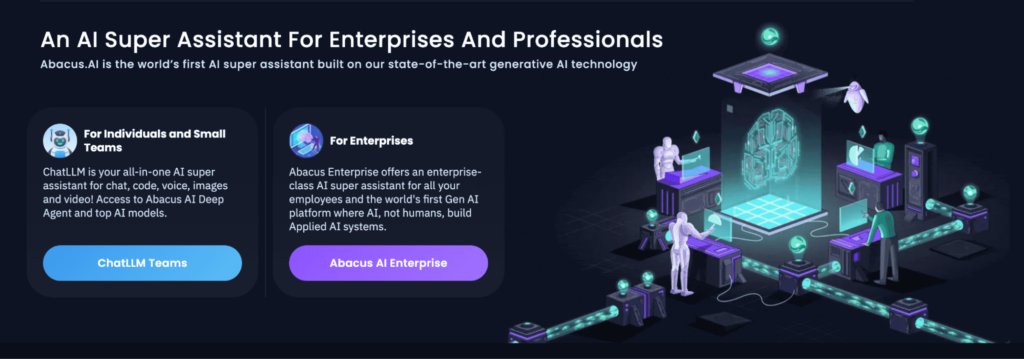
Context As the landscape of artificial intelligence (AI) continues to evolve, tools that facilitate Natural Language Understanding (NLU) and Language Understanding (LU) are becoming increasingly crucial for professionals in the field. Abacus AI, with its offerings like ChatLLM, DeepAgent, and the Enterprise platform, stands out as a comprehensive solution that integrates multiple AI models and functionalities. This review synthesizes insights from user experiences to evaluate how Abacus AI addresses the diverse needs of NLU scientists, providing a nuanced approach to understanding and leveraging AI capabilities. Primary Goal and Achievements The main objective highlighted in the original review is to present an accessible yet powerful AI solution that serves both individual developers and enterprise-level applications. Abacus AI achieves this by consolidating multiple AI models and functionalities into a single platform, significantly reducing costs while enhancing usability. This not only empowers users to engage with various AI models but also allows for seamless integration of advanced features that assist in automating tasks and conducting comprehensive analyses. Advantages of Abacus AI Cost-Effectiveness: For a subscription fee of $10/month, users gain access to a wide array of advanced AI models, which significantly undercuts the costs associated with purchasing individual subscriptions for similar services. This value proposition is particularly beneficial for small teams or individual developers. Comprehensive Toolset: The platform encompasses numerous features, including document analysis, web search integration, image, and video generation. These tools enhance the ability of NLU scientists to process and analyze diverse types of content efficiently. Team Collaboration: The unlimited team member functionality promotes collaborative efforts, making it easier for teams to share projects and resources. This feature is essential for NLU scientists who often work in interdisciplinary teams. Autonomous Capabilities: DeepAgent introduces a level of autonomy that allows users to automate complex processes, such as building functional applications and conducting detailed research. This autonomy can save time and reduce the burden on NLU scientists, allowing them to focus on more strategic tasks. Enterprise Features: The platform’s enterprise-level offerings include end-to-end MLOps capabilities, predictive analytics, and compliance with security standards. These features are crucial for organizations that require robust AI solutions for large-scale operations. Caveats and Limitations While the platform offers a range of functionalities, its complexity may overwhelm absolute beginners who seek straightforward AI solutions. Users with a need for maximum GPU control or those in academic settings may find the platform lacking in certain advanced features necessary for high-performance computing. Some users have reported occasional hiccups in performance, which could pose challenges for teams that rely on consistent and immediate support. Future Implications The ongoing advancements in AI technology, particularly in NLU and LU, suggest a promising trajectory for platforms like Abacus AI. As AI models continue to develop, the potential for enhanced collaboration and automation will likely redefine the workflows of NLU scientists. The integration of machine learning operations with real-time data processing will facilitate more sophisticated analyses, enabling researchers and developers to derive insights that were previously unattainable. Furthermore, as AI becomes more ingrained in various industries, the demand for tools that efficiently manage and leverage these technologies will only increase, reinforcing the relevance of comprehensive platforms like Abacus AI. Disclaimer The content on this site is generated using AI technology that analyzes publicly available blog posts to extract and present key takeaways. We do not own, endorse, or claim intellectual property rights to the original blog content. Full credit is given to original authors and sources where applicable. Our summaries are intended solely for informational and educational purposes, offering AI-generated insights in a condensed format. They are not meant to substitute or replicate the full context of the original material. If you are a content owner and wish to request changes or removal, please contact us directly. Source link : Click Here

Context The study of toponymy, or the investigation of place names, plays a significant role in understanding geographical data and its implications within the field of Data Analytics and Insights. This discipline encompasses the analysis of various geographical identifiers, offering profound insights into cultural, historical, and linguistic aspects of specific locations. The relevance of toponymy extends to data engineers, who leverage this information to enhance data quality and facilitate more effective data modeling techniques. Main Goal and Achievement The primary goal articulated in the original post revolves around the utilization of the BDTOPO database, France’s most comprehensive topographic Geographic Information System (GIS), which provides access to detailed place names. Data engineers can achieve this goal by harnessing the vast dataset to enrich their spatial analyses and support decision-making processes. By integrating toponymic data into their projects, they can create more contextually relevant data visualizations, improve geospatial queries, and enhance the overall robustness of their analyses. Advantages of Utilizing Toponymy in Data Analytics Enhanced Data Contextualization: Toponymy allows for a richer understanding of geographical data, enabling data engineers to incorporate cultural and historical significance into their analyses. Improved Geospatial Queries: By understanding the linguistic patterns in place names, data engineers can refine their geospatial queries, potentially leading to more accurate results and insights. Informed Decision Making: The integration of toponymic data can lead to more informed decision-making processes by providing a deeper context for geographical trends and patterns. Support for Advanced Visualizations: Utilizing toponymic data enhances the quality of visualizations, making them more informative and user-friendly for stakeholders. Historical Analysis: Toponymy offers insights into historical changes in geographical names, which can be instrumental in longitudinal studies and trend analysis. Caveats and Limitations While the advantages of utilizing toponymy are substantial, there are inherent limitations. The accuracy of place names may vary based on the source, and discrepancies can arise in data interpretation. Furthermore, the massive size of databases like BDTOPO can present challenges in terms of data processing and management, necessitating robust computational resources and skilled personnel. Future Implications The evolution of artificial intelligence (AI) holds significant promise for the field of toponymy and its applications in data analytics. As machine learning algorithms become more sophisticated, they will enable data engineers to automate the extraction and analysis of toponymic data, increasing efficiency and accuracy. Additionally, AI can facilitate the identification of patterns and trends within vast datasets, thereby enhancing predictive analytics capabilities. The future landscape of data analytics will likely see an increased integration of AI-driven tools that leverage toponymic insights, leading to more nuanced and actionable data interpretations. Conclusion In summary, the incorporation of toponymy into data analytics presents numerous advantages for data engineers, from enhanced contextualization of data to improved decision-making processes. Despite certain limitations, the future of this field, especially with the advent of AI developments, is poised for significant advancements that will further enrich the understanding of geographical data and its implications. Disclaimer The content on this site is generated using AI technology that analyzes publicly available blog posts to extract and present key takeaways. We do not own, endorse, or claim intellectual property rights to the original blog content. Full credit is given to original authors and sources where applicable. Our summaries are intended solely for informational and educational purposes, offering AI-generated insights in a condensed format. They are not meant to substitute or replicate the full context of the original material. If you are a content owner and wish to request changes or removal, please contact us directly. Source link : Click Here


