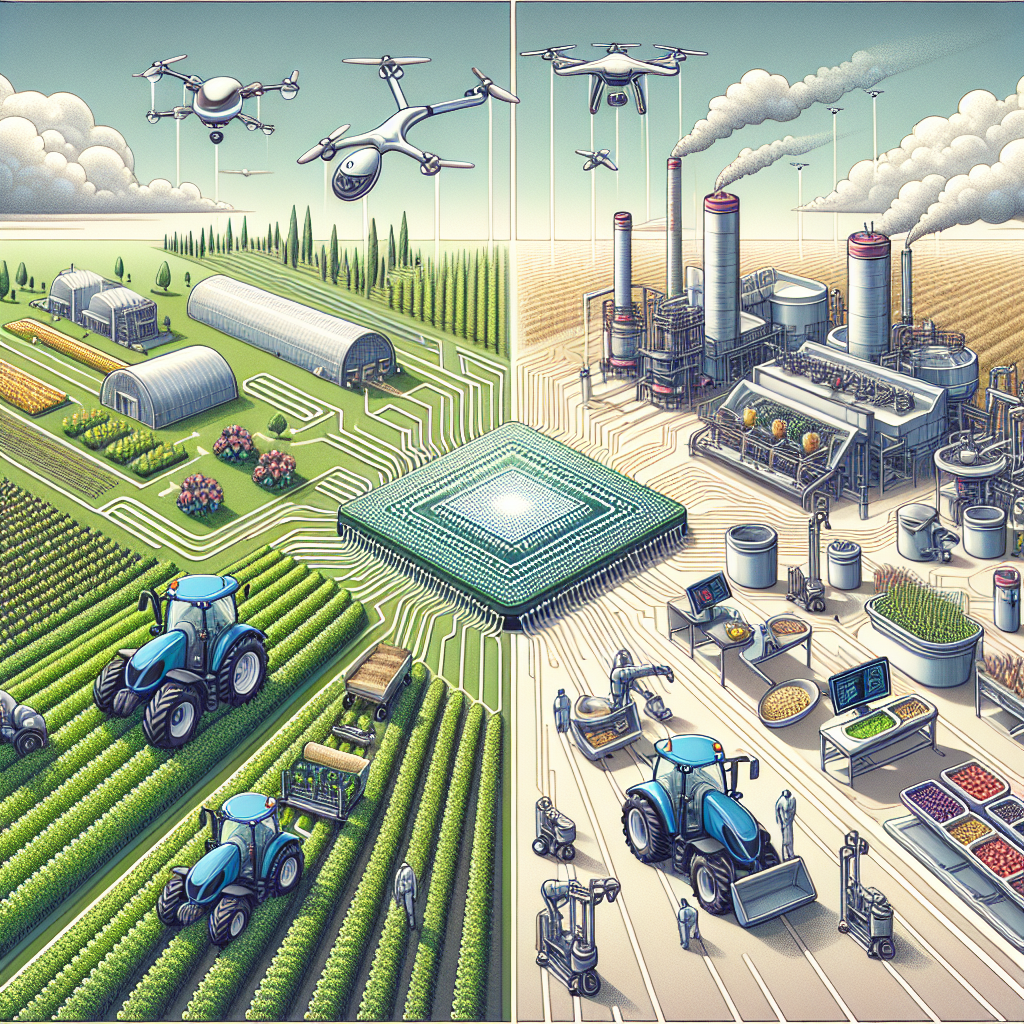
Recent dialogues at prominent events like the World Agri-Tech and Future Food-Tech in San Francisco have underscored a pivotal shift in the investment landscape within the AgriTech sector. Investors have articulated a clear message: the mere act of storytelling in pitches is no longer sufficient. Startups must now demonstrate tangible solutions to genuine problems faced by real customers. This necessitates a relentless focus on capital efficiency and early validation of technology through partnerships with strategic entities.
Over the past six to seven years, significant capital influxes into foodtech ventures have occurred without adequate consideration of revenue pathways. This trend is shifting, as investors increasingly emphasize the importance of margins and sustainable business models. Consequently, the current investment climate reflects a tightening of available capital, driven by a scarcity of successful exits and the resultant hesitance from limited partners (LPs) to invest in a sector marked by weak returns.
The primary goal articulated by investors is the necessity for AgriTech startups to align their innovations with real market needs, thereby ensuring that their solutions are not only innovative but also commercially viable. This can be achieved through several key strategies:
1. **Identifying Genuine Market Needs**: Startups must engage with potential customers to understand their needs and challenges, ensuring that their solutions are relevant and timely.
2. **Capital Efficiency**: Emphasis should be placed on developing business models that require less capital for scaling, thus enhancing the likelihood of sustainable operations.
3. **Strategic Partnerships**: Early-stage companies should proactively seek partnerships with established firms to validate their technologies and gain market traction.
Implementing the strategies outlined by investors can yield significant benefits for AgriTech innovators:
– **Increased Viability**: Startups that focus on solving real problems for customers are more likely to attract investment and achieve market success. Evidence from the original discussions highlights that companies with clearer revenue pathways and margin considerations are favored.
– **Enhanced Capital Efficiency**: By maintaining a lean operational model, companies can extend their runway and reduce the risk of financial distress. Investors are increasingly assessing portfolio companies for capital efficiency, as noted by SOSV’s Pae Wu, who stated that margin discussions are now central to investment decisions.
– **Improved Partnership Potential**: Collaborating with strategic partners can provide startups with not only funding but also market access and credibility. The insights shared by Lisa Feria from Stray Dog Capital emphasize the transformative potential of successful partnerships.
– **Adaptability to Market Changes**: Startups that remain focused on niche areas and adapt their offerings based on market feedback can better navigate the evolving AgriTech landscape.
While these advantages are compelling, it is essential to recognize that there are limitations. Startups must be vigilant in selecting partners to avoid pitfalls, such as being neglected post-partnership, as noted by Lisa Feria’s observations.
Artificial Intelligence (AI) is poised to significantly shape the future of AgriTech, offering numerous advancements that can streamline operations and enhance productivity. The integration of AI technologies can optimize research and development timelines, improve supply chain efficiencies, and facilitate the discovery of high-value ingredients in agricultural waste streams.
As highlighted by investors, AI applications in fields such as precision fermentation and robotics are already transforming processes within the sector. Companies that leverage AI effectively can position themselves at the forefront of innovation, potentially leading to greater profitability and market leadership.
However, caution is warranted in the reliance on AI-generated presentations and strategies. Investors, such as Pae Wu, caution against over-dependence on AI in pitch decks, suggesting that authenticity and genuine understanding of the market remain crucial.
In conclusion, the landscape of AgriTech innovation is evolving, driven by a more discerning investment community advocating for practical solutions to real-world problems. By embracing these insights, AgriTech startups can enhance their prospects for success in a competitive marketplace.
Disclaimer
The content on this site is generated using AI technology that analyzes publicly available blog posts to extract and present key takeaways. We do not own, endorse, or claim intellectual property rights to the original blog content. Full credit is given to original authors and sources where applicable. Our summaries are intended solely for informational and educational purposes, offering AI-generated insights in a condensed format. They are not meant to substitute or replicate the full context of the original material. If you are a content owner and wish to request changes or removal, please contact us directly.
Source link :