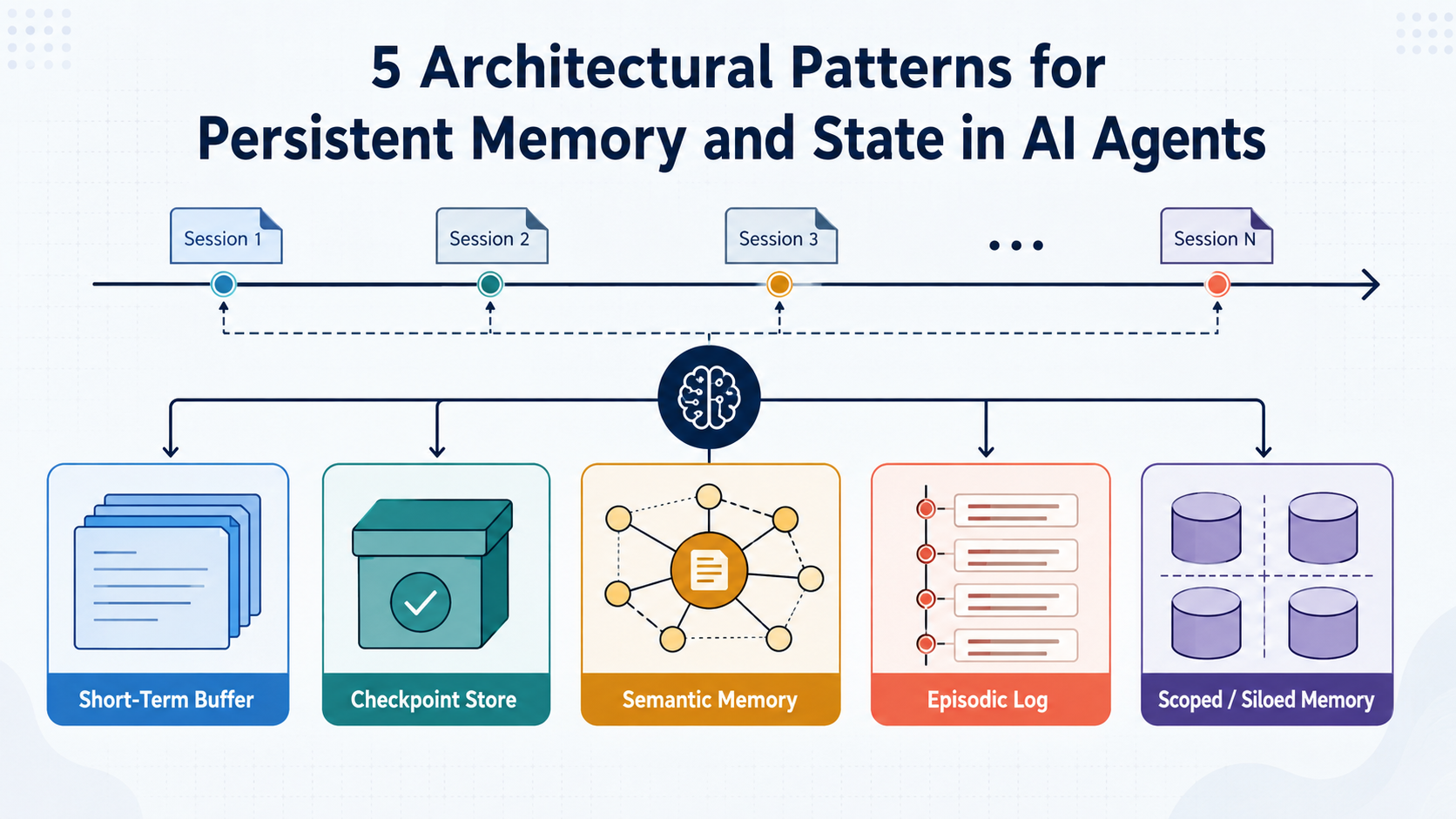
In the evolving landscape of artificial intelligence, the architecture of AI agents is paramount, particularly in the context of persistent memory and state management. Building an AI agent that remains functional and reliable over extended periods, such as six-month deployments, presents significant challenges. Traditional approaches, notably those involving Large Language Models (LLMs), often operate in a stateless manner. Each invocation begins without recollection of prior interactions, leading early developers to incorporate entire conversation histories into the context window, hoping to maintain continuity. However, this method quickly succumbs to limitations, including increased latency and diminished effectiveness in utilizing context, thereby necessitating a more sophisticated architectural approach.
Understanding the distinction between ‘state’ and ‘memory’ is crucial for effective AI agent development. ‘State’ refers to the current snapshot of the agent’s knowledge regarding a task—its progress, the last actions taken, and the variables involved. It can be visualized as a dynamic whiteboard that updates continuously during task execution but is ephemeral unless explicitly saved. Conversely, ‘memory’ serves as a repository for information that transcends individual interactions, allowing agents to carry knowledge across sessions. The interplay between state and memory is cyclical: starting from memory to construct state, updating state during tasks, and then feeding relevant information back into memory for future use. This cycle is essential for the continuity and personalization of AI interactions.
The primary goal articulated in the original discussion is to enhance the reliability and functionality of AI agents through deliberate architectural decisions concerning memory and state management. This can be achieved by implementing structured architectural patterns that address both immediate execution needs and long-term knowledge preservation. By doing so, AI systems become capable of learning from experiences, adapting to user preferences, and maintaining a coherent operational narrative across multiple interactions.
Despite the advantages, there are inherent challenges associated with these architectural patterns. Issues such as the potential for stale data in semantic memory, the risk of duplication in episodic logs, and the complexities involved in ensuring data privacy must be carefully managed. Additionally, the implementation of these architectures requires meticulous planning and resources, which may pose limitations for smaller organizations or projects.
The ongoing advancements in artificial intelligence are likely to further refine the management of memory and state within AI agents. As algorithms become more sophisticated, the mechanisms for handling persistent memory will evolve, enabling more dynamic and contextually aware interactions. Future developments may focus on enhancing the efficiency of memory retrieval processes, improving the security of data management systems, and ensuring that AI agents can learn and adapt in real-time, thereby significantly enhancing their operational capabilities. The interplay between AI advancements and architectural design will shape not only the future of AI agents but also their integration into everyday applications across various sectors.
Disclaimer
The content on this site is generated using AI technology that analyzes publicly available blog posts to extract and present key takeaways. We do not own, endorse, or claim intellectual property rights to the original blog content. Full credit is given to original authors and sources where applicable. Our summaries are intended solely for informational and educational purposes, offering AI-generated insights in a condensed format. They are not meant to substitute or replicate the full context of the original material. If you are a content owner and wish to request changes or removal, please contact us directly.
Source link :