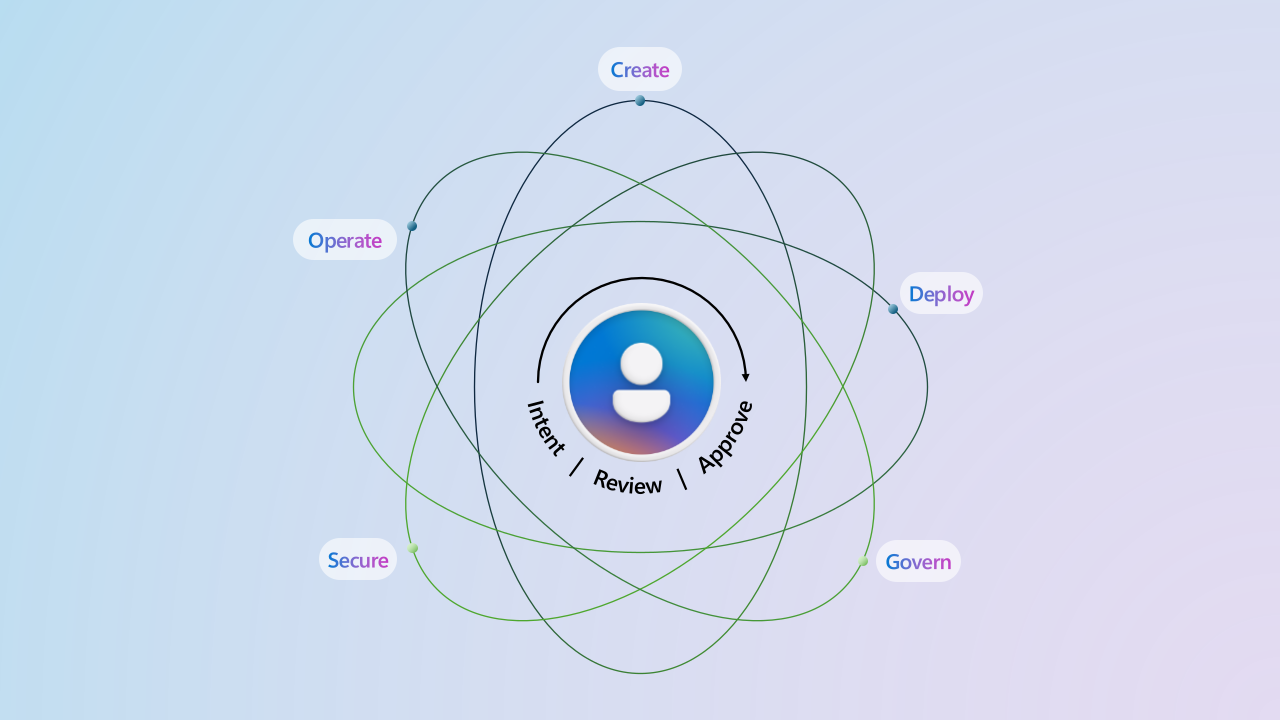
The transition from insight to action in cloud environments represents a pivotal evolution in the realm of Big Data Engineering. As organizations increasingly rely on complex hybrid infrastructures, microservices, and artificial intelligence (AI) workloads, the need for an operational model that seamlessly integrates insight and action becomes imperative. The concept of agentic cloud operations emerges as a solution that employs AI-powered agents, which continuously observe and reason through the cloud lifecycle, transforming isolated signals into actionable workflows. This systematic approach not only enhances performance and reduces costs but also fortifies reliability across data operations.
The core objective of agentic cloud operations is to create an environment where insights derived from data are directly translated into actions in real-time. This model facilitates a dynamic feedback loop, allowing organizations to respond to changing conditions and requirements promptly. Achieving this goal necessitates embedding governance within cloud operations, ensuring that every action adheres to predefined policies and organizational intent. By implementing this model, organizations can ensure that their cloud environments operate efficiently and effectively, ultimately leading to optimized performance and decision-making.
However, it is important to note that while the agentic model offers substantial advantages, organizations must remain vigilant regarding the inherent risks associated with increased automation. The reliance on AI agents necessitates a robust framework for monitoring their actions and ensuring alignment with human oversight.
The future of Big Data Engineering is poised for significant transformation as AI technologies continue to evolve. The integration of more sophisticated AI agents will enhance the capabilities of agentic cloud operations, enabling even greater levels of automation and insight-driven decision-making. As organizations adopt these advancements, we can expect to see:
In conclusion, the progression towards agentic cloud operations signifies a marked shift in the landscape of Big Data Engineering, promising improved efficiencies, better governance, and enhanced incident management. By harnessing the power of AI, organizations can navigate the complexities of modern cloud environments with greater agility and precision.
Disclaimer
The content on this site is generated using AI technology that analyzes publicly available blog posts to extract and present key takeaways. We do not own, endorse, or claim intellectual property rights to the original blog content. Full credit is given to original authors and sources where applicable. Our summaries are intended solely for informational and educational purposes, offering AI-generated insights in a condensed format. They are not meant to substitute or replicate the full context of the original material. If you are a content owner and wish to request changes or removal, please contact us directly.
Source link :