Advancements in Virtual Twin Technology: Insights from NVIDIA’s Jensen Huang at 3DEXPERIENCE World

Contextual Overview

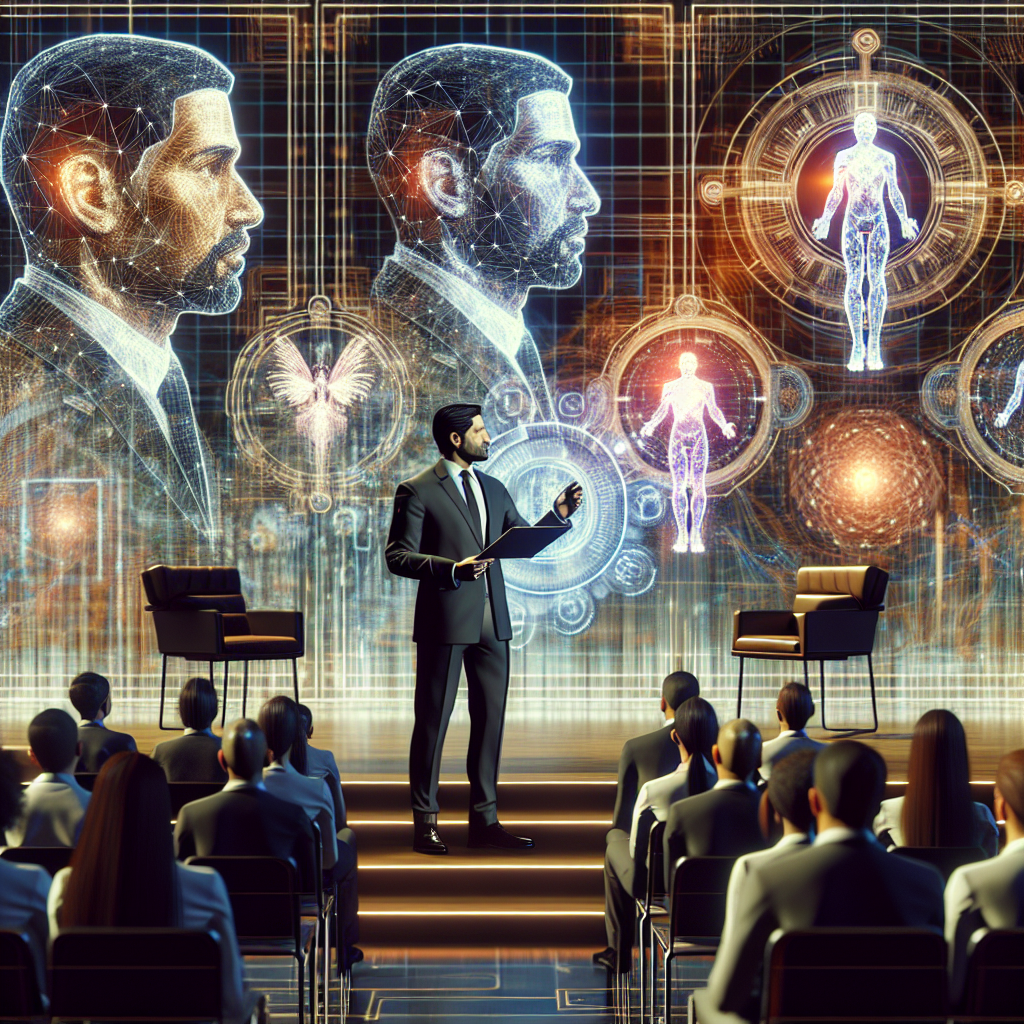
At the recent 3DEXPERIENCE World event in Houston, NVIDIA’s CEO Jensen Huang articulated a transformative vision for the integration of artificial intelligence (AI) within industrial frameworks, emphasizing the critical role of virtual twins. Collaborating with Dassault Systèmes, Huang posited that the future of industrial AI is rooted in physics-based “world models”—sophisticated systems designed to simulate products, factories, and biological systems prior to their physical realization. This paradigm shift envisions AI as a foundational infrastructure akin to utilities such as water, electricity, and the internet, fundamentally augmenting the capabilities of engineers and redefining workflows across multiple sectors.

Main Objective

The primary goal articulated by Huang and Daloz is to create a synergistic ecosystem where advanced AI capabilities merge with virtual twin technology, enabling engineers to operate at unprecedented scales of efficiency and creativity. This objective can be realized through the integration of NVIDIA’s accelerated computing and AI libraries with Dassault Systèmes’ virtual twin platforms, facilitating real-time digital workflows that enhance exploration, validation, prototyping, and iterative processes within engineering.

Advantages of Virtual Twin Integration

  • Enhanced Design Efficiency: The fusion of AI and virtual twin technology allows engineers to design not just the geometry but also the behavior of products, thereby expanding the design space significantly during early development stages.
  • Accelerated Research and Development: Platforms like NVIDIA BioNeMo and BIOVIA are poised to revolutionize biology and materials science by expediting the discovery of new molecules and advanced materials through validated science-based AI systems.
  • Real-Time Decision Making: AI-driven design tools such as SIMULIA leverage AI physics libraries to provide instantaneous predictions of outcomes, thereby streamlining decision-making processes in engineering workflows.
  • Automation of Repetitive Tasks: AI companions are positioned to take over exploratory and repetitive tasks, allowing human engineers to focus on more complex and creative aspects of design, thus amplifying their productivity rather than replacing them.
  • Creation of Knowledge Factories: Virtual twins are conceptualized as knowledge factories, fostering an environment where critical information is created, tested, and validated—ultimately enhancing trust in the simulation outcomes before physical implementation.

Considerations and Limitations

While the potential benefits of integrating AI with virtual twin technology are substantial, certain limitations must be acknowledged. The complexity of implementing such systems requires significant investment in infrastructure and training. Furthermore, the reliance on AI for decision-making necessitates rigorous validation of AI-generated outcomes to mitigate risks associated with erroneous predictions. The need for high-quality data to train AI systems also presents a challenge, as the efficacy of these tools is contingent upon the robustness of the underlying datasets.

Future Implications for Generative AI Scientists

The implications of these advancements for the field of generative AI are profound. As the integration of AI and virtual twin technologies matures, generative AI scientists will be positioned to explore new frontiers in product development, manufacturing, and even biological research. The ability to simulate and optimize designs at an industrial scale could lead to the emergence of entirely new categories of products and processes. Moreover, as AI capabilities continue to evolve, the role of generative AI scientists will expand to include not only the creation of algorithms but also the interpretation of complex system behaviors and the generation of innovative solutions grounded in simulation data.

Disclaimer

The content on this site is generated using AI technology that analyzes publicly available blog posts to extract and present key takeaways. We do not own, endorse, or claim intellectual property rights to the original blog content. Full credit is given to original authors and sources where applicable. Our summaries are intended solely for informational and educational purposes, offering AI-generated insights in a condensed format. They are not meant to substitute or replicate the full context of the original material. If you are a content owner and wish to request changes or removal, please contact us directly.

Source link :

Click Here

How We Help

Our comprehensive technical services deliver measurable business value through intelligent automation and data-driven decision support. By combining deep technical expertise with practical implementation experience, we transform theoretical capabilities into real-world advantages, driving efficiency improvements, cost reduction, and competitive differentiation across all industry sectors.

We'd Love To Hear From You

Transform your business with our AI.

Get In Touch