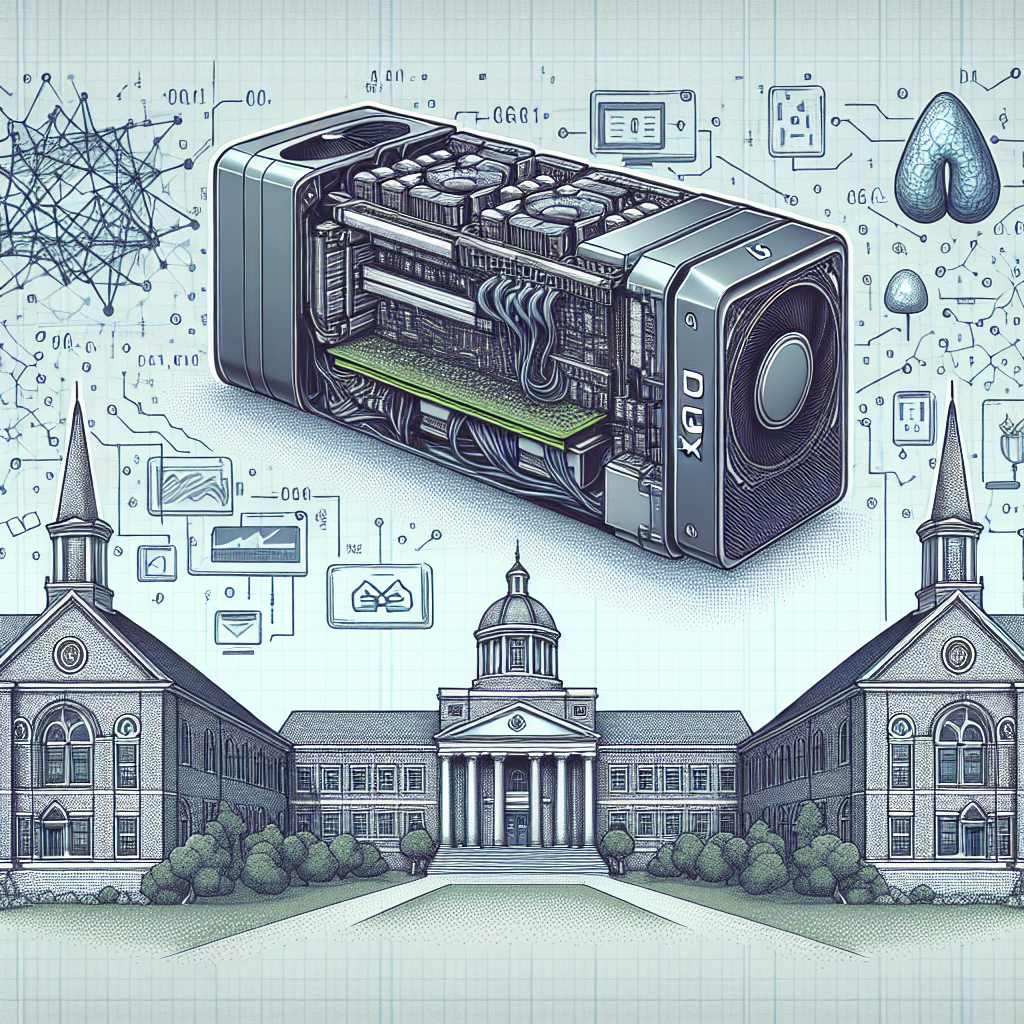
Context of Generative AI Advancements at UC San Diego
The Hao AI Lab at the University of California, San Diego (UCSD) is at the forefront of generative artificial intelligence (AI) research, recently enhancing its capabilities with the acquisition of the NVIDIA DGX B200 system. This advanced hardware aims to bolster their work in large language model (LLM) inference, a critical area in the evolution of generative AI technologies. The lab’s innovative research contributes significantly to foundational concepts that underpin many modern AI frameworks, including NVIDIA Dynamo and DistServe, which optimize the performance of generative models.
Main Goals and Their Achievement
The primary goal of the Hao AI Lab’s recent advancements is to enhance the efficiency and responsiveness of generative AI systems, particularly in the context of LLMs. By leveraging the high-performance capabilities of the DGX B200, researchers aim to accelerate the prototyping and experimentation processes associated with AI model development. This is achieved through the system’s superior processing power, enabling researchers to execute complex simulations and generate outputs more rapidly than previous hardware allowed.
Advantages of the NVIDIA DGX B200 for Generative AI Research
- Increased Processing Power: The DGX B200 boasts one of the most advanced architectures available, which significantly improves the speed of AI model training and inference processes.
- Enhanced Research Capabilities: The lab is employing the DGX B200 for cutting-edge projects such as FastVideo, which creates video content from textual prompts, and Lmgame, a benchmarking suite for evaluating LLMs through interactive gaming.
- Real-Time Responsiveness: The system facilitates research into low-latency LLM serving, allowing for applications that require immediate interaction, such as real-time user interfaces.
- Optimized Resource Management: Utilizing advanced metrics like ‘goodput,’ which balances throughput and latency, the system allows researchers to maximize system efficiency while maintaining user satisfaction.
- Interdepartmental Collaboration: The DGX B200 serves as a catalyst for cross-disciplinary research initiatives, enhancing collaboration between departments such as healthcare and biology at UCSD.
Future Implications of AI Developments
The advancements in generative AI facilitated by the NVIDIA DGX B200 signal a transformative era for AI research and applications. As the capabilities of LLMs expand, their integration into diverse fields such as medicine, education, and entertainment is expected to deepen, enhancing user experience and accessibility. Moreover, the ongoing research into optimizing LLM performance through innovative methodologies will likely lead to breakthroughs in how AI systems interact with users, creating more intuitive and responsive applications.
However, the field must also navigate challenges such as ethical considerations, data governance, and the potential for bias in AI outputs. As researchers continue to explore the limits of generative AI, maintaining a focus on responsible AI development will be essential to harness its full potential while mitigating risks.
Disclaimer
The content on this site is generated using AI technology that analyzes publicly available blog posts to extract and present key takeaways. We do not own, endorse, or claim intellectual property rights to the original blog content. Full credit is given to original authors and sources where applicable. Our summaries are intended solely for informational and educational purposes, offering AI-generated insights in a condensed format. They are not meant to substitute or replicate the full context of the original material. If you are a content owner and wish to request changes or removal, please contact us directly.
Source link :
Click Here