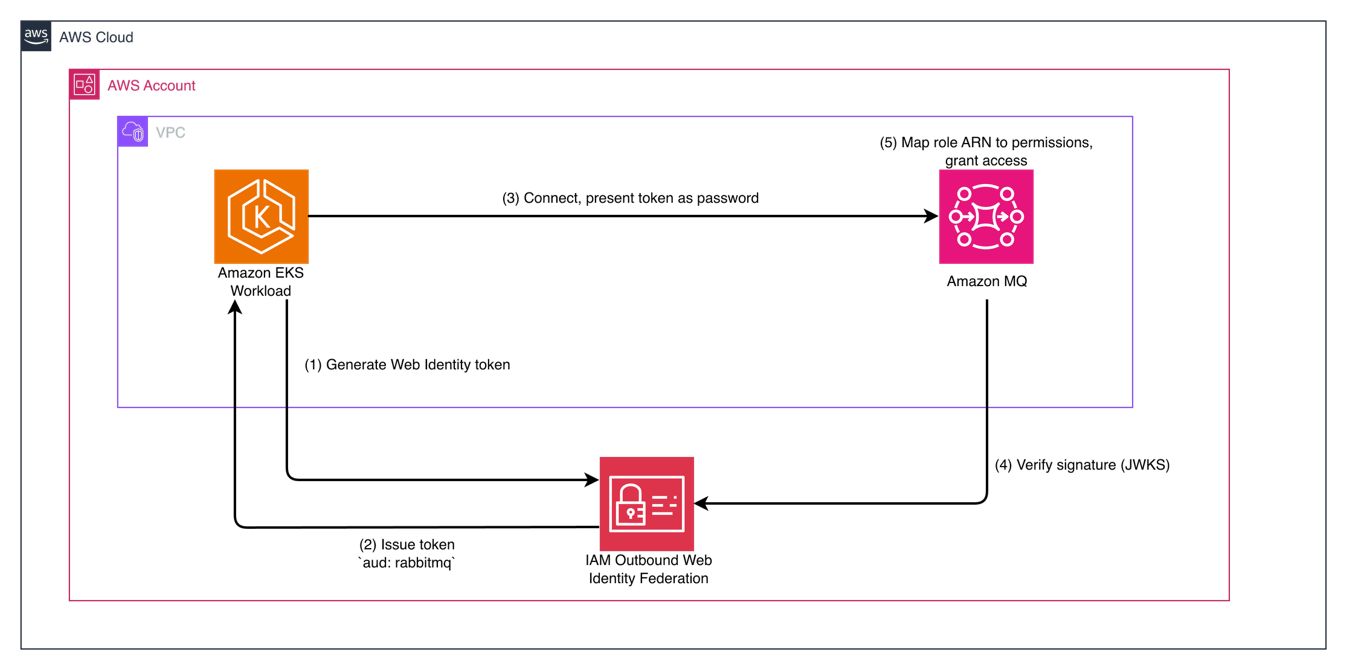
This blog post aims to provide insights into the innovative approaches undertaken by Picnic, a tech scale-up based in Amsterdam, in configuring multiple OAuth providers within their Amazon MQ infrastructure. Picnic is transforming the grocery shopping experience by leveraging advanced technology to manage a complex supply chain and logistics system. Central to this operation is RabbitMQ, which serves as the communication backbone, facilitating the seamless interaction of hundreds of microservices that handle everything from order processing to finance. Given the volume of transactions Picnic manages—close to one million messages per second—ensuring the reliability and scalability of their messaging infrastructure is paramount.
Picnic’s authentication strategy distinguishes between the identities of human operators and automated services, necessitating a solution that accommodates multiple identity providers. This post will explore how Picnic successfully configured Amazon MQ to authenticate tokens from both Keycloak and AWS Identity and Access Management (IAM), thus extending the standard OAuth 2.0 configuration to support a multi-provider setup.
The primary objective of Picnic’s configuration is to establish a secure and efficient authentication mechanism that allows a single RabbitMQ broker to simultaneously trust multiple OAuth 2.0 identity providers. This goal can be achieved through the careful design of resource servers and audience claims within the RabbitMQ setup. By implementing this multi-provider configuration, Picnic enables distinct authentication pathways for human operators and automated services without the need for separate broker instances, thus streamlining operations and maintaining robust security protocols.
While the advantages of this multi-provider setup are compelling, several caveats must be acknowledged:
The evolution of AI technologies will significantly impact the landscape of identity management and authentication in messaging systems. As organizations increasingly rely on machine learning and artificial intelligence, the need for adaptive authentication strategies will become more pronounced. AI could facilitate real-time risk assessment and dynamic adjustment of access controls based on user behavior and context, thereby enhancing security while improving user experience.
Furthermore, as AI systems become more prevalent in operational environments, integration with OAuth frameworks will necessitate robust mechanisms to differentiate between human and machine identities. The lessons learned from Picnic’s multi-provider approach may serve as foundational principles for future developments in secure messaging infrastructures.
Disclaimer
The content on this site is generated using AI technology that analyzes publicly available blog posts to extract and present key takeaways. We do not own, endorse, or claim intellectual property rights to the original blog content. Full credit is given to original authors and sources where applicable. Our summaries are intended solely for informational and educational purposes, offering AI-generated insights in a condensed format. They are not meant to substitute or replicate the full context of the original material. If you are a content owner and wish to request changes or removal, please contact us directly.
Source link :