Contextual Overview
The landscape of meat alternatives is undergoing significant transformation, as evidenced by the recent performance of Quorn Foods, a prominent player in this sector. The company, which operates under the umbrella of Monde Nissin, has reported a modest recovery in sales during the second quarter of 2026, following a challenging period marked by a downturn in the foodservice segment. Specifically, Quorn’s protein segment, which includes both Quorn and Cauldron brands, generated revenues amounting to ₱7.38 billion ($120 million), reflecting a 2.2% growth on a constant-currency basis compared to the first half of 2025. Notably, the company’s core net income shifted from a loss of ₱215 million ($3.5 million) in H1 2025 to a profit of ₱106 million ($1.7 million) in the same period for 2026.
Main Objective and Strategic Pathways
The primary goal articulated by Quorn Foods is to strengthen its presence in the UK retail market while addressing the persistent challenges within the foodservice sector. To achieve this, Quorn is implementing strategic restructuring measures aimed at enhancing operational efficiency and gross margins. The focus on new product launches, such as Protein Bites, which aim to capture the protein snacking trend, illustrates a proactive response to evolving consumer preferences. This product diversification not only seeks to expand market reach but also aims to improve profitability by appealing to a broader audience beyond traditional meat-free consumers.
Advantages of Robust Retail Performance
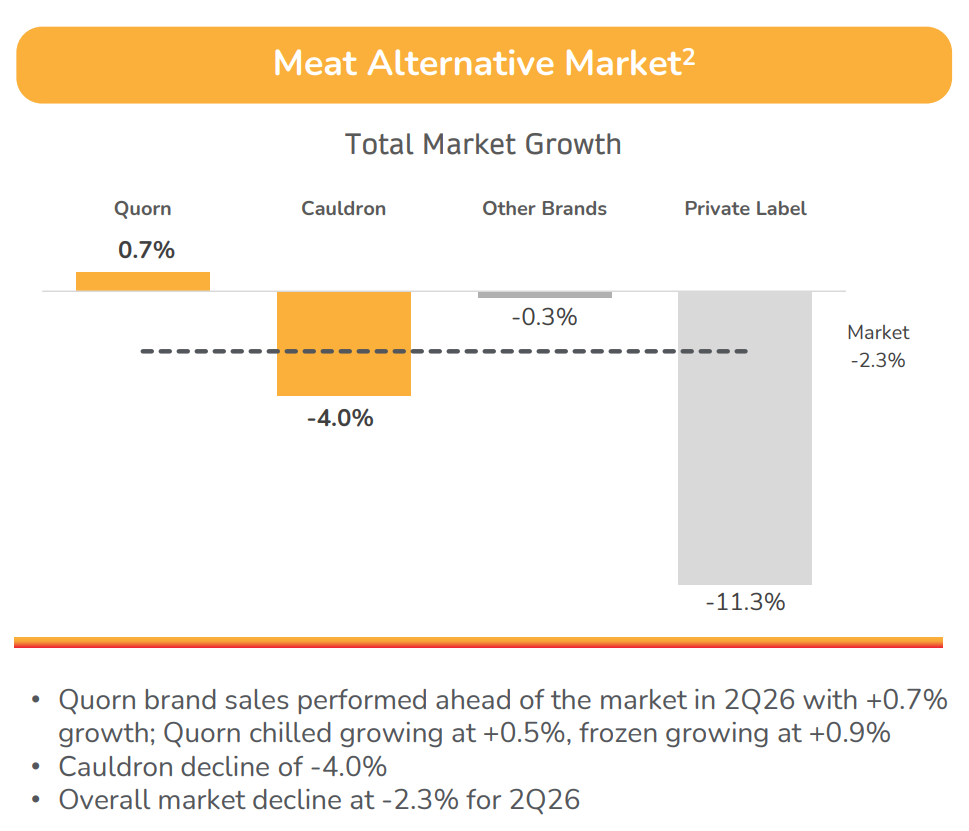
- Increased Revenue Streams: The resurgence in UK retail sales is indicative of a recovering consumer base, which can lead to increased revenue and market share for Quorn. This trend is supported by the 0.7% growth in Quorn branded retail sales during a time when the overall meat alternatives market contracted by 2.3%.
- Improved Profit Margins: The introduction of high-margin products like Protein Bites allows Quorn to command premium pricing, enhancing gross margins. As noted by Monde Nissin’s CEO, the scalability of these products aligns with broader consumer trends favoring convenience and health.
- Diversification Opportunities: Expanding into the foodservice sector with innovative offerings, such as hybrid products combining meat and mycoprotein, positions Quorn to tap into emerging markets and consumer preferences, potentially unlocking new revenue sources.
- Operational Restructuring Benefits: The ongoing organizational right-sizing process is expected to streamline operations, reduce costs, and enhance overall business agility, thereby supporting sustained growth.
Caveats and Limitations
Despite the positive outlook, challenges remain, particularly within the foodservice sector, which saw a 5% decline in sales during Q2. This necessitates a cautious approach, as short-term setbacks may hinder overall growth. Moreover, external factors such as rising input costs linked to geopolitical events, notably the Iran war, could exert pressure on profit margins in the upcoming quarters. Management has indicated that while supply-chain efficiencies may mitigate some of these challenges, the trajectory of recovery is unlikely to be linear.
Future Implications and the Role of AI
Looking ahead, the intersection of AgriTech and artificial intelligence is poised to redefine the landscape of food production and distribution. As AI technologies advance, they will facilitate more efficient supply-chain management, predictive analytics for consumer behavior, and enhanced product development processes. For AgriTech innovators, this presents a significant opportunity to leverage AI-driven insights to optimize operations and meet the evolving demands of health-conscious consumers. The anticipated integration of AI into AgriTech will likely lead to increased efficiencies, reduced costs, and improved sustainability across the food production spectrum.
Disclaimer
The content on this site is generated using AI technology that analyzes publicly available blog posts to extract and present key takeaways. We do not own, endorse, or claim intellectual property rights to the original blog content. Full credit is given to original authors and sources where applicable. Our summaries are intended solely for informational and educational purposes, offering AI-generated insights in a condensed format. They are not meant to substitute or replicate the full context of the original material. If you are a content owner and wish to request changes or removal, please contact us directly.
Source link :