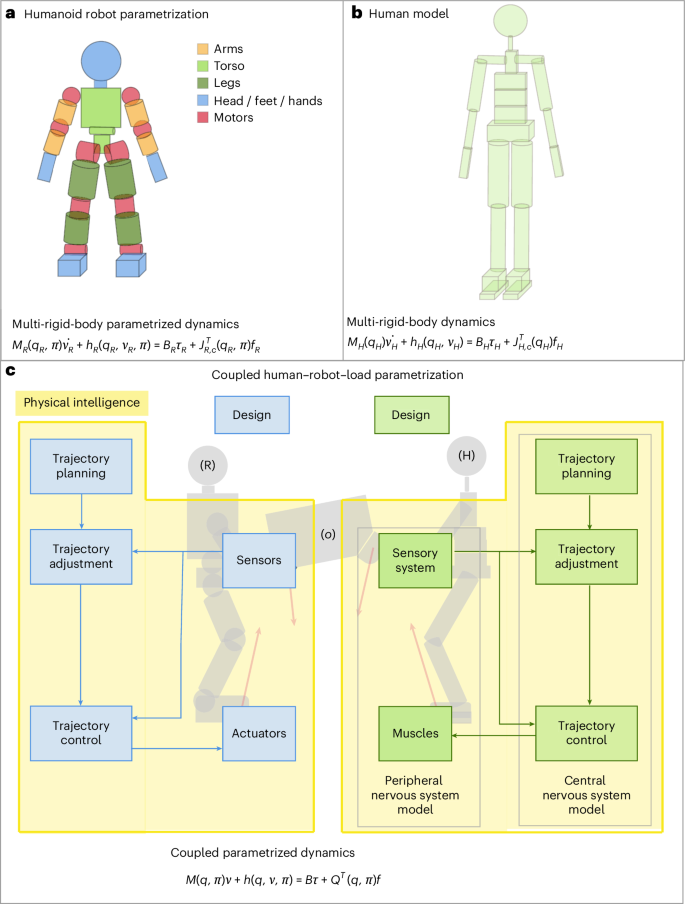
In the evolving landscape of Smart Manufacturing and Robotics, the integration of humanoid robots such as the ergoCub is pivotal for enhancing human-robot collaboration. This collaboration hinges on the development of a shared embodied intelligence architecture, which facilitates effective physical interaction between robots and humans. The primary aim is to optimize robot hardware and control parameters to enhance the performance of human collaborators. This modular architecture consists of various components designed to perform specific tasks, whether in isolation or alongside human partners. The backbone of this framework is the establishment of a symmetrical model of physical intelligence, mirroring the capabilities of both human and humanoid agents.
The overarching goal of this endeavor is to create a humanoid robot capable of seamless collaboration with humans, thereby optimizing joint tasks such as lifting and manipulation. Achieving this necessitates identifying and refining several key elements, including the robot’s physical characteristics and the dynamics governing human-robot interaction. The hierarchical control architecture employed plays a crucial role in modeling the physical intelligence of both agents, ensuring they can synchronize their movements effectively. This is accomplished through a systematic approach of modeling, optimization, and testing, leading to the realization of the ergoCub robot.
1. **Enhanced Collaboration**: The shared embodied intelligence framework allows for improved collaboration between humans and robots, particularly in physically demanding tasks such as lifting, where the joint efforts of both agents can be optimized.
2. **Modular Architecture**: The modular design of the robot’s control system enables flexibility, allowing the robot to adapt to various tasks and environments. This customization is vital for applications in dynamic manufacturing settings.
3. **Symmetrical Physical Intelligence**: By establishing a symmetry between human and robot capabilities, the system can better predict and respond to human actions, improving overall interaction quality and efficiency.
4. **Real-time Optimization**: The architecture incorporates feedback mechanisms that allow for real-time adjustments during operation, thus enhancing the robot’s responsiveness and effectiveness in collaborative tasks.
5. **Energy Efficiency**: By minimizing the energy expenditure of both human and robot participants, the system promotes sustainability in industrial operations, which is crucial for long-term viability.
While the advantages are significant, there are inherent challenges in implementing this technology:
– **Complexity of Human Dynamics**: Accurately modeling human dynamics remains complex and may not fully capture all the nuances of human physical intelligence, potentially affecting collaboration efficiency.
– **Dependence on Technology**: The reliance on advanced sensors and control algorithms means that any technological failure could disrupt the collaborative process, necessitating robust fail-safes and recovery protocols.
– **Cost of Implementation**: The initial investment in developing and integrating such sophisticated systems may be substantial, which could be a barrier for smaller manufacturers.
Looking ahead, the integration of artificial intelligence (AI) within the framework of shared embodied intelligence in humanoid robots is poised to drive significant advancements. AI can enhance decision-making capabilities, enabling robots to learn from their interactions with humans and adapt to varying tasks and environments dynamically. Furthermore, as AI algorithms become more sophisticated, they will facilitate a deeper understanding of human behavior, allowing for even more seamless integration into manufacturing processes.
The potential for AI to facilitate predictive maintenance, optimize operational processes, and enhance safety protocols underscores its transformative impact on Smart Manufacturing and Robotics. As these technologies continue to evolve, the synergy between human workers and robots will likely become more pronounced, leading to more efficient, ergonomic, and safe industrial environments.
In conclusion, the development of shared embodied intelligence in humanoid robots such as the ergoCub reflects a significant stride towards achieving effective human-robot collaboration in Smart Manufacturing. The combined advantages of modularity, symmetry in physical intelligence, and real-time optimization present promising opportunities for enhancing industrial productivity and sustainability.
Disclaimer
The content on this site is generated using AI technology that analyzes publicly available blog posts to extract and present key takeaways. We do not own, endorse, or claim intellectual property rights to the original blog content. Full credit is given to original authors and sources where applicable. Our summaries are intended solely for informational and educational purposes, offering AI-generated insights in a condensed format. They are not meant to substitute or replicate the full context of the original material. If you are a content owner and wish to request changes or removal, please contact us directly.
Source link :