The demand for advanced data interaction capabilities, such as “Talk to Data,” is escalating across various industries. This trend underscores the necessity of a robust semantic foundation to facilitate reliable AI-driven responses. When AI systems leverage well-governed business logic rather than relying on convoluted schemas or disparate dashboards, the quality of answers improves significantly. Consistent key performance indicator (KPI) definitions, aligned business logic, and clearly defined joins and aggregations empower executives with the actionable insights they require.
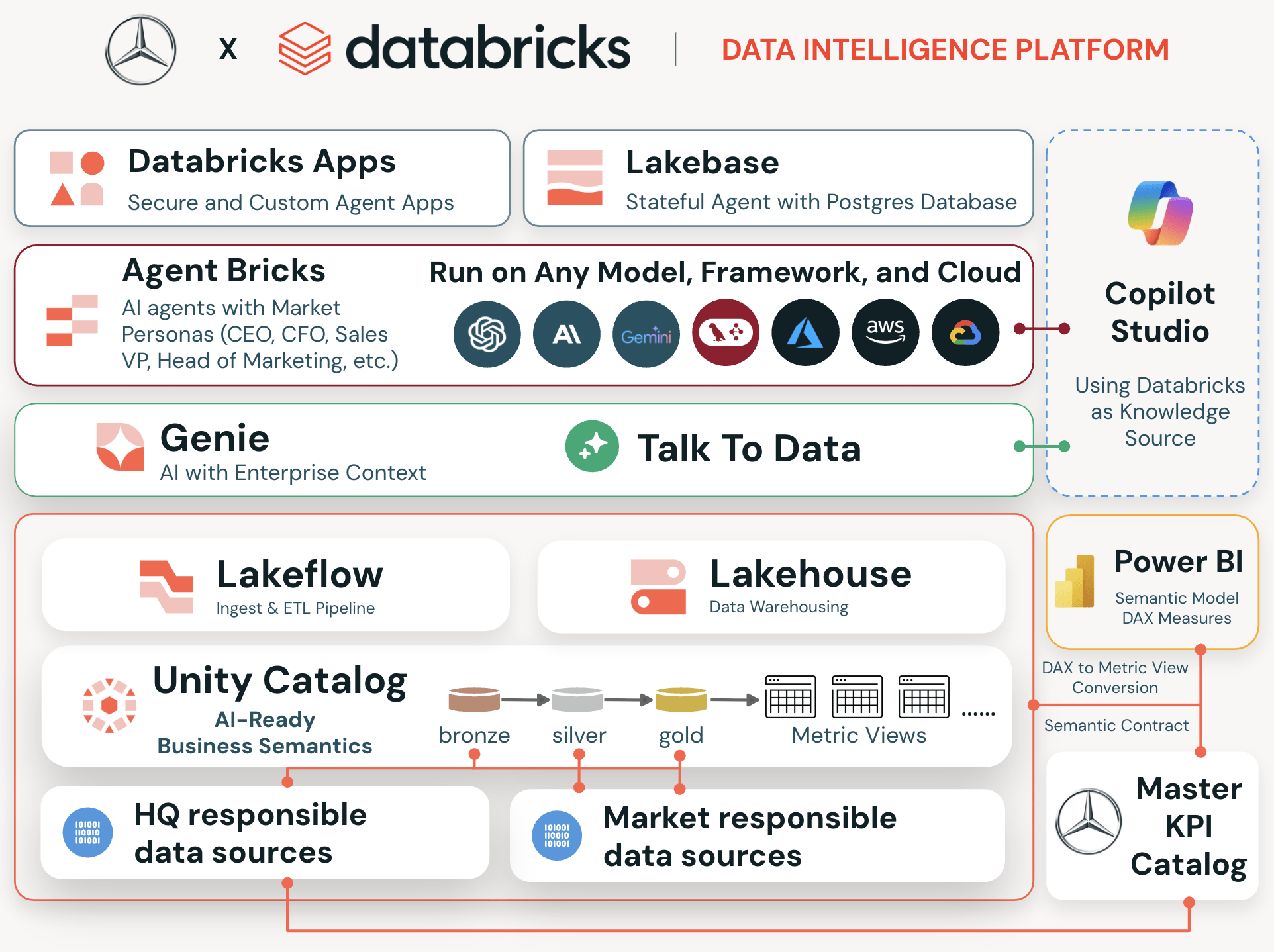
Mercedes-Benz Korea, in collaboration with Databricks, recognized this imperative and strategically expanded its analytics framework to incorporate a governed semantic layer suitable for enterprise AI applications. By facilitating access to KPI logic through platforms like Unity Catalog Business Semantics and Power BI, Mercedes-Benz Korea has pioneered a unified architecture that integrates data, semantics, and agentic AI. The insights gleaned from this initiative serve as a valuable blueprint for other markets within the Mercedes-Benz ecosystem.
The primary goal of the “Talk to Data” initiative at Mercedes-Benz Korea was to establish an AI-ready, unified semantic foundation that could seamlessly support both business intelligence (BI) reporting and AI functionalities. This objective is achieved by ensuring that all data products are governed under consistent business definitions, thereby enhancing the reliability of AI outputs.
This initiative was not merely about transitioning from Power BI but involved a comprehensive strategy to consolidate business logic across various platforms. By creating a single source of truth within the Unity Catalog, the organization aims to facilitate consistent AI responses across different scenarios, thereby streamlining the decision-making process.
However, it is essential to recognize that the implementation of a unified semantic architecture requires meticulous planning and may pose challenges during the initial phases, particularly in terms of aligning existing data structures with new governance protocols.
The advancements in AI are set to transform the landscape of data engineering. As AI technologies become increasingly sophisticated, the need for well-defined semantic layers will intensify. Organizations will increasingly rely on AI to deliver contextual insights that are both accurate and timely, necessitating a robust infrastructure that can support these demands.
Furthermore, as businesses adopt AI-driven analytics, the role of data engineers will evolve to encompass not only data management but also the curation of semantic frameworks that facilitate AI interactions. The implications of these developments will likely include enhanced collaboration between data scientists and engineers, driving innovation in AI applications across various sectors.
Disclaimer
The content on this site is generated using AI technology that analyzes publicly available blog posts to extract and present key takeaways. We do not own, endorse, or claim intellectual property rights to the original blog content. Full credit is given to original authors and sources where applicable. Our summaries are intended solely for informational and educational purposes, offering AI-generated insights in a condensed format. They are not meant to substitute or replicate the full context of the original material. If you are a content owner and wish to request changes or removal, please contact us directly.
Source link :