Enhancing PostgreSQL Write Performance through Lakebase Architecture

Contextualizing Lakebase Architecture in Big Data Engineering

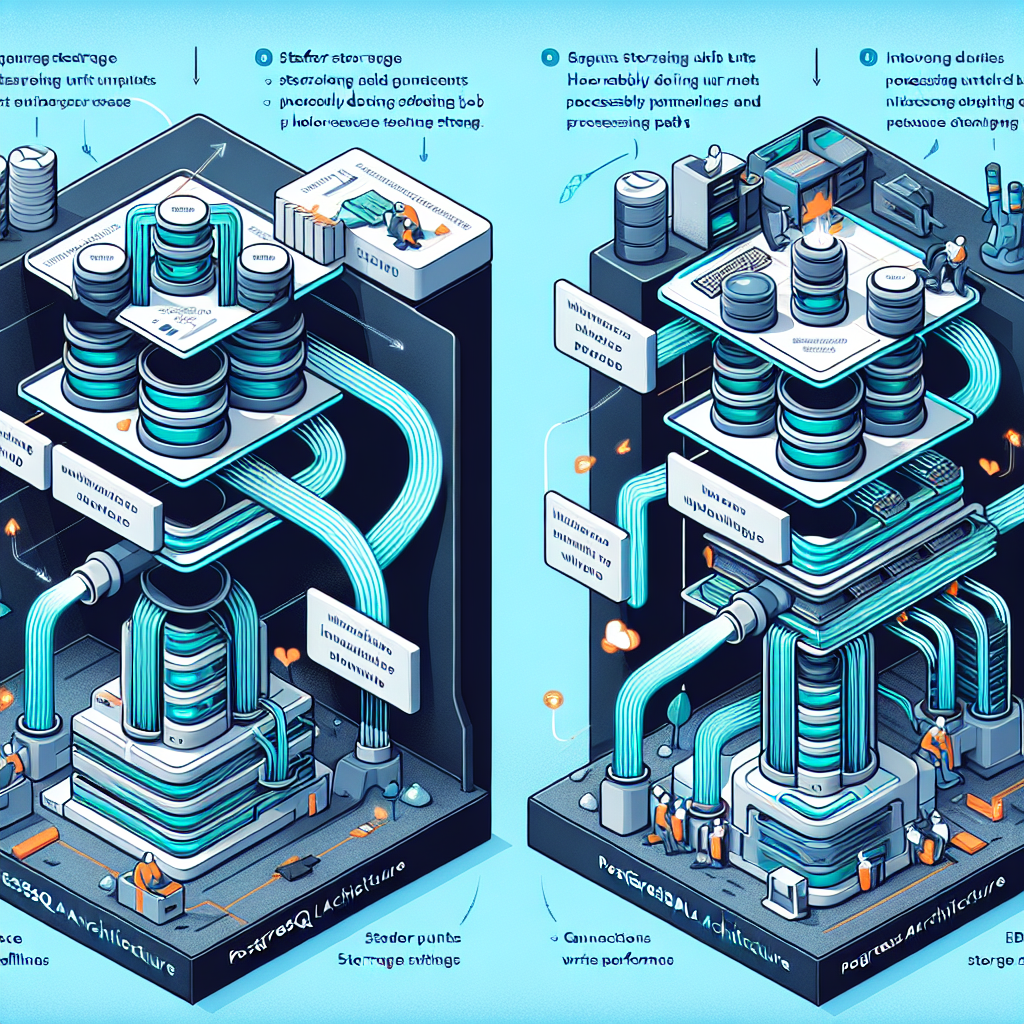
In the realm of Big Data Engineering, the architecture of data storage and computation plays a pivotal role in determining system performance and operational efficiency. The advent of lakebase architecture embodies a paradigm shift in this context, wherein compute and storage are deliberately decoupled. This separation is designed not only for operational flexibility—enabling scaling, branching, and instant recovery—but also to unlock significant performance enhancements. By offloading work from traditional Postgres compute to a more distributed storage system, lakebase architecture offers solutions to longstanding bottlenecks, thereby revolutionizing how data engineers handle write-heavy workloads.

Main Goal: Achieving Performance Optimization

The primary objective articulated through the exploration of lakebase architecture is to achieve a fivefold improvement in the write performance of managed Postgres instances. This goal can be realized by leveraging the unique structural advantages afforded by the separation of compute and storage layers. In traditional Postgres deployments, durability mechanisms, while crucial, introduce significant overhead, particularly under high write loads. By re-engineering these mechanisms within the lakebase framework, engineers can effectively eliminate the bottlenecks associated with full page writes, thereby drastically enhancing write throughput and overall system performance.

Advantages of Lakebase Architecture

  • Network Efficiency: The lakebase architecture promotes a 94% reduction in network traffic by allowing compute nodes to transmit only the changes (deltas) rather than complete page images. This optimization significantly alleviates bandwidth demands, enhancing system responsiveness.
  • Scalability: By distributing workloads across multiple pageservers, lakebase architecture enhances scalability. This shift reduces the burden on a single Postgres writer, facilitating independent scaling of storage resources in response to increasing demands.
  • Optimal Read Performance: The architecture ensures that image generation is based on actual changes to data pages rather than periodic checkpoint processes, maintaining efficient read operations and minimizing latency spikes.
  • Improved Transaction Throughput: Real-world benchmarks demonstrate substantial increases in transaction throughput, with improvements scaling dramatically with compute instance size. For instance, a 32-vCPU instance exhibited throughput gains exceeding 450% due to optimized WAL generation.
  • Enhanced Stability in Latency: The architecture’s reconfiguration has led to a reduction in read latencies, with reports indicating a decrease of 30% to 50% in p99 and p50 read latencies, contributing to a more stable user experience.

Future Implications: The Role of AI in Data Engineering

Looking forward, the intersection of lakebase architecture and artificial intelligence (AI) presents exciting opportunities for further enhancing data engineering practices. As AI technologies evolve, they may facilitate even more intelligent data processing and management systems. For instance, AI-driven algorithms could optimize data retrieval processes by intelligently predicting access patterns, thereby preemptively managing data caching and storage. Moreover, the application of machine learning techniques could enable adaptive adjustments to compute and storage configurations in real time, further enhancing performance and efficiency in managing large-scale data environments.

Disclaimer

The content on this site is generated using AI technology that analyzes publicly available blog posts to extract and present key takeaways. We do not own, endorse, or claim intellectual property rights to the original blog content. Full credit is given to original authors and sources where applicable. Our summaries are intended solely for informational and educational purposes, offering AI-generated insights in a condensed format. They are not meant to substitute or replicate the full context of the original material. If you are a content owner and wish to request changes or removal, please contact us directly.

Source link :

Click Here

How We Help

Our comprehensive technical services deliver measurable business value through intelligent automation and data-driven decision support. By combining deep technical expertise with practical implementation experience, we transform theoretical capabilities into real-world advantages, driving efficiency improvements, cost reduction, and competitive differentiation across all industry sectors.

We'd Love To Hear From You

Transform your business with our AI.

Get In Touch