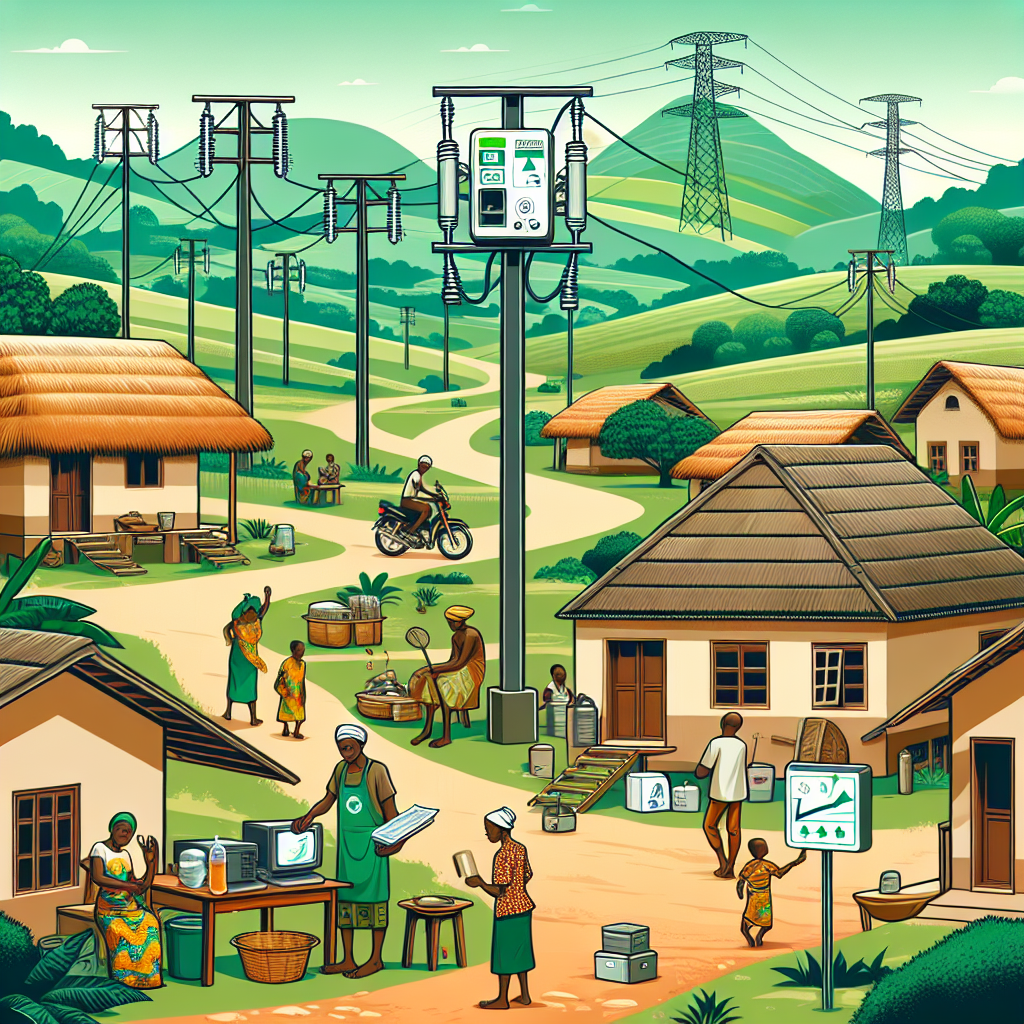
Over three decades ago, the village of Mbem in northwest Cameroon was devoid of electricity, leaving the moon and stars as the only sources of light for its residents, particularly for a young Jude Numfor. This lack of access to electricity profoundly impacted the community’s development and opportunities. Numfor’s vision for electrifying rural areas stemmed from his childhood memories, which fueled his determination to provide sustainable energy solutions. In 2006, he co-founded Renewable Energy Innovators Cameroon (REI), which focuses on designing, installing, and maintaining solar minigrids to facilitate rural electrification. REI leverages photovoltaic technology and battery-energy storage systems to produce electricity distributed through smart meters. The initiative gained traction with support from IEEE Smart Village, which funds projects aimed at enhancing educational and economic opportunities in remote communities.
The principal objective of REI is to electrify rural communities in Cameroon, thereby improving the quality of life and creating economic opportunities. This goal can be achieved through the implementation of solar minigrids that provide consistent and reliable electricity. The strategic collaboration with IEEE Smart Village has enabled REI to refine its business model and expand its operations, ultimately bringing electricity to more than 1,000 households across multiple villages. This partnership has also fostered the development of an open-source metering system, enhancing transparency in energy use and management.
Despite the numerous benefits, challenges persist. The financial viability of such projects remains a significant concern, as the return on investment is often low, deterring potential investors. Additionally, the regulatory environment can pose obstacles, as seen with REI’s journey to obtain a license to operate legally in off-grid areas. Moreover, attracting skilled labor is critical for sustaining operations, necessitating robust recruitment and training processes.
The future of electrification in rural areas, particularly in regions like Cameroon, will likely be influenced significantly by advancements in artificial intelligence (AI). AI has the potential to optimize energy distribution, enhance predictive maintenance of energy systems, and improve demand forecasting. Furthermore, AI-driven analytics can enable better decision-making in energy management, allowing for more tailored solutions that meet the specific needs of communities. As the technology landscape continues to evolve, embracing AI could further empower local entrepreneurs, ensuring that projects like REI can scale effectively and sustainably. The integration of AI in energy systems may also attract a new wave of investors interested in the innovation and impact potential of electrification initiatives.
The electrification efforts spearheaded by Jude Numfor and REI exemplify how sustainable energy solutions can transform rural communities. By addressing the challenges and leveraging technology, particularly AI, there is a significant opportunity to enhance the quality of life for countless individuals, promote economic development, and inspire future generations of innovators.
Disclaimer
The content on this site is generated using AI technology that analyzes publicly available blog posts to extract and present key takeaways. We do not own, endorse, or claim intellectual property rights to the original blog content. Full credit is given to original authors and sources where applicable. Our summaries are intended solely for informational and educational purposes, offering AI-generated insights in a condensed format. They are not meant to substitute or replicate the full context of the original material. If you are a content owner and wish to request changes or removal, please contact us directly.
Source link :