Contextualizing Vectors in Artificial Intelligence
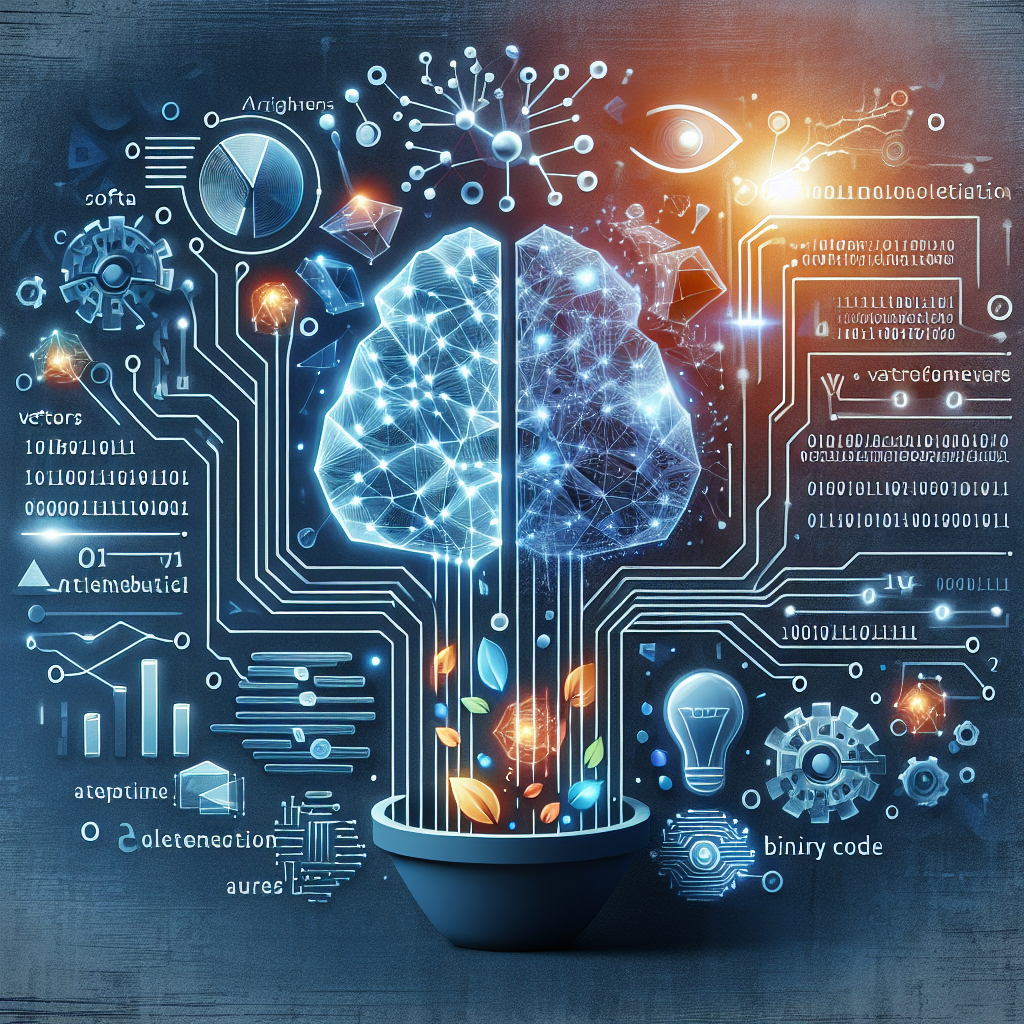
In contemporary discussions surrounding artificial intelligence (AI), it is common to hear assertions about AI’s capability to “understand” various forms of data, including text, images, and user intent. However, this perceived understanding is underpinned by a mathematical framework that is crucial for operationalizing AI systems: vectors. Vectors serve as fundamental building blocks in AI, providing a structured representation of features, semantics, context, and similarities, thereby enabling machines to perform complex comparisons.
Vectors are ubiquitous in modern AI applications, influencing areas such as semantic search, recommendation systems, and context retrieval. Their significance extends particularly to the fields of Computer Vision and Image Processing, where the representation of visual data as vectors facilitates advanced analysis and interpretation.
Main Goal and Achieving Understanding of Vectors
The primary objective of exploring the concept of vectors in AI is to establish a clear and intuitive mental model for understanding how machines process and interpret data. By elucidating the role of vectors, we aim to foster a deeper comprehension of associated terms like embeddings and vector databases, which are instrumental in enhancing the performance of AI systems. Achieving this understanding involves breaking down complex ideas into accessible concepts that maintain their technical rigor.
Advantages of Utilizing Vectors in AI and Computer Vision
- Enhanced Data Representation: Vectors enable a more nuanced representation of data features, which is crucial in applications such as image recognition and natural language processing. This representation allows for improved accuracy in AI predictions and classifications.
- Facilitated Similarity Matching: By representing data in vector form, AI systems can efficiently compute similarities across various modalities—text, images, audio—thereby enhancing capabilities in multi-modal learning.
- Improved Contextual Understanding: Vectors provide contextually rich representations that allow AI systems to consider relationships between different data points, leading to more relevant search results and recommendations.
- Scalability in Data Processing: The mathematical nature of vectors supports scalable algorithms, which can handle large datasets commonly encountered in Computer Vision tasks.
While the use of vectors presents numerous advantages, it is important to acknowledge some caveats. For instance, the effectiveness of vector representations can be influenced by the quality of data and the algorithms employed. Additionally, the interpretability of vector-based models can pose challenges in understanding the decision-making processes of AI systems.
Future Implications of Vectors in AI and Computer Vision
The ongoing advancements in AI are poised to significantly impact the field of Computer Vision and Image Processing. As research progresses, we can expect the development of more sophisticated vector representations that capture even richer semantics and context. This could lead to breakthroughs in areas such as real-time image analysis, autonomous systems, and enhanced human-computer interaction.
Furthermore, the integration of vectors with emerging technologies, such as quantum computing and federated learning, may redefine the capabilities of AI, making it more efficient and effective in processing visual data. As these developments unfold, the role of vectors will remain pivotal, shaping the future landscape of artificial intelligence and its applications in vision science.
Disclaimer
The content on this site is generated using AI technology that analyzes publicly available blog posts to extract and present key takeaways. We do not own, endorse, or claim intellectual property rights to the original blog content. Full credit is given to original authors and sources where applicable. Our summaries are intended solely for informational and educational purposes, offering AI-generated insights in a condensed format. They are not meant to substitute or replicate the full context of the original material. If you are a content owner and wish to request changes or removal, please contact us directly.
Source link :
Click Here