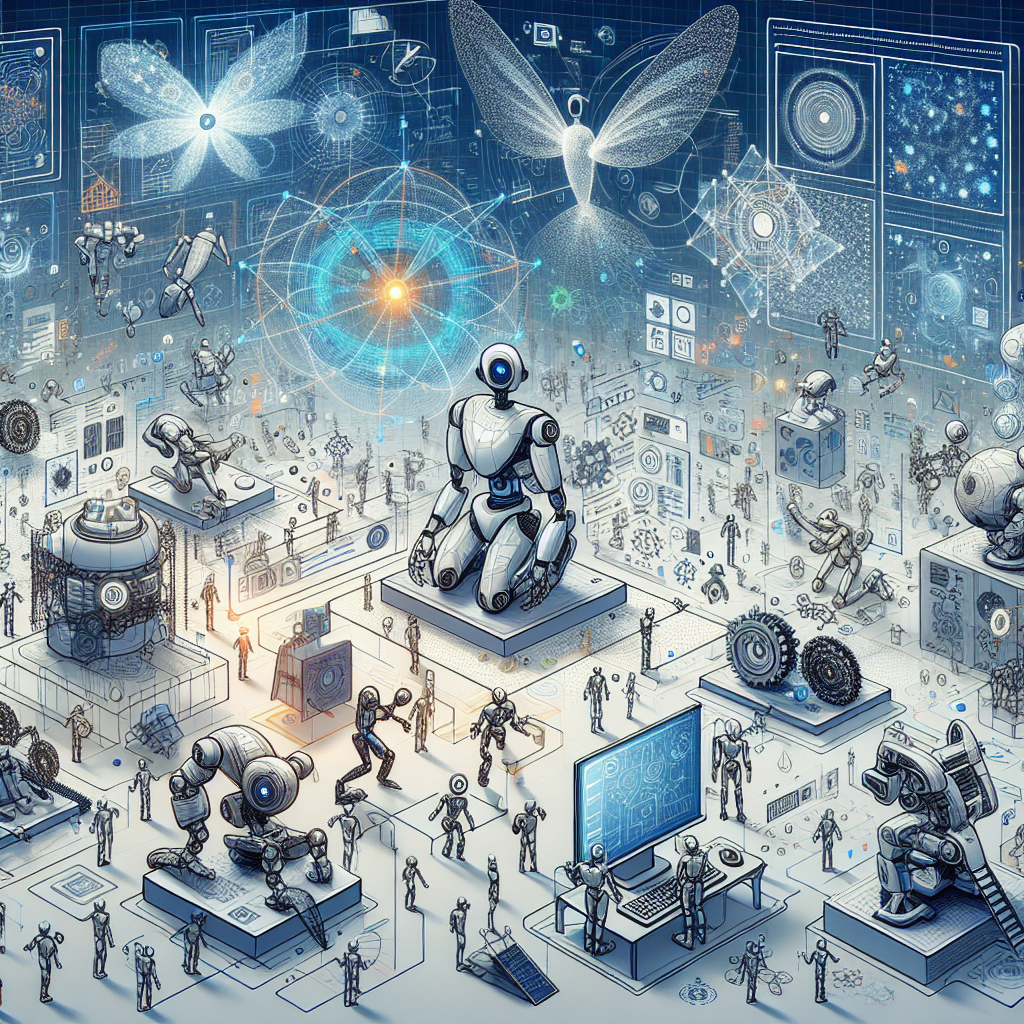
The rapid advancement of technologies in robotics and autonomous systems, particularly through open-source models, has transformed development processes across various industries. As highlighted in the recent developments by NVIDIA, open-source frameworks have become pivotal for fostering innovation in the field of Generative AI. Through collaborative development, these frameworks enable the creation of more capable and safer autonomous systems that can navigate complex environments. The integration of physical AI models, simulation frameworks, and cloud-native tools facilitates a comprehensive toolbox for developers, enhancing their ability to build sophisticated robots and autonomous systems.
The principal aim of introducing open physical AI models and frameworks is to streamline the development lifecycle of robotics. This can be achieved by offering modular toolkits that encompass the entire process, from high-fidelity simulations to real-world deployments. By providing a standardized approach to sharing 3D data via OpenUSD, developers can create accurate digital twins. These digital twins allow for seamless transitions between simulation and deployment stages, thereby enhancing the reliability and effectiveness of robotic systems.
The adoption of open models and frameworks presents numerous advantages for developers and organizations involved in robotics:
1. **Enhanced Collaboration**: Open-source initiatives foster a collaborative environment where developers can share insights, tools, and advancements, accelerating the innovation cycle. For example, NVIDIA’s partnerships with various organizations enable collective contributions to the evolution of AI technologies.
2. **Comprehensive Toolkits**: The modular nature of the newly introduced frameworks allows developers to access a wide range of tools specific to their needs. This versatility supports the development of diverse applications, from humanoid robots to autonomous vehicles.
3. **Improved Simulation Accuracy**: By utilizing high-fidelity world simulations and synthetic data generation, developers can create more accurate representations of real-world scenarios. This is crucial for training autonomous systems to operate effectively in unpredictable environments.
4. **Cost and Time Efficiency**: The ability to reuse digital twins and other resources across different projects significantly reduces development time and costs. This efficiency is further enhanced by cloud-native orchestration, which streamlines the deployment process.
5. **Scalability**: Open models provide the flexibility to scale projects based on evolving requirements. As technologies advance, developers can easily integrate new functionalities or switch to more sophisticated AI models without overhauling their existing systems.
6. **Real-World Applications**: The practical implications of these developments are evident as organizations like Caterpillar and LEM Surgical successfully deploy advanced robotics solutions in operational settings, demonstrating the tangible benefits of these technologies.
The trajectory of AI and robotics development appears to be increasingly intertwined with advancements in open-source technologies. As AI models continue to evolve, their integration with robotics will likely lead to more intuitive and capable systems. Future implications may include:
– **Enhanced AI Reasoning**: With models like NVIDIA Cosmos Reason, robots will become increasingly adept at understanding and responding to complex social cues, thereby improving human-robot interactions.
– **Broader Industry Applications**: The application of these technologies will likely expand beyond traditional sectors, penetrating areas such as healthcare, logistics, and customer service, where autonomous systems can bring efficiency and precision.
– **Regulatory and Ethical Considerations**: As autonomous systems become more prevalent, there will be an increased focus on establishing guidelines to ensure safety, accountability, and ethical use of AI technologies.
– **Continued Innovation through Collaboration**: The collaborative nature of open-source development will likely drive continuous improvements and innovations, fostering an ecosystem where knowledge and advancements are shared freely, ultimately leading to groundbreaking applications in robotics and AI.
In conclusion, the integration of open models and frameworks in the robotics sector is not only a key driver of innovation but also a critical component for the future of autonomous systems. The ongoing advancements in Generative AI will continue to shape how these technologies are developed and applied, providing exciting opportunities for researchers and practitioners alike.
Disclaimer
The content on this site is generated using AI technology that analyzes publicly available blog posts to extract and present key takeaways. We do not own, endorse, or claim intellectual property rights to the original blog content. Full credit is given to original authors and sources where applicable. Our summaries are intended solely for informational and educational purposes, offering AI-generated insights in a condensed format. They are not meant to substitute or replicate the full context of the original material. If you are a content owner and wish to request changes or removal, please contact us directly.
Source link :