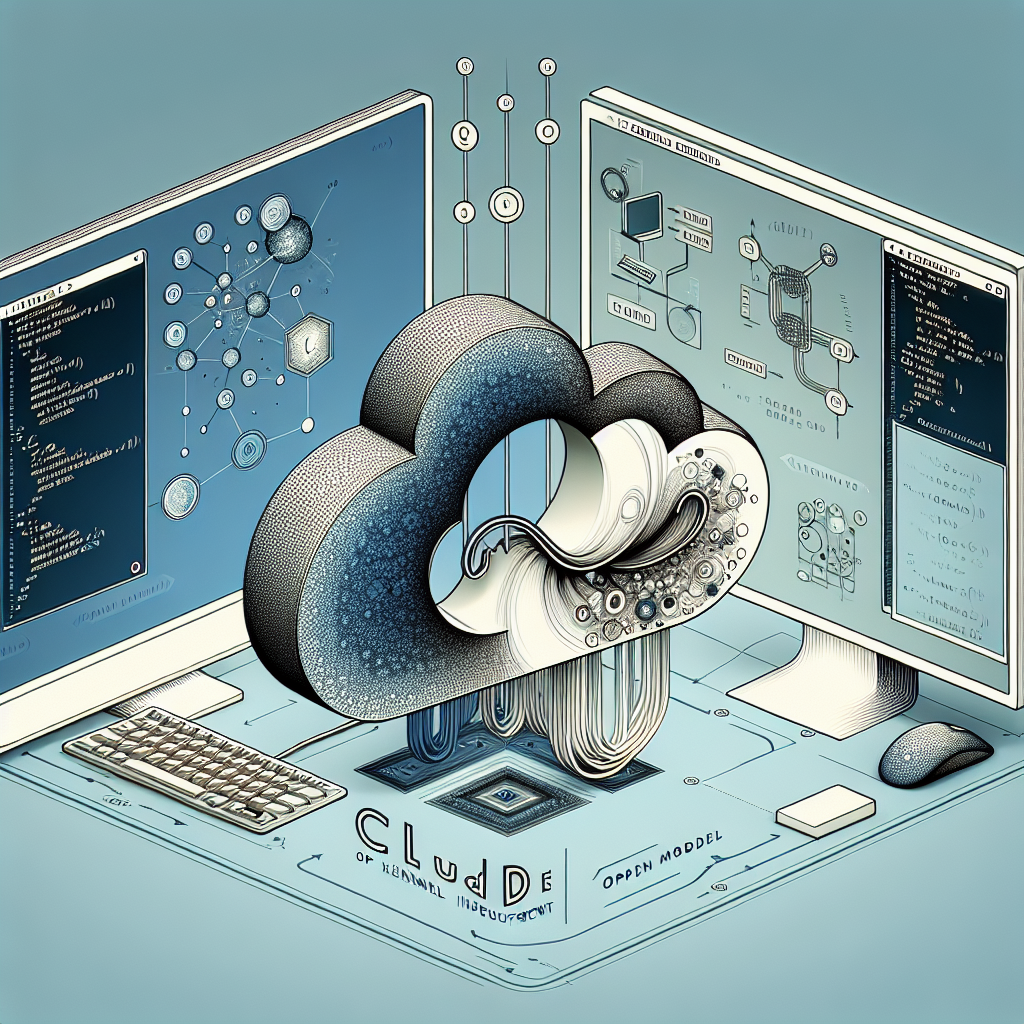
In the rapidly evolving landscape of Generative AI, enhancing the capabilities of agents through targeted skills development—termed as upskilling—has emerged as a pivotal focus. The dual approach to this methodology includes leveraging state-of-the-art (SOTA) models like Opus 4.5 to address complex challenges and utilizing more accessible models to tackle difficult tasks. This blog post elucidates the process of employing a novel tool, upskill, to generate and evaluate agent skills using large models while applying them to smaller, more accessible frameworks. The benchmark for this discussion revolves around the creation of CUDA kernels, an integral aspect of optimizing machine learning models, particularly in the context of the HuggingFace diffusers framework.
The primary objective is to delineate a systematic approach for upskilling agents to handle complex computational tasks, specifically in writing CUDA kernels. This can be achieved by utilizing the upskill tool to create skills that allow models to perform specialized tasks efficiently, thereby empowering smaller models to handle intricate problems without the computational overhead typically associated with larger models.
upskill tool not only generates skills but also provides mechanisms to evaluate the performance of models with and without these skills. This benchmarking capability helps in identifying the best-fit models for specific tasks.upskill tool helps to streamline the learning curve for smaller models.
While the advantages of using upskill are pronounced, there are important caveats to consider:
The ongoing advancements in AI and machine learning technologies are poised to revolutionize the landscape of agent skills development. As models become increasingly sophisticated, the interplay between large, powerful models and smaller, efficient ones will likely define the future of computational efficiency. Moreover, the techniques and methodologies established through the upskill framework may set the stage for broader applications beyond CUDA kernel development, potentially transforming various domains including data science, software engineering, and complex systems modeling.
The evolution of upskilling agents through the upskill tool represents a significant leap forward in the capacity of Generative AI models to address complex tasks efficiently. By focusing on the creation and application of specialized skills, organizations can not only enhance operational efficiency but also foster innovation in machine learning applications. As the field progresses, the principles outlined here will be instrumental in shaping the future of AI-driven solutions across various industries.
Disclaimer
The content on this site is generated using AI technology that analyzes publicly available blog posts to extract and present key takeaways. We do not own, endorse, or claim intellectual property rights to the original blog content. Full credit is given to original authors and sources where applicable. Our summaries are intended solely for informational and educational purposes, offering AI-generated insights in a condensed format. They are not meant to substitute or replicate the full context of the original material. If you are a content owner and wish to request changes or removal, please contact us directly.
Source link :