The challenge of accurately counting overlapping or touching objects in images is a significant obstacle in the field of computer vision. Traditional methods, such as basic thresholding and contour detection, often fall short in these scenarios, erroneously treating multiple adjacent items as a single entity. The Watershed algorithm emerges as a robust solution, conceptualizing the image as a topographic surface wherein the separation of touching objects is facilitated through a simulated flooding process.
Image segmentation, a fundamental aspect of computer vision, involves the partitioning of an image into meaningful segments. This process is vital for enabling machines to interpret visual data semantically, thereby enhancing applications ranging from medical diagnostics to autonomous navigation. Among various segmentation techniques, the watershed algorithm is particularly notable for its adeptness at delineating overlapping or closely positioned objects, a task often challenging for simpler methodologies. Drawing its name from the concept of drainage basins, this algorithm utilizes grayscale intensity values to simulate elevation, establishing natural boundaries between distinct regions.
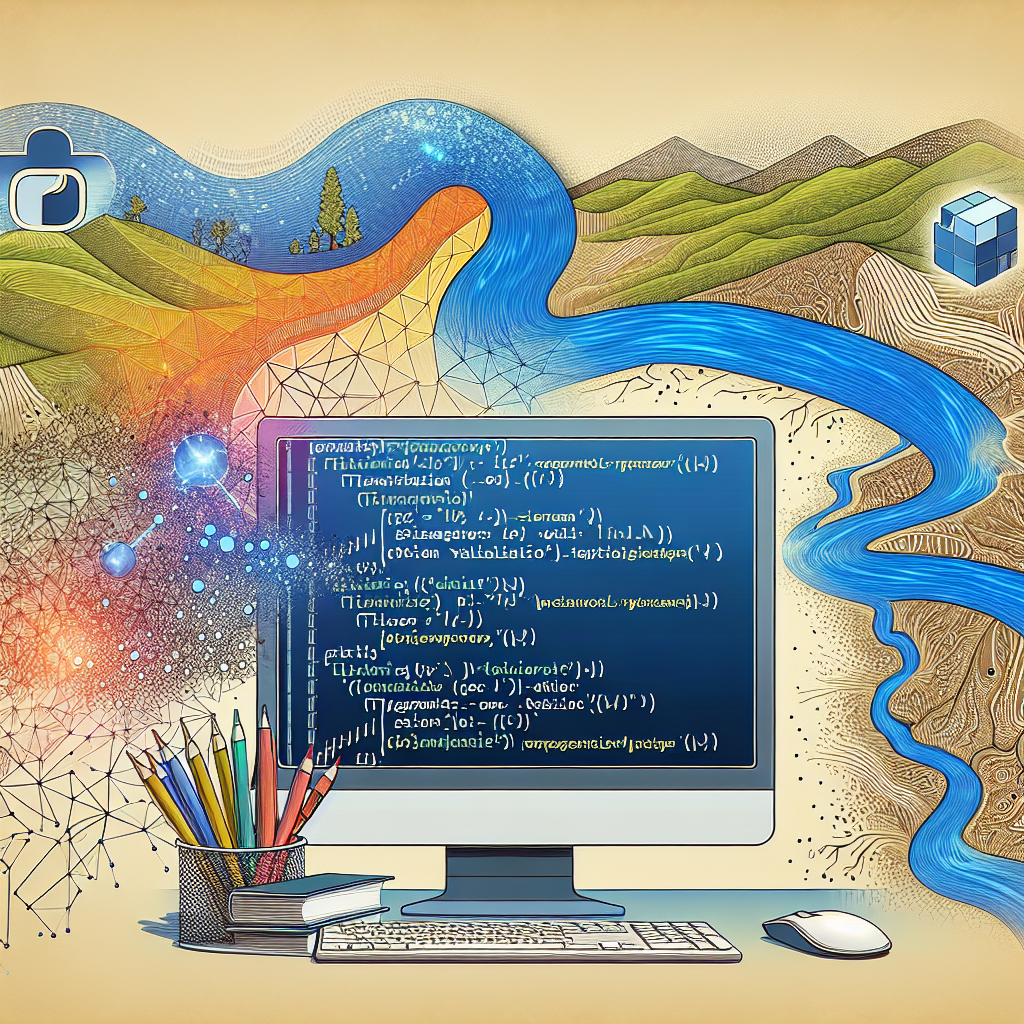
The watershed algorithm employs an intuitive topographical metaphor, envisioning the grayscale image as a three-dimensional landscape. In this representation, pixel intensity corresponds to elevation: brighter regions indicate peaks and ridges, while darker areas represent valleys and basins. This conversion from a flat pixel grid to a three-dimensional terrain underpins the algorithm’s efficacy and elegance in segmentation.
Despite its strengths, classical implementations of the watershed algorithm often encounter the issue of oversegmentation, where minor intensity variations lead to unnecessary local minima and excessive segmentation into trivial regions. The introduction of a marker-based approach effectively addresses this limitation.
The marker-based watershed technique enhances the classical algorithm by incorporating explicit markers that indicate sure foreground objects and background regions, alongside areas requiring algorithmic determination. This strategy allows for a more controlled segmentation process:
The primary objective of the watershed algorithm is to accurately segment touching or overlapping objects in images. This can be achieved through the implementation of the marker-based watershed approach, which minimizes the risk of oversegmentation by utilizing pre-defined markers for foreground and background regions. By guiding the algorithm with these markers, one can significantly enhance the precision of segmentation outcomes, facilitating better object recognition in complex visual scenarios.
However, it is essential to recognize certain limitations, primarily the susceptibility to noise and the potential for oversegmentation if not properly managed. Careful tuning of parameters and preprocessing steps is crucial to mitigate these issues.
As artificial intelligence continues to evolve, the watershed algorithm is poised to benefit from advancements in AI technologies. The integration of machine learning techniques could enhance marker generation processes, allowing for more automated and intelligent segmentation of complex images. Furthermore, coupling the watershed algorithm with deep learning methods, such as convolutional neural networks (CNNs), may yield superior segmentation performance, particularly in challenging scenarios with significant visual clutter.
In summary, the watershed algorithm represents a significant advancement in image segmentation methodologies, providing an effective means to tackle the persistent challenges of overlapping object detection in computer vision. The ongoing development of AI technologies is likely to further enhance its capabilities and applications, solidifying its role as a crucial tool in the field.
Disclaimer
The content on this site is generated using AI technology that analyzes publicly available blog posts to extract and present key takeaways. We do not own, endorse, or claim intellectual property rights to the original blog content. Full credit is given to original authors and sources where applicable. Our summaries are intended solely for informational and educational purposes, offering AI-generated insights in a condensed format. They are not meant to substitute or replicate the full context of the original material. If you are a content owner and wish to request changes or removal, please contact us directly.
Source link :