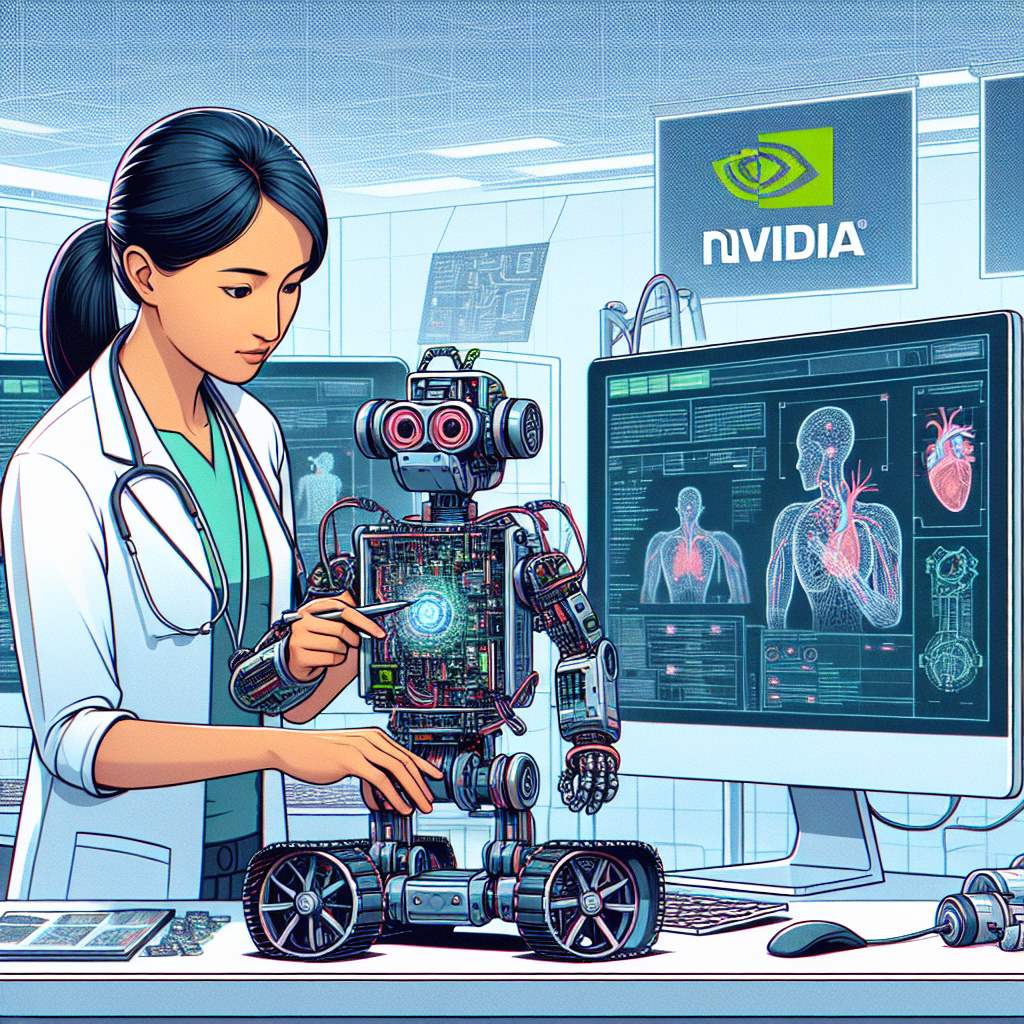
In the field of healthcare robotics, the integration of simulation technologies is redefining how developers approach the design, testing, and deployment of robotic systems. Traditional methods have often been hindered by lengthy prototyping cycles and challenges in translating simulated outcomes to real-world applications. Recent advancements, particularly with NVIDIA’s Isaac for Healthcare platform, are addressing these challenges, facilitating a streamlined workflow from simulation to deployment. This blog post aims to elucidate these developments and their implications for Generative AI models and applications within the healthcare sector, particularly focusing on the benefits for GenAI scientists.
The primary objective of the original blog post is to guide developers in constructing a healthcare robot using the NVIDIA Isaac for Healthcare framework, emphasizing the streamlined transition from simulation to real-world deployment. Achieving this goal involves leveraging the SO-ARM (Surgical Operational Autonomous Robotic Manipulator) starter workflow, which enables developers to collect data, train models, and deploy them effectively in real-world settings.
While the advancements in the SO-ARM workflow present numerous benefits, several limitations warrant consideration. The reliance on simulation data, although substantial, may not fully capture all real-world complexities, which could affect the robot’s performance in unpredictable scenarios. Additionally, the hardware requirements for deploying these systems can be significant, necessitating investments in advanced computational resources.
The trajectory of AI development in healthcare robotics indicates a profound impact on the industry. As generative models evolve, the capacity for these systems to learn from increasingly complex datasets will enhance their operational effectiveness. Future iterations of platforms like NVIDIA’s Isaac for Healthcare are likely to incorporate more sophisticated AI-driven capabilities, allowing for more autonomous decision-making in surgical settings. Additionally, as the technology matures, we can anticipate broader adoption across various healthcare settings, leading to improved patient outcomes and operational efficiencies.
The advancements facilitated by NVIDIA’s Isaac for Healthcare and the SO-ARM starter workflow are pivotal in transforming the landscape of healthcare robotics. By enabling a streamlined process from simulation to deployment, these technologies not only enhance the speed and accuracy of robotic systems but also pave the way for future innovations in the field. For GenAI scientists, this represents an exciting frontier, combining the power of generative AI with practical applications that can significantly improve healthcare delivery.
Disclaimer
The content on this site is generated using AI technology that analyzes publicly available blog posts to extract and present key takeaways. We do not own, endorse, or claim intellectual property rights to the original blog content. Full credit is given to original authors and sources where applicable. Our summaries are intended solely for informational and educational purposes, offering AI-generated insights in a condensed format. They are not meant to substitute or replicate the full context of the original material. If you are a content owner and wish to request changes or removal, please contact us directly.
Source link :