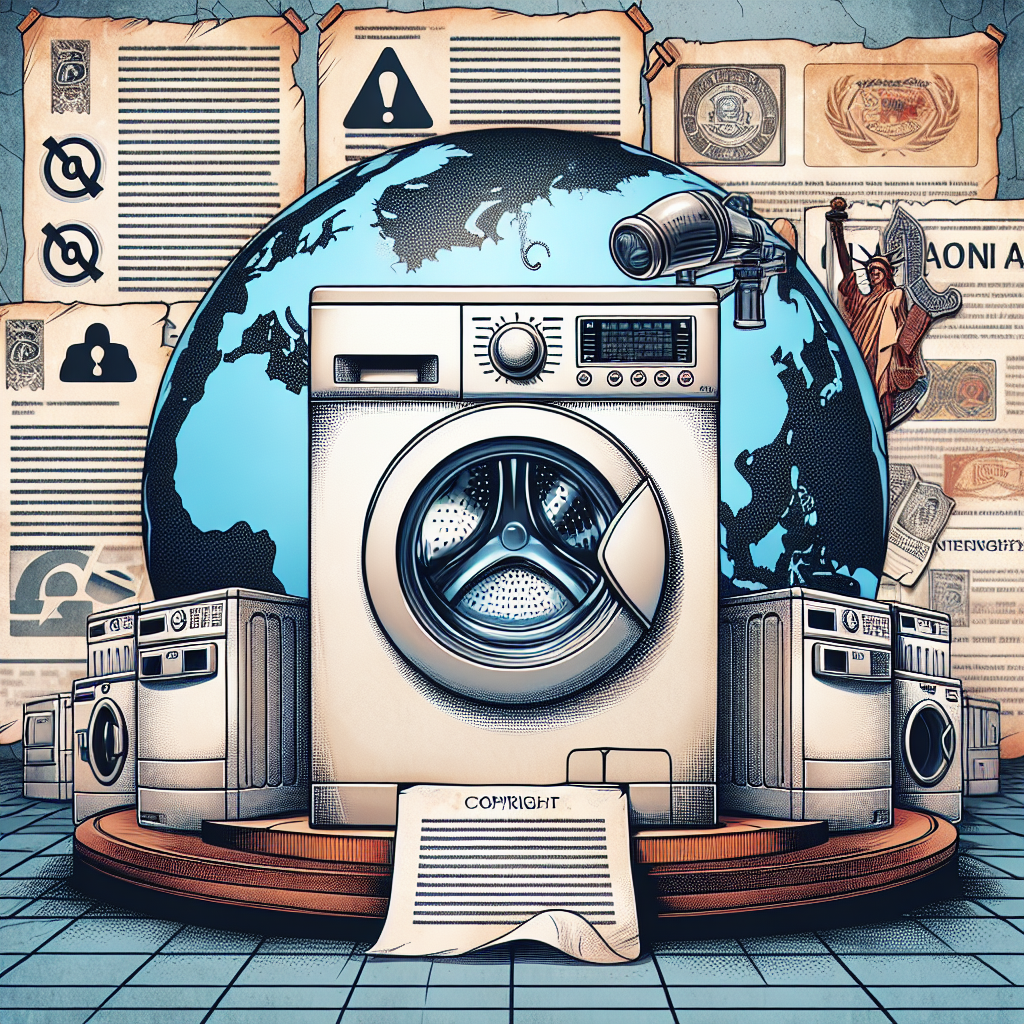
The recent case of Ningbo Yituo v. GoPlus highlights significant implications of copyright takedown notices within the competitive arena of washing machine manufacturing. The dispute arose between two rival companies, GoPlus and Ningbo Yituo, both of which utilize the same original equipment manufacturer (OEM), Ningbo Baike Electric Appliance. This shared dependency has resulted in identical body patterns for their washing machines due to the use of a common mold, effectively minimizing production costs for both entities.
At the heart of the litigation is GoPlus’ claim to a copyright registration for a two-dimensional schematic of its washing machine design. Notably, the registration specifies that it does not extend to any functional articles depicted, but strictly to the artwork submitted. This raises critical questions regarding the validity of copyright claims when the manufacturing processes and designs converge among competitors.
The primary objective of GoPlus in sending Digital Millennium Copyright Act (DMCA) takedown notices to Amazon was to eliminate competition from Ningbo Yituo’s offerings, thereby enhancing its market position. This tactic exemplifies a broader strategy seen across various industries, where companies leverage copyright claims to assert monopolistic control over similar products. Achieving this goal means navigating the legal landscape effectively, which in this case involved asserting ownership of the copyright despite questions surrounding its validity.
However, it is essential to recognize the caveats associated with these advantages. The reliance on potentially invalid copyright claims can lead to legal repercussions, as seen in Ningbo Yituo’s efforts to contest the validity of GoPlus’ copyright registration.
The future of copyright law, particularly in the context of takedown notices, is poised for transformation with advancements in artificial intelligence (AI). As AI technologies evolve, they will likely redefine how copyright ownership and infringement are assessed. For instance, AI-driven analytics could provide more accurate determinations of originality and ownership, potentially mitigating disputes over shared designs and manufacturing processes.
Moreover, AI systems may streamline the process of issuing takedown notices, allowing companies to act swiftly against perceived infringements. However, this could also exacerbate the prevalence of overreaching claims, leading to increased litigation similar to what has been observed in the GoPlus and Ningbo Yituo case.
Ultimately, the intersection of AI and copyright law could yield both opportunities and challenges, necessitating continuous adaptation by legal professionals in the LegalTech sector. These developments underscore the importance of remaining vigilant about the ethical implications and legal frameworks governing copyright enforcement in a rapidly evolving technological landscape.
Disclaimer
The content on this site is generated using AI technology that analyzes publicly available blog posts to extract and present key takeaways. We do not own, endorse, or claim intellectual property rights to the original blog content. Full credit is given to original authors and sources where applicable. Our summaries are intended solely for informational and educational purposes, offering AI-generated insights in a condensed format. They are not meant to substitute or replicate the full context of the original material. If you are a content owner and wish to request changes or removal, please contact us directly.
Source link :