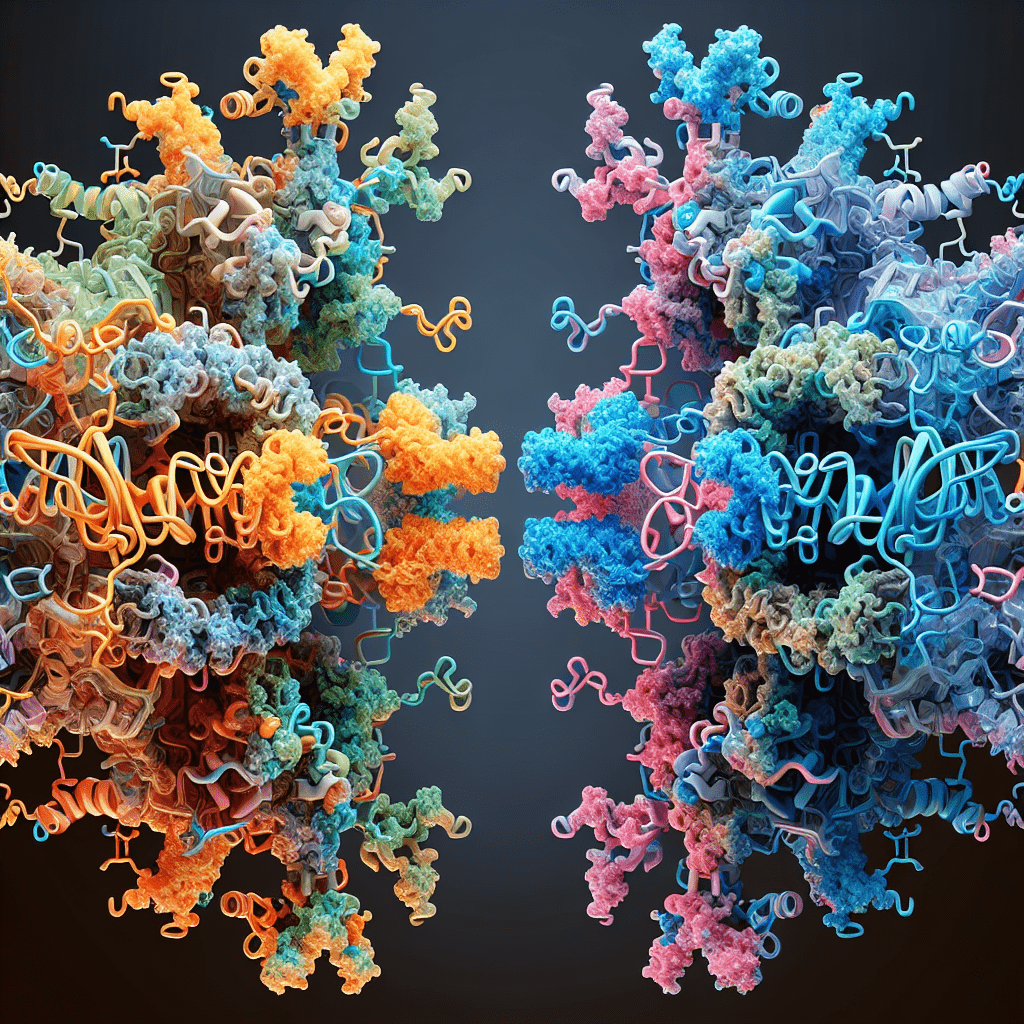
Modeling the Conformational Dynamics of Antibody and T Cell Receptor Complementarity-Determining Regions

Context and Relevance to Smart Manufacturing and Robotics

In the domain of Smart Manufacturing and Robotics, the ability to predict the conformational flexibility of proteins, specifically antibodies and T cell receptors (TCRs), is increasingly recognized as a pivotal factor influencing the functionality and efficacy of biotechnological applications. Proteins, being inherently flexible molecules, exhibit multiple stable structures or conformations that are crucial for their biological functions. For instance, antibodies and TCRs engage their targets through specific regions known as complementarity-determining regions (CDRs). The structural flexibility of these CDRs is linked to essential properties such as specificity and binding affinity—critical parameters in therapeutic and diagnostic applications.

Main Goal and Achievement

The primary aim outlined in the original research is to develop predictive models that can classify the flexibility of CDR regions in antibodies and TCRs. Achieving this goal involves creating a comprehensive dataset, termed ALL-conformations, which collates structural data from various protein databases. By utilizing this dataset, the Immunoglobulins and TCRs Flexibility classifier (ITsFlexible) is trained to accurately predict whether a given CDR adopts a rigid or flexible conformation. This predictive capability is essential for enhancing the design and application of antibody-based therapies and diagnostics.

Advantages of Predicting CDR Flexibility

  • Enhanced Therapeutic Design: The prediction of CDR flexibility aids in designing antibodies with optimal binding characteristics, enhancing their therapeutic potential. Structural flexibility has been associated with improved recognition of antigen variants, which is vital in contexts such as pandemic preparedness.
  • Improved Specificity and Affinity: By understanding the conformational dynamics of CDRs, researchers can engineer antibodies that exhibit higher specificity and binding affinity, minimizing off-target effects and increasing therapeutic effectiveness.
  • Data-Driven Insights: The development of the ALL-conformations dataset allows for a more systematic approach to protein flexibility analysis, providing valuable insights into how conformational diversity influences protein function.
  • Facilitation of AI Integration: The predictive capabilities of ITsFlexible can streamline workflows in drug design, making it easier to integrate AI-driven methodologies into the development processes of therapeutic antibodies.

However, it is important to note that the accuracy of such predictions is contingent on the quality of the input data and the underlying assumptions made during model training. Additionally, while the model has shown promise, further validation through experimental methods is essential to ensure its reliability across diverse protein systems.

Future Implications in Smart Manufacturing and Robotics

Looking ahead, the integration of advanced AI techniques in predicting protein flexibility will likely revolutionize the field of Smart Manufacturing and Robotics. As tools such as AlphaFold and other machine learning models continue to evolve, the ability to accurately forecast the conformational states of proteins will not only enhance therapeutic design but also improve the efficiency of biomanufacturing processes. The potential for AI to model dynamic protein interactions in real-time could lead to breakthroughs in personalized medicine and adaptive manufacturing systems that respond to biological variations.

Disclaimer

The content on this site is generated using AI technology that analyzes publicly available blog posts to extract and present key takeaways. We do not own, endorse, or claim intellectual property rights to the original blog content. Full credit is given to original authors and sources where applicable. Our summaries are intended solely for informational and educational purposes, offering AI-generated insights in a condensed format. They are not meant to substitute or replicate the full context of the original material. If you are a content owner and wish to request changes or removal, please contact us directly.

Source link :

Click Here

How We Help

Our comprehensive technical services deliver measurable business value through intelligent automation and data-driven decision support. By combining deep technical expertise with practical implementation experience, we transform theoretical capabilities into real-world advantages, driving efficiency improvements, cost reduction, and competitive differentiation across all industry sectors.

We'd Love To Hear From You

Transform your business with our AI.

Get In Touch