
Contextual Overview: The Intersection of Technology and Daily Life In the modern landscape of technology, practical solutions often enhance our daily experiences, particularly for parents managing the complexities of travel and entertainment for children. The convenience of portable devices, such as tablets, has become a staple in family outings, allowing for distraction during lengthy wait times. However, the associated challenges of device management, particularly in terms of charging, necessitate reliable accessories. The emergence of high-quality retractable cables has provided a solution that is both functional and efficient, exemplifying how technology can alleviate everyday stressors. This premise resonates within the context of artificial intelligence (AI) applications in cybersecurity, where tools must remain efficient and reliable to protect sensitive information while navigating complex environments. Main Goal: Enhancing User Experience Through Practical Solutions The principal objective discussed in the original content is to highlight the utility of a retractable USB-C cable that simplifies charging for everyday scenarios, particularly in the context of family travel. Achieving this goal involves selecting a product that combines quality with functionality, ensuring that users experience minimal inconvenience. In the realm of cybersecurity, similar principles apply; professionals must employ tools that optimize security without sacrificing user experience. The integration of AI in cybersecurity solutions aims to enhance efficiency, automate threat detection, and streamline incident responses, making it imperative to choose reliable tools that support these goals effectively. Advantages of Retractable Cables in Everyday Use Portability: The compact design of retractable cables allows for seamless transportation, making them ideal for individuals who require on-the-go charging solutions. Efficiency: High power output, such as the 240W supported by the Talix cable, ensures rapid charging of devices, which is particularly beneficial during travel. Durability: The construction materials, including rubber-coated ends, prevent fraying and enhance the longevity of the cable, ensuring it withstands frequent use. Organizational Benefits: The retractable feature minimizes cable tangling, contributing to a more organized space in bags or vehicles, which is advantageous for maintaining a clutter-free environment. User-Friendly Mechanism: The straightforward tug-and-release mechanism simplifies usage, making it accessible for individuals of all ages, similar to the need for intuitive cybersecurity tools. Limitations and Considerations While the advantages are noteworthy, certain limitations must be acknowledged. For instance, the ability to pull only one end of the cable at a time may not be feasible due to the design of the retractable mechanism, which could hinder some user experiences. Additionally, while the cable is robust, the durability of retractable mechanisms can vary across products, indicating a need for thorough research before purchase. In cybersecurity, the rapid evolution of AI technologies also presents challenges, as reliance on automated systems without human oversight can lead to potential vulnerabilities if not managed correctly. Future Implications of AI in Cybersecurity The ongoing advancements in AI technology are poised to significantly influence the field of cybersecurity. As machine learning algorithms become more sophisticated, they will enhance threat detection capabilities, allowing for real-time responses to complex cyber threats. Furthermore, the integration of AI tools is expected to foster a more proactive approach to cybersecurity, shifting from reactive measures to preventative strategies. This evolution necessitates continuous training and adaptation for cybersecurity experts, ensuring they remain adept at utilizing new technologies effectively. The future landscape will likely see a hybrid model where human expertise is complemented by AI-driven insights, ultimately leading to a more secure digital environment. Disclaimer The content on this site is generated using AI technology that analyzes publicly available blog posts to extract and present key takeaways. We do not own, endorse, or claim intellectual property rights to the original blog content. Full credit is given to original authors and sources where applicable. Our summaries are intended solely for informational and educational purposes, offering AI-generated insights in a condensed format. They are not meant to substitute or replicate the full context of the original material. If you are a content owner and wish to request changes or removal, please contact us directly. Source link : Click Here
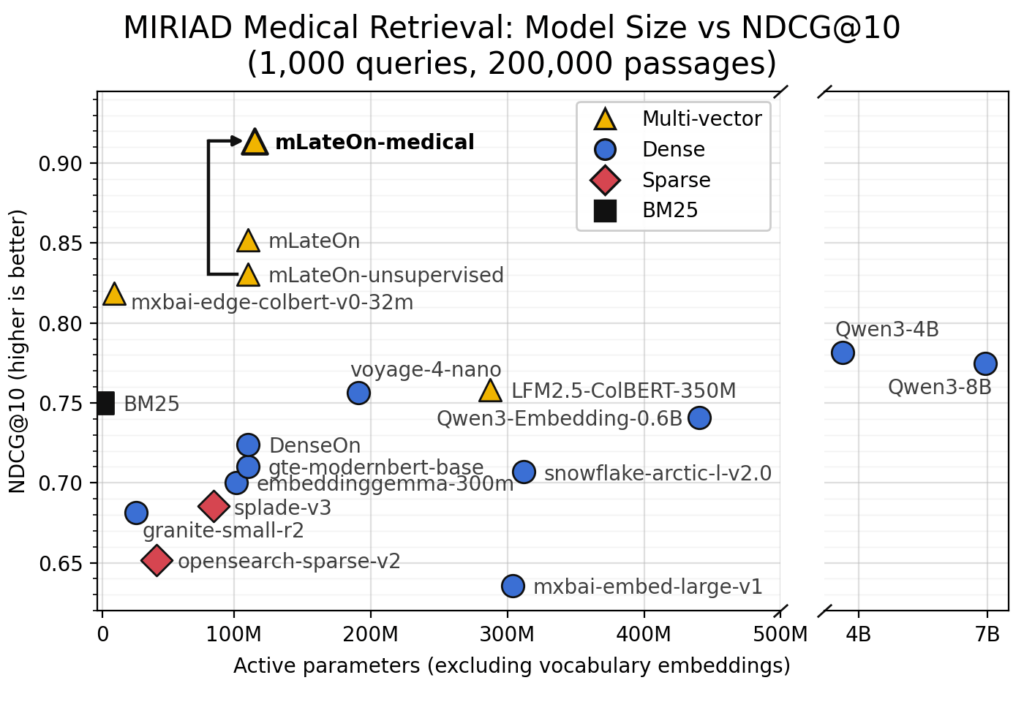
Context In the rapidly evolving landscape of Generative AI, the ability to leverage advanced embedding models is paramount for applications such as semantic search, retrieval-augmented generation, and semantic textual similarity. The Sentence Transformers library has emerged as a robust tool for training and utilizing these models. Its recent version 6.0 introduces the MultiVectorEncoder, which facilitates late interaction retrieval akin to the ColBERT architecture. This update provides a comprehensive method for fine-tuning multi-vector models that can outperform general-purpose retrieval systems tailored to specific datasets. The entire process can be initiated with the simple command: pip install -U “sentence-transformers[train]”. This discussion delves into the core components necessary for fine-tuning multi-vector models, encompassing the model architecture, datasets, loss functions, training parameters, evaluators, and the trainer class. Each component is elucidated with practical examples, equipping data scientists with the necessary insights to enhance the performance of multi-vector models within their specific domains. Main Goal and Achievements The primary goal of fine-tuning multi-vector models is to significantly enhance their retrieval performance within a defined domain. This is accomplished through the adaptation of model parameters tailored to the unique vocabulary, query preferences, and relevance criteria pertinent to the specific application area. The fine-tuning process enables the model to leverage detailed, token-level matching, which is particularly beneficial for domains characterized by nuanced language and complex query structures. Advantages of Fine-Tuning Multi-Vector Models Domain-Specific Performance: Fine-tuning allows models to adapt to specific terminologies and query styles, leading to improved accuracy and relevance in search results. This is supported by empirical evidence indicating that models trained on domain-specific datasets outperform their general counterparts. Enhanced Retrieval Capabilities: Multi-vector models utilize token-level matching, which preserves fine-grained signals that single-vector models may overlook. This results in superior retrieval performance, especially in cases where detailed contextual understanding is essential. Flexibility in Document Length: Many standard models are constrained by predefined document lengths, which can lead to significant information loss. Fine-tuning enables users to configure document lengths according to their specific data needs, ensuring that no critical information is truncated during the retrieval process. Efficient Use of Resources: The training process can effectively utilize consumer-grade GPUs, making advanced model training accessible to a broader range of users without the need for high-end infrastructure. Caveats and Limitations While the benefits of fine-tuning multi-vector models are clear, there are notable caveats to consider. Models trained on small or insufficiently diverse datasets may not generalize well beyond their training data, potentially leading to overfitting. Additionally, the increased index size associated with multi-vector models can pose storage challenges, particularly for applications requiring rapid retrieval across extensive datasets. It is therefore essential to evaluate the trade-offs between model complexity and retrieval efficiency. Future Implications The continuous advancement in AI technologies is likely to further enhance the capabilities of embedding models. As more sophisticated training techniques and larger datasets become available, the potential for even more accurate and context-aware retrieval systems will increase. Future developments may include the integration of multi-modal data sources and enhanced algorithms for dynamic fine-tuning, allowing models to adapt in real-time to evolving user needs and language patterns. This trajectory indicates a promising future for AI applications that leverage fine-tuned multi-vector models, positioning them as critical tools in various sectors, including healthcare, legal, and financial services. Disclaimer The content on this site is generated using AI technology that analyzes publicly available blog posts to extract and present key takeaways. We do not own, endorse, or claim intellectual property rights to the original blog content. Full credit is given to original authors and sources where applicable. Our summaries are intended solely for informational and educational purposes, offering AI-generated insights in a condensed format. They are not meant to substitute or replicate the full context of the original material. If you are a content owner and wish to request changes or removal, please contact us directly. Source link : Click Here
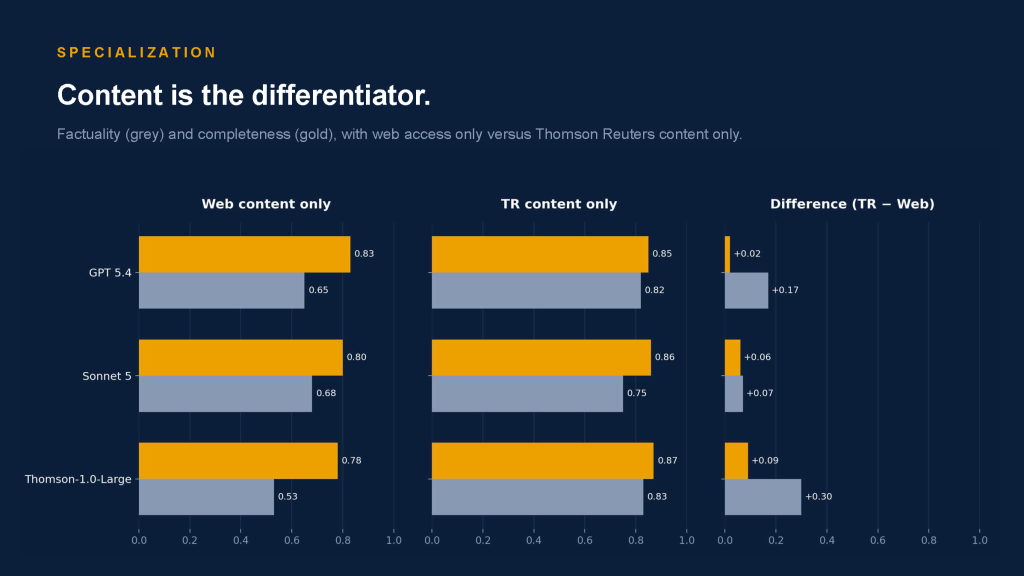
Contextual Overview Thomson Reuters has officially launched its proprietary large language model (LLM), named Thomson, which has been developed utilizing its extensive repository of proprietary legal content from Westlaw and Practical Law. This initiative comes in an era where the integration of artificial intelligence in the legal sector is transforming traditional workflows and enhancing efficiency. According to CEO Steve Hasker, the model has been designed with a foundational focus on specialized legal applications, contrasting with the general-purpose models prevalent in the market, such as ChatGPT and Claude. The development of Thomson is not merely a technological advancement but a strategic positioning within the LegalTech landscape, emphasizing cost-effectiveness and a profound understanding of legal nuances. Main Goal and Achievement Strategy The primary objective of developing the Thomson model is to establish a specialized AI that can address the unique demands of legal professionals while maintaining ownership and control over the intellectual property involved. To achieve this, Thomson Reuters has invested approximately $40 million over two years, significantly lower than the billions typically allocated for leading AI models. This strategic investment underscores the company’s intent to redefine the economics of professional AI by leveraging its proprietary content and expertise, thus fostering a model that is not only efficient but also aligned with the specific needs of the legal industry. Advantages of the Thomson Model Cost Efficiency: Thomson Reuters has demonstrated the potential for significant cost savings in AI development, having invested only $450,000 in the final training run of the Thomson model, compared to the billions spent on other leading models. Specialization in Legal Content: Unlike general-purpose LLMs, Thomson was trained using proprietary legal content, ensuring that the model is finely tuned to meet the specific needs of legal professionals. Enhanced Control: By developing Thomson in-house, Thomson Reuters retains full ownership and control over the model, allowing for tailored adjustments and improvements based on feedback from legal practitioners. Proven Performance: Internal testing has indicated that Thomson outperforms its competitors when evaluated on legal-specific queries, showcasing its capability to provide comprehensive and factual answers. Collaboration Opportunities: The company is open to partnerships with large law firms and corporations that seek to fine-tune the model with their own data, thereby enhancing the model’s applicability and relevance. Future Implications The introduction of Thomson marks a pivotal moment in the legal AI landscape, suggesting a shift towards models that prioritize specialization over sheer scale. As the legal sector increasingly adopts AI technologies, it is anticipated that Thomson will continue to evolve, integrating more proprietary data and refining its capabilities. The implications of this development extend beyond just improved efficiency; they herald a future where legal professionals can leverage AI to enhance their decision-making processes, streamline workflows, and ultimately deliver better outcomes for clients. Furthermore, the potential for licensing Thomson to other organizations may foster a broader ecosystem of specialized legal AI applications, thus propelling the industry towards greater innovation and effectiveness. Disclaimer The content on this site is generated using AI technology that analyzes publicly available blog posts to extract and present key takeaways. We do not own, endorse, or claim intellectual property rights to the original blog content. Full credit is given to original authors and sources where applicable. Our summaries are intended solely for informational and educational purposes, offering AI-generated insights in a condensed format. They are not meant to substitute or replicate the full context of the original material. If you are a content owner and wish to request changes or removal, please contact us directly. Source link : Click Here


