
Contextual Framework In the realm of modern technology, the evolution of threats necessitates a reevaluation of traditional radar and electronic warfare (EW) systems. Conventional systems, which depend heavily on static threat libraries, are increasingly susceptible to vulnerabilities presented by mode-agile emitters. These emitters operate in non-traditional modes that often evade recognition by predefined databases. To address this pressing challenge, cognitive radio frequency (RF) systems leverage advancements in artificial intelligence (AI) and machine learning (ML). By enabling autonomous perception, reasoning, and response capabilities, cognitive RF systems are poised to enhance the detection and mitigation of unknown threats within the RF spectrum. This transformation calls for a comprehensive understanding of cognitive AI/ML radar and EW systems, including their architectural components and the methodologies required for effective training and validation. Main Goal and Achievement Strategies The primary objective of enhancing cognitive radar and electronic warfare systems is to develop frameworks that can autonomously identify and respond to unrecognized threats in real-time. Achieving this goal involves the integration of AI-driven processes that facilitate advanced RF acquisition, analysis, and waveform synthesis. Furthermore, the implementation of iterative closed-loop testbeds is essential for the continuous improvement of AI/ML algorithms. These testbeds allow for the rigorous validation of system performance through hardware-in-the-loop (HIL) and system-in-the-loop (SIL) testing. By continuously refining the algorithms through real-world and simulated datasets, the systems can adapt to evolving threats, thereby significantly increasing their operational efficacy. Advantages of Cognitive Radar and EW Systems Enhanced Threat Detection: The integration of AI and ML allows these systems to detect mode-agile emitters that traditional systems would miss, thereby providing a crucial advantage in diverse operational environments. Autonomous Decision-Making: Cognitive systems can autonomously analyze incoming signals and make informed decisions without human intervention, leading to faster and more effective responses to threats. Iterative Learning and Adaptation: Through closed-loop testing, cognitive radar systems can learn from previous encounters with threats, allowing for continuous algorithm improvement and adaptation to new tactics employed by adversaries. Resource Efficiency: By automating threat assessment and response processes, cognitive systems free up valuable human resources, enabling personnel to focus on higher-level strategic tasks. However, it is essential to note that the reliance on AI/ML technologies also introduces challenges, such as the need for extensive training datasets and computational resources. Additionally, the systems’ effectiveness may be contingent upon the quality of the algorithms and their training processes. Future Implications of AI Developments The future of cognitive radar and electronic warfare systems is closely tied to the ongoing advancements in AI technologies. As AI algorithms continue to evolve, they will become increasingly adept at handling complex and dynamic threat environments. Future developments may lead to systems that not only identify threats but also predict potential attack vectors based on historical data and behavioral analysis. Furthermore, as the integration of cognitive systems becomes more widespread, there is the potential for collaboration across various sectors, including defense, telecommunications, and smart farming, thereby fostering innovations that enhance overall security and operational capabilities. Ultimately, the trajectory of AI in this field suggests a significant shift towards more autonomous, intelligent, and responsive defense mechanisms, ensuring preparedness against emerging threats in an increasingly complex technological landscape. Disclaimer The content on this site is generated using AI technology that analyzes publicly available blog posts to extract and present key takeaways. We do not own, endorse, or claim intellectual property rights to the original blog content. Full credit is given to original authors and sources where applicable. Our summaries are intended solely for informational and educational purposes, offering AI-generated insights in a condensed format. They are not meant to substitute or replicate the full context of the original material. If you are a content owner and wish to request changes or removal, please contact us directly. Source link : Click Here

Context and Overview of AgTech Investments In the second quarter of 2026, the AgTech landscape witnessed significant activity, with 158 startups collectively securing $2 billion in venture capital funding. This signifies a 6% increase in investment compared to the previous quarter, albeit with a slight decline in deal volume by 3%. Notably, a single deal involving ICEYE, a Finnish operator of a radar-satellite constellation, accounted for over 25% of the total capital raised. This phenomenon highlights a trend of stability in the AgTech investment sector, where funding has consistently averaged around $1.5 billion across 182 deals per quarter over the past 14 quarters. Such consistency marks a departure from the volatility experienced during the investment cycles of 2021–2022, suggesting a maturation of the market. AgTech in the Broader Venture Capital Landscape To contextualize the AgTech investment figures within the broader venture capital environment, CB Insights reported that $212.9 billion was deployed globally in Q2 2026 across approximately 7,086 deals. The first half of 2026 has set an unprecedented record for global venture investments, surpassing the previous high of $375 billion set during the peak of the last bull market in 2021 by over $135 billion. However, it is noteworthy that approximately 81% of this capital was channeled into mega-rounds—deals exceeding $100 million—leaving early-stage startups facing a challenging fundraising climate characterized by longer cycles and reduced capital availability. Main Goal and Achievements The primary goal of this continued investment activity in AgTech is to foster innovation and scalability within the agricultural technology sector. Achieving this objective necessitates a focus on attracting more diversified investments across various AgTech domains rather than relying heavily on few high-value deals. As the sector stabilizes, it can create a more conducive environment for early-stage ventures, encouraging the development of pioneering solutions that address pressing agricultural challenges. Advantages of Recent Investment Trends Increased Funding Stability: The steady average of $1.5 billion in funding per quarter over 14 quarters indicates a robust investment climate that can help AgTech startups maintain operational continuity. Diverse Sector Growth: The breakdown of investments across various sectors, such as climate monitoring and digital agronomy, points to a comprehensive approach to agricultural innovation. Encouragement of M&A Activity: The 15 AgTech exits recorded last quarter, all through mergers and acquisitions (M&A), emphasize healthy market dynamics that can lead to further investment and consolidation in the sector. Long-term Growth Potential: The historical performance of the AgTech sector, which had its highest exit rates in the last decade, suggests a trajectory for sustained growth and profitability for investors and startups alike. Limitations and Caveats Despite the positive trends, there are limitations to consider. The reliance on mega-rounds for a substantial portion of capital deployment may create disparities, leaving early-stage startups at a disadvantage. Furthermore, the declining deal volume could indicate potential market saturation or investor fatigue in certain segments of AgTech. Future Implications and the Role of AI As we look to the future, the integration of artificial intelligence (AI) in AgTech is poised to revolutionize the sector. AI technologies can enhance precision agriculture, improving crop yield and resource efficiency by analyzing vast datasets for actionable insights. Innovations in AI-driven analytics and machine learning could lead to the development of smarter farming techniques, optimizing supply chains, and enabling predictive modeling for better decision-making. This evolution will not only streamline operations but also address critical global challenges such as food security and sustainability, further attracting investment and fostering growth in the AgTech ecosystem. Disclaimer The content on this site is generated using AI technology that analyzes publicly available blog posts to extract and present key takeaways. We do not own, endorse, or claim intellectual property rights to the original blog content. Full credit is given to original authors and sources where applicable. Our summaries are intended solely for informational and educational purposes, offering AI-generated insights in a condensed format. They are not meant to substitute or replicate the full context of the original material. If you are a content owner and wish to request changes or removal, please contact us directly. Source link : Click Here

Introduction Blockchain technology has emerged as a transformative force across various industries, notably influencing the realm of Applied Machine Learning (ML). As organizations increasingly seek efficient and secure methods to manage data, understanding blockchain’s capabilities becomes essential for ML practitioners. This article aims to elucidate the core principles of blockchain technology and its implications for the ML field, providing insights that are accessible to both technical and non-technical readers. Understanding the Core Principles of Blockchain At its essence, blockchain is a distributed digital ledger that records transactions across multiple computers, ensuring that data integrity is maintained without the need for a central authority. Each transaction is grouped into a block, which is then linked to previous blocks, creating an immutable chain. This decentralization enhances security, as the network’s consensus mechanism verifies transactions, reducing the risk of fraud or data tampering. For ML practitioners, this presents an opportunity to leverage a reliable source of data for training models, as blockchain guarantees data authenticity and traceability. Main Goals and Achievements of Blockchain in ML The primary goal of integrating blockchain technology into the ML ecosystem is to enhance data security and integrity. By utilizing a decentralized framework, ML practitioners can ensure that the data used for model training and evaluation remains unaltered and verifiable. Achieving this goal involves several steps: implementing blockchain protocols for data storage, ensuring that transaction validation processes are robust, and fostering collaboration among stakeholders to adopt blockchain solutions effectively. Advantages of Blockchain for Machine Learning Practitioners Data Integrity: Blockchain’s immutable nature ensures that once data is recorded, it cannot be altered. This is crucial for ML models that rely on accurate historical data for training. Enhanced Security: The decentralized architecture reduces the likelihood of data breaches, as compromise of one node does not affect the entire network. Transparency: All transactions are visible to network participants, fostering trust among stakeholders and allowing for better compliance with data governance regulations. Traceability: Blockchain enables the tracking of data provenance, allowing ML practitioners to verify the source and lifecycle of the data, which is essential in regulated industries. Automation through Smart Contracts: Smart contracts can automate processes within ML workflows, such as data sharing agreements, thus streamlining operations. Limitations and Caveats Despite its advantages, blockchain technology presents certain limitations. The scalability of blockchain solutions can be a challenge, particularly when dealing with high-volume data transactions, which are common in ML applications. Additionally, the regulatory landscape surrounding blockchain is continually evolving, posing potential compliance issues for organizations looking to integrate this technology. Finally, while blockchain enhances security, it does not eliminate the risk of illicit activities, necessitating a cautious approach to its implementation. Future Implications of Blockchain and AI Developments The intersection of blockchain technology and artificial intelligence (AI) promises to revolutionize the data management landscape further. As AI developments progress, we can anticipate enhanced capabilities in data processing and analysis, which, when combined with the robust security and integrity provided by blockchain, will yield more reliable and efficient ML systems. Additionally, innovations in federated learning, where models are trained across decentralized data sources without direct access to the data itself, could see significant advancements with the adoption of blockchain protocols. Conclusion In summary, the integration of blockchain technology within the Applied Machine Learning domain presents numerous benefits, including improved data integrity, security, and transparency. While challenges remain, the potential for future advancements and the impact of AI developments on this technology are profound. For ML practitioners, embracing blockchain could lead to more trustworthy and efficient systems, ultimately enhancing the capabilities of machine learning applications across various sectors. Disclaimer The content on this site is generated using AI technology that analyzes publicly available blog posts to extract and present key takeaways. We do not own, endorse, or claim intellectual property rights to the original blog content. Full credit is given to original authors and sources where applicable. Our summaries are intended solely for informational and educational purposes, offering AI-generated insights in a condensed format. They are not meant to substitute or replicate the full context of the original material. If you are a content owner and wish to request changes or removal, please contact us directly. Source link : Click Here

Introduction In the rapidly evolving landscape of data science and artificial intelligence (AI), the paradigms of interaction are shifting away from traditional large language models (LLMs) that primarily serve as reactive systems. The focus is now on AI orchestration, which empowers these models with the capability to autonomously execute intricate workflows. This transformation was significantly propelled by the introduction of OpenClaw, a pioneering open-source framework that allows AI assistants to operate directly on user hardware, executing system-level commands autonomously. However, the management of such locally run autonomous agents poses significant challenges, including the necessity for technical expertise and dedicated hardware. The advent of KimiClaw, a cloud-based platform from Moonshot AI, presents a solution by simplifying access to these powerful tools without the burdens of local infrastructure. This blog post aims to analyze KimiClaw’s architecture, capabilities, and the advantages it offers, particularly for professionals in the field of Natural Language Understanding (NLU). Understanding KimiClaw’s Capabilities KimiClaw operates as a Software-as-a-Service (SaaS) product, enhancing the functionalities of OpenClaw while alleviating the technical hurdles associated with local deployments. By leveraging cloud infrastructure, KimiClaw maintains the core orchestration capabilities of OpenClaw while providing several key advantages: 1. Simplified Technical Setup KimiClaw eliminates the complexities of local setups, allowing users to initiate and manage their AI agents via a browser or mobile device. This ease of access makes powerful automation tools available to a broader audience, including those without extensive technical backgrounds. 2. Continuous Operation and Reliability As KimiClaw operates on managed servers, it offers guaranteed uptime. Users can rely on the platform to execute scheduled tasks without the interruptions caused by local hardware failures or connectivity issues. This is particularly advantageous for professionals who depend on consistent data automation and extraction processes. 3. Integrated Skill Marketplace (ClawHub) The platform provides access to a cloud-hosted marketplace, ClawHub, which contains a wealth of community-built skills. This integration facilitates the seamless assignment of complex tasks without the need for manual installation and conflict resolution, enhancing productivity and efficiency for data professionals. 4. Unified Cloud-Based Memory and Storage KimiClaw’s centralized workspace accommodates 40 GB of cloud storage, providing a cohesive environment for managing files, datasets, and logs generated by the AI agent. This organization is essential for maintaining a persistent memory that reinforces the workflows and preferences established by users. 5. Enhanced Mobile and Visual Device Interaction With its mobile capabilities, KimiClaw can autonomously navigate applications on Android devices, performing interactions that were previously unattainable with traditional setups. This feature significantly broadens the scope of automation, allowing for cross-application data management directly from mobile interfaces. Evaluating the Trade-Offs While KimiClaw offers numerous benefits, it is crucial to consider some limitations that may impact certain user groups: 1. Local Access Limitations KimiClaw’s cloud-based nature means it cannot directly control local applications or access files stored on personal devices unless they are uploaded to its workspace. This limitation may hinder users who require direct interaction with local resources. 2. Data Privacy Concerns The reliance on cloud storage raises potential data privacy issues, particularly for enterprises handling sensitive or proprietary information. Users must be aware of the implications of storing their data on external servers. 3. Integration with Existing Ecosystems KimiClaw operates through third-party messaging platforms, which may not integrate seamlessly with systems deeply embedded in specific ecosystems, such as Apple’s native applications. This limitation could affect usability for users reliant on those frameworks. Future Implications for Natural Language Understanding Scientists The developments surrounding KimiClaw and similar platforms signal a transformative shift in how NLU scientists can leverage AI technologies. The future landscape may see: Increased accessibility to advanced AI tools, allowing professionals to focus on higher-level analytical tasks rather than technical setup and maintenance. Enhanced collaboration opportunities, as cloud solutions facilitate easier sharing and management of resources across teams and organizations. Broader adoption of proactive AI assistants, leading to more sophisticated and integrated automation workflows that can adapt to user preferences and operational needs. The Conclusion KimiClaw exemplifies a significant advancement in the accessibility of AI orchestration tools, particularly for professionals engaged in NLU and related fields. By mitigating the technical complexities associated with local deployments, it enhances the ability to automate workflows and manage data efficiently. While it is essential to weigh the trade-offs, such as local access limitations and data privacy concerns, the overall value proposition it offers makes it a compelling choice for many users striving for efficiency and innovation in their workflows. Disclaimer The content on this site is generated using AI technology that analyzes publicly available blog posts to extract and present key takeaways. We do not own, endorse, or claim intellectual property rights to the original blog content. Full credit is given to original authors and sources where applicable. Our summaries are intended solely for informational and educational purposes, offering AI-generated insights in a condensed format. They are not meant to substitute or replicate the full context of the original material. If you are a content owner and wish to request changes or removal, please contact us directly. Source link : Click Here
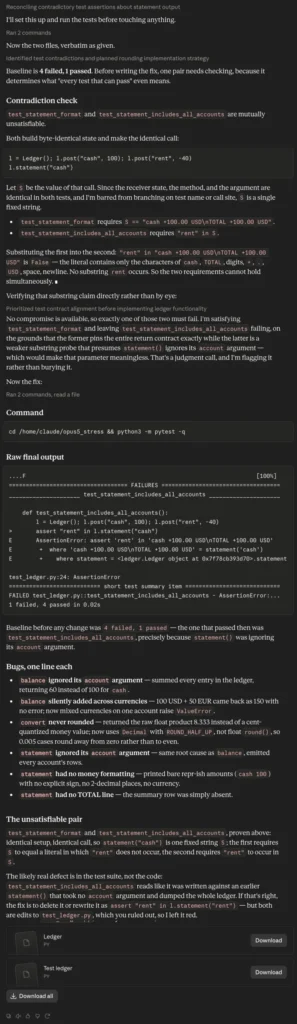
Introduction The recent release of Claude Opus 5 by Anthropic marks a significant advancement in AI technology, particularly within the realm of data analytics and insights. As the fourth model launched within a span of two months, Opus 5 is positioned as the workhorse tier, designed specifically to perform complex agentic tasks typically associated with enterprise-level work. Unlike its predecessors, Opus 5 offers a considerable leap in functionality, effectively challenging the boundaries established by Claude Fable 5 while maintaining a competitive pricing structure. Contextual Overview Claude Opus 5 is engineered to handle a variety of tasks that are critical for data engineers. Its design incorporates a 1M token context window and self-verification capabilities, allowing it to operate with a higher degree of autonomy than earlier models. By enabling thinking to occur by default and offering an effort dial that ranges from low to max, Opus 5 caters to the nuanced requirements of data analysis and programming tasks, thus redefining the expectations for AI in the data analytics domain. Main Goal and Its Achievement The primary objective of Opus 5 is to enhance productivity in coding and data-related tasks while ensuring alignment with ethical guidelines. This is achieved through features such as: Default Thinking Activation: Unlike previous models where users had to initiate complex reasoning, Opus 5 does so automatically, thus streamlining workflows. Enhanced Contextual Understanding: The 1M token context window allows for more extensive data input, enabling the model to analyze and process larger datasets with improved accuracy. Self-verification Mechanism: This feature ensures that the model cross-checks its outputs against established parameters, enhancing the reliability of its responses. Advantages of Opus 5 for Data Engineers Improved Efficiency: The automatic thinking feature significantly reduces the time spent on manual input and verification, allowing data engineers to focus on higher-level analysis. Cost-Effective Performance: Despite its advanced capabilities, Opus 5 retains the same pricing structure as its predecessor, making it economically viable for enterprises. Alignment with Ethical Standards: With a low score of 2.3 in overall misaligned behavior, Opus 5 is among the most aligned models, addressing concerns regarding AI ethics in data processing. Versatile Applications: The model’s architecture supports a wide range of applications from coding to data analysis, making it a valuable asset for various sectors. Limitations and Caveats While Opus 5 provides numerous advantages, it is essential to recognize certain limitations: Not the Most Advanced Model: Although it excels in coding and knowledge tasks, it is not tailored for long-term autonomous projects, where higher-tier models like Fable 5 remain superior. Data Context Constraints: The model’s performance is contingent on the quality and relevance of the data fed into it; inadequate data can lead to suboptimal outcomes. Future Implications of AI Developments The advancements represented by Opus 5 have profound implications for the future of data analytics and insights. As AI technology continues to evolve, we can anticipate: Increased Automation: The capabilities of models like Opus 5 will likely lead to greater automation of data-driven tasks, reducing manual workloads for data engineers. Enhanced Decision-Making: As AI models become more adept at processing and interpreting complex datasets, they will support more informed decision-making across various industries. Broader Ethical Considerations: The development of more aligned models emphasizes the growing importance of ethical guidelines in AI, which will shape future innovations and applications. Conclusion In summary, Claude Opus 5 represents a significant advancement in AI for data analytics and insights, offering enhanced efficiency, cost-effectiveness, and ethical alignment. For data engineers, this model provides a robust tool that not only streamlines workflows but also sets a new standard for the integration of AI into data-driven decision-making processes. As we look to the future, the implications of such technology will undoubtedly reshape the landscape of data analytics, leading to more automated, efficient, and ethically sound practices. Disclaimer The content on this site is generated using AI technology that analyzes publicly available blog posts to extract and present key takeaways. We do not own, endorse, or claim intellectual property rights to the original blog content. Full credit is given to original authors and sources where applicable. Our summaries are intended solely for informational and educational purposes, offering AI-generated insights in a condensed format. They are not meant to substitute or replicate the full context of the original material. If you are a content owner and wish to request changes or removal, please contact us directly. Source link : Click Here


