
Contextual Overview of Annam.AI and Its Impact on Indian Agriculture India’s agricultural sector is characterized by its extensive scale and diversity in agro-climatic zones, enabling the country to emerge as a leading producer of crops such as rice and wheat. Despite these advantages, a multitude of challenges persist, including erratic weather patterns, pest infestations, and a high dependency on smallholder farmers—over 80% of whom cultivate less than two hectares of land. This demographic faces significant barriers to adopting advanced agricultural technologies, which can exacerbate the divide between large commercial farming operations and the majority of farmers. In response to these challenges, the Annam.AI initiative has been established with the objective of providing farmers across India with real-time, personalized agricultural intelligence. By leveraging open data, Annam.AI aims to facilitate precision agriculture and enhance climate resilience, ultimately transforming the agricultural landscape in the country. Main Goals of Annam.AI and Their Achievement The primary goal of Annam.AI is to create a comprehensive agricultural intelligence network that integrates real-time microclimate data, crop intelligence, and multilingual advisory tools. This initiative seeks to empower farmers by providing them with actionable insights tailored to their specific local conditions. Achieving this goal necessitates collaboration among various stakeholders, including government bodies, academic institutions, and private sector entities. The recent partnership between Syngenta and Annam.AI exemplifies this collaborative approach, as Syngenta will contribute its research and development capabilities to develop precise models for crop health and pest management. Advantages of the Annam.AI Initiative 1. **Real-Time Data Access**: Farmers will gain access to timely and localized information that can significantly influence decision-making processes, leading to improved crop yields and reduced losses. 2. **Enhanced Agricultural Resilience**: By providing insights into climate variability and pest threats, Annam.AI can help farmers adopt more resilient farming practices, thereby mitigating the adverse effects of changing weather patterns. 3. **Support for Smallholder Farmers**: The initiative’s focus on smallholder farmers will help bridge the technological gap, ensuring these individuals are not left behind in the agricultural modernization process. 4. **Increased Collaboration**: The program fosters collaboration among various stakeholders, including government, academia, and private enterprises, which can catalyze innovation and resource sharing. 5. **Sustainability Goals**: By promoting precision agriculture, Annam.AI aligns with global sustainability objectives, contributing to food security while minimizing environmental impact. While these advantages are promising, it is crucial to recognize potential limitations such as the need for robust infrastructure to disseminate data effectively and the challenge of ensuring that all farmers possess the digital literacy required to utilize these tools. Future Implications of AI in Agriculture As artificial intelligence continues to evolve, its integration into agricultural practices will likely deepen. The capabilities of AI to analyze vast amounts of data and provide actionable insights will enhance precision farming techniques, optimizing resource use while maximizing output. Furthermore, advancements in machine learning algorithms could lead to more sophisticated predictive models that anticipate climate-related challenges, enabling preemptive actions. In summary, the Annam.AI initiative represents a significant step towards transforming Indian agriculture through open-data collaboration and AI-driven insights. By focusing on inclusivity and sustainability, this program not only addresses the immediate challenges faced by farmers but also sets the foundation for a more resilient agricultural future. Disclaimer The content on this site is generated using AI technology that analyzes publicly available blog posts to extract and present key takeaways. We do not own, endorse, or claim intellectual property rights to the original blog content. Full credit is given to original authors and sources where applicable. Our summaries are intended solely for informational and educational purposes, offering AI-generated insights in a condensed format. They are not meant to substitute or replicate the full context of the original material. If you are a content owner and wish to request changes or removal, please contact us directly. Source link : Click Here

Context In the rapidly evolving landscape of Applied Machine Learning (ML), practitioners often encounter a myriad of questions similar to those found in the realm of affiliate marketing. Just as affiliate marketing allows individuals to monetize existing products and services without the need for creation, machine learning offers various avenues for practitioners to leverage existing algorithms, frameworks, and datasets to provide substantial business value. This post aims to address the most pressing questions that ML practitioners face, drawing parallels to the inquiries often posed in affiliate marketing while providing clarity on how these concepts intertwine. Main Goal and Achievement The primary goal of understanding affiliate marketing is to demystify the process of earning revenue through the promotion of existing products. This can be achieved through a comprehensive understanding of affiliate programs, networks, and commission structures. Similarly, ML practitioners must grasp the foundational principles of machine learning to effectively apply these techniques in their work. By embracing a structured learning approach and utilizing available resources, practitioners can enhance their proficiency and drive meaningful outcomes in their projects. Advantages of Machine Learning for Practitioners Cost Efficiency: Implementing machine learning solutions can significantly reduce operational costs by automating repetitive tasks and enhancing decision-making processes. Evidence shows that organizations that adopt ML technologies report heightened efficiency and lower costs across various operational dimensions. Data-Driven Insights: ML enables practitioners to derive actionable insights from large volumes of data, facilitating informed decision-making. This advantage mirrors the role of affiliate marketing where data analytics helps optimize campaigns and drive conversions. Scalability: Machine learning models can be scaled to accommodate increasing data loads and user demands without a corresponding increase in resource expenditure. This scalability is akin to affiliate marketing, which allows for the expansion of marketing efforts as the affiliate network grows. Competitive Advantage: Organizations leveraging machine learning technologies gain a distinct edge over competitors by utilizing predictive analytics and advanced algorithms to anticipate market trends and consumer behaviors. Improved Customer Experience: Machine learning can enhance customer interactions through personalized recommendations and proactive engagement strategies, similar to how affiliates tailor promotions based on user interests. Limitations and Caveats While the advantages of machine learning are substantial, practitioners must be cognizant of certain limitations. The initial setup of ML systems can be resource-intensive, requiring significant investment in both time and technology. Additionally, the quality of outcomes is directly tied to the quality of data; poor data can lead to misleading insights and ineffective strategies. Furthermore, ethical considerations surrounding data use and algorithmic bias remain critical issues that practitioners must navigate. Future Implications The landscape of machine learning is poised for significant transformation as advancements in artificial intelligence (AI) continue to unfold. Future developments will likely enhance the capabilities of ML, making it more accessible and effective for a broader range of applications. As AI technologies evolve, practitioners will need to adapt to new tools and methodologies, ensuring that they remain at the forefront of innovation. Moreover, the integration of AI into machine learning frameworks will facilitate even deeper insights and more sophisticated automation, further amplifying the potential benefits for businesses and practitioners alike. Conclusion As the field of Applied Machine Learning continues to grow, practitioners will increasingly find themselves at the intersection of technology and strategy. By understanding the fundamental principles and advantages of ML, they can harness its power to drive significant business outcomes. Through a commitment to ongoing learning and adaptation, ML practitioners can navigate the complexities of this dynamic field, ultimately leading to enhanced productivity and innovative solutions in their respective industries. Disclaimer The content on this site is generated using AI technology that analyzes publicly available blog posts to extract and present key takeaways. We do not own, endorse, or claim intellectual property rights to the original blog content. Full credit is given to original authors and sources where applicable. Our summaries are intended solely for informational and educational purposes, offering AI-generated insights in a condensed format. They are not meant to substitute or replicate the full context of the original material. If you are a content owner and wish to request changes or removal, please contact us directly. Source link : Click Here
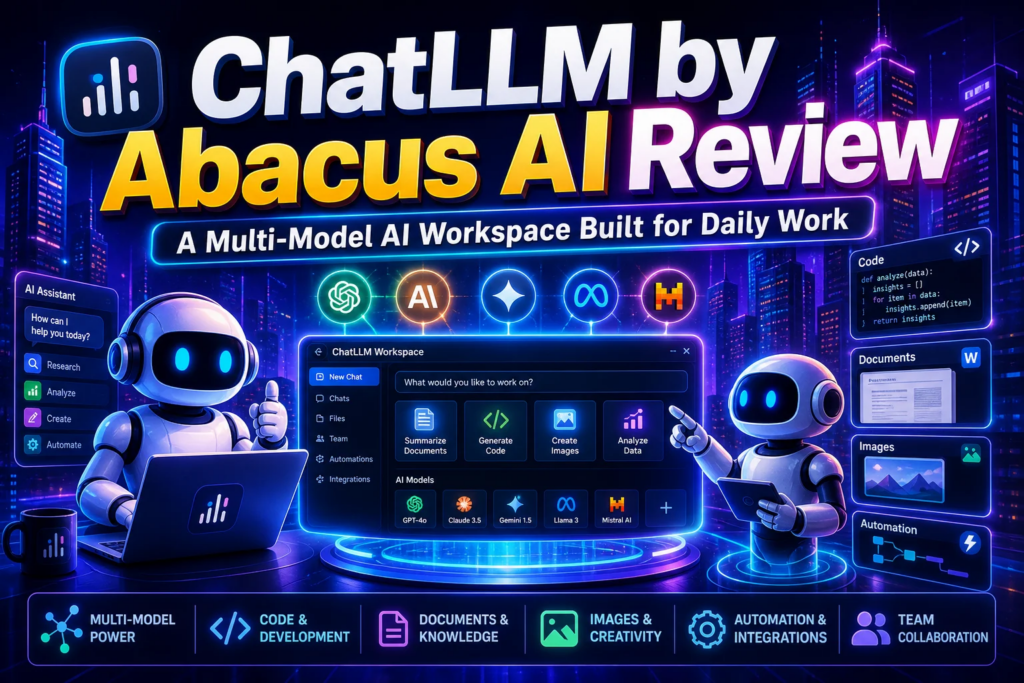
Introduction In recent years, artificial intelligence (AI) has become an integral component of various professional workflows, influencing fields ranging from creative writing to software development. The proliferation of AI tools often results in users managing multiple subscriptions, which can complicate their daily tasks. A notable response to this challenge is the emergence of platforms like ChatLLM by Abacus AI, which consolidates access to multiple leading AI models under a unified subscription. This article examines the implications of such multi-model AI workspaces for Natural Language Understanding (NLU) scientists and the broader industry. Understanding the Main Goal The primary objective of platforms like ChatLLM is to streamline AI usage by providing a centralized workspace that integrates various models for different applications. This allows users to transition seamlessly between tasks such as document analysis, coding, and content creation without the need for multiple subscriptions. For NLU scientists, this means enhanced flexibility and improved efficiency in their workflows, enabling them to apply the most suitable AI model for specific tasks, thereby enhancing the overall quality of their outputs. Advantages of Multi-Model AI Workspaces Consolidated Access: Users benefit from a single platform that houses multiple AI models, reducing the complexity of managing multiple subscriptions. Model Diversity: ChatLLM provides access to a variety of models (e.g., GPT, Claude, Gemini), each optimized for different tasks, enhancing the ability to select the most appropriate tool for the job. Enhanced Collaboration: The platform supports integration with common business tools such as Google Drive and Slack, facilitating teamwork and project management. Regular Updates: The platform frequently updates its model library, ensuring users have access to the latest advancements in AI technology. Automation Features: AI agents can handle repetitive tasks, allowing scientists and professionals to focus on more complex and creative aspects of their work. Strong Security Measures: With a focus on data encryption and compliance with enterprise standards, users can trust that their information is secure. However, it is essential to consider potential limitations, such as usage limits tied to resource-intensive tasks like video generation or large document processing, which may require a credit-based system. Future Implications for Natural Language Understanding The ongoing evolution of AI technologies is poised to significantly impact the realm of Natural Language Understanding. As platforms like ChatLLM continue to innovate, we can expect advancements that enhance model interoperability and user experience. The integration of more sophisticated algorithms may lead to better contextual understanding and improved model performance across various applications. Furthermore, as the demand for AI-driven solutions increases, NLU scientists will have the opportunity to engage in more complex research and development projects that leverage multi-model capabilities, potentially leading to breakthroughs in language processing and comprehension. Conclusion In conclusion, the emergence of multi-model AI platforms like ChatLLM by Abacus AI represents a significant advancement in how professionals, particularly NLU scientists, interact with artificial intelligence. By consolidating access to various models and providing a comprehensive suite of features, these platforms not only enhance productivity but also pave the way for future innovations in Natural Language Processing. As the field continues to evolve, the integration of such technologies will undoubtedly play a critical role in shaping the future of language understanding and AI applications. Disclaimer The content on this site is generated using AI technology that analyzes publicly available blog posts to extract and present key takeaways. We do not own, endorse, or claim intellectual property rights to the original blog content. Full credit is given to original authors and sources where applicable. Our summaries are intended solely for informational and educational purposes, offering AI-generated insights in a condensed format. They are not meant to substitute or replicate the full context of the original material. If you are a content owner and wish to request changes or removal, please contact us directly. Source link : Click Here

Context of the WhatsApp Phishing Attack Recent cybersecurity incidents have showcased the vulnerabilities inherent in popular messaging platforms, with the ongoing malware campaign targeting WhatsApp users across various countries exemplifying this trend. This attack leverages deceptive communication tactics, utilizing messages that appear to originate from trusted contacts. These messages typically contain VBScript files disguised as legitimate business or financial documents, which ultimately compromise the user’s system and grant remote access to the threat actor. The attack’s sophistication lies in its execution; by enticing users to download and run these malicious files, the threat actor initiates a chain of infections culminating in the installation of the legitimate ManageEngine Endpoint Central software. This application, while intended for system management by IT professionals, is exploited by attackers to gain unauthorized control over victimized devices. Main Goal of the Attack The primary objective of this phishing campaign is to surreptitiously gain remote access to victims’ computers through manipulation and social engineering tactics. To achieve this, attackers exploit the trust inherent in interpersonal communications within platforms like WhatsApp, effectively turning users into unwitting participants in their own compromise. The success of this operation hinges on the ability to convince users to execute malicious files that masquerade as benign documents. Advantages and Implications for Data Engineers Enhanced Awareness of Phishing Techniques: The pervasive nature of such attacks underscores the importance of vigilance among Data Engineers and IT personnel. Remaining informed about evolving phishing tactics is crucial for developing effective countermeasures. Informed Security Protocols: Understanding the mechanics behind these attacks can lead to the establishment of more robust security protocols within organizations. Implementing stringent file verification processes and user education programs can mitigate risks associated with similar phishing attempts. Proactive Threat Detection: The data gleaned from the telemetry reports provided by cybersecurity firms, such as Kaspersky, can enhance threat detection systems. By analyzing patterns in phishing attempts, Data Engineers can refine and optimize security algorithms and machine learning models to better identify and respond to such threats. However, it is essential to acknowledge the limitations of current security measures. Despite advancements in technology and detection capabilities, the evolving nature of phishing tactics requires continuous adaptation and vigilance. Future Implications and the Role of AI The emergence of artificial intelligence (AI) technologies presents both opportunities and challenges in the realm of cybersecurity. As AI continues to advance, it holds the potential to revolutionize threat detection and response mechanisms. For instance, AI-driven analytics can facilitate real-time monitoring of communications and file transfers, enabling quicker identification of anomalous behaviors indicative of phishing attempts. Moreover, AI can assist in automating responses to phishing threats, reducing the burden on IT departments and enhancing incident response times. However, this technological evolution also poses risks, as threat actors may leverage AI to enhance the sophistication of their phishing campaigns, thereby creating a perpetual arms race between attackers and defenders. In conclusion, as the landscape of cybersecurity continues to evolve, Data Engineers must remain vigilant and proactive in their approaches to safeguarding systems against such sophisticated threats. By understanding the dynamics of phishing attacks and leveraging emerging technologies, organizations can bolster their defenses and minimize the risks posed by these pervasive cybersecurity challenges. Disclaimer The content on this site is generated using AI technology that analyzes publicly available blog posts to extract and present key takeaways. We do not own, endorse, or claim intellectual property rights to the original blog content. Full credit is given to original authors and sources where applicable. Our summaries are intended solely for informational and educational purposes, offering AI-generated insights in a condensed format. They are not meant to substitute or replicate the full context of the original material. If you are a content owner and wish to request changes or removal, please contact us directly. Source link : Click Here


