
Introduction The economic landscape of Japan has been characterized by persistent inflationary pressures, as evidenced by the core inflation rate holding steady at 1.4% in May 2026. This stability occurs in the context of rising energy costs, which have been a significant concern for both consumers and businesses. The implications of these economic indicators extend into the realm of financial technology (FinTech) and artificial intelligence (AI) in finance, transforming how financial professionals analyze and respond to inflationary trends. Context of Current Economic Conditions in Japan Japan’s inflation dynamics are particularly noteworthy as they reflect broader trends in global economics. The core inflation rate, which excludes volatile food prices, signifies that underlying price pressures remain contained despite external shocks from energy markets. The Bank of Japan’s recent decision to raise interest rates to their highest level since 1995 underscores a proactive approach to managing inflation expectations. In this environment, financial professionals must leverage advanced analytical tools to navigate the complexities of inflation and its impact on consumer behavior and business operations. Main Goals and Achievements in Managing Inflation The principal objective highlighted in the original content is the maintenance of core inflation within manageable levels, aligning with the Bank of Japan’s target. Achieving this goal requires a multifaceted strategy that includes monitoring inflationary trends, adjusting interest rates, and implementing fiscal policies to mitigate the effects of rising energy costs on consumers and businesses. Financial professionals can utilize AI-driven analytics to enhance forecasting accuracy, enabling more informed decision-making. Advantages of Utilizing AI in Financial Analysis Enhanced Predictive Analytics: AI algorithms can analyze vast datasets to identify patterns and predict future inflation trends, providing financial professionals with actionable insights. Real-Time Data Processing: The ability to process real-time data allows for swift adjustments in financial strategies, which is critical in a volatile economic environment. Cost Efficiency: Automation of routine analysis tasks through AI reduces operational costs and allows financial professionals to focus on high-value activities. Risk Management: Advanced AI models can simulate various economic scenarios, helping professionals assess potential risks associated with inflation fluctuations. Caveats and Limitations Despite the numerous advantages, there are important caveats to consider. The effectiveness of AI in financial analysis is contingent upon the quality and comprehensiveness of the data fed into these systems. Moreover, over-reliance on automated systems without sufficient human oversight may lead to misinterpretations of data, particularly in unpredictable economic climates. Financial professionals must remain vigilant in integrating AI tools within a broader analytical framework that considers qualitative factors and expert judgment. Future Implications of AI in Finance and Inflation Management The integration of AI into financial analysis is set to revolutionize how professionals manage inflation-related challenges. As AI technologies continue to evolve, their applications will likely expand to encompass more sophisticated predictive modeling and risk assessment strategies. The capacity for AI to learn from past economic conditions will enhance its predictive capabilities, potentially leading to more proactive measures in managing inflation. Additionally, as global economic interdependencies grow, financial professionals equipped with AI tools will be better positioned to respond to inflationary pressures that stem from international markets. Conclusion The steady core inflation rate in Japan, despite rising energy costs, exemplifies the complex interplay between economic indicators and financial strategies. As financial professionals navigate these challenges, the adoption of AI technologies presents a significant opportunity to enhance analytical capabilities and improve decision-making processes. By embracing these advancements, professionals in the finance and FinTech sectors can better adapt to a rapidly changing economic landscape. Disclaimer The content on this site is generated using AI technology that analyzes publicly available blog posts to extract and present key takeaways. We do not own, endorse, or claim intellectual property rights to the original blog content. Full credit is given to original authors and sources where applicable. Our summaries are intended solely for informational and educational purposes, offering AI-generated insights in a condensed format. They are not meant to substitute or replicate the full context of the original material. If you are a content owner and wish to request changes or removal, please contact us directly. Source link : Click Here

Context and Overview In the realm of professional golf, performance analytics play a vital role in shaping competitive strategies and enhancing player performance. The recent performance of Rory McIlroy, the reigning Masters Champion, during the first round of the U.S. Open serves as an illustrative case study in the effective application of sports analytics. McIlroy’s achievement of a 1-under score at Shinnecock Hills, matched by his playing partner Ludvig Åberg, exemplifies the intersection of athletic prowess and data-driven insights. As sports analytics technology continues to advance, understanding its implications becomes increasingly pertinent for sports data enthusiasts and professionals in the field. Main Goals and Achievement Strategies The primary goal highlighted in the context of McIlroy’s performance is the capacity to leverage analytics to enhance competitive positioning within major tournaments. Achieving this goal necessitates a multifaceted approach, which includes the effective utilization of data regarding player performance, course conditions, and opponent strategies. By integrating these data points, players can make informed decisions that optimize their gameplay, thereby increasing their chances of securing victories in prestigious events such as the U.S. Open. Advantages of AI in Sports Analytics Enhanced Performance Insights: AI technologies can analyze vast amounts of data to identify patterns and trends in player performance. This capability allows athletes like McIlroy to fine-tune their techniques and strategies based on empirical evidence. Real-time Decision Making: With advancements in analytics, players can receive immediate feedback during competitions, facilitating timely adjustments that can significantly impact the outcome of their performance. Predictive Modeling: By employing machine learning algorithms, analysts can forecast player performance under various conditions, providing critical insights that inform training regimens and competitive strategies. Increased Engagement: For sports data enthusiasts, the integration of AI into analytics fosters a deeper engagement with the sport, as fans and analysts alike gain access to sophisticated data interpretations that enrich their understanding of gameplay dynamics. Caveats and Limitations While the advantages of AI in sports analytics are substantial, it is essential to recognize certain limitations. The reliance on data-driven insights may inadvertently lead to over-analysis, where players become overly focused on statistics rather than instinctual gameplay. Additionally, the accuracy of predictive models is contingent upon the quality of the data input; hence, erroneous data can skew results and misguide strategic decisions. Furthermore, the dynamic nature of sports introduces variables that may not be fully accounted for in analytical models, necessitating a balanced approach that combines data insights with experiential knowledge. Future Implications of AI Developments The ongoing evolution of AI technologies promises to significantly impact the landscape of sports analytics in the future. As computational capabilities expand, we can anticipate even more sophisticated models that not only analyze player performance but also simulate various scenarios based on historical data. This progression could lead to personalized training programs tailored to individual players’ strengths and weaknesses, thereby enhancing overall performance at competitive levels. Moreover, as AI becomes more integrated into training and performance assessment, the role of human intuition and experience will likely shift, creating new paradigms in how athletes prepare for and compete in tournaments. Disclaimer The content on this site is generated using AI technology that analyzes publicly available blog posts to extract and present key takeaways. We do not own, endorse, or claim intellectual property rights to the original blog content. Full credit is given to original authors and sources where applicable. Our summaries are intended solely for informational and educational purposes, offering AI-generated insights in a condensed format. They are not meant to substitute or replicate the full context of the original material. If you are a content owner and wish to request changes or removal, please contact us directly. Source link : Click Here
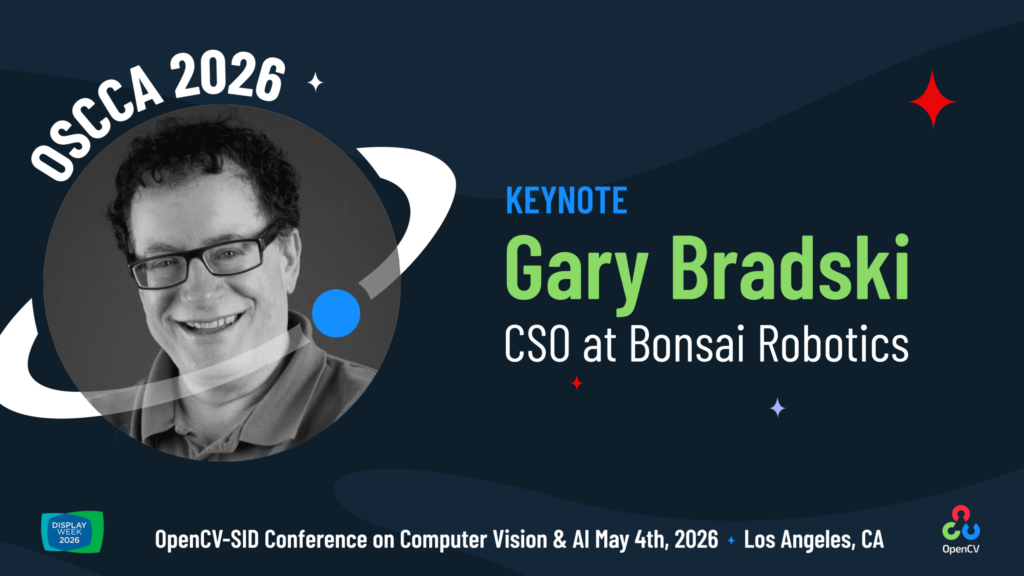
Introduction The field of computer vision and image processing has experienced unprecedented growth in recent years, significantly impacting various industries, from autonomous vehicles to medical diagnostics. Central to this evolution is OpenCV, an open-source computer vision library that has garnered over 1.5 billion downloads globally. The upcoming OpenCV-SID Conference on Computer Vision & AI (OSCCA), scheduled for May 4th, 2026, in Los Angeles, promises to be a pivotal event for professionals in this domain. Notably, Gary Bradski, the founder of OpenCV, will be delivering a keynote address, providing attendees with insights rooted in decades of expertise in artificial intelligence (AI), robotics, and machine learning. Primary Objectives of the Conference The primary goal of the OSCCA is to foster knowledge exchange and collaboration among experts in computer vision and AI. By convening leaders from industry giants such as Ultralytics and Disney Research Imagineering, the conference aims to illuminate the latest advancements and applications in the field. Attendees will gain a unique opportunity to engage with influential figures and learn firsthand about innovative technologies that are shaping the future of computer vision. Advantages of Attending OSCCA Networking Opportunities: Attendees will have the chance to connect with top-tier professionals and organizations, facilitating partnerships and collaborations that can accelerate research and development in computer vision. Access to Cutting-edge Research: The conference will showcase groundbreaking work from various sectors, enabling participants to stay abreast of the latest trends and findings relevant to their specific interests. Free Access to the AI Pavilion: Your OSCCA ticket includes passes to the Display Week Exhibition Hall, featuring over 200 exhibitors. This provides invaluable exposure to emerging technologies and companies driving innovation in AI. Insights from Industry Pioneers: The keynote address by Gary Bradski offers a rare opportunity to learn from a pioneer who has significantly shaped the landscape of computer vision and AI. Caveats and Limitations While the benefits of attending OSCCA are substantial, it is essential to acknowledge potential limitations. For instance, the sheer volume of information presented in a single day may overwhelm attendees, necessitating careful selection of sessions to maximize value. Additionally, participants should come prepared with specific questions or areas of interest to ensure they engage meaningfully with speakers and peers. Future Implications of AI in Computer Vision The implications of advancements in AI for computer vision are profound. As AI technologies continue to evolve, their integration into computer vision applications is likely to enhance accuracy, efficiency, and scalability. The ongoing development of machine learning algorithms will enable more sophisticated image analysis, driving innovations in fields such as autonomous navigation, healthcare diagnostics, and smart city infrastructure. Moreover, as the conference highlights, collaboration among industry leaders will be crucial in addressing ethical and practical challenges, ensuring that the evolution of computer vision aligns with societal needs and values. Conclusion In summary, the OSCCA conference represents a critical juncture for professionals in the computer vision and image processing domains. With the opportunity to learn from industry leaders, network with peers, and gain insights into future trends, attending this event could significantly enhance a participant’s knowledge and influence within the field. As the landscape of computer vision continues to evolve, engaging with these developments at OSCCA is an invaluable step towards staying at the forefront of this dynamic industry. Disclaimer The content on this site is generated using AI technology that analyzes publicly available blog posts to extract and present key takeaways. We do not own, endorse, or claim intellectual property rights to the original blog content. Full credit is given to original authors and sources where applicable. Our summaries are intended solely for informational and educational purposes, offering AI-generated insights in a condensed format. They are not meant to substitute or replicate the full context of the original material. If you are a content owner and wish to request changes or removal, please contact us directly. Source link : Click Here
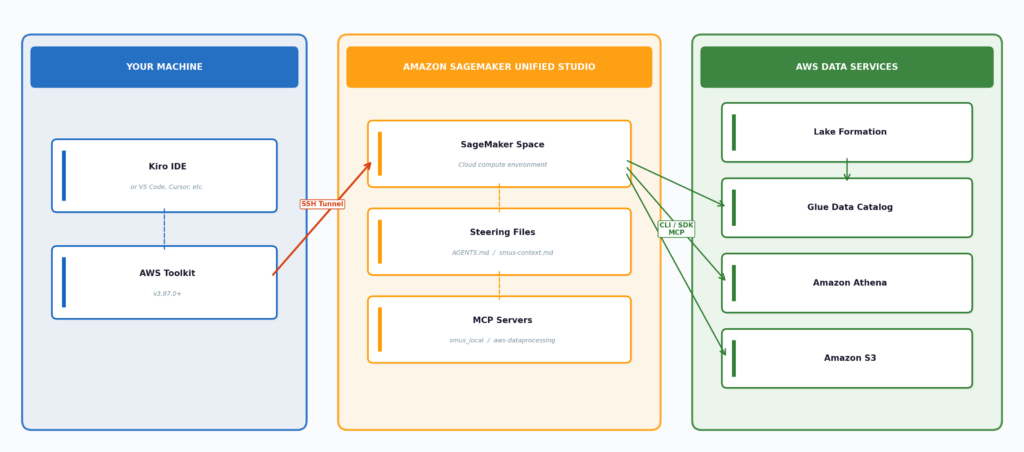
Context: AI-Assisted Data Development in Big Data Engineering In the rapidly evolving landscape of software development, AI coding assistants are emerging as transformative tools. However, data engineering presents a unique set of challenges that differ significantly from traditional software development. These challenges include governed data access, shared compute environments, and compliance controls that must be consistently enforced. The essential question arises: how can organizations harness the power of AI-assisted development within such a governed data environment? The integration of the AWS Toolkit for Visual Studio Code with tools like Kiro, VS Code, and Cursor provides a solution, facilitating direct connections to Amazon SageMaker Unified Studio. This enables developers to leverage AI-assisted development while ensuring compliance with data governance and project permissions. By connecting an editor to a SageMaker Unified Studio Space—essentially a cloud-based compute environment—developers gain the benefits of AI-assisted development while SageMaker manages essential aspects such as data governance and compute resources. Additionally, SageMaker Unified Studio automatically generates steering files (such as AGENTS.md) that equip the AI assistant with contextual knowledge about the project environment, ensuring an informed and effective interaction from the outset. Main Goal and Achievement The primary objective of this integration is to streamline the data development process by allowing data engineers to utilize natural language queries to explore and analyze data within a governed environment. This is achieved by establishing a seamless connection between Kiro and Amazon SageMaker Unified Studio, enabling the AI assistant to access project-specific data and configurations without requiring extensive manual setup. By leveraging this integration, data engineers can focus on deriving insights rather than navigating the complexities of data governance and access controls. Advantages of AI-Assisted Development Enhanced Productivity: The integration facilitates rapid data exploration using natural language prompts, which streamlines the workflow for data engineers. For example, data engineers can simply ask, “Show my databases and the tables I have access to,” thereby eliminating the need to write complex queries manually. Automatic Context Generation: Through the automatic generation of steering files, the AI assistant is pre-equipped with relevant information about the data and environment, enhancing its effectiveness from the first interaction. This reduces the time spent on configuration and setup, allowing for faster project initiation. Seamless Compliance: By utilizing SageMaker’s governance features, data engineers can ensure that all data access and processing adhere to organizational policies. This integration ensures compliance without compromising on the innovative capabilities of AI. Dynamic Query Capabilities: The integration supports various data services, allowing data engineers to dynamically query AWS Glue Data Catalog and execute SQL queries using Amazon Athena. This flexibility empowers engineers to perform complex data analyses efficiently. Caveats and Limitations While the advantages are substantial, there are important caveats to consider. The AI assistant’s output is inherently non-deterministic, meaning that responses can vary with each session, even when using the same prompt. This variability can lead to inconsistencies in code generation and tool choices, necessitating careful validation of outputs. Additionally, the reliance on natural language processing may inadvertently lead to misinterpretations if prompts are not clearly articulated. Future Implications of AI in Data Engineering The integration of AI technologies into data engineering is poised to redefine the field significantly. As AI models become more sophisticated, we can anticipate improvements in their contextual understanding and execution capabilities, reducing the need for manual intervention. This evolution could lead to a paradigm where data engineers spend less time on repetitive tasks and more time on strategic initiatives, such as developing new data products and optimizing workflows. Furthermore, as organizations increasingly adopt AI-driven tools, the demand for skilled professionals who can effectively leverage these technologies will undoubtedly rise, emphasizing the need for continuous learning and adaptation in the workforce. Disclaimer The content on this site is generated using AI technology that analyzes publicly available blog posts to extract and present key takeaways. We do not own, endorse, or claim intellectual property rights to the original blog content. Full credit is given to original authors and sources where applicable. Our summaries are intended solely for informational and educational purposes, offering AI-generated insights in a condensed format. They are not meant to substitute or replicate the full context of the original material. If you are a content owner and wish to request changes or removal, please contact us directly. Source link : Click Here
Contextualizing the Challenge of Creative Testing in Marketing The contemporary landscape of performance marketing is characterized by an insatiable demand for creative assets. As brands navigate the complexities of consumer behavior, the phenomenon of ad fatigue has emerged as a significant challenge. In an age marked by dwindling attention spans, platforms and algorithms compel marketers to consistently refresh their content. Failure to do so results in escalated acquisition costs, creating a precarious cycle for businesses striving to maintain their competitive edge. This dilemma epitomizes the ‘velocity trap’ inherent in Business-to-Consumer (B2C) marketing. While the need for creative experimentation is paramount, the financial sustainability of expanding in-house teams to meet peak demands is questionable. Internal creative teams, already burdened by extensive responsibilities such as product launches and ongoing website optimization, often find themselves overwhelmed by the sheer volume of required creative outputs. Defining the Core Objective The primary aim of sustaining creative testing without augmenting headcount revolves around enhancing marketing agility while minimizing operational costs. This can be achieved through the strategic integration of flexible staffing solutions, which allows organizations to scale their creative capabilities dynamically in response to market demands. By leveraging external talent and advanced technologies, businesses can maintain a continuous flow of innovative content without the extensive overhead associated with permanent hires. Advantages of Flexible Staffing and AI Integration Enhanced Agility: Establishing a pre-vetted network of freelancers facilitates rapid response to creative demands. This proactive approach allows brands to activate talent swiftly, reducing the time traditionally required for hiring. Specialized Expertise: Utilizing freelancers proficient in advanced tools such as generative AI not only enhances creative outputs but also introduces specialized skills that may not be required on a full-time basis. This strategic deployment of talent can significantly bolster campaign effectiveness. Cost Efficiency: By reframing the financial narrative from asset costs to opportunity costs, organizations can justify investments in flexible staffing. This perspective emphasizes the potential revenue generated through successful creative iterations, thereby highlighting the value of agile marketing strategies. Operational Streamlining: Incorporating automated workflows and project management tools alleviates the administrative burden on in-house teams. By facilitating the initial draft processes through automation, senior management can focus on strategic decisions rather than tactical executions. Continuous Iteration: The integration of AI-driven tools ensures a continuous loop of testing and refinement. This dynamic allows businesses to remain responsive to real-time market feedback, optimizing their creative strategies effectively. Caveats and Limitations While the advantages of flexible staffing and AI integration are compelling, several caveats warrant consideration. The reliance on external freelancers may introduce challenges concerning brand consistency and quality control. Furthermore, the effective utilization of AI tools mandates a clear strategic direction; without it, there is a risk of generating off-brand or ineffective content. Organizations must also be mindful of the administrative complexities associated with managing a diverse pool of freelance talent, which can occasionally hinder operational efficiency. Future Implications of AI in Creative Marketing The future trajectory of AI in marketing is poised to reshape the creative landscape significantly. As advancements in AI technologies continue to evolve, the capability to generate high-quality content through natural language processing and other innovative methods will expand. This evolution will empower marketers to harness AI not just as a tool for optimization but as a pivotal component of their creative strategy. Moreover, the increasing sophistication of AI will likely lead to a shift in the skill sets required within marketing teams. As routine creative tasks become automated, the emphasis will shift toward strategic oversight, creative direction, and the integration of AI insights into overarching marketing strategies. Consequently, organizations that adapt to these changes will not only enhance their efficiency but also solidify their competitive positioning in an increasingly crowded marketplace. Disclaimer The content on this site is generated using AI technology that analyzes publicly available blog posts to extract and present key takeaways. We do not own, endorse, or claim intellectual property rights to the original blog content. Full credit is given to original authors and sources where applicable. Our summaries are intended solely for informational and educational purposes, offering AI-generated insights in a condensed format. They are not meant to substitute or replicate the full context of the original material. If you are a content owner and wish to request changes or removal, please contact us directly. Source link : Click Here

Context of the D585 Pro Depth Camera in Smart Manufacturing and Robotics The unveiling of the RealSense D585 Pro AI-native depth camera at Automate 2026 represents a significant advancement in the realm of smart manufacturing and robotics. This cutting-edge device, which integrates depth sensing with edge AI acceleration, is designed to cater to a variety of robotic applications, including humanoids, autonomous mobile robots (AMRs), and collaborative robotic arms. The D585 Pro’s sophisticated capabilities are anticipated to facilitate enhanced navigation, manipulation, and inspection tasks, which are critical for efficiency in modern manufacturing environments. With an expected shipping date in Q1 2027, this technology promises to redefine the standards of depth perception and AI integration within the industry. Main Goals and Achievements of the D585 Pro The primary goal of the RealSense D585 Pro is to establish a new standard for perception platforms in robotics by integrating advanced depth sensing, AI capabilities, and a flexible software-defined architecture. Achieving this goal involves the development of a camera that functions effectively at both short (under 15 cm) and long ranges (over 10 m), allowing for versatile applications in various operational environments. The D585 Pro is expected to evolve over time through software updates, thereby enhancing its functionality without necessitating hardware replacements, which is a crucial aspect for long-term deployment in industrial settings. Advantages of the D585 Pro Depth Camera Enhanced Depth Quality: The D585 Pro delivers over 2x better depth quality compared to its predecessors, significantly improving the precision of robotic tasks such as navigation and human-robot interaction. Minimum Range Capability: With a sub-15 cm minimum range, the D585 Pro supports close-range applications such as cobot arm inspection and bin picking, which traditional cameras struggle to achieve. High Frame Rate: Operating at 60 FPS ensures that the camera sustains full-resolution capture, which is vital for fast-moving robotic applications and high-speed conveyors. Robust Operating Range: The camera’s ability to operate optimally at distances greater than 10 meters makes it suitable for extensive navigation tasks within warehouses and factories. Weather Resistance: The IP65 rating ensures the camera’s resilience in various environments, eliminating the need for premium variants for enhanced protection. On-device AI Processing: By integrating AI processing directly on the camera, reliance on external computing resources is minimized, thus streamlining the operation of robotic systems. Future Implications of AI Developments in Robotics The introduction of the D585 Pro is poised to have far-reaching implications in the field of robotics and smart manufacturing. As AI technologies continue to advance, the integration of intelligent perception capabilities will enable robots to perform increasingly complex tasks with greater autonomy and efficiency. The D585 Pro’s software-defined architecture allows for continuous improvement of its functionalities through SDK updates, which will likely lead to innovations in areas such as Visual-Inertial Odometry (VIO) and occupancy grid generation. This adaptability is essential for keeping pace with the rapidly evolving demands of the industry. Moreover, as industrial technologists increasingly adopt AI-driven solutions, the landscape of manufacturing will shift towards more automated and intelligent systems, where robots not only assist humans but also make autonomous decisions based on real-time data. This evolution will necessitate ongoing education and training for professionals in the field to harness the potential of these advanced technologies effectively. Disclaimer The content on this site is generated using AI technology that analyzes publicly available blog posts to extract and present key takeaways. We do not own, endorse, or claim intellectual property rights to the original blog content. Full credit is given to original authors and sources where applicable. Our summaries are intended solely for informational and educational purposes, offering AI-generated insights in a condensed format. They are not meant to substitute or replicate the full context of the original material. If you are a content owner and wish to request changes or removal, please contact us directly. Source link : Click Here


