
Contextual Overview of ARM Institute’s Project Call The Advanced Robotics for Manufacturing (ARM) Institute has initiated a critical project call aimed at addressing pressing technological needs within the U.S. defense manufacturing sector. This initiative, designated as Project Call 27-01, seeks innovative solutions in various domains including metalwork, unmanned aerial systems (UAS), munitions, and shipbuilding. The ARM Institute recognizes the intersection of robotics and national security, asserting that advancements in this field are vital for both economic competitiveness and geopolitical stability. This project call specifically invites proposals that demonstrate a significant potential impact on the U.S. Department of War (DoW). Importantly, submissions must also contain a validated transition plan to the DoW’s commercial and organic industrial bases, thereby ensuring that developed technologies can be effectively integrated into existing supply chains. A key emphasis is placed on dual-use technologies, which offer benefits not only to military applications but also to the broader manufacturing landscape. Main Objective and Achievability The primary objective of the ARM Institute’s call is to foster the development of innovative manufacturing technologies that enhance the efficiency and effectiveness of defense production. Achieving this goal requires collaboration between industry stakeholders, academic institutions, and government agencies to cultivate solutions that can transition seamlessly into operational settings. Proposals must adhere to specific criteria, including a focus on defense applications and alignment with Technology Readiness Levels (TRL) 4 to 7. This structured approach ensures that projects are not only theoretically sound but also practical and implementable within a defined timeline. The inclusion of stakeholders from the DoW or relevant government programs enhances the likelihood of successful commercialization and integration, thereby addressing cost and acquisition barriers. Advantages of Project Call 27-01 The ARM Institute’s initiative offers several key advantages that can significantly benefit the U.S. defense manufacturing ecosystem: 1. **Enhanced Technological Innovation**: By focusing on defense-related applications, the project call promotes the development of cutting-edge technologies that can improve production processes. 2. **Dual-Use Technology Development**: A preference for dual-use technologies allows for broader applications, ensuring that advancements benefit both military and civilian sectors, thus fostering a resilient manufacturing base. 3. **Streamlined Transition Plans**: The requirement for validated transition plans facilitates smoother integration of new technologies into the DoW’s supply chains, which can lead to reduced costs and shorter acquisition timelines. 4. **Support for Collaborative Efforts**: The initiative encourages partnerships among industry, academia, and government, enhancing knowledge sharing and resource allocation, which is critical for tackling complex challenges in defense manufacturing. 5. **Focus on High-Priority Needs**: By addressing specific defense application areas, such as high-mix, low-volume castings and uncrewed systems, the project call aligns technological efforts with the most pressing needs of the DoW, ensuring relevance and impact. While the advantages are significant, it is important to acknowledge potential limitations, such as the stringent requirements for TRL and the necessity for stakeholder involvement, which may restrict participation to established entities with prior experience in defense contracts. Future Implications and AI Integration Looking ahead, the integration of artificial intelligence (AI) technologies into defense manufacturing presents transformative potential. AI can enhance production efficiency by automating complex processes, optimizing supply chain logistics, and facilitating real-time data analysis for decision-making. As the ARM Institute and the DoW invest in innovative technologies, the role of AI is expected to expand, leading to more agile and responsive manufacturing systems. Moreover, AI’s capabilities in predictive maintenance and quality control will likely improve product reliability and reduce downtime, further strengthening the U.S. defense manufacturing sector’s resilience. As these advancements unfold, the collaboration fostered by initiatives like Project Call 27-01 will be vital in enabling industrial technologists to leverage AI effectively, ensuring that U.S. military capabilities remain robust and competitive in an increasingly complex global landscape. In conclusion, the ARM Institute’s project call represents a significant opportunity for the advancement of defense manufacturing technologies, with implications that extend beyond military applications. By fostering collaboration and innovation, this initiative not only aims to address immediate defense needs but also paves the way for a more sustainable and competitive U.S. manufacturing environment. Disclaimer The content on this site is generated using AI technology that analyzes publicly available blog posts to extract and present key takeaways. We do not own, endorse, or claim intellectual property rights to the original blog content. Full credit is given to original authors and sources where applicable. Our summaries are intended solely for informational and educational purposes, offering AI-generated insights in a condensed format. They are not meant to substitute or replicate the full context of the original material. If you are a content owner and wish to request changes or removal, please contact us directly. Source link : Click Here

Context and Importance of Interoperability in Pharmacy Systems In the rapidly evolving landscape of healthcare, the integration of pharmacy systems, health systems, payers, pharmacy benefit managers (PBMs), and health IT organizations is no longer a luxury but a necessity. The concept of interoperability has gained unprecedented significance as stakeholders strive to facilitate seamless communication and data exchange. Central to these efforts is the challenge posed by fragmented and inconsistently coded clinical data. When clinical information is formatted using proprietary terminologies rather than standardized systems such as RxNorm, SNOMED CT, and ICD-10, it disrupts automated workflows and complicates clinical decision support (CDS). This fragmentation not only hampers operational efficiency but also incurs significant costs related to manual interventions and integration delays. As pharmacy and health IT leaders confront these challenges, the strategic adoption of standardized clinical data emerges as a pivotal consideration for enhancing interoperability today and enabling advanced patient-specific decision-making in the future. Main Goal and Implementation Strategies The primary objective articulated in the original discussion is to advocate for a modular, standardized approach to clinical decision support interoperability. Achieving this goal necessitates a paradigm shift in how organizations manage their clinical data. By implementing standardized terminologies and data formats, organizations can mitigate the adverse effects of fragmented data. Practical strategies for achieving this include: 1. **Adopting Standardized Terminologies:** Transitioning to established standards like RxNorm and SNOMED CT can streamline data integration and enhance the reliability of clinical decision support systems. 2. **Developing Modular Solutions:** Embracing a modular architecture enables organizations to update or replace components of their systems without overhauling entire infrastructures, thus facilitating more agile responses to emerging technologies. 3. **Enhancing Data Exchange Protocols:** By strengthening the protocols for data exchange across various stakeholders—including pharmacies, providers, payers, and PBMs—organizations can minimize manual exceptions and improve overall workflow efficiency. Advantages of Standardized Clinical Data The implementation of a modular, standardized approach to clinical decision support interoperability offers numerous advantages, as outlined in the original content: – **Operational Efficiency:** A standardized data framework reduces the operational impact of fragmented data, leading to diminished manual efforts and integration times, thus optimizing workflows. – **Cost Reduction:** By minimizing the occurrences of manual exception queues and integration delays, organizations can significantly lower operational costs associated with inefficiencies in data handling. – **Enhanced Decision Support:** Standardized data facilitates more effective clinical decision support capabilities, allowing for timely and precise patient-specific safety checks, ultimately improving patient outcomes. – **Scalability for Future Innovations:** A foundational approach based on standards paves the way for the integration of advanced technologies, including AI and machine learning, ensuring that organizations remain agile in the face of technological advancements. Despite these advantages, it is essential to recognize potential caveats. The transition to standardized systems requires upfront investment in technology and training, and organizations may encounter resistance to change from staff accustomed to legacy systems. Future Implications: The Role of AI in Clinical Decision Support Looking ahead, the intersection of AI and clinical decision support presents exciting opportunities and challenges. As AI technologies continue to evolve, they will likely play a transformative role in enhancing clinical workflows. The integration of AI-driven analytics with standardized clinical data can lead to more sophisticated decision support systems that offer real-time, patient-specific recommendations. Moreover, as health data becomes increasingly interconnected, AI will be instrumental in identifying trends, predicting outcomes, and personalizing medication regimens. This evolution will necessitate ongoing collaboration among pharmacy leaders, health IT professionals, and policy-makers to ensure that the foundational elements of interoperability are robust and capable of supporting these advanced capabilities. In summary, the pursuit of interoperability through standardized clinical data represents not only a technical challenge but also an opportunity for health organizations to fundamentally enhance their operational efficiency and patient care capabilities. As the healthcare landscape continues to evolve, those organizations that proactively adopt these strategies will be best positioned to thrive in a data-driven future. Disclaimer The content on this site is generated using AI technology that analyzes publicly available blog posts to extract and present key takeaways. We do not own, endorse, or claim intellectual property rights to the original blog content. Full credit is given to original authors and sources where applicable. Our summaries are intended solely for informational and educational purposes, offering AI-generated insights in a condensed format. They are not meant to substitute or replicate the full context of the original material. If you are a content owner and wish to request changes or removal, please contact us directly. Source link : Click Here
Contextual Background on Video Game Preservation The gaming community has faced a significant challenge in recent years regarding the preservation of video games. Gamers frequently encounter scenarios where beloved titles become unplayable due to the shutdown of centralized online servers or find themselves unable to purchase and download critically acclaimed games that have been digitally delisted. This phenomenon raises pressing questions about the feasibility of video game preservation and accessibility amidst the evolving landscape of digital gaming. To address these concerns, a live discussion featuring Ross Scott, the founder of the Stop Killing Games campaign, has been organized. This event, part of the Ars Live series, aims to explore the implications of game preservation and the movement’s potential to influence legislative change. Scott’s initiative, catalyzed by Ubisoft’s decision to shut down servers for The Crew, has garnered substantial support, culminating in millions of signatures on petitions advocating for perpetual access to purchased games. Main Goal of the Stop Killing Games Movement The primary objective of the Stop Killing Games movement is to advocate for legislative measures that ensure gamers retain access to the titles they have purchased, irrespective of the fate of centralized servers. Achieving this goal involves lobbying for policies that mandate continued support for online servers or provide gamers the option to maintain their own servers. This approach seeks to counteract the current trend of digital obsolescence and the resultant loss of gaming heritage. Advantages of Video Game Preservation Initiatives Enhanced Accessibility: Ensuring that games remain playable fosters a broader access for players, allowing both current and future generations to experience gaming history. Legislative Progress: The movement has already instigated discussions within governmental bodies, leading to parliamentary debates and proposed legislation, such as initiatives in California aimed at safeguarding online games. Community Engagement: The campaign has united millions of gamers, highlighting a collective desire for preservation and recognition of gaming as a cultural artifact. Market Awareness: Increased attention on game preservation encourages developers and publishers to consider the long-term implications of their online infrastructures when planning future titles. Caveats and Limitations Despite the numerous advantages, several caveats must be acknowledged. Legislative action can be slow and fraught with bureaucratic challenges, potentially delaying necessary reforms. Additionally, the gaming industry is inherently driven by profit, and there may be resistance from companies unwilling to allocate resources towards maintaining older titles or infrastructure. Furthermore, the rapid evolution of technology could render some preservation efforts obsolete before they can be effectively implemented. Future Implications of AI Developments in Game Preservation As the gaming industry continues to evolve, advancements in artificial intelligence (AI) may play a pivotal role in shaping the future of game preservation. AI could enhance the ability to archive and emulate older games, providing automated solutions for maintaining server functionalities or even creating virtual environments for defunct titles. Moreover, AI-driven analytics could help identify which games to prioritize for preservation based on player engagement and historical significance, ensuring that the most valued titles remain accessible. In conclusion, the intersection of technology and legislation in the realm of video game preservation presents a complex yet critical challenge. As discussions surrounding the Stop Killing Games movement gain momentum, the potential for meaningful change in how we approach the preservation of digital content becomes increasingly tangible. The integration of AI technologies further augments this potential, heralding a future where gaming history can be effectively safeguarded for generations to come. Disclaimer The content on this site is generated using AI technology that analyzes publicly available blog posts to extract and present key takeaways. We do not own, endorse, or claim intellectual property rights to the original blog content. Full credit is given to original authors and sources where applicable. Our summaries are intended solely for informational and educational purposes, offering AI-generated insights in a condensed format. They are not meant to substitute or replicate the full context of the original material. If you are a content owner and wish to request changes or removal, please contact us directly. Source link : Click Here

Context and Industry Insights from the AgriBusiness Global Trade Summit On August 6, 2026, the vibrant city of Las Vegas served as the backdrop for the second day of the AgriBusiness Global™ Trade Summit, which brought together over 700 participants from various sectors of the agribusiness industry. This event provided a critical platform for networking, fostering industry connections, and discussing the latest trends that influence the AgriTech and Smart Farming sectors. The summit emphasized the importance of collaboration and knowledge exchange among stakeholders, which is essential in navigating the complexities of today’s agricultural landscape. Main Goal and Strategic Objectives The primary goal of the AgriBusiness Global Trade Summit is to enhance collaboration among industry players to drive innovation and address significant challenges within the agribusiness sector. This can be achieved by creating avenues for dialogue, such as roundtable discussions, expert interviews, and panels featuring leaders in the field. The focus is on developing effective procurement strategies, understanding evolving regulatory landscapes, and leveraging technological advancements to bolster productivity and sustainability. Advantages of Participation in Industry Summits Networking Opportunities: Attendees can connect with industry leaders, facilitating partnerships that enhance sourcing and distribution channels. Access to Expert Insights: Participants gain valuable knowledge from specialists regarding market trends, regulatory updates, and technological innovations, which can inform their business strategies. Collaboration for Problem-Solving: Engaging with peers allows stakeholders to share best practices and collaboratively address common challenges such as supply chain disruptions and changing trade dynamics. Strategic Adaptation: Insights gathered can guide companies in adapting to shifting market conditions, including fluctuations in commodity prices and evolving consumer demands. Limitations and Considerations While participation in industry events offers numerous benefits, there are limitations to consider. The effectiveness of networking can vary depending on individual engagement levels and the quality of connections made. Additionally, the insights shared may not always guarantee immediate applicability, as market conditions can change rapidly. Therefore, businesses must critically evaluate the information and tailor it to their unique contexts. Future Implications of AI Developments in AgriTech As the AgriTech sector continues to evolve, the integration of artificial intelligence (AI) is set to revolutionize agricultural practices. AI can enhance precision farming techniques, enabling farmers to optimize resource use and improve crop yields. This technology will provide real-time data analytics, allowing for better decision-making regarding pest management and crop health monitoring. Furthermore, AI-driven insights can assist in navigating complex regulatory environments, ensuring compliance while maximizing operational efficiency. In conclusion, the ongoing developments in AI and the collaborative efforts fostered by events like the AgriBusiness Global Trade Summit will significantly shape the future of AgriTech. By leveraging these advancements, agribusinesses can enhance their resilience, adapt to changing market landscapes, and ultimately contribute to a more sustainable agricultural future. Disclaimer The content on this site is generated using AI technology that analyzes publicly available blog posts to extract and present key takeaways. We do not own, endorse, or claim intellectual property rights to the original blog content. Full credit is given to original authors and sources where applicable. Our summaries are intended solely for informational and educational purposes, offering AI-generated insights in a condensed format. They are not meant to substitute or replicate the full context of the original material. If you are a content owner and wish to request changes or removal, please contact us directly. Source link : Click Here

Introduction The integration of artificial intelligence (AI) within the legal sector has engendered significant innovations, particularly in the realm of litigation management. DISCO, a recognized leader in legal technology since its inception in 2013, has recently unveiled a pioneering unified litigation solution that transcends traditional e-discovery methodologies. This blog post explores the implications of this advancement, detailing how DISCO’s innovative approach aims to streamline the litigation process while enhancing the strategic capabilities of legal professionals. Context of the Unified Litigation Solution DISCO’s transition from a focus on e-discovery to developing a comprehensive litigation solution represents a critical evolution in legal technology. The new AI-native application, currently undergoing pilot testing with select law firms, aims to merge case facts with pertinent U.S. case law. This integration promises to provide legal practitioners with a cohesive platform that synthesizes evidence, claims, and legal authority. By creating an accessible interface metaphorically described as a “single pane of glass,” DISCO seeks to facilitate a more coherent understanding of ongoing litigation matters. Main Goal and Achievement Strategy The primary objective of DISCO’s unified litigation solution is to deliver a holistic view of case management that interconnects factual data with applicable legal precedents. Achieving this goal involves the implementation of patent-pending workflows that are specifically tailored for the nuances of litigation. By ensuring that all relevant information is collated and made accessible, DISCO aims to empower legal teams with the tools necessary to navigate complex legal landscapes effectively. Advantages of the Unified Litigation Solution Enhanced Efficiency: By integrating case facts and legal precedents, legal teams can reduce the time spent on information retrieval and analysis, allowing for a more efficient litigation process. Improved Strategic Decision-Making: The solution enables legal professionals to leverage institutional knowledge that is often dispersed across different cases and colleagues, thereby enhancing strategic planning and execution. Customization and Control: DISCO provides firms with the flexibility to tailor workflows and tools according to their specific best practices, ensuring that the solution aligns with the unique operational needs of each firm. Centralized Knowledge Repository: By carrying case context and prior work products forward, the platform serves as a centralized repository of knowledge, promoting collaboration and continuity among legal teams. Caveats and Limitations While the unified litigation solution presents numerous advantages, it is essential to recognize potential limitations. The success of such innovative technology relies heavily on user adoption and the integration of existing workflows. Additionally, concerns regarding data privacy and security must be addressed to ensure compliance with legal standards. Future Implications of AI in LegalTech The advent of the unified litigation solution signifies a broader trend towards the integration of AI in legal practice. As technology continues to evolve, legal professionals can anticipate further enhancements in case management, resource allocation, and legal research. The implications of AI advancements may include increased accuracy in legal predictions, the automation of routine tasks, and the potential for real-time legal analysis, thereby reshaping the future landscape of the legal profession. Conclusion DISCO’s unified litigation solution marks a significant milestone in the ongoing evolution of LegalTech. By merging case facts with relevant legal precedents, the platform offers legal professionals a robust tool to enhance their litigation strategies. As AI technology progresses, the potential for further innovations within the legal sector remains vast, promising a future where legal practices are more efficient, informed, and interconnected. Disclaimer The content on this site is generated using AI technology that analyzes publicly available blog posts to extract and present key takeaways. We do not own, endorse, or claim intellectual property rights to the original blog content. Full credit is given to original authors and sources where applicable. Our summaries are intended solely for informational and educational purposes, offering AI-generated insights in a condensed format. They are not meant to substitute or replicate the full context of the original material. If you are a content owner and wish to request changes or removal, please contact us directly. Source link : Click Here

Context and Background The recent conviction of Connor Riley Moucka, a 26-year-old Canadian identified as a significant threat actor in the realm of cybercrime, underscores the sophistication and pervasiveness of modern cyber threats. Pleading guilty to charges of computer fraud and conspiracy, Moucka’s activities were particularly alarming, involving the hacking and extortion of over 165 organizations utilizing the cloud service provider Snowflake. His actions included the theft of call and text history records affecting more than 100 million AT&T customers, illustrating the scale and severity of his cybercrimes. Between February and October 2024, Moucka and his associates exploited stolen login credentials to breach cloud-hosted data from a U.S.-based software-as-a-service company. Their target selection was strategic; they focused on Snowflake customer accounts that lacked robust security measures, such as multi-factor authentication. This incident not only highlights vulnerabilities within cloud services but also emphasizes the crucial need for enhanced cybersecurity protocols. Main Goal and Achievements The primary goal highlighted by Moucka’s case is the urgent necessity for organizations to adopt comprehensive cybersecurity measures to safeguard sensitive data from unauthorized access and exploitation. This can be achieved through various means, including the implementation of multi-factor authentication, regular security audits, and employee training on recognizing phishing attempts and other social engineering tactics. Advantages of Enhanced Cybersecurity Measures Reduction of Data Breaches: Implementing stringent security protocols significantly decreases the likelihood of unauthorized access. Organizations that enforced multi-factor authentication saw improved security, as evidenced by Snowflake’s response to the breaches. Protection of Sensitive Information: Enhanced security measures help protect sensitive customer data, including personally identifiable information (PII), which is vital for maintaining customer trust and regulatory compliance. Cost-Effectiveness: While initial investments in cybersecurity infrastructure may seem significant, the financial impact of data breaches—including ransom payments and reputational damage—can far exceed these costs. The Justice Department reported that over $2.5 million was paid in ransom due to Moucka’s extortions. Increased Awareness and Preparedness: Regular training and updates on cybersecurity risks foster a culture of vigilance among employees, empowering them to recognize and mitigate potential threats. Future Implications of AI in Cybersecurity The evolution of artificial intelligence (AI) is poised to significantly influence the cybersecurity landscape. As threats become more sophisticated, AI technologies can enhance threat detection and response capabilities. AI algorithms can analyze vast amounts of data in real-time, identifying patterns indicative of potential breaches and enabling proactive measures to mitigate risks before they escalate. Moreover, AI can facilitate automated responses to cyber threats, which may reduce the response time and potentially limit the extent of damage in the event of a breach. However, there are caveats; the integration of AI also necessitates careful oversight to prevent misuse and ensure that AI-driven systems do not inadvertently introduce new vulnerabilities. As cybersecurity experts harness the power of AI, the ongoing challenge will be to stay ahead of cybercriminals who are also leveraging advanced technologies to enhance their attacks. Therefore, the future of cybersecurity will likely revolve around a collaborative approach that combines human expertise with AI-driven insights to create a robust defense against ever-evolving cyber threats. Disclaimer The content on this site is generated using AI technology that analyzes publicly available blog posts to extract and present key takeaways. We do not own, endorse, or claim intellectual property rights to the original blog content. Full credit is given to original authors and sources where applicable. Our summaries are intended solely for informational and educational purposes, offering AI-generated insights in a condensed format. They are not meant to substitute or replicate the full context of the original material. If you are a content owner and wish to request changes or removal, please contact us directly. Source link : Click Here

Contextual Overview The geopolitical landscape is increasingly influenced by actions and statements from key political figures. Recently, Iran’s chief negotiator, Mohammad Bagher Ghalibaf, accused U.S. President Donald Trump of engaging in what he termed “theater diplomacy.” This accusation arose amidst conflicting narratives regarding ongoing negotiations aimed at de-escalating the hostilities between the United States and Iran. Ghalibaf’s comments reflect the complexities and uncertainties surrounding diplomatic efforts in a region marked by tension and instability. The broader implications of this diplomatic discourse extend beyond the immediate political sphere, influencing critical sectors such as finance and technology. Main Goal and Achievement Strategies The principal objective outlined in the discourse is to establish a framework for dialogue that could lead to a resolution of the ongoing conflict. Achieving this goal necessitates transparent communication and genuine engagement from both parties involved. Diplomatic resolutions can be facilitated through the use of technology and data analytics, improving the understanding of regional dynamics and enabling better decision-making processes. By leveraging advanced analytical tools, stakeholders can gain insights into the implications of geopolitical tensions on global markets, particularly in sectors heavily reliant on stability, such as finance and energy. Advantages of an AI-Driven Approach Enhanced Decision-Making: Utilizing AI technologies can significantly improve decision-making capabilities for financial professionals by providing real-time data analysis and predictive modeling. This enables stakeholders to anticipate market fluctuations resulting from geopolitical developments. Risk Management: AI tools can assist in identifying and mitigating risks associated with geopolitical uncertainties. For example, advancements in machine learning algorithms can help financial analysts assess the potential impacts of conflicts on energy supply chains, thereby allowing for better risk management strategies. Operational Efficiency: The integration of AI in financial operations can streamline processes, allowing for quicker responses to market changes driven by geopolitical events. Automation of routine tasks enhances productivity, enabling professionals to focus on strategic decision-making. Informed Investment Strategies: AI’s analytical capabilities can empower financial professionals to develop informed investment strategies that account for the potential volatility introduced by geopolitical tensions. Access to predictive analytics can guide investment decisions in sectors sensitive to such dynamics. Limitations and Caveats Despite the benefits, there are salient caveats to consider. The reliability of AI predictions can be compromised by the unpredictability of political events. Geopolitical situations can evolve rapidly, and AI models may not always account for sudden changes in the landscape. Furthermore, the reliance on technology necessitates a robust infrastructure and skilled personnel to interpret the data effectively. Future Implications of AI in Financial Services The future landscape of finance and FinTech is poised for transformation through the continued integration of AI technologies. As geopolitical tensions persist, financial professionals will increasingly depend on AI-driven insights to navigate complex market environments. The capacity for real-time data analysis and predictive modeling will become essential in crafting responsive strategies that mitigate risks associated with international conflicts. Furthermore, as AI continues to evolve, its applications in finance are likely to expand, fostering a more adaptive and resilient financial ecosystem. Disclaimer The content on this site is generated using AI technology that analyzes publicly available blog posts to extract and present key takeaways. We do not own, endorse, or claim intellectual property rights to the original blog content. Full credit is given to original authors and sources where applicable. Our summaries are intended solely for informational and educational purposes, offering AI-generated insights in a condensed format. They are not meant to substitute or replicate the full context of the original material. If you are a content owner and wish to request changes or removal, please contact us directly. Source link : Click Here

Context In the realm of professional football, contract negotiations often serve as pivotal moments impacting team strategies and player careers. The recent extension of Vinícius Júnior’s contract with Real Madrid until 2032 has significant implications, particularly for clubs like Arsenal which had been actively pursuing the Brazilian winger. This decision follows a turbulent season for Real Madrid, where the absence of trophies spurred speculation regarding the future of key players. However, with this renewed commitment, Vinícius aims to solidify his role in Real Madrid’s resurgence under the leadership of José Mourinho. Main Goal and Its Achievement The primary goal reflected in Vinícius Júnior’s contract extension is the stabilization of player commitment to a club amidst turbulent circumstances. This commitment is critical for maintaining team cohesion and building a competitive squad. Achieving this goal requires effective communication between club management and players, ensuring that both parties align on future ambitions and expectations. Such clarity can help mitigate uncertainties that arise from managerial changes and past performance issues. Advantages of Player Commitment Enhanced Team Stability: A long-term contract fosters an environment of stability, allowing clubs to build around key players. Vinícius’s commitment enables Real Madrid to focus on long-term strategic goals rather than short-term fixes. Increased Player Performance: Players who feel secure in their positions are often more motivated to perform at their best. Vinícius’s past performance metrics—375 matches, 128 goals, and 14 titles—underscore the benefits of such emotional and professional security. Attraction of Additional Talent: A successful and stable team can attract other high-caliber players, as seen with Real Madrid’s recent signings. This synergistic effect can enhance overall squad quality and performance. Boosted Fan Engagement: Player commitment can enhance fan loyalty and engagement, as supporters are more likely to invest emotionally in teams with recognizable and long-term players. However, it is essential to acknowledge potential limitations. Contract extensions do not guarantee on-field success, as seen in Real Madrid’s recent trophy-less season. Additionally, player performance can be unpredictable, influenced by factors such as injuries or changes in personal circumstances. Future Implications of AI in Sports Analytics The integration of artificial intelligence (AI) in sports analytics holds transformative potential for player management and performance evaluation. As clubs increasingly rely on data-driven insights, AI technologies can enhance decision-making processes related to contract negotiations, training, and player scouting. Future developments may include advanced predictive modeling to assess player performance trajectories and injury risks, thereby informing contract extensions and player acquisitions. Moreover, AI can facilitate real-time analytics during matches, providing coaches with immediate feedback to optimize strategies. This level of insight can further augment a team’s competitive edge, reinforcing the importance of retaining key talents like Vinícius Júnior. As technological advancements continue to evolve, the landscape of player recruitment and retention will undergo significant changes, emphasizing the need for clubs to adapt and leverage these tools effectively. Disclaimer The content on this site is generated using AI technology that analyzes publicly available blog posts to extract and present key takeaways. We do not own, endorse, or claim intellectual property rights to the original blog content. Full credit is given to original authors and sources where applicable. Our summaries are intended solely for informational and educational purposes, offering AI-generated insights in a condensed format. They are not meant to substitute or replicate the full context of the original material. If you are a content owner and wish to request changes or removal, please contact us directly. Source link : Click Here
Contextual Overview The rapid evolution of AI technologies has significantly transformed the landscape of marketing, particularly through the emergence of answer engine optimization (AEO) tools. Evaluating these tools is crucial for digital marketers seeking to enhance their content strategies in an increasingly competitive digital environment. Among the leading solutions are HubSpot AEO and Scrunch, each offering distinct functionalities tailored to specific marketing workflows. HubSpot AEO is designed as an integrated platform that connects AI visibility data directly to existing customer relationship management (CRM) and content workflows, while Scrunch serves as a specialized monitoring and benchmarking tool that excels in multi-engine tracking and competitive share-of-voice analysis. The choice between these tools depends on the specific needs of the marketing team, be it unified execution or focused benchmarking. Main Goal and Achievements The primary goal of utilizing AEO tools like HubSpot AEO and Scrunch is to optimize how brands are presented in AI-generated answers across platforms such as ChatGPT, Google Gemini, and Perplexity. Achieving this goal necessitates a thorough understanding of the tools’ capabilities and how they can be integrated into existing marketing workflows. For instance, marketers must assess whether they require a comprehensive solution that integrates seamlessly with their CRM or a dedicated tool for in-depth analytics and benchmarking. By aligning the tool’s functionalities with the team’s objectives, marketers can maximize visibility and capitalize on early-funnel opportunities. Advantages of Using AEO Tools Enhanced Visibility: HubSpot AEO enables teams to track brand performance across AI platforms, thereby identifying visibility gaps and providing actionable recommendations to enhance content strategy. Seamless Integration: For teams already utilizing HubSpot’s ecosystem, AEO offers a unified platform that minimizes the need for additional systems, which streamlines workflows and reduces operational overhead. Focused Benchmarking: Scrunch excels in monitoring multiple AI engines, allowing for detailed competitive analysis and sentiment tracking, which is essential for understanding market positioning. Customizable Prompt Strategies: Both tools offer varying degrees of customization in prompt selection, enabling marketers to tailor their content strategies based on specific audience segments and competitive landscapes. Actionable Insights: The tools provide specific recommendations rather than generic advice, guiding marketers toward concrete steps to improve their content performance. Considerations and Limitations While the advantages are compelling, it is important to recognize certain limitations. HubSpot AEO’s full functionality is best realized within the HubSpot ecosystem, which may present challenges for teams using disparate tools. Conversely, Scrunch’s standalone nature requires effective coordination with existing workflows, which can lead to increased complexity in execution. Furthermore, the effectiveness of these tools can vary based on the specific AI engines being monitored and the overall marketing maturity of the organization. Future Implications of AI Developments The future of digital marketing will be profoundly shaped by advancements in AI technologies. As AI-generated content becomes increasingly prevalent, the tools and strategies used to optimize visibility within these platforms will need to evolve. Emerging AI models will likely continue to diversify, necessitating that marketers remain agile and adaptable in their strategies. Continuous monitoring and optimization will be essential to ensure brands maintain a competitive edge. Moreover, as AI capabilities expand, integrating insights from AEO tools into broader marketing strategies will become integral to capturing consumer attention in a crowded digital landscape. Disclaimer The content on this site is generated using AI technology that analyzes publicly available blog posts to extract and present key takeaways. We do not own, endorse, or claim intellectual property rights to the original blog content. Full credit is given to original authors and sources where applicable. Our summaries are intended solely for informational and educational purposes, offering AI-generated insights in a condensed format. They are not meant to substitute or replicate the full context of the original material. If you are a content owner and wish to request changes or removal, please contact us directly. Source link : Click Here
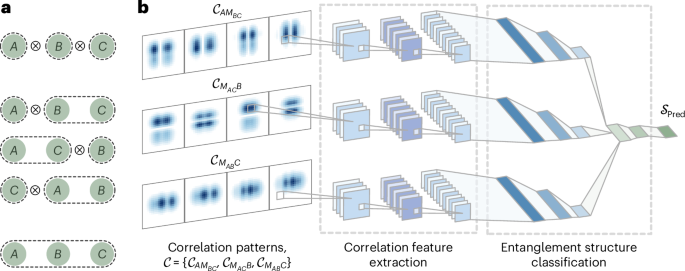
Contextual Overview: Multipartite Continuous-Variable Entanglement Structures In the realm of quantum mechanics, multipartite entanglement detection extends beyond merely confirming the existence of entangled states; it encapsulates a nuanced understanding of their structural intricacies. Specifically, a state that is \(\mathcalR_1| \cdots | \mathcalR_j\)-separable can be expressed in a decomposed form \(\hat\rho =\sum _\gamma p_\gamma \hat\rho _\mathcalR_1^(\gamma )\otimes \cdots \otimes \hat\rho _\mathcalR_j^(\gamma )\), where \(\mathcalR_i\) denotes an ensemble of modes, and \(\hat\rho _\mathcalR_i^(\gamma )\) represents the reduced density matrix of the state on the given subsystem \(\mathcalR_i\). This classification of multipartite states is critical for advancing technologies in Smart Manufacturing and Robotics, where quantum resources may play pivotal roles in enhancing system efficiencies and capabilities. Main Objective and Methodology The primary goal articulated in the original research is the classification of multipartite continuous-variable entanglement structures utilizing data-augmented neural networks. This objective is achieved through a systematic approach that involves training neural networks on diverse datasets of random, mixed continuous-variable (CV) quantum states. By classifying states according to their entanglement structures, the framework aims to facilitate a more profound understanding of quantum systems, which can be leveraged in practical applications within the Smart Manufacturing sector. Advantages of the Approach Enhanced Classification Accuracy: The neural networks demonstrated remarkable accuracy in predicting entanglement structures, achieving up to 0.986 accuracy when augmented datasets were utilized. This indicates a strong capacity for distinguishing between intricate quantum states, which is crucial for implementing quantum technologies in industrial settings. Efficient Data Augmentation: The introduction of Quantum Data Augmentation (QDA) techniques allows for the generation of diverse training samples without the need for extensive computational resources. This efficiency is particularly advantageous in resource-constrained environments, such as manufacturing facilities aiming to optimize their operational frameworks. Robustness Against Data Degradation: The neural network’s architecture exhibits resilience against information loss due to discretization, ensuring reliable performance even when the input data is compromised—a common scenario in experimental quantum systems. Streamlined Measurement Processes: By employing homodyne detection and other innovative measurement techniques, the framework minimizes the number of required measurements, enabling faster and less resource-intensive data acquisition. This supports the operational goals of industrial technologists seeking to enhance productivity. Limitations and Caveats Despite the promising advancements, there are inherent limitations that must be acknowledged. The reliance on extensive training datasets may pose challenges when attempting to generalize findings across various quantum systems. Moreover, the QFI-based criterion for accurately identifying fully inseparable states necessitates comprehensive knowledge of the density matrix, which may not always be feasible in practical scenarios. These factors underscore the need for continuous refinement of methodologies and the importance of balancing theoretical constructs with empirical realities. Future Implications of AI Developments The integration of artificial intelligence into quantum mechanics, particularly in the classification of multipartite entanglement structures, heralds a transformative era for Smart Manufacturing and Robotics. As AI technologies evolve, the potential for real-time analysis and adaptive learning will enhance the robustness and versatility of quantum systems. This may lead to breakthroughs in quantum computing, optimization algorithms, and the development of novel quantum materials, ultimately driving innovation across various industrial sectors. Furthermore, the synergistic application of AI and quantum mechanics could pave the way for advanced automation processes, significantly improving operational efficiencies and decision-making capabilities in manufacturing environments. Disclaimer The content on this site is generated using AI technology that analyzes publicly available blog posts to extract and present key takeaways. We do not own, endorse, or claim intellectual property rights to the original blog content. Full credit is given to original authors and sources where applicable. Our summaries are intended solely for informational and educational purposes, offering AI-generated insights in a condensed format. They are not meant to substitute or replicate the full context of the original material. If you are a content owner and wish to request changes or removal, please contact us directly. Source link : Click Here


