
Contextual Overview of Operationalizing AI The integration of Artificial Intelligence (AI) into various sectors has become a focal point for enhancing operational efficiency and achieving strategic sovereignty. The concept of “Operationalizing AI for Scale and Sovereignty” emphasizes the necessity for organizations, especially those within governmental and enterprise frameworks, to establish robust, secure, and scalable AI capabilities. Thought leaders in this domain, such as Chris Davidson from Hewlett Packard Enterprise and Arjun Shankar from Oak Ridge National Laboratory, play pivotal roles in shaping the discourse around AI’s operationalization. Their contributions highlight the intersection of high-performance computing (HPC), data science, and AI, underscoring the collaborative efforts required to advance these technologies. Main Goals of Operationalizing AI The primary objective of operationalizing AI is to create a framework that enables organizations to leverage AI technologies effectively and responsibly. Achieving this goal involves implementing AI Factory solutions and Sovereign AI initiatives that facilitate secure data handling, compliance with regulations, and alignment with national interests. By fostering partnerships among governments, enterprises, and research institutions, organizations can create a synergistic environment conducive to innovation and scalability in AI applications. Advantages of Operationalizing AI Enhanced Scalability: The establishment of scalable AI capabilities allows organizations to manage and process larger datasets efficiently. This scalability is critical for applications requiring real-time data analysis and decision-making. Improved Security: Sovereign AI initiatives prioritize data security and compliance, ensuring that sensitive information is protected against breaches. This aspect is crucial for organizations handling confidential government or proprietary data. Interdisciplinary Collaboration: The bridging of computer science and data science fosters cross-disciplinary partnerships, enabling comprehensive scientific discovery campaigns. This collaboration is essential for tackling complex challenges in AI research. Optimized Performance: By leveraging high-performance computing resources, organizations can conduct large-model training and deploy AI solutions at an unprecedented pace and efficiency, positioning them at the forefront of technological advancement. Limitations and Considerations While the advantages of operationalizing AI are significant, organizations must also navigate certain caveats. The complexity of integrating AI systems into existing infrastructures can pose challenges, including potential resistance to change within organizational cultures. Furthermore, the rapid evolution of AI technologies necessitates ongoing investment in training and development to ensure that personnel are equipped to handle sophisticated AI tools and frameworks. Future Implications of AI Developments As AI technologies continue to evolve, their implications for operational efficiency and societal governance will deepen. The ongoing advancements in AI capabilities promise to revolutionize industries by enhancing automation, improving predictive analytics, and driving innovation in data-driven decision-making. Organizations that successfully operationalize AI will likely gain competitive advantages, positioning themselves as leaders in their respective fields. However, the ethical considerations surrounding AI deployment will necessitate vigilant oversight and governance to ensure that AI serves the public good while advancing technological frontiers. Disclaimer The content on this site is generated using AI technology that analyzes publicly available blog posts to extract and present key takeaways. We do not own, endorse, or claim intellectual property rights to the original blog content. Full credit is given to original authors and sources where applicable. Our summaries are intended solely for informational and educational purposes, offering AI-generated insights in a condensed format. They are not meant to substitute or replicate the full context of the original material. If you are a content owner and wish to request changes or removal, please contact us directly. Source link : Click Here

Contextual Overview of Holography in Computer Vision The concept of holography, once relegated to the realms of science fiction, has begun to manifest itself in tangible applications that promise to revolutionize the fields of computer vision and image processing. Pioneering efforts in this domain are exemplified by the work of Shawn Frayne, co-founder and CEO of Looking Glass Factory. With over two decades of dedication, Frayne has successfully developed holographic displays that facilitate immersive experiences without the necessity of headgear or dark environments. This breakthrough technology allows multiple users to engage with three-dimensional holographic content in a shared space, thus democratizing access to advanced visualizations. Main Goal and Achievement Pathways The primary objective of this technological advancement is to create a seamless interface for interacting with 3D holograms, thereby enhancing user engagement and understanding. This is particularly relevant to professionals in the fields of computer vision and image processing, as it enables richer data interpretation and presentation. Achieving this goal requires ongoing collaboration among experts in computer vision, artificial intelligence, and display technologies, as well as active participation in forums like OSCCA, where thought leaders converge to discuss innovations and their implications. Advantages of Holographic Displays Enhanced User Interaction: Holographic displays permit multiple viewers to interact with 3D content simultaneously, fostering collaborative environments that are critical in research and education. Elimination of Physical Barriers: The absence of glasses or headgear eliminates discomfort and allows for spontaneous engagement, making the technology more accessible to a broader audience. Integration of AI and Computer Vision: The convergence of AI with holographic technology enables real-time processing of visual data, which can significantly enhance the capabilities of computer vision applications. Innovative Communication Tools: This technology serves as a powerful medium for presenting complex data sets in a more intuitive manner, facilitating better understanding and retention among users. However, it is crucial to acknowledge certain limitations associated with this technology. The initial cost of implementation and the need for specialized content creation tools may pose barriers to widespread adoption. Additionally, as with any emerging technology, continuous advancements are necessary to keep pace with user expectations and application requirements. Future Implications of AI in Holography The future of holographic technology in conjunction with artificial intelligence holds significant promise. As AI algorithms become more sophisticated, they will enhance the interactivity and realism of holographic displays, enabling predictive analytics and deeper insights into visual data. The anticipated developments in this sphere are likely to catalyze advancements in various applications, including medical imaging, education, and industrial design. Vision scientists and researchers will find themselves at the forefront of this evolution, leveraging these tools to push the boundaries of what is possible in visual representation and interpretation. Disclaimer The content on this site is generated using AI technology that analyzes publicly available blog posts to extract and present key takeaways. We do not own, endorse, or claim intellectual property rights to the original blog content. Full credit is given to original authors and sources where applicable. Our summaries are intended solely for informational and educational purposes, offering AI-generated insights in a condensed format. They are not meant to substitute or replicate the full context of the original material. If you are a content owner and wish to request changes or removal, please contact us directly. Source link : Click Here
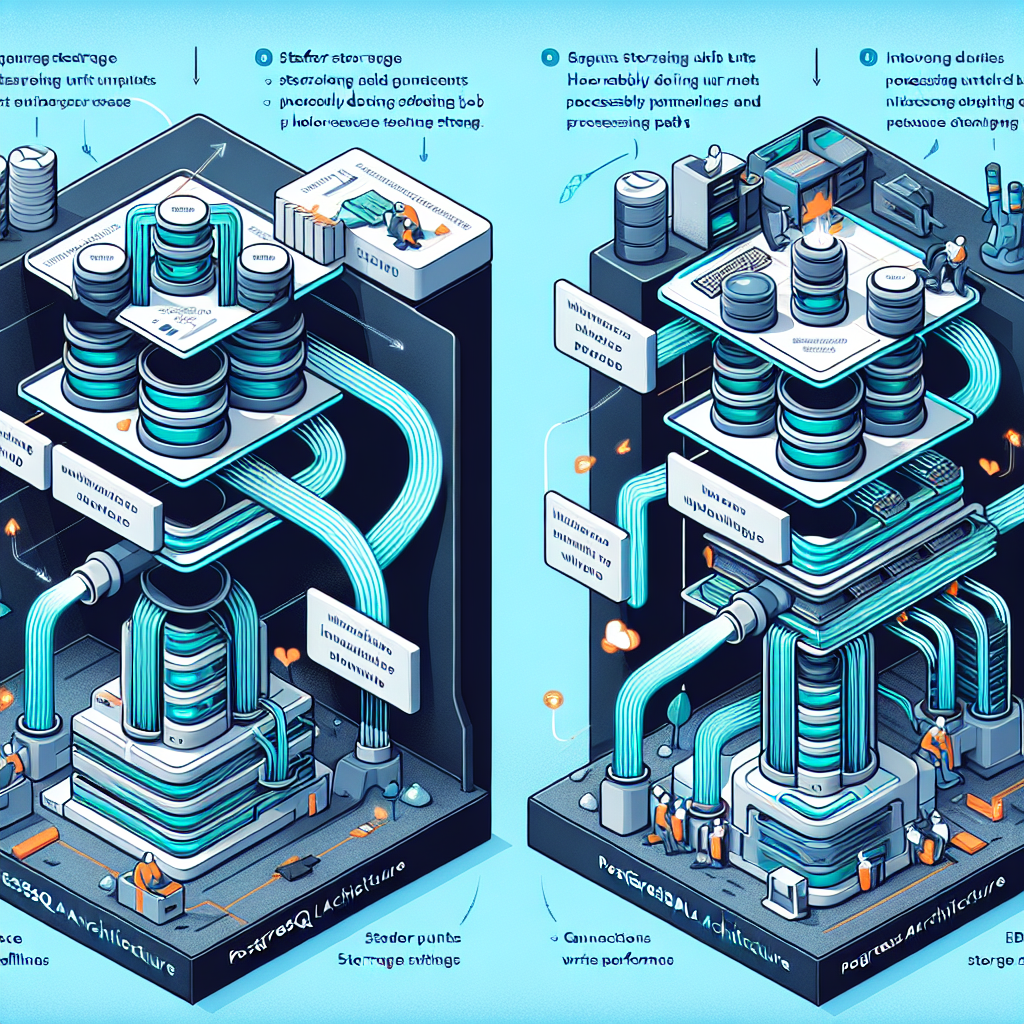
Contextualizing Lakebase Architecture in Big Data Engineering In the realm of Big Data Engineering, the architecture of data storage and computation plays a pivotal role in determining system performance and operational efficiency. The advent of lakebase architecture embodies a paradigm shift in this context, wherein compute and storage are deliberately decoupled. This separation is designed not only for operational flexibility—enabling scaling, branching, and instant recovery—but also to unlock significant performance enhancements. By offloading work from traditional Postgres compute to a more distributed storage system, lakebase architecture offers solutions to longstanding bottlenecks, thereby revolutionizing how data engineers handle write-heavy workloads. Main Goal: Achieving Performance Optimization The primary objective articulated through the exploration of lakebase architecture is to achieve a fivefold improvement in the write performance of managed Postgres instances. This goal can be realized by leveraging the unique structural advantages afforded by the separation of compute and storage layers. In traditional Postgres deployments, durability mechanisms, while crucial, introduce significant overhead, particularly under high write loads. By re-engineering these mechanisms within the lakebase framework, engineers can effectively eliminate the bottlenecks associated with full page writes, thereby drastically enhancing write throughput and overall system performance. Advantages of Lakebase Architecture Network Efficiency: The lakebase architecture promotes a 94% reduction in network traffic by allowing compute nodes to transmit only the changes (deltas) rather than complete page images. This optimization significantly alleviates bandwidth demands, enhancing system responsiveness. Scalability: By distributing workloads across multiple pageservers, lakebase architecture enhances scalability. This shift reduces the burden on a single Postgres writer, facilitating independent scaling of storage resources in response to increasing demands. Optimal Read Performance: The architecture ensures that image generation is based on actual changes to data pages rather than periodic checkpoint processes, maintaining efficient read operations and minimizing latency spikes. Improved Transaction Throughput: Real-world benchmarks demonstrate substantial increases in transaction throughput, with improvements scaling dramatically with compute instance size. For instance, a 32-vCPU instance exhibited throughput gains exceeding 450% due to optimized WAL generation. Enhanced Stability in Latency: The architecture’s reconfiguration has led to a reduction in read latencies, with reports indicating a decrease of 30% to 50% in p99 and p50 read latencies, contributing to a more stable user experience. Future Implications: The Role of AI in Data Engineering Looking forward, the intersection of lakebase architecture and artificial intelligence (AI) presents exciting opportunities for further enhancing data engineering practices. As AI technologies evolve, they may facilitate even more intelligent data processing and management systems. For instance, AI-driven algorithms could optimize data retrieval processes by intelligently predicting access patterns, thereby preemptively managing data caching and storage. Moreover, the application of machine learning techniques could enable adaptive adjustments to compute and storage configurations in real time, further enhancing performance and efficiency in managing large-scale data environments. Disclaimer The content on this site is generated using AI technology that analyzes publicly available blog posts to extract and present key takeaways. We do not own, endorse, or claim intellectual property rights to the original blog content. Full credit is given to original authors and sources where applicable. Our summaries are intended solely for informational and educational purposes, offering AI-generated insights in a condensed format. They are not meant to substitute or replicate the full context of the original material. If you are a content owner and wish to request changes or removal, please contact us directly. Source link : Click Here

Contextual Overview of Gemini 2.5 Model Family The Gemini 2.5 model family represents a significant advancement in generative AI technologies, particularly in the area of reasoning models. The recent updates to this model family include the stable releases of Gemini 2.5 Pro and Gemini 2.5 Flash, along with the introduction of the preview version of Gemini 2.5 Flash-Lite. These models are designed with enhanced capabilities for reasoning, allowing for improved performance and accuracy in various applications. The flexibility of control over the “thinking budget” empowers developers to optimize the models for their specific needs, thereby enhancing the overall user experience. Main Goal and Implementation Strategies The primary goal of the updates to the Gemini 2.5 model family is to enhance the effectiveness of generative AI applications by providing models that can reason through their responses. This is achieved through iterative improvements in model architecture and functionality, allowing for greater adaptability in various use cases. By providing distinct models such as Gemini 2.5 Pro for high-complexity tasks and Gemini 2.5 Flash-Lite for cost-sensitive applications, the Gemini family accommodates a wide range of developer requirements. This strategic differentiation enables developers to select the most suitable model for their specific applications, ultimately leading to improved outcomes in AI-driven tasks. Structured Advantages of Gemini 2.5 Models Enhanced Performance: The Gemini 2.5 models, particularly Flash-Lite, are engineered for lower latency and superior throughput, making them ideal for high-volume tasks such as classification and summarization. Cost Efficiency: With updated pricing structures, Gemini 2.5 Flash offers a more competitive cost-per-intelligence ratio, ensuring that developers can scale their applications without incurring prohibitive costs. Dynamic Control: The ability to adjust the “thinking budget” via API parameters in models like Flash-Lite provides developers with greater flexibility in balancing cost and performance based on specific application needs. Broad Applicability: The models are designed to support a wide range of applications, from coding and agentic tasks in Gemini 2.5 Pro to high-throughput operations in Flash-Lite, thereby appealing to a diverse set of user requirements. It is important to note that while these models present numerous advantages, there may be limitations in terms of the depth of reasoning available in lower-tier models. Developers must assess the requirements of their specific use cases to select the optimal model accordingly. Future Implications of Generative AI Developments The advancements in the Gemini 2.5 model family have far-reaching implications for the field of generative AI and its applications. As AI technologies continue to evolve, we can anticipate further enhancements in model intelligence and usability. The ongoing research and development efforts aimed at pushing the boundaries of what generative AI can achieve will likely result in even more sophisticated models capable of tackling intricate tasks with greater efficiency. Moreover, the trend towards cost-effective, high-performance AI solutions will empower a broader range of developers and organizations to integrate AI capabilities into their operations, thus accelerating innovation across various industries. Disclaimer The content on this site is generated using AI technology that analyzes publicly available blog posts to extract and present key takeaways. We do not own, endorse, or claim intellectual property rights to the original blog content. Full credit is given to original authors and sources where applicable. Our summaries are intended solely for informational and educational purposes, offering AI-generated insights in a condensed format. They are not meant to substitute or replicate the full context of the original material. If you are a content owner and wish to request changes or removal, please contact us directly. Source link : Click Here

Context and Importance in Natural Language Understanding Since the release of BERT (Bidirectional Encoder Representations from Transformers) in 2018, Natural Language Processing (NLP) has undergone a paradigm shift. BERT’s innovative architecture, utilizing bidirectional training and transformer-based self-attention, has significantly advanced tasks such as sentiment analysis, question answering, and language inference. Despite its groundbreaking success, BERT’s limitations—particularly in computational efficiency, context handling, and interpretability—necessitated the development of an enhanced model known as ModernBERT. This evolution aims to address BERT’s shortcomings, providing solutions that improve processing speeds, extend context handling capabilities, and enhance interpretability for developers. In this discussion, we will delve into the features of ModernBERT and explore its application in sentiment analysis, underscoring its advantages and limitations. Main Goals and Achievements with ModernBERT The primary goal of ModernBERT is to rectify the limitations exhibited by its predecessor, BERT, particularly in the realm of sentiment analysis. By leveraging advanced algorithms such as Flash Attention and Local-Global Alternating Attention, ModernBERT enhances computational speed and permits the handling of longer input contexts. Additionally, the model’s transparency facilitates interpretability, thereby enabling developers to debug and adapt it for specific applications more efficiently. The implementation of ModernBERT for sentiment analysis can be accomplished through the following steps: Installation of necessary libraries such as the Hugging Face Transformers and datasets. Loading and preprocessing a suitable dataset, such as the IMDb movie reviews dataset, for sentiment classification. Tokenization of the text into a format compatible with the ModernBERT model. Initialization of the ModernBERT model for sentiment analysis tasks. Training the model using defined metrics and evaluation strategies. Evaluating and saving the fine-tuned model for future predictions. Advantages of ModernBERT ModernBERT introduces several key advantages over BERT, enhancing its applicability in the field of NLP: Enhanced Processing Speed: ModernBERT utilizes Flash Attention, which optimizes the attention mechanism, significantly improving both time and memory efficiency. This advancement allows ModernBERT to be 2-4 times faster than traditional attention mechanisms. Extended Context Handling: By integrating Local-Global Alternating Attention, ModernBERT can support longer text sequences, overcoming BERT’s fixed-length context limitations. This is crucial for applications requiring the analysis of lengthy documents. Improved Interpretability: ModernBERT’s design focuses on transparency, making it easier for developers to understand and manipulate the model, thus facilitating debugging and adaptations for specific tasks. Common Sense Reasoning: Improvements in common sense reasoning capabilities allow ModernBERT to understand context and nuances effectively, enhancing its performance in various NLP tasks. However, it is essential to acknowledge some caveats associated with ModernBERT: Training Data Bias: The model’s training primarily on English and code data may limit its effectiveness on non-English texts and other specialized domains. Complexity: The architectural enhancements and new techniques introduce a layer of complexity that may challenge implementation and fine-tuning processes. Inference Speed Concerns: While Flash Attention accelerates processing, the potential use of an extensive token window may still result in slower inference times. Future Implications of AI Developments in Natural Language Understanding The advancements represented by ModernBERT signal a significant trajectory for future developments in AI, particularly in Natural Language Understanding. As models evolve to become more efficient and capable of handling complex language tasks, we can anticipate a broadened scope of applications across industries. Improved sentiment analysis, enhanced text classification, and the ability to decipher nuanced human language will empower businesses to leverage AI for better customer insights, automated content generation, and more effective communication strategies. In conclusion, the evolution from BERT to ModernBERT exemplifies the dynamic nature of AI in NLP, illustrating the continuous pursuit of more robust and interpretable models. As the field progresses, the integration of these advanced technologies will likely redefine the capabilities of AI in understanding and generating human language, fundamentally altering how we interact with machines. Disclaimer The content on this site is generated using AI technology that analyzes publicly available blog posts to extract and present key takeaways. We do not own, endorse, or claim intellectual property rights to the original blog content. Full credit is given to original authors and sources where applicable. Our summaries are intended solely for informational and educational purposes, offering AI-generated insights in a condensed format. They are not meant to substitute or replicate the full context of the original material. If you are a content owner and wish to request changes or removal, please contact us directly. Source link : Click Here

Introduction The emphasis in SQL programming often centers around generating queries that produce functional outputs. However, a critical aspect frequently overlooked is the maintenance of their reliability over time. Changes in data, schema modifications, or query refactoring can lead to unexpected failures, often without immediate detection. This blog post delineates a systematic approach to treating SQL with the same rigor applied to conventional software development practices, emphasizing the importance of unit testing, continuous integration/continuous deployment (CI/CD), and data quality automation. These measures are particularly consequential in the field of Applied Machine Learning (ML), where the integrity of data-driven decisions hinges on robust SQL practices. Main Goal and Achievement The primary objective articulated in the original post revolves around establishing a framework to ensure that SQL queries are reliable, testable, and maintainable, akin to conventional software development. Achieving this entails several steps: converting SQL logic into reusable components, defining expected outcomes, and integrating automated testing within a CI/CD pipeline. This comprehensive approach not only safeguards against silent failures but also enhances the overall quality and robustness of data workflows, thereby directly benefiting machine learning practitioners who rely on accurate data processing for their models. Advantages of Robust SQL Testing Practices Increased Reliability: Implementing rigorous testing safeguards against silent errors caused by changes in data or schema. As highlighted in the original content, SQL queries can easily break when assumptions are altered, making proactive testing essential. Enhanced Confidence in Results: By employing unit tests and CI/CD, practitioners can ensure that their SQL logic will yield expected results consistently, reducing the likelihood of erroneous conclusions drawn from faulty data. Improved Collaboration: A well-structured testing framework allows for smoother team collaboration. When multiple developers work on SQL queries, standardized testing ensures that changes do not inadvertently disrupt existing functionality. Automation of Data Quality Checks: Automated checks not only validate the logic of SQL queries but also ensure the integrity of the data itself, addressing issues such as duplicate entries or invalid data types before they affect downstream analytics. Considerations and Limitations While the advantages are compelling, it is essential to acknowledge potential limitations. For instance, implementing a thorough testing regime requires an initial investment of time and resources, which may deter some organizations. Furthermore, automated tests are only as effective as the assumptions and criteria defined within them; poorly designed tests could lead to false confidence in query accuracy. Future Implications The rapid advancements in artificial intelligence (AI) are poised to significantly impact the realm of SQL testing and data quality automation. Emerging technologies may facilitate more sophisticated automated testing frameworks, leveraging AI to predict potential failures based on historical data trends. Moreover, as machine learning algorithms increasingly incorporate real-time data processing, the demand for robust SQL practices will continue to escalate. Future developments may also lead to intelligent systems capable of dynamically adjusting SQL queries in response to changing data landscapes, enhancing adaptability and resilience in data-driven environments. Disclaimer The content on this site is generated using AI technology that analyzes publicly available blog posts to extract and present key takeaways. We do not own, endorse, or claim intellectual property rights to the original blog content. Full credit is given to original authors and sources where applicable. Our summaries are intended solely for informational and educational purposes, offering AI-generated insights in a condensed format. They are not meant to substitute or replicate the full context of the original material. If you are a content owner and wish to request changes or removal, please contact us directly. Source link : Click Here

Context and Overview The recent release of JAGS 5.0.0-beta signifies a pivotal advancement in the realm of Bayesian data analysis, particularly for users reliant on the R programming environment. This beta version is primarily aimed at two demographics: software developers who have built applications leveraging JAGS, specifically those who maintain R packages that interface with JAGS, such as rjags, runjags, R2jags, and jagsUI; and also, individuals keen on exploring the new features and identifying potential issues before the official launch. This initiative emphasizes the importance of collaborative feedback in refining software quality and ensuring compatibility with existing tools within the Data Analytics and Insights landscape. Main Goal and Achievement Strategy The primary objective of the JAGS 5.0.0-beta release is to solicit user feedback to enhance the stability and performance of the software prior to its official release. This can be accomplished by encouraging active participation from the community in testing the new features and reporting any bugs or inconsistencies encountered during usage. By engaging both developers and end-users, the JAGS team aims to address any compatibility issues that may arise, particularly concerning the integration of R packages with the new version of JAGS. Advantages of JAGS 5.0.0-beta Improved Functionality: The beta version introduces enhancements that could streamline Bayesian analysis processes, making them more efficient for data engineers and analysts alike. Community Engagement: By fostering collaboration between developers and users, the feedback mechanism helps ensure that the final release is robust and user-friendly, reducing the likelihood of post-launch issues. Preemptive Issue Resolution: Users are provided with the opportunity to identify and address potential bugs before the official release, thereby minimizing disruptions in their ongoing projects. Enhanced Compatibility: The beta release allows developers of R packages to adapt and update their tools, ensuring continued compatibility with JAGS as it evolves. However, it is important to note that the beta status implies that users may encounter bugs and incomplete features. The JAGS team encourages users to report these issues, which plays a critical role in the software’s refinement. Future Implications in the Field of Data Analytics As the landscape of Data Analytics and Insights continues to evolve, the developments in JAGS 5.0.0-beta reflect broader trends in software development, particularly the increasing reliance on community-driven improvements. The integration of artificial intelligence (AI) into statistical software is anticipated to further enhance the capabilities of tools like JAGS. For instance, AI could facilitate advanced predictive analytics and automated feature selection, thereby augmenting the analytical power available to data engineers. Such advancements are likely to make Bayesian methods more accessible and efficient, driving innovation across various sectors relying on data-driven decision-making. Disclaimer The content on this site is generated using AI technology that analyzes publicly available blog posts to extract and present key takeaways. We do not own, endorse, or claim intellectual property rights to the original blog content. Full credit is given to original authors and sources where applicable. Our summaries are intended solely for informational and educational purposes, offering AI-generated insights in a condensed format. They are not meant to substitute or replicate the full context of the original material. If you are a content owner and wish to request changes or removal, please contact us directly. Source link : Click Here

Introduction In the contemporary landscape of cybersecurity, the integration of artificial intelligence (AI) is reshaping traditional paradigms of security management. The convergence of AI technologies with cybersecurity challenges has exposed significant vulnerabilities in existing systems, necessitating a strategic reevaluation of security protocols. This blog post delves into the pressing need for a fundamental shift in cybersecurity practices, advocating for the incorporation of AI as a foundational element rather than an afterthought. Understanding the Core Goal of AI-Driven Cybersecurity The primary objective of rethinking cybersecurity in the context of AI is to enhance the resilience and adaptability of security frameworks against evolving threats. The traditional methodologies, often characterized by reactive measures, have proven inadequate in addressing the dynamic nature of cyber threats exacerbated by AI technologies. To achieve this goal, organizations must adopt a proactive approach that integrates AI capabilities at the core of their security strategies. This entails leveraging machine learning and predictive analytics to preemptively identify and mitigate potential risks, thereby fortifying the security posture of enterprises. Advantages of Integrating AI in Cybersecurity The integration of AI into cybersecurity frameworks offers several pivotal advantages: 1. Enhanced Threat Detection and Response AI systems can analyze vast amounts of data in real time, identifying patterns indicative of potential security breaches. This capability significantly reduces response times to incidents, allowing organizations to address threats before they escalate. 2. Automation of Security Processes By automating routine security tasks, AI frees human resources to focus on more strategic initiatives. Automation enhances efficiency and minimizes the likelihood of human error, further strengthening security protocols. 3. Predictive Analysis for Threat Mitigation AI’s predictive capabilities enable organizations to anticipate potential vulnerabilities based on historical data trends. This foresight allows for timely interventions, thus preempting attacks before they occur. 4. Continuous Learning and Adaptation AI systems are designed to learn and evolve over time, adapting to new threats and vulnerabilities. This continuous improvement cycle ensures that security measures remain relevant and effective in an ever-changing threat landscape. 5. Cost Efficiency Implementing AI-driven security solutions can lead to significant cost savings by reducing the frequency and impact of security incidents. Over time, the investment in AI technology can yield substantial returns through enhanced operational efficiencies and reduced incident response costs. Caveats and Limitations While the advantages of AI integration are compelling, there are notable caveats to consider: – **Dependence on Data Quality**: AI systems require high-quality, relevant data to function effectively. Poor data quality can lead to inaccurate predictions and ineffective threat mitigation strategies. – **Potential for Misuse**: As AI technologies advance, there is a risk that malicious actors could leverage AI for nefarious purposes, creating a new class of cyber threats. – **Implementation Challenges**: Organizations may face difficulties in integrating AI into existing security frameworks, including technical challenges and resistance to change within the workforce. Future Implications of AI in Cybersecurity The evolution of AI technologies holds significant implications for the future of cybersecurity. As AI continues to advance, we can anticipate: – **Increased Sophistication of Cyber Threats**: As organizations adopt AI for defense, cybercriminals are likely to employ AI-driven strategies for attacks, leading to an arms race in cybersecurity. – **AI-Enhanced Cybersecurity Regulations**: Regulatory bodies may introduce new frameworks and guidelines to govern the use of AI in cybersecurity, necessitating compliance from organizations. – **Emergence of AI-Specific Cybersecurity Solutions**: The demand for specialized AI-driven security solutions will likely increase, fostering innovation and competition within the cybersecurity industry. Conclusion The integration of AI into cybersecurity is not merely an enhancement; it is a necessity in the face of evolving threats. By rethinking security practices to place AI at the forefront, organizations can build more resilient and adaptive security frameworks. As the landscape of cybersecurity continues to evolve, embracing AI will be crucial for safeguarding sensitive data and maintaining trust in digital systems. Disclaimer The content on this site is generated using AI technology that analyzes publicly available blog posts to extract and present key takeaways. We do not own, endorse, or claim intellectual property rights to the original blog content. Full credit is given to original authors and sources where applicable. Our summaries are intended solely for informational and educational purposes, offering AI-generated insights in a condensed format. They are not meant to substitute or replicate the full context of the original material. If you are a content owner and wish to request changes or removal, please contact us directly. Source link : Click Here

Context: Reducing Token Consumption in AI Systems In the realm of artificial intelligence, particularly within the Computer Vision and Image Processing sectors, the efficient utilization of computational resources is paramount. The original discourse on “Cutting Self-Built MCP Server Token Usage by 90% — The Parking Pattern” unveils a critical concern: the unexpected high token consumption associated with Multi-Channel Processing (MCP) servers. These servers are integral to AI operations, serving as conduits for data exchange in AI-driven applications. This article extrapolates the principles discussed in the original post and elucidates their implications for Vision Scientists, who require optimized data processing workflows. Main Goal: Optimizing Token Usage The primary objective articulated in the original post is to significantly reduce the token consumption of self-built MCP servers, which can inflate due to naive implementations that involve transferring large data sets directly through the communication channels. By adopting a strategic approach that involves transferring only metadata or reference keys instead of bulk data, organizations can drastically minimize the computational load. This optimization not only enhances efficiency but also ensures a more stable and robust AI application deployment. Advantages of the Proposed Pattern Significant Reduction in Token Consumption: By implementing the ‘parking pattern,’ organizations reported a 70–90% decrease in total token usage across various tools. This reduction is achieved by transferring only essential keys or URLs instead of large data sets, thus maintaining the overall system performance while minimizing costs. Improved System Efficiency: With less data being transmitted through MCP, the likelihood of hitting payload limits and experiencing errors diminishes. This leads to smoother operations and reduces the frequency of session compactions, which can disrupt AI workflows. Scalability: The method allows for handling larger data sets effectively without compromising performance. Offloading large data to external storage solutions, such as Google Sheets or Git, ensures that the core processing remains efficient and agile. Enhanced User Experience: Vision Scientists can focus on analyzing and interpreting data rather than managing complex data transfers. By simplifying data access—through URLs to external resources—scientists can streamline their workflows, allowing for quicker insights and decision-making. Security Improvements: Utilizing OAuth for data storage not only simplifies authentication but also enhances data security. By utilizing user-specific access permissions, the risk of unauthorized data exposure is significantly mitigated. Caveats and Limitations While the proposed strategies offer substantial benefits, certain limitations must be acknowledged: Data Accessibility: Although parking data externally enhances efficiency, it requires a reliable internet connection and access permissions, which may not always be feasible in all operational environments. Dependency on External Systems: This approach relies on the stability and security of third-party storage solutions. Any disruptions in these services could impact data accessibility and analysis workflows. Initial Implementation Effort: Transitioning to this optimized framework may require upfront investment in re-engineering existing systems and processes, which could pose challenges in resource allocation. Future Implications of AI Developments The evolution of AI technologies, particularly in Computer Vision and Image Processing, will undoubtedly lead to more sophisticated and efficient data handling methodologies. As AI systems become increasingly integrated into various sectors, the need for optimized resource management will become even more critical. Future advancements may include enhanced algorithms that automatically adjust data processing methods based on real-time analysis of token consumption and system performance. Furthermore, the integration of AI with cloud-based solutions will likely facilitate seamless data access and manipulation, paving the way for innovative applications in image analysis, automation, and visualization. Conclusion In conclusion, the insights gained from optimizing token usage in MCP servers present a compelling case for their adoption within the Computer Vision and Image Processing domains. By strategically transferring data in a more efficient manner, organizations can enhance their AI capabilities while managing operational costs effectively. The implications of these practices extend beyond mere token savings; they contribute to a more effective and secure framework for data analysis, ultimately benefiting Vision Scientists and their critical work in advancing the field. Disclaimer The content on this site is generated using AI technology that analyzes publicly available blog posts to extract and present key takeaways. We do not own, endorse, or claim intellectual property rights to the original blog content. Full credit is given to original authors and sources where applicable. Our summaries are intended solely for informational and educational purposes, offering AI-generated insights in a condensed format. They are not meant to substitute or replicate the full context of the original material. If you are a content owner and wish to request changes or removal, please contact us directly. Source link : Click Here

Context: DDoS Attacks and the Role of Security Firms Recent developments in Brazil have uncovered a troubling trend involving a local tech firm specializing in distributed denial-of-service (DDoS) protection. This firm, Huge Networks, has been implicated in facilitating massive DDoS attacks against other Brazilian internet service providers (ISPs). The firm’s chief executive attributes these attacks to a security breach, suggesting that a competitor may have orchestrated the malicious activity to damage Huge Networks’ reputation. This incident highlights the vulnerabilities that exist within the infrastructure of seemingly secure firms and raises significant concerns about the integrity of network protection services. Main Goal: Understanding and Mitigating DDoS Threats The primary goal emerging from these events is to develop a comprehensive understanding of DDoS threats and the mechanisms through which they operate. This understanding can be achieved through rigorous analysis of network vulnerabilities, proactive monitoring of network traffic, and the implementation of robust security protocols. The ability to identify and neutralize potential threats before they escalate into full-scale attacks is crucial for safeguarding the integrity of network services and maintaining customer trust. Advantages of Proactive DDoS Mitigation Enhanced Network Security: By employing advanced monitoring tools and security protocols, organizations can significantly reduce their vulnerability to DDoS attacks. Evidence from the Huge Networks incident illustrates that even established firms can be compromised, underscoring the necessity for persistent vigilance. Minimized Downtime: Effective DDoS mitigation strategies can dramatically decrease the downtime experienced during an attack, thereby preserving service availability. The rapid response to attacks, as seen in Huge Networks’ initial notifications to upstream providers, can help contain the damage. Preservation of Reputation: Maintaining the integrity of a firm’s reputation is paramount in the competitive tech landscape. The potential for malicious actors to use DDoS attacks as a competitive weapon emphasizes the need for firms to adopt comprehensive defensive strategies. Improved Customer Trust: Customers are more likely to engage with firms that demonstrate a commitment to security. The public assurance of protective measures can foster stronger relationships with clients, as evidenced by Huge Networks’ emphasis on its DDoS mitigation capabilities. Regulatory Compliance: Adhering to security standards can prevent legal repercussions associated with data breaches and service disruptions. Firms that prioritize cybersecurity are better positioned to meet regulatory requirements. Future Implications: The Role of AI in DDoS Protection As technology continues to evolve, so too will the methods employed by malicious actors to exploit vulnerabilities. The integration of artificial intelligence (AI) into cybersecurity frameworks is expected to play a pivotal role in the future landscape of DDoS mitigation. AI-driven systems can analyze vast amounts of data in real-time, allowing for more effective identification of abnormal traffic patterns indicative of potential attacks. Moreover, machine learning algorithms can adapt to emerging threats, providing dynamic responses to evolving strategies employed by cybercriminals. The implications of these advancements are profound, as they not only enhance the defensive capabilities of firms but also expedite the identification and response times during an attack. However, reliance on AI systems does introduce caveats, such as potential over-reliance on technology that may inadvertently overlook nuanced human elements of cybersecurity. Therefore, a balanced approach that combines AI capabilities with human oversight will likely yield the most effective outcomes in the ongoing fight against DDoS threats. Conclusion The ongoing situation with Huge Networks serves as a poignant reminder of the complex challenges facing firms in the realm of cybersecurity. By understanding the intricacies of DDoS attacks and adopting proactive mitigation strategies, organizations can better protect themselves against the evolving landscape of cyber threats. As advancements in AI continue to shape the future of cybersecurity, firms must remain vigilant and adaptable to ensure robust defense mechanisms are in place. Disclaimer The content on this site is generated using AI technology that analyzes publicly available blog posts to extract and present key takeaways. We do not own, endorse, or claim intellectual property rights to the original blog content. Full credit is given to original authors and sources where applicable. Our summaries are intended solely for informational and educational purposes, offering AI-generated insights in a condensed format. They are not meant to substitute or replicate the full context of the original material. If you are a content owner and wish to request changes or removal, please contact us directly. Source link : Click Here


