
Contextual Overview of the SAD Scheme in Legal Proceedings The recent legal proceedings surrounding the SAD Scheme, particularly the case of CJB Global v. Schedule A Defendants, have highlighted significant issues within the realm of intellectual property litigation. Presided over by Judge Naomi Reice Buchwald, this case serves as a crucial example of the legal system’s response to potentially exploitative practices in the enforcement of design patents and copyrights. Judge Buchwald’s critical assessment of the plaintiff’s requests reveals the inherent risks associated with ex parte relief, which could lead to broad and potentially unjust asset freezes without adequate notice to defendants. The judge’s observations underscore the necessity for a rigorous evidentiary standard in cases involving multiple defendants, particularly when claims hinge on comparative analysis of products. Main Goals and Achievements in Addressing the SAD Scheme The primary objective of Judge Buchwald’s ruling is to establish a more equitable framework for adjudicating intellectual property disputes, specifically those involving multiple defendants under the SAD Scheme. Achieving this goal requires a stringent adherence to evidentiary standards, which includes the necessity for plaintiffs to substantiate their claims through tangible evidence rather than mere allegations or screenshots. The judge’s insistence on test buys as a means to validate claims against a significant number of defendants illustrates a commitment to ensuring that the legal process does not become a tool for harassment or unfounded claims, thereby enhancing the integrity of intellectual property law. Advantages of a Rigorous Approach to Intellectual Property Claims 1. **Enhanced Judicial Scrutiny**: By rejecting the plaintiff’s request for ex parte relief, Judge Buchwald emphasizes the importance of judicial oversight in cases involving multiple defendants. This approach mitigates the risk of wrongful asset freezes and protects defendants from potential abuse of the legal system. 2. **Requirement for Substantive Evidence**: The insistence on “test buys” as a necessary component of the evidentiary framework ensures that claims are substantiated by actual product comparisons. This requirement not only strengthens the credibility of the claims but also fosters a more just legal environment. 3. **Clarification of Copyright Enforcement**: The judge’s critique of the plaintiff’s copyright claims highlights the need for precise and accurate claims in copyright enforcement. By acknowledging that a significant number of defendants may not have violated copyright, it underscores the importance of responsible litigation practices. 4. **Judicial Precedent for Future Cases**: The ruling sets a precedent that may deter frivolous claims in the future, potentially leading to a decrease in the number of SAD Scheme cases that exploit legal loopholes. This could foster a more balanced landscape for intellectual property enforcement. Future Implications in the Context of AI and LegalTech The ongoing advancements in AI technology and LegalTech are poised to significantly reshape the landscape of intellectual property litigation. AI’s capabilities in data analysis and pattern recognition could facilitate the identification of legitimate claims against infringing products more effectively than traditional methods. As AI tools become increasingly integrated into legal workflows, they may enhance the ability of legal professionals to conduct thorough investigations and gather substantive evidence prior to litigation. Moreover, the use of AI could streamline the process of identifying potential defendants and assessing the viability of claims, thus reducing the burden on courts and ensuring that only well-founded cases proceed. However, as AI becomes more prevalent, it will be essential for legal professionals to remain vigilant regarding the ethical implications of automated decision-making in the legal domain. The balance between efficiency and due process will be crucial in maintaining the integrity of the judicial system as it adapts to new technological realities. Disclaimer The content on this site is generated using AI technology that analyzes publicly available blog posts to extract and present key takeaways. We do not own, endorse, or claim intellectual property rights to the original blog content. Full credit is given to original authors and sources where applicable. Our summaries are intended solely for informational and educational purposes, offering AI-generated insights in a condensed format. They are not meant to substitute or replicate the full context of the original material. If you are a content owner and wish to request changes or removal, please contact us directly. Source link : Click Here

Introduction The integration of technology in various sectors has transformed conventional practices, and AgriTech is no exception. In recent years, advancements in technology have allowed for innovative solutions in agriculture, leading to better productivity, sustainability, and the overall enhancement of farming practices. A significant focus has been placed on empowering young innovators to take part in this evolution, as demonstrated by initiatives that create pathways for students to attain skills in STEM (Science, Technology, Engineering, and Mathematics) fields. These initiatives not only equip students with the necessary knowledge but also embed a sense of community and cultural awareness, which is crucial for fostering an inclusive environment in the AgriTech sector. Main Objective The primary goal of initiatives such as those undertaken by young leaders in AgriTech is to increase accessibility to STEM education and opportunities, particularly for underrepresented groups. By providing students with hands-on experiences and mentorship, these programs aim to cultivate the next generation of innovators who will contribute to sustainable agricultural practices through technology. Achieving this goal involves creating collaborative environments where students can learn, innovate, and engage with experienced professionals in the field. Structured Advantages Engaging students in STEM through AgriTech initiatives offers several benefits: Skill Development: Participants gain practical skills in technology applications relevant to agriculture, enabling them to contribute effectively to the industry. Networking Opportunities: These programs connect students with industry professionals and thought leaders, fostering relationships that can lead to internships and employment opportunities. Cultural Relevance: Integrating cultural elements into STEM education helps students appreciate the historical significance of agriculture within their communities, enhancing their learning experience. Increased Diversity: By targeting underrepresented groups, such initiatives promote diversity within the AgriTech sector, which is essential for developing solutions that cater to a broader population. Community Engagement: Programs that involve local communities encourage collaboration and support, leading to a more robust agricultural ecosystem. While the advantages are substantial, it is essential to acknowledge potential limitations, such as funding constraints and varying levels of commitment from stakeholders, which can impede the effectiveness of these initiatives. Future Implications The advent of Artificial Intelligence (AI) is poised to significantly reshape the landscape of AgriTech. As AI applications become increasingly integrated into agricultural practices, the need for a workforce equipped with the requisite skills becomes paramount. AI can optimize crop management, enhance yield predictions, and streamline supply chains, thus presenting new opportunities for innovation within the sector. Consequently, educational initiatives must adapt to include AI training, ensuring that students are not only consumers of technology but also creators. This transition will facilitate the development of intelligent agricultural systems that are sustainable and efficient, aligning with the global push towards environmentally friendly practices. In conclusion, empowering young innovators through STEM and AgriTech initiatives is crucial for cultivating a diverse and skilled workforce that can meet the challenges of modern agriculture. As technology continues to evolve, the integration of AI into these educational frameworks will be vital for fostering a future where innovative solutions thrive, ultimately benefiting both the agricultural sector and society at large. Disclaimer The content on this site is generated using AI technology that analyzes publicly available blog posts to extract and present key takeaways. We do not own, endorse, or claim intellectual property rights to the original blog content. Full credit is given to original authors and sources where applicable. Our summaries are intended solely for informational and educational purposes, offering AI-generated insights in a condensed format. They are not meant to substitute or replicate the full context of the original material. If you are a content owner and wish to request changes or removal, please contact us directly. Source link : Click Here

Contextual Overview In the rapidly evolving field of AgriTech and Smart Farming, the integration of advanced data capabilities and autonomous maneuvers is crucial for enhancing operational efficiency. Agtonomy, a leader in physical AI technology, is at the forefront of this transformation by enhancing its autonomy stack and introducing innovative functionalities such as autonomous multi-point turning. This technological advancement allows Agtonomy-enabled units to execute complex maneuvers with high precision, thereby expanding the operational capabilities of agricultural equipment in challenging environments. Main Goal and Achievement Strategies The primary objective of Agtonomy’s advancements is to facilitate the seamless integration of automation in off-road equipment to improve agricultural productivity. This goal can be achieved through the continuous collection and analysis of operational data, which informs iterative improvements in system performance. By leveraging over 2 terabytes of data generated per hour from each vehicle, Agtonomy can refine its algorithms and enhance the autonomy of its equipment, ensuring that growers have access to reliable and efficient solutions in real-time. Advantages of Enhanced Data Capabilities Improved Operational Efficiency: The use of anonymized data aids in optimizing fleet management and operational analytics, as evidenced by the significant reduction in manual data collection efforts, as highlighted by Joel Carter, Orchard Operations Manager at Okanagan Specialty Fruits. Greater Maneuverability: The introduction of autonomous multi-point turning enhances the ability of equipment to navigate tight spaces, enabling operations in previously inaccessible areas, which can considerably increase task completion rates on varied terrain. Scalable Data Collection: With passive data collection capabilities, Agtonomy enables continuous gathering of field intelligence, which builds a robust foundation for future technological applications and partnerships. Versatile Implement Support: The Agtonomy Implement Library™ allows for standardized integration of over 500 implements, catering to diverse agricultural tasks and enhancing the adaptability of the platform to different operational needs. Caveats and Limitations While the advancements presented by Agtonomy indicate significant strides in AgriTech, it is essential to acknowledge potential limitations. The reliance on large datasets necessitates robust data security measures to safeguard sensitive operational information. Additionally, the effectiveness of autonomous systems can be influenced by varying environmental conditions, which may require continual adjustments and updates to the AI algorithms. Future Implications of AI Developments The ongoing advancements in AI technologies are poised to redefine the landscape of AgriTech. As machine learning algorithms become increasingly sophisticated, the potential for predictive analytics in agriculture will expand, providing growers with invaluable insights into crop management and yield optimization. Furthermore, the integration of AI-driven solutions will likely lead to more sustainable farming practices by enabling precise resource allocation and minimizing waste. The future of AgriTech lies in the embrace of these intelligent systems, which will empower growers to make data-driven decisions that enhance productivity and sustainability in the agricultural sector. Disclaimer The content on this site is generated using AI technology that analyzes publicly available blog posts to extract and present key takeaways. We do not own, endorse, or claim intellectual property rights to the original blog content. Full credit is given to original authors and sources where applicable. Our summaries are intended solely for informational and educational purposes, offering AI-generated insights in a condensed format. They are not meant to substitute or replicate the full context of the original material. If you are a content owner and wish to request changes or removal, please contact us directly. Source link : Click Here

Contextualizing E-commerce Platforms in Applied Machine Learning In the evolving landscape of e-commerce, platforms such as Sellfy have emerged as essential tools for digital content creators, enabling them to efficiently establish online stores and monetize their products. The application of machine learning in this domain enhances the functionality and efficiency of such platforms. Machine learning algorithms can analyze consumer behavior, optimize inventory management, and personalize marketing strategies, thereby improving customer engagement and conversion rates. Main Goals and Achievements The primary goal of utilizing an e-commerce platform like Sellfy is to streamline the process of selling digital products while maintaining autonomy over marketing strategies. This objective can be achieved through the platform’s user-friendly interface, customizable storefronts, and robust payment processing capabilities. Users can quickly set up their stores and begin selling within a matter of minutes, significantly reducing the barriers to entry for aspiring entrepreneurs. Advantages of Using Sellfy Rapid Setup: Users can establish an online store in a matter of minutes, allowing for swift entry into the e-commerce space. Comprehensive Product Types: Sellfy supports various product categories, including physical items, digital goods, and subscription services, catering to a diverse range of sellers. Immediate Payment Processing: Sellers receive payments on the same day as sales, which is advantageous compared to platforms with delayed payment processes. Customizable Storefront: The platform allows users to tailor their online presence with personalized branding elements, thereby enhancing brand recognition. Integrated Marketing Tools: Sellfy’s built-in marketing capabilities, including email marketing and discount codes, enable sellers to effectively promote their products and engage with customers. Mobile Responsiveness: The platform ensures that online stores are optimized for mobile devices, facilitating a seamless shopping experience for customers on various platforms. Considerations and Limitations Free Plan Restrictions: While Sellfy offers a free plan, it limits users to only 10 products, which may not suffice for those looking to scale quickly. Branding Limitations: The platform’s branding is only removed from hosted products upon upgrading to a paid plan, which may affect initial perceptions of professionalism. Design Uniformity: Although the storefront designs are clean, the lack of unique templates may limit the ability to create a distinctive brand image. Future Implications of AI in E-commerce Platforms As artificial intelligence continues to advance, its integration into e-commerce platforms like Sellfy is likely to revolutionize the industry. Future developments may include enhanced predictive analytics to forecast consumer trends, automated customer service solutions powered by chatbots, and sophisticated algorithms for personalized marketing campaigns. These innovations will not only optimize operational efficiency but also create a more personalized shopping experience, ultimately increasing customer satisfaction and retention. Disclaimer The content on this site is generated using AI technology that analyzes publicly available blog posts to extract and present key takeaways. We do not own, endorse, or claim intellectual property rights to the original blog content. Full credit is given to original authors and sources where applicable. Our summaries are intended solely for informational and educational purposes, offering AI-generated insights in a condensed format. They are not meant to substitute or replicate the full context of the original material. If you are a content owner and wish to request changes or removal, please contact us directly. Source link : Click Here

Contextual Overview In the rapidly evolving landscape of Natural Language Processing (NLP), optimizing model inference is paramount for enhancing performance without necessitating significant hardware investments. The exploration of techniques such as quantization, optimized kernels, and advanced inference engines is essential for maximizing the utility of existing GPU infrastructures. Among these techniques, speculative decoding has emerged as a particularly effective strategy, increasing generation speed while minimizing the need for additional GPUs. This approach is vital for Natural Language Understanding (NLU), where rapid and accurate model inference is crucial. Main Goal and Its Achievement The primary objective of the discussed techniques, particularly those utilizing DSpark, is to enhance the speed of large language model (LLM) inference. This is achieved through innovative methods that combine parallel and sequential processing, allowing the model to generate draft tokens while leveraging information from prior predictions. By implementing these advanced techniques, NLU scientists can expect to see significant improvements in generation throughput, leading to more efficient natural language applications. Advantages and Limitations Increased Generation Speed: The implementation of DSpark has been reported to yield a generation speed increase ranging from 60% to 85%, enhancing the overall efficiency of LLMs. Parallel Drafting with Sequential Components: DSpark’s hybrid approach allows for the integration of information from previously predicted tokens, improving the accuracy of subsequent predictions while maintaining speed. Reduction in Computational Waste: By estimating the likelihood of draft tokens surviving verification, DSpark can eliminate low-confidence predictions, optimizing resource usage. Ease of Implementation: DSpark can be readily integrated into existing frameworks, such as llama.cpp, making it accessible to practitioners in the field. Compatibility and Support: Despite its advantages, DSpark currently supports a limited number of models, which may restrict its utility across varied applications. Future Implications The advancements in techniques like DSpark signal a transformative shift in the capabilities of AI in natural language tasks. As AI continues to evolve, the emphasis on improving inference speed without compromising quality will likely lead to more sophisticated models that can handle complex tasks with greater efficiency. This progression suggests that NLU scientists will increasingly rely on hybrid techniques, combining the strengths of various approaches to achieve optimal performance. The future landscape of NLP will be characterized by models that not only generate text rapidly but also understand and interpret language with increasing accuracy, paving the way for more intuitive human-computer interactions. Disclaimer The content on this site is generated using AI technology that analyzes publicly available blog posts to extract and present key takeaways. We do not own, endorse, or claim intellectual property rights to the original blog content. Full credit is given to original authors and sources where applicable. Our summaries are intended solely for informational and educational purposes, offering AI-generated insights in a condensed format. They are not meant to substitute or replicate the full context of the original material. If you are a content owner and wish to request changes or removal, please contact us directly. Source link : Click Here
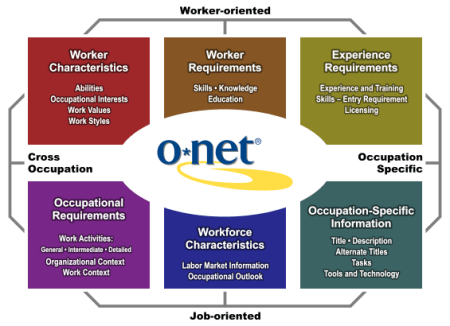
Context In the realm of labor economics, the ability to identify transition pathways for workers is increasingly vital, particularly as automation and technological advancements reshape job markets. The original post, “Identifying skills-based occupational transition pathways with the O*NET,” outlines a methodology to estimate potential labor market transitions by analyzing the similarity of skills, abilities, and knowledge across various occupations. By leveraging the O*NET database—an extensive resource detailing the characteristics of over 800 occupations—researchers can glean insights into how workers can transition between jobs, especially in the face of automation and evolving market demands. This approach offers a structured framework for data engineers and professionals in the Data Analytics and Insights industry to assess labor market dynamics effectively. Main Goals and Achievements The primary goal established in the original post is the identification of viable occupational transition pathways for workers, particularly for those currently employed in roles subject to automation, such as truck drivers. This goal can be achieved through a systematic analysis of occupational data, focusing on the following key steps: 1. **Data Analysis**: Utilize the O*NET database to extract relevant occupational data. 2. **Skill Similarity Assessment**: Calculate similarity scores based on the skills and attributes required for different occupations. 3. **Transition Pathway Identification**: Identify potential job transitions that workers can undertake based on their existing skill sets. By employing these steps, organizations can not only support workers in navigating their career paths but also enhance workforce planning and policy development. Advantages of the Approach 1. **Enhanced Labor Market Insights**: The methodology provides a detailed understanding of how similar occupations are, which can guide workforce development initiatives. As noted in the original content, the similarities in skills and abilities can facilitate smoother transitions between jobs. 2. **Data-Driven Decision Making**: By utilizing empirical data from the O*NET database, organizations can make informed decisions regarding training programs and workforce allocation. This approach aligns with evidence indicating that similar jobs require similar skills, making it easier for workers to transition. 3. **Policy Development**: Policymakers can utilize the findings to design targeted interventions for workers in occupations at risk of automation. The data can inform the development of training programs aimed at equipping workers with the necessary skills for transition. 4. **Broad Applicability**: The methodology is adaptable to various labor markets and occupational classifications, allowing for broader application beyond the US context. This flexibility can enhance its relevance to international workforce challenges. Limitations and Caveats While the advantages are compelling, there are limitations to consider: 1. **Data Coverage**: The analysis may not cover all occupations, as indicated by the original post, which noted that a percentage of occupations may not be represented in the O*NET database. This limitation can skew the similarity scores and potentially overlook viable transition pathways. 2. **Variability in Occupation Characteristics**: The approach relies on the assumption that skill similarities translate into job transition feasibility, which may not hold true in all cases. Factors such as wage differentials, geographic mobility, and personal circumstances can significantly impact a worker’s ability to transition. 3. **Dynamic Labor Markets**: The rapidly changing nature of labor markets, influenced by technology and economic conditions, may mean that findings can quickly become outdated. Continuous updates to the data and methodology are essential to maintain relevance. Future Implications and AI Developments Looking ahead, the integration of AI into labor market analysis holds significant promise. As AI technologies evolve, they can enhance the accuracy and efficiency of occupational data analysis. For instance, machine learning algorithms can be employed to predict occupational transitions more effectively by analyzing vast datasets for patterns that may not be immediately apparent through traditional methods. Additionally, AI can facilitate real-time updates to occupational data, ensuring that workforce development strategies remain aligned with current market conditions. Moreover, AI-driven personalization in training and education could further empower workers by providing tailored learning pathways based on individual skill sets and career aspirations. As AI continues to revolutionize the workplace, the methodologies developed for identifying occupational transition pathways will likely become increasingly sophisticated, enabling organizations to better support their workforce in an ever-evolving labor landscape. In summary, while the methodology for identifying skills-based occupational transition pathways offers substantial benefits for labor market analysis, it is crucial to remain vigilant about its limitations and adapt to the dynamic nature of the workforce, particularly as AI continues to shape our understanding of labor market dynamics. Disclaimer The content on this site is generated using AI technology that analyzes publicly available blog posts to extract and present key takeaways. We do not own, endorse, or claim intellectual property rights to the original blog content. Full credit is given to original authors and sources where applicable. Our summaries are intended solely for informational and educational purposes, offering AI-generated insights in a condensed format. They are not meant to substitute or replicate the full context of the original material. If you are a content owner and wish to request changes or removal, please contact us directly. Source link : Click Here

Contextual Overview: The Intersection of Technology and Daily Life In the modern landscape of technology, practical solutions often enhance our daily experiences, particularly for parents managing the complexities of travel and entertainment for children. The convenience of portable devices, such as tablets, has become a staple in family outings, allowing for distraction during lengthy wait times. However, the associated challenges of device management, particularly in terms of charging, necessitate reliable accessories. The emergence of high-quality retractable cables has provided a solution that is both functional and efficient, exemplifying how technology can alleviate everyday stressors. This premise resonates within the context of artificial intelligence (AI) applications in cybersecurity, where tools must remain efficient and reliable to protect sensitive information while navigating complex environments. Main Goal: Enhancing User Experience Through Practical Solutions The principal objective discussed in the original content is to highlight the utility of a retractable USB-C cable that simplifies charging for everyday scenarios, particularly in the context of family travel. Achieving this goal involves selecting a product that combines quality with functionality, ensuring that users experience minimal inconvenience. In the realm of cybersecurity, similar principles apply; professionals must employ tools that optimize security without sacrificing user experience. The integration of AI in cybersecurity solutions aims to enhance efficiency, automate threat detection, and streamline incident responses, making it imperative to choose reliable tools that support these goals effectively. Advantages of Retractable Cables in Everyday Use Portability: The compact design of retractable cables allows for seamless transportation, making them ideal for individuals who require on-the-go charging solutions. Efficiency: High power output, such as the 240W supported by the Talix cable, ensures rapid charging of devices, which is particularly beneficial during travel. Durability: The construction materials, including rubber-coated ends, prevent fraying and enhance the longevity of the cable, ensuring it withstands frequent use. Organizational Benefits: The retractable feature minimizes cable tangling, contributing to a more organized space in bags or vehicles, which is advantageous for maintaining a clutter-free environment. User-Friendly Mechanism: The straightforward tug-and-release mechanism simplifies usage, making it accessible for individuals of all ages, similar to the need for intuitive cybersecurity tools. Limitations and Considerations While the advantages are noteworthy, certain limitations must be acknowledged. For instance, the ability to pull only one end of the cable at a time may not be feasible due to the design of the retractable mechanism, which could hinder some user experiences. Additionally, while the cable is robust, the durability of retractable mechanisms can vary across products, indicating a need for thorough research before purchase. In cybersecurity, the rapid evolution of AI technologies also presents challenges, as reliance on automated systems without human oversight can lead to potential vulnerabilities if not managed correctly. Future Implications of AI in Cybersecurity The ongoing advancements in AI technology are poised to significantly influence the field of cybersecurity. As machine learning algorithms become more sophisticated, they will enhance threat detection capabilities, allowing for real-time responses to complex cyber threats. Furthermore, the integration of AI tools is expected to foster a more proactive approach to cybersecurity, shifting from reactive measures to preventative strategies. This evolution necessitates continuous training and adaptation for cybersecurity experts, ensuring they remain adept at utilizing new technologies effectively. The future landscape will likely see a hybrid model where human expertise is complemented by AI-driven insights, ultimately leading to a more secure digital environment. Disclaimer The content on this site is generated using AI technology that analyzes publicly available blog posts to extract and present key takeaways. We do not own, endorse, or claim intellectual property rights to the original blog content. Full credit is given to original authors and sources where applicable. Our summaries are intended solely for informational and educational purposes, offering AI-generated insights in a condensed format. They are not meant to substitute or replicate the full context of the original material. If you are a content owner and wish to request changes or removal, please contact us directly. Source link : Click Here
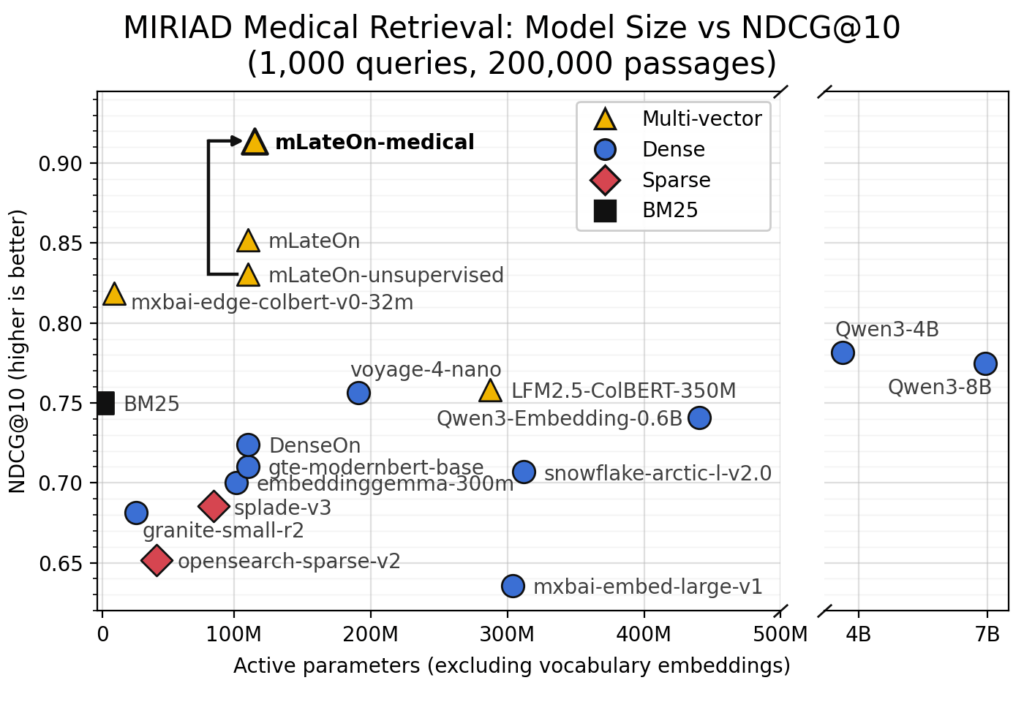
Context In the rapidly evolving landscape of Generative AI, the ability to leverage advanced embedding models is paramount for applications such as semantic search, retrieval-augmented generation, and semantic textual similarity. The Sentence Transformers library has emerged as a robust tool for training and utilizing these models. Its recent version 6.0 introduces the MultiVectorEncoder, which facilitates late interaction retrieval akin to the ColBERT architecture. This update provides a comprehensive method for fine-tuning multi-vector models that can outperform general-purpose retrieval systems tailored to specific datasets. The entire process can be initiated with the simple command: pip install -U “sentence-transformers[train]”. This discussion delves into the core components necessary for fine-tuning multi-vector models, encompassing the model architecture, datasets, loss functions, training parameters, evaluators, and the trainer class. Each component is elucidated with practical examples, equipping data scientists with the necessary insights to enhance the performance of multi-vector models within their specific domains. Main Goal and Achievements The primary goal of fine-tuning multi-vector models is to significantly enhance their retrieval performance within a defined domain. This is accomplished through the adaptation of model parameters tailored to the unique vocabulary, query preferences, and relevance criteria pertinent to the specific application area. The fine-tuning process enables the model to leverage detailed, token-level matching, which is particularly beneficial for domains characterized by nuanced language and complex query structures. Advantages of Fine-Tuning Multi-Vector Models Domain-Specific Performance: Fine-tuning allows models to adapt to specific terminologies and query styles, leading to improved accuracy and relevance in search results. This is supported by empirical evidence indicating that models trained on domain-specific datasets outperform their general counterparts. Enhanced Retrieval Capabilities: Multi-vector models utilize token-level matching, which preserves fine-grained signals that single-vector models may overlook. This results in superior retrieval performance, especially in cases where detailed contextual understanding is essential. Flexibility in Document Length: Many standard models are constrained by predefined document lengths, which can lead to significant information loss. Fine-tuning enables users to configure document lengths according to their specific data needs, ensuring that no critical information is truncated during the retrieval process. Efficient Use of Resources: The training process can effectively utilize consumer-grade GPUs, making advanced model training accessible to a broader range of users without the need for high-end infrastructure. Caveats and Limitations While the benefits of fine-tuning multi-vector models are clear, there are notable caveats to consider. Models trained on small or insufficiently diverse datasets may not generalize well beyond their training data, potentially leading to overfitting. Additionally, the increased index size associated with multi-vector models can pose storage challenges, particularly for applications requiring rapid retrieval across extensive datasets. It is therefore essential to evaluate the trade-offs between model complexity and retrieval efficiency. Future Implications The continuous advancement in AI technologies is likely to further enhance the capabilities of embedding models. As more sophisticated training techniques and larger datasets become available, the potential for even more accurate and context-aware retrieval systems will increase. Future developments may include the integration of multi-modal data sources and enhanced algorithms for dynamic fine-tuning, allowing models to adapt in real-time to evolving user needs and language patterns. This trajectory indicates a promising future for AI applications that leverage fine-tuned multi-vector models, positioning them as critical tools in various sectors, including healthcare, legal, and financial services. Disclaimer The content on this site is generated using AI technology that analyzes publicly available blog posts to extract and present key takeaways. We do not own, endorse, or claim intellectual property rights to the original blog content. Full credit is given to original authors and sources where applicable. Our summaries are intended solely for informational and educational purposes, offering AI-generated insights in a condensed format. They are not meant to substitute or replicate the full context of the original material. If you are a content owner and wish to request changes or removal, please contact us directly. Source link : Click Here
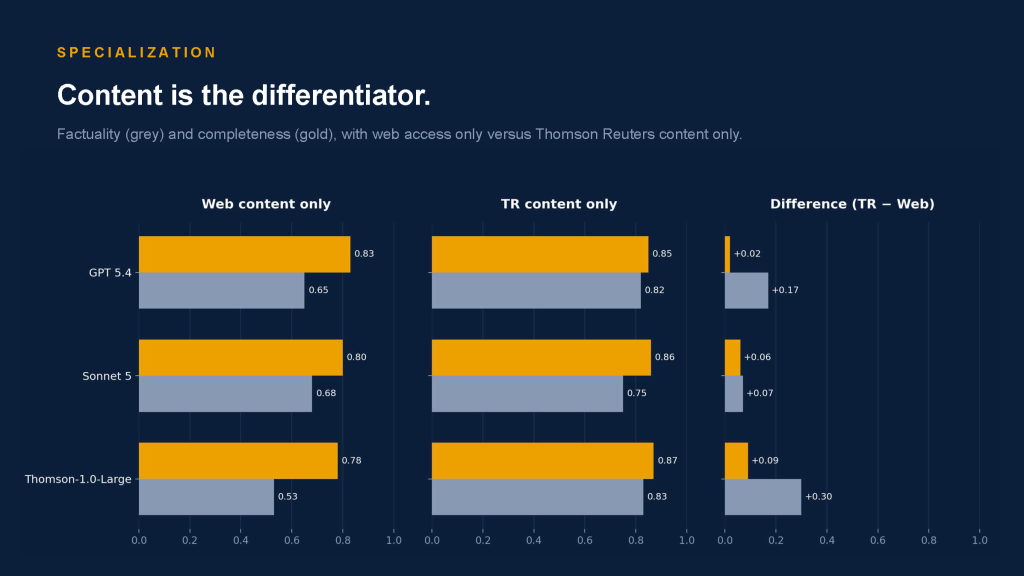
Contextual Overview Thomson Reuters has officially launched its proprietary large language model (LLM), named Thomson, which has been developed utilizing its extensive repository of proprietary legal content from Westlaw and Practical Law. This initiative comes in an era where the integration of artificial intelligence in the legal sector is transforming traditional workflows and enhancing efficiency. According to CEO Steve Hasker, the model has been designed with a foundational focus on specialized legal applications, contrasting with the general-purpose models prevalent in the market, such as ChatGPT and Claude. The development of Thomson is not merely a technological advancement but a strategic positioning within the LegalTech landscape, emphasizing cost-effectiveness and a profound understanding of legal nuances. Main Goal and Achievement Strategy The primary objective of developing the Thomson model is to establish a specialized AI that can address the unique demands of legal professionals while maintaining ownership and control over the intellectual property involved. To achieve this, Thomson Reuters has invested approximately $40 million over two years, significantly lower than the billions typically allocated for leading AI models. This strategic investment underscores the company’s intent to redefine the economics of professional AI by leveraging its proprietary content and expertise, thus fostering a model that is not only efficient but also aligned with the specific needs of the legal industry. Advantages of the Thomson Model Cost Efficiency: Thomson Reuters has demonstrated the potential for significant cost savings in AI development, having invested only $450,000 in the final training run of the Thomson model, compared to the billions spent on other leading models. Specialization in Legal Content: Unlike general-purpose LLMs, Thomson was trained using proprietary legal content, ensuring that the model is finely tuned to meet the specific needs of legal professionals. Enhanced Control: By developing Thomson in-house, Thomson Reuters retains full ownership and control over the model, allowing for tailored adjustments and improvements based on feedback from legal practitioners. Proven Performance: Internal testing has indicated that Thomson outperforms its competitors when evaluated on legal-specific queries, showcasing its capability to provide comprehensive and factual answers. Collaboration Opportunities: The company is open to partnerships with large law firms and corporations that seek to fine-tune the model with their own data, thereby enhancing the model’s applicability and relevance. Future Implications The introduction of Thomson marks a pivotal moment in the legal AI landscape, suggesting a shift towards models that prioritize specialization over sheer scale. As the legal sector increasingly adopts AI technologies, it is anticipated that Thomson will continue to evolve, integrating more proprietary data and refining its capabilities. The implications of this development extend beyond just improved efficiency; they herald a future where legal professionals can leverage AI to enhance their decision-making processes, streamline workflows, and ultimately deliver better outcomes for clients. Furthermore, the potential for licensing Thomson to other organizations may foster a broader ecosystem of specialized legal AI applications, thus propelling the industry towards greater innovation and effectiveness. Disclaimer The content on this site is generated using AI technology that analyzes publicly available blog posts to extract and present key takeaways. We do not own, endorse, or claim intellectual property rights to the original blog content. Full credit is given to original authors and sources where applicable. Our summaries are intended solely for informational and educational purposes, offering AI-generated insights in a condensed format. They are not meant to substitute or replicate the full context of the original material. If you are a content owner and wish to request changes or removal, please contact us directly. Source link : Click Here

Contextual Overview The ongoing geopolitical tensions between the United States and China, particularly regarding economic sanctions and trade relations, have significant implications for financial professionals navigating the complexities of international finance. Recent developments, such as the U.S. ramping up pressure through secondary sanctions related to Iran, underscore the delicate balance both nations maintain in their efforts to cooperate economically despite heightened tensions. This situation is further complicated by President Trump’s assertions regarding potential sanctions on Chinese banks, highlighting the intricate interplay between political rhetoric and economic realities. Main Goal and Its Achievement The principal aim of the current U.S.-China negotiations is to establish a framework for bilateral cooperation while mitigating the risks posed by economic sanctions. Achieving this goal necessitates open lines of communication and strategic dialogue, as evidenced by recent meetings between U.S. Ambassador to China David Perdue and Chinese officials. This cooperative stance is crucial, as it allows both countries to explore avenues for collaboration, even amidst pronounced political posturing. Financial professionals must actively monitor these developments to adapt their strategies accordingly. Advantages for Financial Professionals Enhanced Compliance Strategies: Financial institutions can develop robust compliance frameworks to navigate complex sanctions and regulatory requirements, mitigating risks associated with non-compliance. This is exemplified by the legal mechanisms that allow Chinese companies to align with U.S. rules while prioritizing domestic laws. Informed Decision-Making: Access to updated geopolitical insights enables financial professionals to make informed investment decisions, particularly in markets influenced by U.S.-China relations. Understanding the implications of sanctions on specific sectors can lead to better risk assessment and management. Market Opportunities: The potential for high-level interactions and negotiations between the U.S. and China may open new avenues for cross-border investments and collaborations, providing financial professionals with opportunities to diversify their portfolios. Resilience in Trade Dynamics: The commitment to maintaining a trade truce suggests a mutual recognition of the detrimental impacts of a trade war, allowing financial professionals to better predict market behavior and adjust their strategies to remain competitive. Future Implications of AI Developments As the landscape of international finance continues to evolve, the integration of artificial intelligence (AI) within financial services is poised to transform how financial professionals operate. AI technologies can facilitate enhanced data analysis, enabling professionals to better forecast market trends and identify potential risks associated with geopolitical developments. Additionally, AI-driven compliance tools can streamline the monitoring of sanctions and regulatory changes, thereby improving operational efficiency. Looking forward, the intersection of AI and international finance will likely yield sophisticated tools for real-time risk assessment and decision-making. This evolution will empower financial professionals to navigate the complexities of U.S.-China relations more effectively, ensuring that they remain agile in an increasingly dynamic environment. Disclaimer The content on this site is generated using AI technology that analyzes publicly available blog posts to extract and present key takeaways. We do not own, endorse, or claim intellectual property rights to the original blog content. Full credit is given to original authors and sources where applicable. Our summaries are intended solely for informational and educational purposes, offering AI-generated insights in a condensed format. They are not meant to substitute or replicate the full context of the original material. If you are a content owner and wish to request changes or removal, please contact us directly. Source link : Click Here


