
Context The emergence of generative AI tools has revolutionized the landscape of artistic creation by democratizing access to art-making capabilities. In a fraction of the time and without extensive training, individuals can generate intricate images based on their imagination. Yet, this newfound accessibility has incited considerable criticism, particularly regarding the proliferation of low-quality content across social media platforms such as Instagram and TikTok. Companies are increasingly opting to leverage these AI tools for image and video generation, potentially sidelining traditional artists in the process. This paradigm shift raises questions about the value of art and the role of human creativity in a domain increasingly influenced by artificial intelligence. Main Goal and Achievement The central aim of integrating generative AI into the artistic realm is to foster creative expression among individuals who may not possess traditional artistic skills. This goal can be realized through the development and utilization of user-friendly AI tools that encourage experimentation and innovation in art creation. By enabling a broader audience to engage in the artistic process, these tools can cultivate a new generation of creators who contribute diverse perspectives to the art world. However, achieving this goal necessitates a balance between accessibility and the preservation of artistic integrity, as the artistic merit of AI-generated works remains a contentious topic. Advantages of Generative AI in Art Increased Accessibility: Generative AI tools allow individuals without formal training to create art, thereby lowering barriers to entry and expanding the creative community. Diverse Perspectives: The democratization of art-making promotes the inclusion of varied voices and ideas, enriching the artistic landscape with new narratives and styles. Enhanced Creativity: Artists can leverage AI as a collaborative tool, enhancing their creative process by introducing elements of unpredictability and innovation that may not arise through traditional methods. New Market Opportunities: The emergence of AI-generated art has led to novel market dynamics, evidenced by high-profile sales at auction houses, such as the $24,000 sale of a bitcoin NFT, indicating a growing acceptance of AI as a legitimate medium. Caveats and Limitations Despite the advantages, there are significant caveats to consider. The ease of generating art with AI tools can lead to an oversaturation of content, where the distinction between profound artistry and mere replication becomes blurred. Moreover, the reliance on AI can diminish the perceived value of traditional artistic skills, leading to concerns about the devaluation of human artistry. Additionally, the unpredictability inherent in AI-generated works, while often seen as a benefit, may also produce outcomes that lack coherence or artistic intention. Future Implications Looking forward, the trajectory of AI developments in the art world is poised to impact various aspects of artistic creation and appreciation. As generative AI continues to evolve, it will likely enhance its capabilities, enabling artists to explore increasingly complex themes and styles. Furthermore, the ongoing dialogue surrounding the legitimacy of AI as a co-creator will play a crucial role in shaping public perception and acceptance. The integration of AI in art may lead to the establishment of new artistic movements that redefine traditional concepts of creativity and authorship. Ultimately, the future of AI in the arts hinges on the ability to balance innovation with respect for the rich history of human expression. Disclaimer The content on this site is generated using AI technology that analyzes publicly available blog posts to extract and present key takeaways. We do not own, endorse, or claim intellectual property rights to the original blog content. Full credit is given to original authors and sources where applicable. Our summaries are intended solely for informational and educational purposes, offering AI-generated insights in a condensed format. They are not meant to substitute or replicate the full context of the original material. If you are a content owner and wish to request changes or removal, please contact us directly. Source link : Click Here

Context The rapid advancement of artificial intelligence (AI) technologies has transformed various sectors, including the field of cybersecurity. A recent study by the European Broadcasting Union (EBU) and the BBC highlights alarming inaccuracies in AI-generated news content, revealing that AI chatbots misrepresent facts nearly half the time. This raises critical concerns about the reliability of AI tools in disseminating information, especially in areas as sensitive as cybersecurity. Cybersecurity experts rely heavily on accurate information to safeguard systems, making it essential to scrutinize the integrity of AI outputs. Main Goal The primary objective derived from the original post is to underscore the necessity of verifying information sourced from AI tools, particularly in the context of news dissemination and its implications for public trust. Achieving this goal involves implementing rigorous evaluation systems for AI-generated content, ensuring that cybersecurity professionals can differentiate between accurate and misleading information. By fostering a culture of skepticism towards unverified AI outputs, experts can mitigate risks associated with misinformation. Advantages of AI in Cybersecurity Enhanced Threat Detection: AI algorithms excel in identifying patterns and anomalies that may indicate cyber threats. By analyzing vast amounts of data, these systems can flag potential vulnerabilities more swiftly than traditional methods. Improved Response Times: Automation through AI can facilitate real-time responses to security breaches, thereby minimizing potential damage. This rapid intervention is crucial in maintaining the integrity of sensitive data. Resource Efficiency: Cybersecurity teams can optimize their resources by leveraging AI tools for routine tasks, allowing human experts to focus on more complex issues that require nuanced understanding. Predictive Analytics: AI’s ability to forecast potential threats based on historical data assists cybersecurity professionals in proactively fortifying systems against future attacks. Caveats and Limitations Despite the advantages, there are important caveats that cybersecurity experts must consider when utilizing AI tools. The EBU and BBC study highlighted that 45% of AI responses contained significant issues, including inaccuracies such as hallucinations and outdated information. This indicates that reliance on AI without proper verification can lead to misguided decisions. Furthermore, the lack of transparency in AI algorithms may obscure understanding of how threats are identified, potentially jeopardizing trust among cybersecurity professionals. Future Implications The ongoing evolution of AI will undoubtedly shape the landscape of cybersecurity in the coming years. As AI technologies become more sophisticated, their integration into cybersecurity frameworks will likely deepen. However, as evidenced by current research, the reliability of these tools will remain a pressing concern. Ensuring that cybersecurity experts are equipped with robust verification processes and critical thinking skills will be paramount in navigating the complexities introduced by AI. Moreover, a collaborative approach to AI development, involving input from cybersecurity professionals, can enhance the efficacy and trustworthiness of these technologies. Disclaimer The content on this site is generated using AI technology that analyzes publicly available blog posts to extract and present key takeaways. We do not own, endorse, or claim intellectual property rights to the original blog content. Full credit is given to original authors and sources where applicable. Our summaries are intended solely for informational and educational purposes, offering AI-generated insights in a condensed format. They are not meant to substitute or replicate the full context of the original material. If you are a content owner and wish to request changes or removal, please contact us directly. Source link : Click Here

Context of Healthcare Disruption in the Era of OBBBA The One Big Beautiful Bill Act (OBBBA) represents a pivotal shift in healthcare policy, poised to bring about significant changes across the healthcare landscape. The anticipated repercussions, including substantial Medicaid cuts, alterations in Affordable Care Act (ACA) marketplaces, and an increase in uncompensated care, underscore the urgency for stakeholders to adapt to this evolving environment. While the full implications of OBBBA will materialize in 2027, preliminary disruptions are expected to manifest much sooner, necessitating immediate strategic planning and responsiveness. Main Goals of the OBBBA and Achieving Success The primary objective of engaging with the implications of the OBBBA is to equip healthcare entities with the knowledge and strategies required to navigate forthcoming disruptions. This goal can be achieved through detailed analysis of the legislation, understanding its timeline, and identifying critical areas for operational and financial planning. By leveraging analytics and fostering resilience, healthcare organizations can transform potential challenges into opportunities for growth and improvement. Advantages of Understanding OBBBA’s Impact Informed Decision-Making: By comprehensively understanding OBBBA, healthcare professionals can make informed decisions that align with regulatory changes, ultimately enhancing service delivery and patient outcomes. Proactive Financial Planning: Identifying urgent areas for financial planning allows organizations to mitigate risks associated with reduced funding and increased uncompensated care. Utilization of Analytics: Employing data analytics can facilitate improved operational efficiency, enabling organizations to adapt swiftly to market changes and consumer needs. Enhanced Negotiation Strategies: Knowledge of the healthcare landscape influenced by OBBBA empowers stakeholders to negotiate more effectively with payers and other entities, ensuring better financial terms and partnerships. Caveats and Limitations Despite the advantages, there are inherent limitations to consider. The uncertainty surrounding the full implementation of OBBBA may lead to challenges in forecasting long-term impacts. Additionally, the ability of healthcare organizations to adapt swiftly to these changes will depend on their existing infrastructure and resource availability, which may vary widely among different entities. Future Implications of AI in Healthcare Post-OBBBA As the healthcare industry grapples with the changes brought about by OBBBA, the integration of Artificial Intelligence (AI) will become increasingly paramount. AI technologies hold the potential to revolutionize various aspects of healthcare, from predictive analytics in patient care to streamlined administrative processes. Future developments in AI may enhance the ability of healthcare professionals to navigate regulatory changes and optimize operational efficiencies, thus ensuring sustainability in an era marked by financial challenges and systemic disruptions. The continuous evolution of AI in health and medicine will likely play a critical role in shaping the future landscape, enabling a more resilient and adaptive healthcare ecosystem. Disclaimer The content on this site is generated using AI technology that analyzes publicly available blog posts to extract and present key takeaways. We do not own, endorse, or claim intellectual property rights to the original blog content. Full credit is given to original authors and sources where applicable. Our summaries are intended solely for informational and educational purposes, offering AI-generated insights in a condensed format. They are not meant to substitute or replicate the full context of the original material. If you are a content owner and wish to request changes or removal, please contact us directly. Source link : Click Here

Context and Overview The gaming landscape is witnessing a transformative shift with titles such as Vampire: The Masquerade – Bloodlines 2 capitalizing on advanced cloud gaming technologies through platforms like GeForce NOW. This integration not only enhances accessibility but also showcases the potential of robust infrastructure, such as the NVIDIA RTX 5080-class power, to deliver high-performance gaming experiences seamlessly. As gaming becomes increasingly cloud-based, it parallels developments in the Generative AI Models & Applications sector, where the focus is on leveraging AI capabilities to optimize user engagement and interaction in gaming environments. Main Goal and Achievement Strategies The primary goal illustrated in the original content is to highlight the seamless integration of advanced cloud technology with contemporary gaming experiences, thereby enhancing user accessibility and engagement. This can be achieved through: Infrastructure Enhancement: Upgrading server capabilities to support high-performance gaming. Accessibility Improvements: Facilitating instant game access without the need for extensive downloads or high-end hardware. User Engagement: Providing immersive experiences through rich narratives and interactive gameplay. Advantages of Cloud Gaming Integration The integration of cloud gaming technologies presents several advantages that benefit both players and developers: Instant Access: Players can engage with games immediately, as no installation is required. This encourages a broader player base and promotes trial of new titles. Enhanced Graphics and Performance: The use of NVIDIA’s RTX 5080-class power ensures high frame rates and superior graphics quality, thereby elevating the gaming experience. Device Flexibility: Players can access games across various devices, whether high-end PCs or mobile devices, promoting inclusivity in gaming. Dynamic Storytelling: Titles like Bloodlines 2 leverage rich narratives and complex character interactions, enhancing immersion and player agency. Limitations and Caveats While the advantages are significant, certain limitations must be acknowledged: Internet Dependency: A stable and high-speed internet connection is crucial, which may limit access for users in regions with inadequate infrastructure. Latency Issues: Real-time performance can be affected by network latency, which may detract from the gameplay experience. Subscription Costs: While cloud gaming offers convenience, the recurring subscription fees may deter some potential players. Future Implications in AI and Gaming The future landscape of gaming, particularly within the context of AI developments, is poised for significant evolution. The continued refinement of AI technologies will likely drive advancements in: Personalized Gaming Experiences: AI could tailor game narratives and challenges based on individual player behavior and preferences. Real-time Adaptation: AI systems may enable games to adapt in real-time to player decisions, enhancing immersion and engagement. Enhanced NPC Interactions: The development of more sophisticated non-playable characters (NPCs) through AI can lead to deeper and more meaningful player interactions. Predictive Analytics: Game developers can use AI to analyze player data, predicting trends and optimizing game features for better player retention. Disclaimer The content on this site is generated using AI technology that analyzes publicly available blog posts to extract and present key takeaways. We do not own, endorse, or claim intellectual property rights to the original blog content. Full credit is given to original authors and sources where applicable. Our summaries are intended solely for informational and educational purposes, offering AI-generated insights in a condensed format. They are not meant to substitute or replicate the full context of the original material. If you are a content owner and wish to request changes or removal, please contact us directly. Source link : Click Here

Context The landscape of data science interviews is evolving, particularly in the realm of Applied Machine Learning. Traditionally, candidates have been assessed on their technical acumen, including proficiency in programming languages such as SQL and Python, as well as their understanding of machine learning algorithms and statistical analysis. However, a deeper, often overlooked dimension exists within these interviews: the ‘hidden curriculum.’ This refers to the non-technical competencies that employers are increasingly prioritizing, which are vital for success in a collaborative and dynamic working environment. Recognizing this shift is crucial for both job seekers and organizations aiming to optimize their hiring processes. Introduction The primary goal of identifying the hidden curriculum in data science interviews is to equip candidates with the skills to effectively navigate the complexities of real-world data challenges. To achieve this, candidates must not only demonstrate technical expertise but also exhibit critical thinking, adaptability, and effective communication. Understanding how to translate business problems into data-driven solutions and vice versa encapsulates this goal. By mastering these competencies, candidates can position themselves as valuable assets to potential employers. Advantages of Recognizing the Hidden Curriculum Enhanced Communication Skills: Candidates who can articulate their thought processes clearly and adapt their language for different audiences are better equipped to collaborate with diverse teams. This skill is essential for translating complex data insights into actionable business strategies. Improved Problem-Solving Abilities: By recognizing the need for trade-off analysis and decision-making under uncertainty, candidates learn to prioritize tasks effectively and make informed judgments, which is critical in fast-paced environments. Resilience in Ambiguous Situations: Interview scenarios often mimic real-world challenges where data is incomplete or ambiguous. Candidates who can thrive in such conditions demonstrate a mindset that is invaluable in the workplace. Pragmatic Approach to Solutions: Understanding the principle that “better” can be the enemy of “good” encourages candidates to focus on delivering practical solutions rather than striving for unattainable perfection, leading to faster project completions and resource efficiency. Collaborative Mindset: The ability to handle pushback and engage in constructive criticism fosters a collaborative environment, which is essential for successful data science initiatives. Caveats and Limitations While embracing the hidden curriculum offers significant advantages, candidates must also be aware of potential pitfalls. The emphasis on soft skills should not overshadow the necessity of technical proficiency. Additionally, organizations may inadvertently create biases in their hiring processes by overvaluing certain non-technical skills, potentially overlooking technically adept candidates who may lack these competencies. Thus, a balanced evaluation framework that considers both technical and non-technical skills is imperative. Future Implications As artificial intelligence continues to advance, the dynamics of data science interviews are likely to shift further. AI tools may increasingly automate technical assessments, placing greater emphasis on candidates’ soft skills and their ability to work collaboratively within teams. Moreover, as industries evolve, the demand for data scientists who can navigate ethical considerations and societal impacts of data-driven decisions will rise. Consequently, the hidden curriculum will become even more critical in preparing candidates for future roles in a rapidly changing landscape. Disclaimer The content on this site is generated using AI technology that analyzes publicly available blog posts to extract and present key takeaways. We do not own, endorse, or claim intellectual property rights to the original blog content. Full credit is given to original authors and sources where applicable. Our summaries are intended solely for informational and educational purposes, offering AI-generated insights in a condensed format. They are not meant to substitute or replicate the full context of the original material. If you are a content owner and wish to request changes or removal, please contact us directly. Source link : Click Here
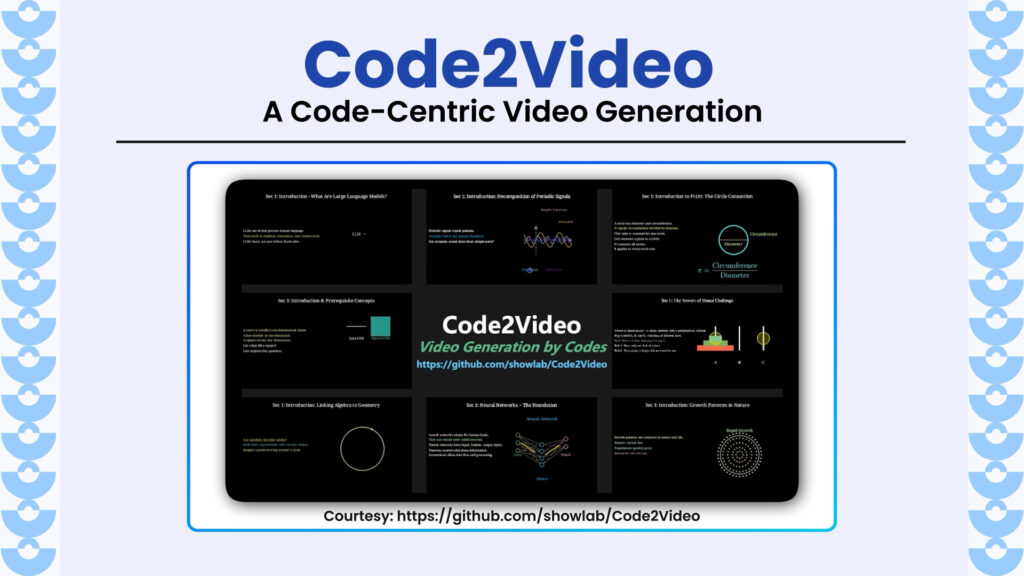
Context In the rapidly evolving domain of Computer Vision and Image Processing, the generation of educational content is becoming increasingly sophisticated. The advent of frameworks such as Code2Video signifies a transformative approach to creating instructional materials. This innovative system operates by generating professional educational videos directly from executable Python code, diverging from conventional pixel-based diffusion and text-to-video models. By positioning code as the primary generative medium, Code2Video enhances visual control, transparency, and interpretability in the development of long-form educational content. Developed by the Show Lab at the National University of Singapore, Code2Video employs a tri-agent architecture comprised of three collaborative components: the Planner, the Coder, and the Critic. This architecture allows for the systematic production of structured and scalable educational videos, which is particularly beneficial for educators and learners alike. Main Goal The principal objective of Code2Video is to facilitate the generation of high-quality educational videos through a code-centric approach. By utilizing executable code as a foundational element, the system ensures a level of precision and clarity that is often lacking in traditional video generation methods. This goal can be achieved through the concerted efforts of the three agents: the Planner organizes the lecture flow, the Coder produces executable code with debugging capabilities, and the Critic provides multimodal feedback to refine the output. This triadic collaboration enables the creation of coherent and instructive videos that can effectively convey complex concepts. Advantages of Code2Video Enhanced Transparency: The use of executable code allows for a clear understanding of the underlying processes, making it easier for educators and students to follow along. Scalability: The tri-agent structure enables the production of videos that can be easily scaled to accommodate various educational topics, from mathematics to computer science. Improved Learning Outcomes: The implementation of the TeachQuiz metric allows for the assessment of knowledge transfer, demonstrating that students can effectively “unlearn” and “relearn” concepts through the generated content. Benchmarking Efficiency: The MMMC Benchmark, derived from established Manim tutorials, ensures that the generated videos meet high standards for aesthetics, efficiency, and educational effectiveness. Performance Boost: Code2Video has shown a 40% performance improvement over traditional direct code generation methods, achieving educational outcomes comparable to those of human-created tutorials. Future Implications The continuous advancement of artificial intelligence holds considerable promise for the future of educational content generation. As AI technologies evolve, we can anticipate even more sophisticated frameworks that integrate enhanced machine learning algorithms and improved data processing capabilities. This evolution may lead to an increased ability to personalize educational experiences, tailoring content to individual learning styles and needs. Furthermore, the integration of AI in video generation systems like Code2Video could foster greater collaboration between educators and AI systems, ultimately enriching the learning environment and improving educational outcomes for students worldwide. Disclaimer The content on this site is generated using AI technology that analyzes publicly available blog posts to extract and present key takeaways. We do not own, endorse, or claim intellectual property rights to the original blog content. Full credit is given to original authors and sources where applicable. Our summaries are intended solely for informational and educational purposes, offering AI-generated insights in a condensed format. They are not meant to substitute or replicate the full context of the original material. If you are a content owner and wish to request changes or removal, please contact us directly. Source link : Click Here

Introduction The evaluation of Natural Language Processing (NLP) models is an essential aspect of the development cycle, particularly in the context of Natural Language Understanding (NLU). In this discourse, we will explore the foundational evaluation metrics that serve as cornerstones in assessing the efficacy of NLP models. Often, practitioners encounter challenges in comprehending the myriad definitions and formulas associated with these metrics, leading to a superficial understanding rather than a robust conceptual framework. Main Goal The primary objective of this discussion is to cultivate a profound understanding of evaluation metrics prior to delving into the intricacies of their mathematical representations. This foundational knowledge enables practitioners to discern the nuances of model performance, particularly in relation to the limitations of overall accuracy as a standalone metric. Advantages of Understanding Evaluation Metrics Intuitive Comprehension: Developing an intuitive grasp of evaluation metrics enables practitioners to assess model performance effectively. This understanding allows for more informed decision-making regarding model selection and optimization. Identification of Misleading Metrics: A critical examination of overall accuracy reveals its potential to misrepresent model performance, especially in imbalanced datasets. For instance, a model achieving high accuracy may still fail to capture critical instances relevant to specific applications. Connection to Advanced Metrics: By grasping fundamental concepts, practitioners can better relate advanced metrics such as BLEU and ROUGE to core evaluation principles, enhancing their analytical capabilities. Application in Real-World Scenarios: An understanding of evaluation metrics equips practitioners to tailor their approaches to specific contexts, such as hate speech detection, where the emphasis on catching harmful content outweighs the need for perfect classification of neutral or positive comments. Caveats and Limitations While a robust understanding of evaluation metrics offers numerous advantages, it is imperative to acknowledge certain limitations. For instance, metrics such as precision and recall may not fully encapsulate the complexities of particular NLP tasks, leading to a necessity for nuanced evaluation strategies. Additionally, the reliance on certain metrics may inadvertently prioritize specific aspects of performance at the expense of others, underscoring the importance of a holistic evaluation approach. Future Implications Looking ahead, advancements in artificial intelligence will likely reshape the landscape of evaluation metrics within NLP. As models become increasingly sophisticated, the need for adaptive and context-sensitive evaluation strategies will intensify. Developments in explainable AI (XAI) may further enhance the interpretability of model outputs, allowing practitioners to evaluate not only the accuracy of predictions but also the rationale behind them. Moreover, the integration of multimodal data sources will necessitate the evolution of existing metrics to encompass broader performance criteria. As NLU systems become integral to various applications, from conversational agents to information retrieval, the refinement of evaluation methodologies will play a pivotal role in ensuring their reliability and effectiveness. Conclusion In conclusion, comprehending evaluation metrics in NLP is not merely an academic exercise; it is a vital component of developing effective NLU systems. By fostering an intuitive understanding of these metrics, practitioners can navigate the complexities of model evaluation, ensuring that their methodologies align with real-world applications and user needs. As the field continues to evolve, ongoing education and adaptation in evaluation strategies will be crucial to harnessing the full potential of NLP technologies. Disclaimer The content on this site is generated using AI technology that analyzes publicly available blog posts to extract and present key takeaways. We do not own, endorse, or claim intellectual property rights to the original blog content. Full credit is given to original authors and sources where applicable. Our summaries are intended solely for informational and educational purposes, offering AI-generated insights in a condensed format. They are not meant to substitute or replicate the full context of the original material. If you are a content owner and wish to request changes or removal, please contact us directly. Source link : Click Here

Introduction In contemporary business environments, change is often met with skepticism, as observed in the adage, “When a company makes a change, it’s probably not going to benefit you.” This sentiment underscores a critical aspect of organizational dynamics—understanding the implications of changes, particularly in pricing strategies. The example of McDonald’s rounding cash change to the nearest five cents serves as a case study in the intersection of consumer psychology, pricing strategies, and data analytics. This analysis aims to elucidate the implications of such changes for data analytics professionals, particularly data engineers, and explore the broader effects of these changes in the industry. Understanding the Main Goal The primary objective of the original discussion revolves around analyzing the impact of pricing changes on consumer behavior and corporate profits. This can be achieved through comprehensive data analysis that scrutinizes transaction data to determine the effects of rounding rules on overall revenue. By employing robust analytical methods, data engineers can uncover patterns that inform strategic business decisions and optimize pricing models. Advantages of Data-Driven Pricing Changes The exploration of McDonald’s rounding practices reveals several advantages, including: 1. **Consumer Perception Management**: Pricing strategies that utilize psychological pricing, such as ending prices in .99, create a perception of lower costs. This tactic can enhance consumer attraction and retention. 2. **Revenue Optimization**: The analysis indicates a slight positive rounding difference of 0.04 cents per transaction, suggesting that while individual gains may be minimal, cumulative effects across millions of transactions can yield significant financial benefits for corporations. 3. **Data-Driven Insights**: By leveraging aggregated transaction data, data engineers can identify pricing patterns and consumer behavior trends. This evidence-based approach can lead to more informed decision-making and the development of targeted marketing strategies. 4. **Adaptability to Local Markets**: The analysis highlights the variability in meal pricing and sales tax rates across different states. Data engineers can tailor pricing strategies that accommodate regional differences, thereby maximizing potential revenue streams. Caveats and Limitations While the insights derived from analyzing rounding practices present clear advantages, several limitations must be acknowledged: – **Data Accessibility**: The analysis relies on assumptions regarding pricing distribution and consumer behavior, which can vary widely. Access to detailed transaction data is crucial for more precise analyses. – **Generalizability**: The findings from a specific case, such as McDonald’s, may not universally apply to all businesses or industries. Each organization has unique factors that influence pricing strategies. – **Temporal Factors**: Market conditions, economic trends, and consumer preferences are subject to change. Continuous monitoring and real-time data analysis are necessary to ensure the effectiveness of pricing strategies. Future Implications and the Role of AI As the landscape of data analytics continues to evolve, the integration of artificial intelligence (AI) technologies is poised to transform the industry. AI can automate complex data analysis processes, providing deeper insights into consumer behavior and pricing strategies. Machine learning algorithms can predict future trends based on historical data, allowing businesses to adapt their pricing models proactively. Moreover, AI-driven analytics can enhance the accuracy of data collection and processing, mitigating the limitations of traditional methods. As businesses increasingly rely on data-driven decision-making, the role of data engineers will become even more critical in harnessing AI technologies to optimize pricing strategies and improve overall business performance. Conclusion In summary, understanding the implications of pricing changes, such as those implemented by McDonald’s, underscores the importance of data analytics in modern business practices. By leveraging data-driven insights, organizations can optimize pricing strategies to enhance consumer perception and maximize revenue. As advancements in AI continue to shape the industry, data engineers will play a pivotal role in driving these changes, ensuring that businesses can navigate the complexities of pricing dynamics effectively. Disclaimer The content on this site is generated using AI technology that analyzes publicly available blog posts to extract and present key takeaways. We do not own, endorse, or claim intellectual property rights to the original blog content. Full credit is given to original authors and sources where applicable. Our summaries are intended solely for informational and educational purposes, offering AI-generated insights in a condensed format. They are not meant to substitute or replicate the full context of the original material. If you are a content owner and wish to request changes or removal, please contact us directly. Source link : Click Here

Introduction In the contemporary landscape of big data engineering, the efficient synchronization of real-time data within data lakes is paramount. Organizations are increasingly grappling with challenges related to data accuracy, latency, and scalability. As businesses strive for actionable insights derived from near real-time data, the need for advanced data management solutions becomes ever more critical. This blog post focuses on the integration of Amazon MSK Serverless, Apache Iceberg, and AWS Glue streaming as a comprehensive solution to unlock real-time data insights through schema evolution. Main Goal and Implementation Strategy The primary objective of this integration is to facilitate real-time data processing and analytics by leveraging schema evolution capabilities. Schema evolution refers to the ability to modify the structure of a data table to accommodate changes in the data over time without interrupting ongoing operations. This is particularly vital in streaming environments where data is continuously ingested from diverse sources. By employing Apache Iceberg’s robust schema evolution support, organizations can ensure that their streaming pipelines remain operational even when underlying data structures change. Key Advantages of the Integrated Solution Continuous Data Processing: The solution ensures uninterrupted data flows, enabling organizations to maintain analytical capabilities without the need for manual intervention during schema changes. Scalability: Utilizing Amazon MSK Serverless allows for automatic provisioning and scaling of resources, eliminating the complexities typically associated with capacity management. Real-Time Analytics: By streamlining the data processing pipeline from Amazon RDS to Iceberg tables via AWS Glue, businesses can access up-to-date insights, thus enhancing decision-making processes. Reduced Operational Friction: The integration minimizes technical complexity and operational overhead by automating schema evolution, which is crucial for environments with frequently changing data models. Future-Proofing Data Infrastructure: The architecture’s inherent flexibility allows it to adapt to various use cases, ensuring that organizations can respond effectively to evolving data needs. Caveats and Limitations While the integrated solution offers numerous advantages, there are limitations to consider. Notably, certain schema changes—such as dropping or renaming columns—may still require manual intervention. Furthermore, organizations must ensure they have the necessary AWS infrastructure and IAM permissions set up to leverage these capabilities fully. Performance may also be contingent upon how well the data sources are managed and the frequency of changes occurring within the source systems. Future Implications and AI Developments The impact of artificial intelligence (AI) on data engineering practices is poised to be transformative. As AI technologies evolve, the automation of data processing and schema evolution could become more sophisticated, further reducing the need for human oversight. Enhanced predictive analytics, powered by AI, may enable organizations to anticipate data changes and adjust their schemas proactively. Moreover, the integration of AI could lead to smarter data pipelines that optimize performance, improve data quality, and reduce latency even further, thus reshaping the role of data engineers in the future. Conclusion This exploration of the integration of Amazon MSK Serverless, Apache Iceberg, and AWS Glue streaming illustrates a path toward unlocking real-time data insights through schema evolution. By addressing the challenges of data latency and accuracy, organizations can enhance their analytical capabilities, ultimately driving better business strategies. As the field of big data engineering continues to evolve, embracing such innovative solutions will be critical for maintaining a competitive edge in a data-driven world. Disclaimer The content on this site is generated using AI technology that analyzes publicly available blog posts to extract and present key takeaways. We do not own, endorse, or claim intellectual property rights to the original blog content. Full credit is given to original authors and sources where applicable. Our summaries are intended solely for informational and educational purposes, offering AI-generated insights in a condensed format. They are not meant to substitute or replicate the full context of the original material. If you are a content owner and wish to request changes or removal, please contact us directly. Source link : Click Here

Introduction In the realm of artificial intelligence (AI) applications, the challenges posed by facial recognition technology are increasingly prominent, particularly regarding inclusivity for individuals with facial differences or disabilities. The growing reliance on AI-driven technologies in sectors such as cybersecurity necessitates a thorough understanding of these impediments, as the implications extend beyond mere inconvenience and into the domain of equitable access. This discussion will contextualize the challenges faced by users with facial differences, explore the goals of inclusive AI, and elucidate the impacts on cybersecurity professionals. Context of Facial Recognition Challenges in AI Recent advancements in AI have led to widespread adoption of facial recognition systems across various sectors, especially in cybersecurity. However, the efficacy of these systems poses significant challenges for individuals with facial differences or disabilities. Kathleen Bogart, a psychology professor specializing in disability research, emphasizes that the failure to include diverse populations in the development of AI technologies amplifies existing societal prejudices. This underrepresentation perpetuates a cycle of exclusion, whereby individuals with distinct facial features may encounter systemic barriers when interfacing with AI-driven platforms. For instance, Noor Al-Khaled, who struggles to create an online account with the Social Security Administration, illustrates the emotional and practical ramifications of these technologies. Her experience highlights the inadequacies of current facial verification systems that fail to recognize her craniofacial condition, rendering her unable to access vital services. Such scenarios underscore the urgent need for alternate verification methods that accommodate all users, fostering a more inclusive digital landscape. Main Goals of Inclusive AI Development The primary objective of developing inclusive AI is to ensure that technology functions effectively for all users, including those with disabilities or facial differences. This goal can be achieved by incorporating diverse user feedback during the design and implementation phases of AI systems. By actively involving individuals who are typically marginalized in technological advancements, developers can create more robust systems that cater to a wider array of needs. Moreover, organizations must prioritize accessibility by providing alternative verification methods beyond facial recognition, thus mitigating the barriers faced by those with facial differences. As emphasized by Byrum from Present Moment Enterprises, a lack of fallback options often leads to users becoming ensnared in complex technological systems, exacerbating feelings of isolation and frustration. Advantages of Inclusive AI Systems 1. **Enhanced Accessibility**: By integrating diverse user perspectives in AI development, organizations can create systems that are inherently more accessible. This approach not only broadens the user base but also ensures compliance with legal standards regarding accessibility. 2. **Increased User Trust**: When users perceive that a system accommodates their unique needs, it fosters trust and encourages wider adoption. This is particularly crucial in cybersecurity, where user confidence directly influences the effectiveness of security measures. 3. **Reduction of Discrimination**: Inclusive AI can help mitigate biases inherent in algorithms, thus contributing to a fairer technological landscape. Addressing these biases can lead to more accurate and equitable outcomes for all users. 4. **Improved User Experience**: By offering multiple avenues for verification, organizations can significantly enhance the user experience, reducing frustration and promoting greater engagement with digital services. 5. **Social Responsibility**: Organizations that prioritize inclusivity position themselves as socially responsible entities, positively impacting their reputation and potentially increasing customer loyalty. Future Implications of AI Developments in Cybersecurity As AI continues to evolve, its implications for cybersecurity will be profound. The integration of advanced machine learning techniques promises enhanced security measures that are both efficient and effective. However, the potential for exclusion remains a critical concern. The development of adaptive AI systems that can learn to recognize and accommodate a diverse range of facial features will be essential in fostering inclusivity. Moreover, as AI applications proliferate, regulatory scrutiny surrounding their ethical deployment will intensify. Organizations must proactively address inclusivity to avoid legal ramifications and reputational damage. The future landscape will likely see a push for standards and best practices in AI development that emphasize accessibility as a core principle. In conclusion, the intersection of AI, facial recognition, and cybersecurity presents both challenges and opportunities. By prioritizing inclusivity in technological advancements, organizations can enhance user experiences, build trust, and contribute to a more equitable digital world. Disclaimer The content on this site is generated using AI technology that analyzes publicly available blog posts to extract and present key takeaways. We do not own, endorse, or claim intellectual property rights to the original blog content. Full credit is given to original authors and sources where applicable. Our summaries are intended solely for informational and educational purposes, offering AI-generated insights in a condensed format. They are not meant to substitute or replicate the full context of the original material. If you are a content owner and wish to request changes or removal, please contact us directly. Source link : Click Here


