
Context In the rapidly evolving landscape of Generative AI, the efficiency of language models is paramount, particularly as their applications broaden across various industries. The post “Continuous Batching from First Principles” provides foundational insights into the mechanics of large language models (LLMs), emphasizing the significance of continuous batching as a technique to optimize throughput. By understanding how LLMs process and generate tokens, we can appreciate the computational challenges they face—specifically, the high resource demands associated with generating responses in real-time for multiple users. Continuous batching addresses these challenges by allowing models to handle multiple conversations simultaneously and efficiently. Main Goal and Achievement The primary goal articulated in the original post is to enhance the performance of LLMs in high-load scenarios through continuous batching. This is achieved by integrating concepts from attention mechanisms and key-value (KV) caching, enabling the processing of multiple prompts concurrently without sacrificing the quality of output. By effectively managing computational resources, continuous batching facilitates real-time interactions in applications such as chatbots and virtual assistants, significantly improving user experience. Advantages of Continuous Batching Increased Throughput: Continuous batching enables models to generate multiple tokens simultaneously, enhancing the number of tokens produced per second. This is crucial for applications needing real-time responses. Resource Efficiency: By leveraging KV caching, models avoid redundant computations, which minimizes overall resource consumption and reduces latency during token generation. Dynamic Scheduling: The technique allows for the seamless integration of new prompts into ongoing processes, maintaining high throughput and optimizing resource use without excessive padding. Adaptability to Variable-Length Inputs: The chunked prefill approach accommodates longer prompts that may exceed available memory, ensuring that models can process extensive inputs without compromising performance. Caveats and Limitations While continuous batching presents significant advantages, it is essential to acknowledge its limitations. The effectiveness of this approach is contingent on the model architecture and the nature of the input data. Additionally, while dynamic scheduling mitigates padding issues, it may still introduce complexity in managing input sequences, particularly when dealing with diverse user queries. Furthermore, the implementation of continuous batching requires careful tuning to balance performance and resource allocation effectively. Future Implications As advancements in AI continue to unfold, the methodologies surrounding continuous batching will likely evolve. Future developments may focus on refining these techniques to accommodate even larger datasets and more complex interactions. The integration of improved algorithms and hardware capabilities is expected to further enhance the efficiency of LLMs, making them more accessible for use in various applications, from customer service to content generation. Additionally, as AI systems become more sophisticated, the need for efficient resource management will remain critical, ensuring that these technologies can scale and adapt to growing user demands. Disclaimer The content on this site is generated using AI technology that analyzes publicly available blog posts to extract and present key takeaways. We do not own, endorse, or claim intellectual property rights to the original blog content. Full credit is given to original authors and sources where applicable. Our summaries are intended solely for informational and educational purposes, offering AI-generated insights in a condensed format. They are not meant to substitute or replicate the full context of the original material. If you are a content owner and wish to request changes or removal, please contact us directly. Source link : Click Here

Contextual Overview of FLUX.2 Image Generation Models The recent release of the FLUX.2 family of image generation models by Black Forest Labs marks a significant advancement in the domain of visual generative artificial intelligence (AI). This innovative suite of models is designed to enhance the capability of generating photorealistic images, thereby pushing the boundaries of what is possible in the field of Generative AI Models & Applications. The inclusion of a multi-reference feature allows for the production of numerous variations of similar images with high fidelity, while maintaining detailed typography and graphics — even when operating at scale. A pivotal collaboration between NVIDIA, Black Forest Labs, and ComfyUI has facilitated the introduction of these models with enhanced performance optimizations, specifically targeting the reduction of VRAM (Video Random Access Memory) requirements by 40%, while simultaneously improving computational performance by the same margin. This accessibility, achieved without the necessity of any specialized software packages, enables broader utilization within the creative industry, particularly within applications that leverage the capabilities of ComfyUI. Main Goal and Achievement Strategies The primary objective of the FLUX.2 models is to democratize access to high-quality image generation tools for artists, designers, and researchers, thereby fostering creativity and innovation across various domains. Achieving this goal involves several key strategies: Developing advanced functionalities such as the multi-reference feature, which permits users to generate highly consistent variations of images based on multiple reference inputs. Implementing cutting-edge performance enhancements, including FP8 quantizations, which effectively lower the VRAM requirements for model operation, making it feasible for a wider audience to utilize these models. Collaborating with ComfyUI to streamline the user experience and improve memory management through enhanced RAM offloading capabilities, thereby optimizing performance on consumer-grade GPUs. Advantages of FLUX.2 Models The FLUX.2 image generation models provide a range of advantages that significantly benefit users in the Generative AI landscape: Photorealistic Output: The models can generate images with up to 4 megapixel resolution, incorporating realistic lighting and physical properties, thus minimizing the artificial appearance often associated with AI-generated visuals. Multi-Reference Functionality: Users can select up to six reference images, ensuring consistency in style and subject matter without the need for extensive model fine-tuning, which can be time-consuming and resource-intensive. Performance Optimizations: With a reduction in VRAM requirements by 40%, users can run these models on less powerful hardware, thus expanding accessibility to a broader range of users, including those utilizing consumer-grade GPUs. Direct Pose Control: The ability to explicitly specify the pose of characters or subjects in images enhances creative control, allowing for more tailored visual outputs. However, it is important to note that despite these advancements, the models are still demanding in terms of computational resources. Users may still encounter limitations, particularly when operating in environments with constrained hardware capabilities. Future Implications of Generative AI Developments The trajectory of advancements in generative AI, as exemplified by the FLUX.2 release, is set to profoundly influence various sectors, including digital art, advertising, and interactive media. As AI continues to evolve, the following implications can be anticipated: Increased Accessibility: As models become more optimized for lower VRAM usage, a broader spectrum of users, including independent artists and small businesses, will gain access to powerful generative tools, potentially leading to a surge in creative outputs. Enhanced Creative Collaboration: The ability to generate high-quality images quickly can facilitate collaboration between artists and technologists, enabling multidisciplinary projects that were previously constrained by technical limitations. Continued Innovation in AI Techniques: Ongoing research and development in generative models will likely yield even more sophisticated tools, allowing for improved customization and user interaction, ultimately pushing the boundaries of what is achievable in visual creativity. In conclusion, the FLUX.2 family of image generation models represents a significant step forward in the field of generative AI, characterized by innovative functionalities and enhanced user accessibility. The implications of these advancements are far-reaching, suggesting a future where creative professionals are empowered by increasingly sophisticated AI tools. Disclaimer The content on this site is generated using AI technology that analyzes publicly available blog posts to extract and present key takeaways. We do not own, endorse, or claim intellectual property rights to the original blog content. Full credit is given to original authors and sources where applicable. Our summaries are intended solely for informational and educational purposes, offering AI-generated insights in a condensed format. They are not meant to substitute or replicate the full context of the original material. If you are a content owner and wish to request changes or removal, please contact us directly. Source link : Click Here

Context In the evolving landscape of data science and applied machine learning, the ability to derive insights from extensive datasets is paramount. Analysts frequently encounter the challenge of sifting through vast amounts of data, which often leads to a repetitive and time-consuming process. Traditional methods for exploratory data analysis (EDA) necessitate manual inspection of DataFrames, generating plots one at a time, and spending significant time on rudimentary visualizations. To address this inefficiency, tools like Lux have emerged, integrating seamlessly with existing Python libraries such as Pandas to automate the visualization process, thereby enhancing productivity for data practitioners. Introduction The primary objective of Lux is to streamline the exploratory data analysis process by automatically generating insightful visualizations directly from Pandas DataFrames. This automation serves to alleviate the monotony of manual plotting and enables analysts to focus on interpreting results rather than getting bogged down in the mechanics of data visualization. By integrating Lux into their workflows, data scientists and analysts can expedite their exploration of data, leading to quicker hypothesis generation and deeper insights into underlying patterns. Main Goal and Achievements The central goal of integrating Lux with Pandas is to eliminate the repetitive nature of data visualization tasks. Analysts can achieve this by leveraging Lux’s capabilities to generate visualizations that elucidate distributions, correlations, and trends within datasets automatically. To implement this, users simply need to display their DataFrame in a Jupyter Notebook or Google Colab environment, and Lux will provide a comprehensive array of visual outputs without additional coding. This functionality promotes a more intuitive understanding of data characteristics, thereby enhancing the analytical process. Advantages of Using Lux Automated Visualization: Lux generates visual representations of data automatically, significantly reducing the time required for preliminary analysis and allowing analysts to focus on higher-order interpretations. Enhanced Data Exploration: By providing visual insights on demand, Lux encourages exploratory data analysis, facilitating the identification of important trends and relationships that may not be immediately obvious. Ease of Use: The integration of Lux into existing data workflows requires minimal setup—analysts can install it via pip and import it alongside Pandas, making it accessible even for those with limited coding experience. Interactive Features: Lux allows users to toggle between different visualization types and export visualizations as HTML files, enhancing the flexibility and usability of the analysis. Focus on Intent: Analysts can specify their analytical intent, guiding Lux to prioritize certain variables or relationships, thus tailoring the exploration process to specific research questions. Caveats and Limitations While Lux offers numerous benefits, it is essential to consider its limitations: Optimal Performance in Specific Environments: Lux functions best within Jupyter Notebook or Google Colab, potentially limiting its applicability in other programming environments. Not Suitable for Large Datasets: The performance of Lux may degrade with very large datasets, which could hinder its effectiveness in handling big data scenarios. Publication-Ready Visuals: Although Lux automates many aspects of visualization, analysts may still need to utilize traditional libraries like Matplotlib or Seaborn for creating publication-quality graphics. Future Implications As artificial intelligence continues to evolve, the integration of advanced machine learning techniques with tools like Lux is expected to enhance data analysis capabilities further. Future iterations of such tools may incorporate more sophisticated algorithms for predictive analytics, thereby enabling analysts to not only visualize data but also to forecast trends and outcomes based on historical patterns. The continued development of automated data visualization tools will likely democratize data science practices, allowing professionals with varying levels of expertise to derive actionable insights from complex datasets efficiently. Ultimately, embracing such innovations will be crucial for ML practitioners aiming to stay competitive in a rapidly advancing field. Disclaimer The content on this site is generated using AI technology that analyzes publicly available blog posts to extract and present key takeaways. We do not own, endorse, or claim intellectual property rights to the original blog content. Full credit is given to original authors and sources where applicable. Our summaries are intended solely for informational and educational purposes, offering AI-generated insights in a condensed format. They are not meant to substitute or replicate the full context of the original material. If you are a content owner and wish to request changes or removal, please contact us directly. Source link : Click Here
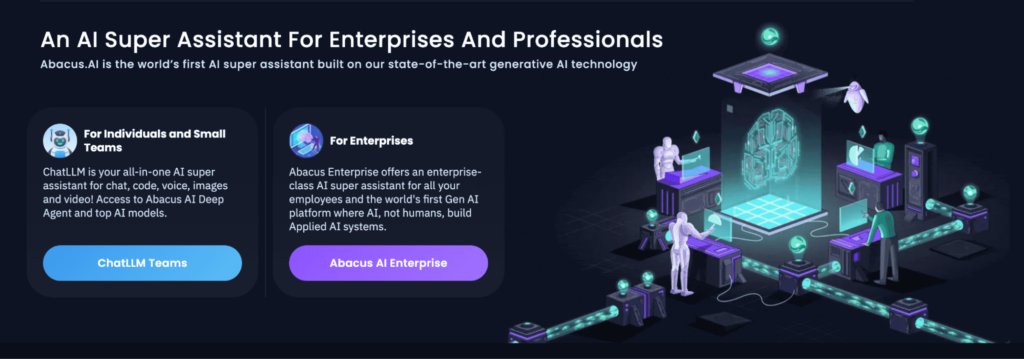
Context As the landscape of artificial intelligence (AI) continues to evolve, tools that facilitate Natural Language Understanding (NLU) and Language Understanding (LU) are becoming increasingly crucial for professionals in the field. Abacus AI, with its offerings like ChatLLM, DeepAgent, and the Enterprise platform, stands out as a comprehensive solution that integrates multiple AI models and functionalities. This review synthesizes insights from user experiences to evaluate how Abacus AI addresses the diverse needs of NLU scientists, providing a nuanced approach to understanding and leveraging AI capabilities. Primary Goal and Achievements The main objective highlighted in the original review is to present an accessible yet powerful AI solution that serves both individual developers and enterprise-level applications. Abacus AI achieves this by consolidating multiple AI models and functionalities into a single platform, significantly reducing costs while enhancing usability. This not only empowers users to engage with various AI models but also allows for seamless integration of advanced features that assist in automating tasks and conducting comprehensive analyses. Advantages of Abacus AI Cost-Effectiveness: For a subscription fee of $10/month, users gain access to a wide array of advanced AI models, which significantly undercuts the costs associated with purchasing individual subscriptions for similar services. This value proposition is particularly beneficial for small teams or individual developers. Comprehensive Toolset: The platform encompasses numerous features, including document analysis, web search integration, image, and video generation. These tools enhance the ability of NLU scientists to process and analyze diverse types of content efficiently. Team Collaboration: The unlimited team member functionality promotes collaborative efforts, making it easier for teams to share projects and resources. This feature is essential for NLU scientists who often work in interdisciplinary teams. Autonomous Capabilities: DeepAgent introduces a level of autonomy that allows users to automate complex processes, such as building functional applications and conducting detailed research. This autonomy can save time and reduce the burden on NLU scientists, allowing them to focus on more strategic tasks. Enterprise Features: The platform’s enterprise-level offerings include end-to-end MLOps capabilities, predictive analytics, and compliance with security standards. These features are crucial for organizations that require robust AI solutions for large-scale operations. Caveats and Limitations While the platform offers a range of functionalities, its complexity may overwhelm absolute beginners who seek straightforward AI solutions. Users with a need for maximum GPU control or those in academic settings may find the platform lacking in certain advanced features necessary for high-performance computing. Some users have reported occasional hiccups in performance, which could pose challenges for teams that rely on consistent and immediate support. Future Implications The ongoing advancements in AI technology, particularly in NLU and LU, suggest a promising trajectory for platforms like Abacus AI. As AI models continue to develop, the potential for enhanced collaboration and automation will likely redefine the workflows of NLU scientists. The integration of machine learning operations with real-time data processing will facilitate more sophisticated analyses, enabling researchers and developers to derive insights that were previously unattainable. Furthermore, as AI becomes more ingrained in various industries, the demand for tools that efficiently manage and leverage these technologies will only increase, reinforcing the relevance of comprehensive platforms like Abacus AI. Disclaimer The content on this site is generated using AI technology that analyzes publicly available blog posts to extract and present key takeaways. We do not own, endorse, or claim intellectual property rights to the original blog content. Full credit is given to original authors and sources where applicable. Our summaries are intended solely for informational and educational purposes, offering AI-generated insights in a condensed format. They are not meant to substitute or replicate the full context of the original material. If you are a content owner and wish to request changes or removal, please contact us directly. Source link : Click Here

Context The study of toponymy, or the investigation of place names, plays a significant role in understanding geographical data and its implications within the field of Data Analytics and Insights. This discipline encompasses the analysis of various geographical identifiers, offering profound insights into cultural, historical, and linguistic aspects of specific locations. The relevance of toponymy extends to data engineers, who leverage this information to enhance data quality and facilitate more effective data modeling techniques. Main Goal and Achievement The primary goal articulated in the original post revolves around the utilization of the BDTOPO database, France’s most comprehensive topographic Geographic Information System (GIS), which provides access to detailed place names. Data engineers can achieve this goal by harnessing the vast dataset to enrich their spatial analyses and support decision-making processes. By integrating toponymic data into their projects, they can create more contextually relevant data visualizations, improve geospatial queries, and enhance the overall robustness of their analyses. Advantages of Utilizing Toponymy in Data Analytics Enhanced Data Contextualization: Toponymy allows for a richer understanding of geographical data, enabling data engineers to incorporate cultural and historical significance into their analyses. Improved Geospatial Queries: By understanding the linguistic patterns in place names, data engineers can refine their geospatial queries, potentially leading to more accurate results and insights. Informed Decision Making: The integration of toponymic data can lead to more informed decision-making processes by providing a deeper context for geographical trends and patterns. Support for Advanced Visualizations: Utilizing toponymic data enhances the quality of visualizations, making them more informative and user-friendly for stakeholders. Historical Analysis: Toponymy offers insights into historical changes in geographical names, which can be instrumental in longitudinal studies and trend analysis. Caveats and Limitations While the advantages of utilizing toponymy are substantial, there are inherent limitations. The accuracy of place names may vary based on the source, and discrepancies can arise in data interpretation. Furthermore, the massive size of databases like BDTOPO can present challenges in terms of data processing and management, necessitating robust computational resources and skilled personnel. Future Implications The evolution of artificial intelligence (AI) holds significant promise for the field of toponymy and its applications in data analytics. As machine learning algorithms become more sophisticated, they will enable data engineers to automate the extraction and analysis of toponymic data, increasing efficiency and accuracy. Additionally, AI can facilitate the identification of patterns and trends within vast datasets, thereby enhancing predictive analytics capabilities. The future landscape of data analytics will likely see an increased integration of AI-driven tools that leverage toponymic insights, leading to more nuanced and actionable data interpretations. Conclusion In summary, the incorporation of toponymy into data analytics presents numerous advantages for data engineers, from enhanced contextualization of data to improved decision-making processes. Despite certain limitations, the future of this field, especially with the advent of AI developments, is poised for significant advancements that will further enrich the understanding of geographical data and its implications. Disclaimer The content on this site is generated using AI technology that analyzes publicly available blog posts to extract and present key takeaways. We do not own, endorse, or claim intellectual property rights to the original blog content. Full credit is given to original authors and sources where applicable. Our summaries are intended solely for informational and educational purposes, offering AI-generated insights in a condensed format. They are not meant to substitute or replicate the full context of the original material. If you are a content owner and wish to request changes or removal, please contact us directly. Source link : Click Here

Contextualizing the AI Controversy in the Music Industry Spotify has recently come under scrutiny for its release of AI-generated music attributed to deceased artists, raising ethical concerns regarding exploitation and intellectual property rights. An investigation by 404 Media revealed that the streaming service published tracks without obtaining authorization from the artists’ estates or record labels. For instance, a song titled “Together” appeared on the page of Blake Foley, a country musician murdered in 1989, despite the track’s creator being a different individual entirely. This incident reflects a broader trend wherein AI tools are employed to generate music that emulates the styles of past artists. The emergence of an AI band, Velvet Sundown, which has gained significant traction with its track “Dust on the Wind,” further exemplifies the growing presence of AI-generated content within established music platforms. Despite Spotify’s removal of unauthorized tracks following media exposure, the prevalence of such incidents indicates a systemic issue within the industry. Main Goals and Their Achievement The primary goal highlighted in this discourse is the necessity for ethical standards and regulatory frameworks governing AI-generated content in the music industry. Achieving this goal involves implementing robust policies that require platforms to seek explicit permission from artists or their estates before using their likeness or style in AI-generated compositions. Moreover, transparency in labeling AI-generated content is essential to inform consumers and protect the integrity of human artistry. Advantages and Considerations Preservation of Artist Rights: Establishing clear regulations surrounding AI-generated music would safeguard the rights of deceased artists and their estates, ensuring that their legacies are not exploited without consent. Consumer Trust: Providing transparent labeling of AI-generated content fosters trust among listeners, as they can make informed decisions about the music they consume. Fair Competition: By regulating AI-generated music, platforms can create a level playing field for human artists, preventing AI tracks from unfairly competing for streaming royalties. Innovation in Music Creation: While regulations are necessary, they can also stimulate innovation by encouraging the development of AI technologies that respect intellectual property rights. However, it is essential to note that overly stringent regulations could stifle creativity and limit the potential benefits of AI in music production, such as enhancing accessibility and diversity in musical expression. Future Implications of AI in the Music Industry The ongoing advancements in AI technology are poised to significantly reshape the music landscape. As AI becomes more sophisticated, the potential for creating music that closely mimics established artists will increase, leading to heightened ethical dilemmas. The industry may witness the development of AI systems capable of generating entirely new compositions that blend various musical elements, further blurring the lines between human and machine-generated music. Moreover, as the debate surrounding copyright and intellectual property rights intensifies, music streaming platforms may face increased pressure to adopt transparent practices. This could prompt a shift toward more equitable revenue-sharing models that recognize the contributions of both human artists and AI systems. Ultimately, the future of AI in the music industry hinges on balancing innovation with ethical considerations, ensuring that technological advancements do not come at the expense of artistic integrity. Disclaimer The content on this site is generated using AI technology that analyzes publicly available blog posts to extract and present key takeaways. We do not own, endorse, or claim intellectual property rights to the original blog content. Full credit is given to original authors and sources where applicable. Our summaries are intended solely for informational and educational purposes, offering AI-generated insights in a condensed format. They are not meant to substitute or replicate the full context of the original material. If you are a content owner and wish to request changes or removal, please contact us directly. Source link : Click Here

Context of Agricultural Drone Technology The integration of unmanned aircraft systems (UAS) in agriculture is gaining momentum, presenting innovative solutions to some of the sector’s most pressing challenges. The recent initiatives by Mississippi State University (MSU) through its Agricultural Autonomy Institute (AAI) exemplify this trend. By launching a comprehensive video series aimed at educating farmers about the operational and regulatory aspects of agricultural drones, the AAI is facilitating the adoption of this pioneering technology. These systems, particularly those equipped with spray capabilities, promise to enhance efficiency in agricultural production, a necessity in an industry increasingly challenged by labor shortages and rising operational costs. The rapid acceleration of UAS adoption in agricultural contexts can be attributed to the establishment of clear regulatory frameworks which have permitted their commercial use. While initial investments in technology may appear daunting, the long-term benefits—including significant reductions in labor, time, and costs associated with tasks like aerial cover crop seeding, fertilizer distribution, and pesticide application—underscore the value proposition of this innovation. Main Goal and Achievement Strategies The principal goal of the AAI’s video series is to enhance understanding and facilitate the safe, effective use of agricultural drones among stakeholders. This aim is pursued by addressing common inquiries and providing comprehensive guidance through a 13-part instructional video series. By focusing on both foundational knowledge and troubleshooting, the AAI aims to empower users to navigate the complexities of drone technology effectively. To achieve this goal, the series is structured to incorporate short, digestible videos that cover high-demand topics, thereby catering to various levels of expertise among users. This educational approach not only demystifies drone technology but also promotes safe practices, which is critical given the evolving regulatory landscape surrounding UAS operations in agriculture. Advantages of Agricultural Drones 1. **Increased Efficiency**: Agricultural drones can perform tasks such as spraying and monitoring crops at a fraction of the time required by traditional methods. This efficiency translates to labor savings and increased productivity. 2. **Cost Savings**: While there is an upfront investment, the reduction in labor costs and the ability to cover larger areas quickly yield substantial financial benefits in the long run. 3. **Precision Agriculture**: Drones enable precise application of inputs, reducing waste and minimizing environmental impact. This precision is particularly beneficial for tasks such as pesticide application, where targeted delivery can enhance efficacy and safety. 4. **Real-time Data Collection**: Drones are equipped with advanced sensors that provide real-time data on crop health, soil conditions, and environmental factors, empowering farmers to make informed decisions. 5. **Educational Support**: Initiatives like the video series from AAI provide critical educational resources, bridging the knowledge gap for farmers and stakeholders unfamiliar with drone technology. While these advantages are compelling, it is essential to acknowledge some limitations. The initial investment in drone technology and the need for ongoing training to keep up with regulatory changes can pose challenges for adoption, particularly among smaller operations. Future Implications of AI in Agricultural Drones Looking ahead, advancements in artificial intelligence (AI) are poised to further revolutionize the agricultural drone sector. Enhanced AI algorithms will enable drones to perform more complex tasks, such as autonomous decision-making regarding crop treatment and monitoring. This capability could significantly reduce the need for human oversight, allowing farmers to focus on strategic decision-making rather than operational management. Moreover, the integration of AI with machine learning will facilitate the analysis of vast amounts of data collected by drones, enabling predictive analytics that can inform crop management practices. This evolution could lead to more sustainable agricultural practices, optimized resource management, and improved yield outcomes. In conclusion, the initiatives undertaken by the AAI highlight the potential of agricultural drones as transformative tools in modern farming. By fostering education and understanding of this technology, stakeholders can harness its benefits, leading to enhanced productivity and sustainability in the agricultural sector. The future, particularly with the integration of AI, promises even greater advancements, ensuring that agricultural innovation continues to evolve in response to the challenges of the industry. Disclaimer The content on this site is generated using AI technology that analyzes publicly available blog posts to extract and present key takeaways. We do not own, endorse, or claim intellectual property rights to the original blog content. Full credit is given to original authors and sources where applicable. Our summaries are intended solely for informational and educational purposes, offering AI-generated insights in a condensed format. They are not meant to substitute or replicate the full context of the original material. If you are a content owner and wish to request changes or removal, please contact us directly. Source link : Click Here

Introduction The rapid advancement of specialized AI agents is transforming the landscape of modern business operations. As organizations increasingly adopt agentic AI technologies, they are tasked with determining the most effective AI agents to develop in order to address their unique challenges. This blog post explores the implications of specialized AI agents within the Generative AI Models & Applications sector, highlighting their significant impact on operational efficiency and innovation. Main Goals of Specialized AI Agents The primary goal of specialized AI agents is to enhance business processes through tailored solutions that leverage proprietary data and domain expertise. Organizations are transitioning from generic, one-size-fits-all AI models to customized systems that can better understand and address specific use cases. This shift aims to drive faster outcomes and foster long-term AI adoption by aligning AI capabilities with the unique demands and workflows of various industries. Structured Advantages of Specialized AI Agents Increased Efficiency: Specialized AI agents automate routine tasks, thereby allowing human personnel to concentrate on complex decision-making. For instance, CrowdStrike’s AI agents significantly improve the accuracy of alert triage, enhancing productivity while reducing manual efforts. Enhanced Customization: By developing agents that cater to specific business needs, organizations can achieve performance levels that generic models cannot match. Companies like PayPal utilize specialized agents to facilitate conversational commerce, resulting in reduced latency and improved user experiences. Scalability: The modular design of specialized AI agents allows businesses to scale their solutions effectively. This is evident in Synopsys’s implementation of agentic AI frameworks that boost productivity in chip design workflows, enabling rapid adaptation to evolving engineering tasks. Long-term Viability: Specialized agents promote sustainable AI adoption by continuously improving through iterative training and fine-tuning. This ensures that as business needs evolve, the AI systems remain relevant and effective. While the advantages of specialized AI agents are substantial, organizations must also consider limitations such as the initial investment required for development and the ongoing need for data management and model retraining. Future Implications of Specialized AI Agents The trajectory of AI development suggests that the adoption of specialized AI agents will continue to rise, leading to profound changes within various industries. As companies increasingly leverage generative AI models, the integration of these agents will likely result in more sophisticated applications across sectors such as finance, healthcare, and cybersecurity. Furthermore, advancements in AI technologies will facilitate the creation of agents capable of performing complex tasks, thereby enhancing their utility in real-world applications. This evolution will not only redefine operational efficiency but also reshape the workforce dynamics as AI agents become collaborative partners within organizational ecosystems. Conclusion In summary, the emergence of specialized AI agents represents a significant advancement in the application of generative AI models. By focusing on tailored solutions that leverage proprietary knowledge and domain expertise, organizations can harness the full potential of AI technologies. As the landscape of business continues to evolve, the ongoing refinement and development of specialized AI agents will be crucial in driving innovation and maintaining competitive advantage in an increasingly complex marketplace. Disclaimer The content on this site is generated using AI technology that analyzes publicly available blog posts to extract and present key takeaways. We do not own, endorse, or claim intellectual property rights to the original blog content. Full credit is given to original authors and sources where applicable. Our summaries are intended solely for informational and educational purposes, offering AI-generated insights in a condensed format. They are not meant to substitute or replicate the full context of the original material. If you are a content owner and wish to request changes or removal, please contact us directly. Source link : Click Here

Contextual Overview of Digital Resilience in the Agentic AI Era As global investments in artificial intelligence (AI) are projected to reach $1.5 trillion in 2025, a significant gap persists between technological advancement and organizational preparedness. According to recent findings, less than half of business leaders express confidence in their organizations’ ability to ensure service continuity, security, and cost management during unforeseen disruptions. This lack of assurance is compounded by the complexities introduced by agentic AI, which necessitates a comprehensive reevaluation of digital resilience strategies. Organizations are increasingly adopting the concept of a data fabric—an integrated architectural framework that interlinks and governs data across various business dimensions. This approach dismantles silos and allows for real-time access to enterprise-wide data, thereby equipping both human teams and agentic AI systems to better anticipate risks, mitigate issues proactively, recover swiftly from setbacks, and sustain operational continuity. Understanding Machine Data: The Foundation of Agentic AI and Digital Resilience Historically, AI models have predominantly relied on human-generated data such as text, audio, and video. However, the advent of agentic AI necessitates a deeper understanding of machine data—comprising logs, metrics, and telemetry produced by devices, servers, systems, and applications within an organization. Access to this data must be seamless and real-time to harness the full potential of agentic AI in fostering digital resilience. The absence of comprehensive integration of machine data can severely restrict AI capabilities, leading to missed anomalies and the introduction of errors. As noted by Kamal Hathi, senior vice president and general manager of Splunk (a Cisco company), agentic AI systems depend on machine data for contextual comprehension, outcome simulation, and continuous adaptation. Thus, the management of machine data emerges as a critical element for achieving digital resilience. Hathi describes machine data as the “heartbeat of the modern enterprise,” emphasizing that agentic AI systems are driven by this essential pulse, which requires real-time information access. Effective operation of these intelligent agents hinges on their direct engagement with the intricate flow of machine data, necessitating that AI models are trained on the same data streams. Despite the recognized importance of machine data, few organizations have achieved the level of integration required to fully activate agentic systems. This limitation not only constrains potential applications of agentic AI but also raises the risk of data anomalies and inaccuracies in outputs and actions. Historical challenges faced by natural language processing (NLP) models highlight the importance of foundational fluency in machine data to avoid biases and inconsistencies. The rapid pace of AI development poses additional challenges for organizations striving to keep up. Hathi notes that the speed of innovation may inadvertently introduce risks that organizations are ill-equipped to manage. Specifically, relying on traditional large language models (LLMs) trained on human-centric data may not suffice for maintaining secure, resilient, and perpetually available systems. Strategizing a Data Fabric for Enhanced Resilience To overcome existing shortcomings and cultivate digital resilience, technology leaders are encouraged to adopt a data fabric design tailored to the requirements of agentic AI. This strategy involves weaving together fragmented assets spanning security, information technology (IT), business operations, and network infrastructure to establish an integrated architecture. Such an architecture connects disparate data sources, dismantles silos, and facilitates real-time analysis and risk management. Main Goal and Its Achievement The primary objective articulated in the original content is the enhancement of digital resilience through the effective integration of machine data within a data fabric framework. Achieving this goal involves fostering a seamless connection among various data sources, which enables both human and AI systems to engage with real-time data analytics effectively. This integration is vital for anticipating risks and ensuring operational continuity in an increasingly complex AI landscape. Advantages of Implementing a Data Fabric Enhanced Decision-Making: Integrated real-time data empowers both human teams and AI systems to make informed decisions, thus reducing the likelihood of errors. Proactive Risk Management: Access to comprehensive machine data allows for the identification and mitigation of potential risks before they escalate into significant issues. Operational Continuity: Organizations can sustain operations even in the face of unexpected disruptions, thereby maintaining service continuity and customer trust. Scalability: A well-designed data fabric allows organizations to scale their operations and integrate new technologies without significant disruption. Limitations and Considerations Despite the numerous advantages, organizations must also consider potential limitations, such as the initial investment required to develop a robust data fabric and the ongoing need for data governance and management. Furthermore, organizations must ensure that the AI systems are trained on high-quality, comprehensive machine data to avoid inaccuracies and biases. Future Implications for AI Research and Innovation The ongoing evolution of AI technologies will significantly impact the realm of digital resilience. As AI systems become more autonomous and integrated into critical infrastructure, the necessity for organizations to invest in data fabric architectures will become paramount. Future advancements in AI will likely necessitate even more sophisticated data management practices, emphasizing the importance of machine data oversight to preempt operational risks. As organizations strive to keep pace with rapid technological advancements, those that successfully implement comprehensive data fabrics will likely lead in operational resilience and competitive advantage. Disclaimer The content on this site is generated using AI technology that analyzes publicly available blog posts to extract and present key takeaways. We do not own, endorse, or claim intellectual property rights to the original blog content. Full credit is given to original authors and sources where applicable. Our summaries are intended solely for informational and educational purposes, offering AI-generated insights in a condensed format. They are not meant to substitute or replicate the full context of the original material. If you are a content owner and wish to request changes or removal, please contact us directly. Source link : Click Here

Contextual Overview The forthcoming Black Friday, scheduled for November 28, 2025, and the subsequent Cyber Monday on December 1, 2025, present an opportune moment for consumers to acquire technology products at significant discounts. This period not only stimulates consumer spending but also serves as a critical evaluation point for technological advancements and pricing strategies within the market. As organizations and individuals gear up for these sales, understanding the implications of pricing tactics, particularly in the context of artificial intelligence (AI) applications in cybersecurity, becomes increasingly relevant. Understanding the Goals of Black Friday Shopping The primary goal of participating in Black Friday sales is to access substantial discounts on desired products, particularly in technology sectors that are pivotal for both personal and professional use. To achieve this goal, consumers must remain vigilant against deceptive pricing strategies such as markups and false discounts. Utilizing price tracking tools such as Keepa and CamelCamelCamel can enhance the shopping experience by providing transparent pricing histories, ensuring that consumers make informed purchasing decisions. Advantages of Engaging in Early Black Friday Deals Significant Savings: Products are often available at markdowns of 20% or more, allowing for substantial savings on high-demand items such as televisions, laptops, and smart home devices. Access to Latest Technology: Black Friday is an ideal time to purchase last year’s models, which often experience dramatic price reductions as retailers clear inventory for new releases. Informed Purchasing: The utilization of price comparison tools and consumer reviews equips shoppers with the necessary insights to discern the quality and value of products prior to making a purchase. Consumer Empowerment: By actively researching and comparing prices, consumers can leverage information to secure the best deals, thereby fostering a more competitive marketplace. Limitations and Caveats While Black Friday offers numerous advantages, consumers must navigate several limitations. Retailers may engage in deceptive practices, such as inflating original prices to create the illusion of a discount. Additionally, not all products marked down during Black Friday represent substantial savings or quality assurance. Thus, a thorough investigation of product reviews and price histories is essential to avoid unsatisfactory purchases. Future Implications of AI in Cybersecurity and Shopping As AI technologies continue to evolve, their impact on cybersecurity and consumer shopping experiences will likely grow. Enhanced AI-driven analytics can improve price transparency and predict market trends, allowing consumers to make more informed decisions. Furthermore, AI can facilitate the development of sophisticated protective measures against fraud and cyber threats associated with online shopping. This dual benefit of maximizing savings while ensuring security will be critical as more consumers engage with technology-driven shopping platforms. Disclaimer The content on this site is generated using AI technology that analyzes publicly available blog posts to extract and present key takeaways. We do not own, endorse, or claim intellectual property rights to the original blog content. Full credit is given to original authors and sources where applicable. Our summaries are intended solely for informational and educational purposes, offering AI-generated insights in a condensed format. They are not meant to substitute or replicate the full context of the original material. If you are a content owner and wish to request changes or removal, please contact us directly. Source link : Click Here


