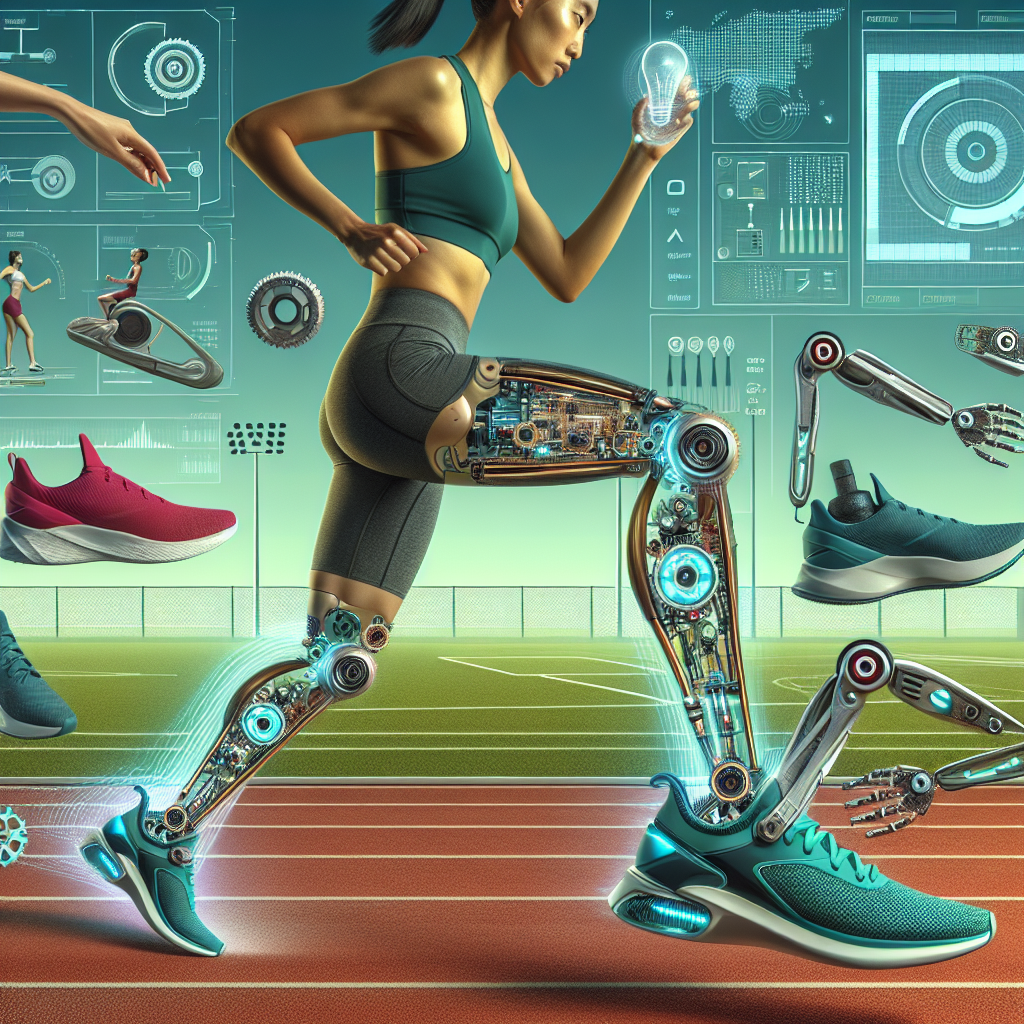
Contextual Overview of Robotic Footwear Innovations Nike has consistently emerged as a leader in innovative footwear concepts, demonstrating its commitment to integrating advanced technologies into everyday products. The company has introduced unique designs such as self-lacing shoes and performance-enhancing Hyperboots. Recently, Nike has unveiled two new projects: Project Amplify, a robotic sneaker system, and the Mind 001 and Mind 002 footwear lines, which are influenced by neuroscience. These advancements signify a notable shift in the athletic footwear market, highlighting the intersection of technology and human performance. Main Goals and Implementation Strategies The primary goal of Nike’s latest innovations is to enhance athletic performance through the application of robotics and neuroscience. Project Amplify is designed to assist athletes by acting as an auxiliary muscle system, thereby improving efficiency in walking and running. This system employs a combination of mechanical components, including a motor, battery, and drive belt, to augment human capabilities without supplanting them. The Mind 001 and Mind 002 footwear aim to elevate sensory awareness, enhancing focus and concentration during physical activities by incorporating foam nodes that provide tactile feedback from the ground. Advantages and Considerations Enhanced Physical Performance: Project Amplify improves speed and endurance, allowing users to experience reduced exertion when engaging in strenuous activities, akin to riding an e-bike, as described by Nike. Scientific Validation: The development process is supported by extensive testing conducted in collaboration with the Nike Sport Research Lab and over 400 athletes, ensuring the reliability of performance claims. Increased Sensory Awareness: The Mind 001 and Mind 002 shoes utilize neuroscience principles to enhance the wearer’s awareness of their environment, potentially leading to improved focus and performance in competitive settings. Potential Market Differentiation: By integrating robotics and neuroscience into their products, Nike positions itself as a pioneer in the sporting goods industry, appealing to tech-savvy consumers and athletes alike. However, it is essential to note that these innovations also come with limitations. The complexity and potential cost of such technologically advanced footwear may limit accessibility for some consumers. Additionally, the long-term durability and practical usability of robotic components in everyday athletic wear remain to be fully evaluated. Future Implications and AI Integration The advancements in Nike’s footwear technology foreshadow a future where AI and robotics are increasingly integrated into consumer products. As artificial intelligence continues to evolve, it holds the potential to further enhance the capabilities of wearable technology in sports and fitness. For instance, AI could enable real-time performance monitoring and personalized feedback, tailoring the functionality of footwear to individual user needs. This integration could lead to smarter athletic gear that not only supports physical performance but also adapts to the wearer’s unique biomechanics and training goals. As Nike continues to innovate, the dynamic interplay between technology and athletic performance is likely to shape the future landscape of the sporting goods industry. Disclaimer The content on this site is generated using AI technology that analyzes publicly available blog posts to extract and present key takeaways. We do not own, endorse, or claim intellectual property rights to the original blog content. Full credit is given to original authors and sources where applicable. Our summaries are intended solely for informational and educational purposes, offering AI-generated insights in a condensed format. They are not meant to substitute or replicate the full context of the original material. If you are a content owner and wish to request changes or removal, please contact us directly. Source link : Click Here
Contextual Overview of Brazil’s Bioinputs Market Transformation The landscape of mergers and acquisitions (M&A) within Brazil’s agribusiness sector has evolved significantly, particularly regarding biological inputs. Historically characterized by rapid growth and opportunistic strategies, the market is now transitioning toward a phase defined by selectivity, financial prudence, and well-articulated value propositions. This transformation is largely driven by Brazil’s extensive agricultural capacity and the immediate need for modernization within the input supply chain, making it an attractive destination for investors. According to Ignacio Moyano, Vice President of Market Development for Latin America at DunhamTrimmer, contemporary investors prioritize governance, robust financial health, and distinct competitive advantages over mere scale or publicity. The emphasis on biotechnology and bioinputs is particularly noteworthy, as these areas merge innovation with scalability, aligning seamlessly with sustainability priorities that are increasingly influential in investment decisions. Transparency as a Catalyst for Value Creation In the context of M&A, the pathway from non-disclosure agreement (NDA) to due diligence and closure is well established; however, the speed and efficiency of these processes hinge on thorough preparation. Moyano asserts that clarity in financial metrics, structured governance, and well-documented procedures can facilitate deal closures within a year. In contrast, inadequate record-keeping and fragmented information can significantly impede progress. Thus, transparency emerges not just as a compliance necessity but as a critical factor in enhancing valuation. Recent trends reveal a dual dynamic in the sector: consolidation among major distributors—often multinational firms aiming for extensive market reach—and heightened specialization through collaborations with startups focused on innovations in biofertilizers, biocontrol, and digital agriculture. Noteworthy instances, such as Corteva’s investment in Puna Bio, exemplify the “innovation premium” that is influencing market direction. For larger corporations, engaging in M&A provides a strategic avenue to technological advancement and market penetration, circumventing the inherent risks and delays associated with in-house development. Conversely, for smaller innovators, M&A offers a crucial pathway to transition from laboratory innovations to practical applications in the field. Moyano elaborates that M&A facilitates the movement of innovations from research environments to agricultural settings, ensuring logistical, compliance, and distribution scales that individual startups might struggle to achieve. Future Trends in M&A Transactions Looking ahead, Moyano anticipates a more disciplined approach to transactions, emphasizing that investors are increasingly inclined toward resilient, established companies rather than volatile entities. Additionally, the prevalence of partnerships and joint ventures is expected to strengthen, fostering risk-sharing mechanisms and expediting product adoption. Global Dynamics: Insights from DunhamTrimmer Rick Melnick, COO & Managing Partner at DunhamTrimmer, notes that the transformation occurring within Brazil’s bioinputs sector is indicative of broader global shifts. While markets in Europe and North America exhibit high maturity levels with decelerating growth rates, Latin America, and particularly Brazil, remains one of the fastest-growing regions. The unique challenges presented by Brazil’s diverse agricultural landscape, including distinctive soil types, pest pressures, and government policies, create both opportunities and complexities for market participants. Melnick emphasizes the necessity for local expertise in navigating these challenges, stating that success in Brazil often necessitates a profound understanding of the regulatory landscape and established networks. He highlights DunhamTrimmer’s strategic focus on two key areas: go-to-market strategy and due diligence, positioning the firm as a primary resource for investment groups evaluating M&A prospects within the biological sector. Strategic Importance of ABIM 2025 Among the critical milestones for DunhamTrimmer is the upcoming ABIM 2025 (Annual Biocontrol Industry Meeting), which serves as a premier networking venue for the biological crop protection industry. This event not only facilitates vital business development interactions but also reinforces existing relationships within the industry. Melnick, a long-time attendee, underscores the significance of ABIM as a platform for showcasing innovation and connecting with international stakeholders. At ABIM 2025, DunhamTrimmer plans to highlight its expertise in due diligence and its strengthened foothold in Latin America, illustrating how the firm bridges global innovation with local knowledge. Melnick notes that initial conversations at this forum often lay the groundwork for pivotal projects in the biological crop protection sector in subsequent years. Implications for the Future: AI and Technological Integration The acceleration of consolidation within the agricultural inputs market, coupled with the imperative for sustainable practices, suggests a transformative future for Brazil’s bioinputs industry. M&A will increasingly serve not just as a financial mechanism but as a vital force for innovation, enabling the swift delivery of new solutions to farmers at scale. Looking forward, advancements in artificial intelligence will likely play a pivotal role in shaping this landscape. AI technologies can enhance decision-making processes through predictive analytics, optimize supply chain logistics, and facilitate more efficient regulatory compliance. As the integration of AI into the agricultural sector deepens, AgriTech innovators will be well-positioned to leverage these tools, thereby enhancing their competitive advantages and fostering sustainable growth. Conclusion In summary, the ongoing evolution of M&A in Brazil’s bioinputs market is indicative of a larger trend toward strategic, sustainable growth in the agricultural sector. With a focus on transparency, governance, and innovation, stakeholders can navigate the complexities of the market effectively, positioning themselves for future success. As AI technologies continue to emerge, they will further empower AgriTech innovators to drive meaningful change in agricultural practices, ensuring resilience and sustainability in the face of evolving global demands. Disclaimer The content on this site is generated using AI technology that analyzes publicly available blog posts to extract and present key takeaways. We do not own, endorse, or claim intellectual property rights to the original blog content. Full credit is given to original authors and sources where applicable. Our summaries are intended solely for informational and educational purposes, offering AI-generated insights in a condensed format. They are not meant to substitute or replicate the full context of the original material. If you are a content owner and wish to request changes or removal, please contact us directly. Source link : Click Here

Contextual Background In recent developments within the National Football League (NFL), Cincinnati Bengals linebacker Logan Wilson has formally requested a trade, citing a diminished role within the team’s defensive structure. This situation unfolds against the backdrop of the Bengals’ reliance on emerging rookies like Barrett Carter and Demetrius Knight Jr., who have taken on substantial defensive responsibilities. Wilson, a seasoned player with significant contributions to the team’s past successes, now finds himself navigating the complexities of reduced playing time and team dynamics. Main Goal and Its Achievement The primary goal highlighted in the original context is to illustrate the impact of player role changes on team dynamics and individual career trajectories within professional sports. Achieving this goal involves analyzing player performance metrics, team strategies, and the implications of utilizing advanced analytics to inform decisions regarding player utilization and trade negotiations. By leveraging data-driven insights, teams can make informed choices that enhance overall performance while accommodating the needs of individual players. Advantages of AI in Sports Analytics Enhanced Performance Evaluation: Utilizing AI tools allows for comprehensive analysis of player performance, identifying strengths and weaknesses that inform coaching decisions. For example, Wilson’s reduced snap count can be quantitatively assessed to determine its impact on game outcomes. Strategic Team Composition: AI analytics provide insights into optimal player combinations, helping teams adjust their strategies based on real-time performance data. The Bengals’ current reliance on rookies illustrates how teams can pivot toward youth while maintaining competitiveness. Informed Trade Decisions: AI models can simulate various trade scenarios, offering predictive insights that guide management in making beneficial trades, as evidenced by Wilson’s trade request amid evolving team dynamics. Player Development: AI can track and analyze player development over time, offering tailored training regimens that ensure players adapt to their changing roles, as observed in Wilson’s supportive relationship with new starters. Limitations and Caveats Despite the advantages, there are inherent limitations to AI in sports analytics. Data quality and availability can significantly affect the accuracy of predictions. Moreover, reliance on quantitative data may overlook qualitative factors, such as team chemistry and player morale, which are essential in team sports. The case of Wilson serves as a reminder that the human element remains critical, even in data-driven environments. Future Implications of AI Developments The ongoing evolution of AI in sports analytics is set to revolutionize how teams approach player management and game strategy. As algorithms become more sophisticated, the ability to predict player performance and market value will improve, leading to more strategic decisions regarding trades and player development. Furthermore, as teams increasingly embrace data analytics, the integration of AI will likely lead to an even greater emphasis on data literacy among players and coaching staff. This shift could redefine the dynamics of player roles, potentially minimizing the impact of reduced playing time and enhancing overall team success. Disclaimer The content on this site is generated using AI technology that analyzes publicly available blog posts to extract and present key takeaways. We do not own, endorse, or claim intellectual property rights to the original blog content. Full credit is given to original authors and sources where applicable. Our summaries are intended solely for informational and educational purposes, offering AI-generated insights in a condensed format. They are not meant to substitute or replicate the full context of the original material. If you are a content owner and wish to request changes or removal, please contact us directly. Source link : Click Here

Context: The Evolving Landscape of Data Engineering in AI As artificial intelligence (AI) technology continues to permeate various sectors, the role of data engineering becomes increasingly pivotal. Data engineers are tasked with managing the complexities of unstructured data and the demands of real-time data pipelines, which are significantly heightened by advanced AI models. With the growing sophistication of these models, data engineers must navigate an environment characterized by escalating workloads and a pressing need for efficient data management strategies. This transformation necessitates a reevaluation of the data engineering landscape, as professionals in this field are expected to adapt to the evolving requirements of AI-driven projects. Main Goal: Enhancing the Role of Data Engineers in AI Integration The central aim emerging from this discourse is to recognize and enhance the integral role of data engineers within organizations leveraging AI technologies. This can be achieved through targeted investment in skills development, strategic resource allocation, and the adoption of advanced data management tools. By empowering data engineers with the necessary skills and resources, organizations can optimize their data workflows and facilitate a more seamless integration of AI capabilities into their operations. Advantages of a Strong Data Engineering Framework Increased Organizational Value: A significant 72% of technology leaders acknowledge that data engineers are crucial to business success, with the figure rising to 86% in larger organizations where AI maturity is more pronounced. This alignment underscores the value that proficient data engineering brings to organizations, particularly in sectors such as financial services and manufacturing. Enhanced Productivity: Data engineers are dedicating an increasing proportion of their time to AI projects, with engagement levels nearly doubling from 19% to 37% over two years. This trend is expected to escalate further, with projections indicating an average of 61% involvement in AI initiatives in the near future. Such engagement fosters greater efficiency and innovation within data management processes. Adaptability to Growing Workloads: The demand for data engineers to manage expanding workloads is evident, as 77% of surveyed professionals anticipate an increase in their responsibilities. By recognizing these challenges and providing adequate support, organizations can ensure that data engineers remain effective amidst growing demands. Future Implications: The Path Forward for AI and Data Engineering The trajectory of AI advancements suggests a continued integration of sophisticated technologies within data engineering practices. As organizations increasingly rely on AI-driven insights, the implications for data engineers will be profound. Future developments may include the automation of routine data management tasks, enabling data engineers to focus on higher-level analytical functions. However, this evolution must be approached with caution, ensuring that data engineers are equipped with the necessary skills to leverage emerging technologies effectively. Continuous professional development and adaptive strategies will be essential for data engineers to thrive in this dynamic landscape. Disclaimer The content on this site is generated using AI technology that analyzes publicly available blog posts to extract and present key takeaways. We do not own, endorse, or claim intellectual property rights to the original blog content. Full credit is given to original authors and sources where applicable. Our summaries are intended solely for informational and educational purposes, offering AI-generated insights in a condensed format. They are not meant to substitute or replicate the full context of the original material. If you are a content owner and wish to request changes or removal, please contact us directly. Source link : Click Here

Context The ongoing evolution of artificial intelligence (AI) is significantly influenced by advancements in computational technologies. At the recent NVIDIA AI Day held in Sydney, industry leaders gathered to explore the implications of what they refer to as “sovereign AI.” Notably, Brendan Hopper, the Chief Information Officer for Technology at the Commonwealth Bank of Australia, articulated how next-generation compute capabilities are driving AI innovations. This gathering underscored the essence of collaboration between technology providers and local ecosystems, setting the stage for a transformative era in AI applications. Main Goal of the Event The primary objective of the event, as articulated by the technology leaders present, was to highlight how emerging compute technologies can enhance AI capabilities. This goal can be achieved through a concerted effort involving infrastructure development, strategic partnerships, and a commitment to innovation. The discussions emphasized the importance of high-performance computing and the role it plays in fostering an environment conducive to AI advancements. Advantages of Advancements in AI and Compute Technologies Enhanced Computational Power: The integration of quantum and high-performance computing is redefining the pace of scientific discovery. As highlighted by Giuseppe M. J. Barca, co-founder and head of research at QDX Technologies, these advancements empower AI to tackle complex problems with greater accuracy and efficiency. Growth of the AI Ecosystem: The event illustrated a growing ecosystem of over 600 Australia-based NVIDIA Inception startups and numerous higher education institutions leveraging NVIDIA technologies. This ecosystem fosters innovation and provides a platform for collaboration among researchers and industry leaders. Cross-Industry Collaboration: NVIDIA AI Day showcased partnerships between technology developers and various sectors, including finance and public services. This collaboration presents opportunities for industries to leverage AI for transformative solutions, enhancing service delivery and operational efficiencies. Caveats and Limitations While the advancements in AI and computational technologies present numerous benefits, there are inherent limitations and challenges. The rapid pace of technological change may outstrip regulatory frameworks, leading to ethical concerns regarding data usage and governance. Furthermore, the dependency on advanced infrastructure may pose barriers for smaller organizations and startups striving to enter the market. Future Implications The implications of AI advancements are profound, particularly concerning the role of generative AI models. As computational capabilities continue to evolve, they will enable AI systems to generate more sophisticated outputs, enhancing applications in various fields, including healthcare, finance, and creative industries. The ongoing developments will likely lead to an increase in AI-driven solutions, promoting efficiency, personalization, and innovation. However, it will also necessitate ongoing scrutiny regarding ethical practices and the societal impacts of widespread AI integration. Disclaimer The content on this site is generated using AI technology that analyzes publicly available blog posts to extract and present key takeaways. We do not own, endorse, or claim intellectual property rights to the original blog content. Full credit is given to original authors and sources where applicable. Our summaries are intended solely for informational and educational purposes, offering AI-generated insights in a condensed format. They are not meant to substitute or replicate the full context of the original material. If you are a content owner and wish to request changes or removal, please contact us directly. Source link : Click Here

Contextual Overview The recent advancements in the Qwen Deep Research tool, introduced by Alibaba’s Qwen Team, signify a transformative shift in the generative AI landscape, particularly for professionals engaged in research and content creation. This update enables users to swiftly convert comprehensive research reports into various digital formats, including interactive web pages and podcasts, with minimal effort. The integration of functionalities such as Qwen3-Coder, Qwen-Image, and Qwen3-TTS illustrates a significant proprietary expansion that enhances the utility of AI in research environments. By facilitating an integrated workflow, the Qwen Deep Research tool empowers users to generate, publish, and disseminate knowledge efficiently, thus aligning with the demands of modern content consumption. Main Objective and Achievement Mechanism The primary goal of the Qwen Deep Research update is to streamline the research process from initiation to publication by enabling multi-format output. Users can achieve this by utilizing the Qwen Chat interface to request specific information, after which the AI generates a comprehensive report. This report can subsequently be transformed into a live web page or an audio podcast through a straightforward user interface. The effective combination of AI capabilities allows for a seamless transition from text-based research to interactive and auditory formats, catering to diverse audience preferences. Advantages of Qwen Deep Research – **Multi-Modal Output**: The tool allows for the creation of diverse content forms—written reports, interactive web pages, and audio podcasts—enabling comprehensive knowledge dissemination across various platforms. – **User-Friendly Interface**: The design of the Qwen Chat interface facilitates a smooth user experience, allowing researchers to generate complex content with just a few clicks, thus reducing the time and effort typically required in traditional research workflows. – **Integrated Workflow**: By hosting the entire process—from research execution to content deployment—Qwen eliminates the need for users to configure or maintain separate infrastructures, which enhances productivity and reduces overhead. – **Customization Options**: The podcast feature offers a selection of different voice outputs, adding a personalized touch to audio content, which can appeal to a broader audience. – **Real-Time Data Analysis**: The platform’s capability to pull data from multiple sources and analyze discrepancies in real time supports accurate and reliable research outputs. However, it is crucial to note certain limitations: – **Audio Quality and Language Constraints**: Early users have reported that the voice outputs may sound robotic compared to other AI tools. Additionally, the current version may not support language changes, limiting accessibility for non-English speakers. – **Dependency on Proprietary Infrastructure**: While the tool offers integrated services, it also confines users within a proprietary ecosystem, potentially hindering those who prefer or require more customizable solutions. Future Implications of AI Developments As generative AI continues to evolve, tools like Qwen Deep Research are likely to redefine the landscape of research and content creation. The implications of this development are far-reaching: – **Enhanced Accessibility**: The ability to generate multiple content formats from a single source could democratize access to information, allowing diverse audiences to engage with research findings in ways that suit their preferences. – **Shift in Research Methodologies**: Traditional research practices may need to adapt to incorporate AI-driven tools that emphasize efficiency and multi-format output, potentially leading to a more collaborative and dynamic research environment. – **Emergence of New Content Standards**: As tools become more advanced, expectations regarding the quality and presentation of research outputs may rise, prompting users to seek even greater sophistication in AI capabilities. In summary, the Qwen Deep Research update exemplifies a significant stride in the deployment of generative AI models within the research domain, underscoring the potential for AI to enhance productivity and accessibility in knowledge-sharing. The future will likely see continued integration of such technologies, further shaping the way research is conducted and communicated. Disclaimer The content on this site is generated using AI technology that analyzes publicly available blog posts to extract and present key takeaways. We do not own, endorse, or claim intellectual property rights to the original blog content. Full credit is given to original authors and sources where applicable. Our summaries are intended solely for informational and educational purposes, offering AI-generated insights in a condensed format. They are not meant to substitute or replicate the full context of the original material. If you are a content owner and wish to request changes or removal, please contact us directly. Source link : Click Here

Context and Significance The phenomenon of coastal flooding poses a significant risk to communities in the United States, with a staggering 26% probability of flooding occurring within a 30-year timeframe. This risk is expected to escalate due to climate change and rising sea levels, rendering coastal areas increasingly susceptible to natural disasters. The research led by Michael Beck at the Center for Coastal Climate Resilience at UC Santa Cruz exemplifies the integration of advanced computational techniques and ecological modeling to address these challenges. By utilizing NVIDIA GPU-accelerated visualizations, Beck’s team aims to elucidate flood risks for governmental bodies and organizations, thus promoting nature-based solutions that mitigate potential damages. Main Goal and Achievements The principal objective of the UC Santa Cruz initiative is to enhance the understanding of coastal flooding through precise modeling and visualizations, which inform decision-making regarding adaptation and preservation strategies. The integration of NVIDIA CUDA-X software and high-performance GPUs significantly expedites the simulation processes, reducing computation times and enabling detailed scenario analyses. This achievement is crucial in demonstrating the efficacy of natural infrastructure, such as coral reefs and mangroves, in mitigating flood risks and supporting coastal resilience. Advantages of Advanced Flood Modeling Accelerated Simulations: The use of NVIDIA RTX GPUs has decreased model computation times from approximately six hours to around 40 minutes, allowing for more efficient analyses. Enhanced Visualization: High-resolution visualizations facilitate a clearer understanding of complex flooding scenarios, which is essential for motivating action among stakeholders. Global Mapping Initiatives: The initiative aims to map small-island developing states globally, providing critical data for international climate conferences and enhancing global awareness of flood risks. Integration of Nature-Based Solutions: By demonstrating the protective benefits of coral reefs and mangroves, the modeling efforts promote strategies that leverage natural ecosystems for flood risk reduction. However, it is essential to acknowledge potential limitations. The reliance on advanced computational resources may not be feasible for all research institutions, and the efficacy of nature-based solutions can vary based on local ecological conditions. Future Implications of AI in Flood Modeling The evolution of artificial intelligence (AI) and its applications in environmental modeling is poised to revolutionize the field. As AI technologies continue to advance, researchers will likely develop more sophisticated algorithms capable of analyzing larger datasets and generating predictive models with greater accuracy. This could lead to enhanced real-time flood forecasting, improved risk assessments, and more effective disaster response strategies. Moreover, the increasing accessibility of AI tools may empower more institutions to engage in similar research initiatives, thereby broadening the scope of flood risk management globally. In conclusion, the intersection of advanced computing and ecological modeling, as demonstrated by UC Santa Cruz’s initiative, not only addresses immediate flood risk challenges but also sets a precedent for future research endeavors in the field of environmental resilience. The ongoing development of AI technologies will undoubtedly play a critical role in shaping responses to climate change and enhancing the sustainability of coastal communities around the world. Disclaimer The content on this site is generated using AI technology that analyzes publicly available blog posts to extract and present key takeaways. We do not own, endorse, or claim intellectual property rights to the original blog content. Full credit is given to original authors and sources where applicable. Our summaries are intended solely for informational and educational purposes, offering AI-generated insights in a condensed format. They are not meant to substitute or replicate the full context of the original material. If you are a content owner and wish to request changes or removal, please contact us directly. Source link : Click Here

Context Computer vision represents a significant domain in the analysis of images and videos. Although machine learning models often dominate discussions surrounding computer vision, it is crucial to recognize that numerous existing algorithms can sometimes outperform AI approaches. Within this expansive field, feature detection plays a pivotal role by identifying distinct regions of interest within images. These identified features are subsequently utilized to create feature descriptors, which are numerical vectors that represent localized areas of an image. By combining these feature descriptors from multiple images of the same scene, practitioners can engage in tasks like image matching or scene reconstruction. This article draws parallels to calculus to elucidate the concepts of image derivatives and gradients. A comprehensive understanding of these concepts is essential for grasping the underlying principles of convolutional kernels, particularly the Sobel operator, a vital tool in edge detection within images. Main Goal and Achievement The primary objective of the original post is to provide a foundational understanding of image derivatives, gradients, and the Sobel operator as essential tools in feature detection within computer vision. This understanding can be achieved through a structured approach that encompasses the mathematical representations of image properties, practical examples of applying convolutional kernels, and the implementation of these concepts in programming environments such as OpenCV. Advantages of Understanding Image Derivatives and Gradients Enhanced Feature Detection: Understanding image derivatives and gradients enables the identification of significant variations in pixel intensity, facilitating the detection of edges and features within images. This is critical in applications such as object recognition, image segmentation, and scene reconstruction. Robustness Against Noise: The Sobel operator, in particular, demonstrates increased resilience to noise in images compared to simpler methods, as it considers neighboring pixel values for more stable edge detection. Improved Image Processing Techniques: By applying techniques such as convolutional kernels, machine learning practitioners can enhance the quality of input data for algorithms, ultimately leading to more accurate predictions and analyses. Foundation for Advanced Techniques: Knowledge of first-order derivatives and the Sobel operator serves as a stepping stone for understanding more complex image analysis algorithms, such as those involving convolutional neural networks (CNNs). It is essential to acknowledge potential limitations, such as the computational cost associated with processing high-resolution images and the challenges posed by varying lighting conditions that can affect gradient calculations. Future Implications As artificial intelligence continues to evolve, particularly in the realm of computer vision, the methodologies surrounding feature detection, including image derivatives and operators like Sobel and Scharr, are expected to undergo significant advancements. Innovations in AI are likely to enhance the efficiency of these processes, allowing for real-time applications in diverse fields such as autonomous vehicles, medical imaging, and augmented reality. Moreover, the integration of deep learning techniques may further augment traditional methods, leading to more sophisticated and accurate feature detection capabilities. In conclusion, understanding image derivatives, gradients, and the Sobel operator is crucial for professionals in the applied machine learning industry. This knowledge not only enhances feature detection capabilities but also lays the groundwork for future advancements in image analysis technologies. Disclaimer The content on this site is generated using AI technology that analyzes publicly available blog posts to extract and present key takeaways. We do not own, endorse, or claim intellectual property rights to the original blog content. Full credit is given to original authors and sources where applicable. Our summaries are intended solely for informational and educational purposes, offering AI-generated insights in a condensed format. They are not meant to substitute or replicate the full context of the original material. If you are a content owner and wish to request changes or removal, please contact us directly. Source link : Click Here

Introduction The association of pumpkins with the fall season has deep historical roots, tracing back to ancient traditions in Ireland and Scotland where turnips were used to symbolize the mythical figure of Stingy Jack. This cultural practice evolved as Irish and Scottish immigrants migrated to North America during the Potato Famine, bringing their customs with them. Today, pumpkins are not merely emblematic of Halloween; they are a versatile agricultural crop with diverse cultivars that offer both aesthetic appeal and culinary potential. In the context of AgriTech and Smart Farming, cultivating various pumpkin varieties can yield significant benefits for agricultural innovators, enhancing sustainability, marketability, and consumer engagement. Main Goal and Achievements The primary objective highlighted in the original post is to encourage the cultivation of diverse pumpkin varieties, emphasizing their potential not just as decorative items but as valuable agricultural products. This can be achieved through strategic planting, careful selection of cultivars, and leveraging modern agricultural technologies. By adopting improved farming practices, such as precision agriculture and integrated pest management, farmers can optimize their yields and ensure higher quality produce. Advantages of Pumpkin Cultivation in AgriTech Diverse Cultivation Options: The post illustrates various pumpkin cultivars, such as ‘Batwing’ and ‘Casperita,’ each offering unique characteristics. This diversity allows farmers to cater to different consumer preferences and market demands. Edibility and Marketability: Many pumpkin varieties are edible, providing farmers with an additional revenue stream. For instance, pumpkins like ‘Pik-A-Pie’ are specifically bred for their culinary qualities, making them popular among home bakers and chefs. Visual Appeal: Aesthetically unique varieties can enhance farm stands and local markets, attracting customers seeking novelty in their purchases. This can foster community engagement and increase sales. Resilience to Pests and Diseases: Certain cultivars, such as ‘Casperita,’ exhibit resistance to common afflictions like powdery mildew, thereby reducing the need for chemical treatments and promoting sustainable practices. Extended Harvesting Periods: With careful planning, farmers can select short and long-maturing varieties to stagger their harvests, ensuring a continuous supply of pumpkins throughout the season. Caveats and Limitations While the benefits of pumpkin cultivation are substantial, there are limitations that must be considered. The success of growing specific varieties is contingent on climate conditions, soil quality, and pest pressure. Additionally, while some pumpkins are marketed for their edibility, consumer preferences can vary significantly, impacting sales. Therefore, farmers must conduct thorough market research and possibly engage in crop rotation strategies to mitigate soil depletion and disease cycles. Future Implications of AI in Pumpkin Cultivation The integration of artificial intelligence and smart farming technologies is poised to revolutionize pumpkin cultivation. AI can enhance precision agriculture by analyzing data from soil sensors and weather forecasts to optimize planting schedules and resource allocation. Moreover, machine learning algorithms can predict pest outbreaks and recommend timely interventions, minimizing crop losses and reducing chemical usage. As the agricultural sector embraces these advancements, pumpkin farming can become more efficient, sustainable, and profitable, aligning with the global shift towards smart agricultural practices. Conclusion In summary, the cultivation of pumpkins presents a multifaceted opportunity for AgriTech innovators. By leveraging diverse cultivars, adopting modern agricultural practices, and embracing technological advancements, farmers can enhance their productivity and market presence. The potential of pumpkins extends beyond seasonal festivities, evolving into a sustainable agricultural practice that can thrive in an increasingly competitive market. Disclaimer The content on this site is generated using AI technology that analyzes publicly available blog posts to extract and present key takeaways. We do not own, endorse, or claim intellectual property rights to the original blog content. Full credit is given to original authors and sources where applicable. Our summaries are intended solely for informational and educational purposes, offering AI-generated insights in a condensed format. They are not meant to substitute or replicate the full context of the original material. If you are a content owner and wish to request changes or removal, please contact us directly. Source link : Click Here

Context In recent developments, Microsoft is progressively integrating artificial intelligence (AI) capabilities into Windows 11, particularly through its Copilot feature. This initiative signifies a pivotal shift in how users interact with their operating systems, moving towards a more intuitive and efficient experience. As seen in testing builds, Copilot is poised to usurp the traditional search function in the taskbar, reflecting a deeper integration of AI in everyday computing tasks. The latest enhancements aim to empower users by enabling Copilot to manage PC settings via natural language queries, thereby simplifying navigation through Windows’ complex settings interface. Such advancements not only streamline user experience but also showcase the potential for AI to enhance productivity and accessibility. Main Goal and Achievement The primary objective of Microsoft’s AI integration within Windows 11 is to facilitate a seamless user experience by automating routine tasks and offering intelligent assistance. This goal can be realized through the implementation of features such as Copilot’s ability to access and manipulate various applications, including email and file-sharing services. By enabling users to perform tasks like document creation and file management directly through AI interactions, Microsoft is enhancing productivity and reducing the cognitive load associated with navigating multiple applications. Advantages of AI Integration Enhanced User Experience: The integration of AI allows for more intuitive interactions with Windows, making it easier for users to accomplish tasks without extensive knowledge of the system. Increased Productivity: Features such as Copilot Connectors, which link to external services like Gmail and Dropbox, streamline workflows by reducing the need to switch between applications. Document Management: New capabilities enable Copilot to export chat contents into various formats, including Word and PDF, facilitating better organization and presentation of information. File Manipulation Ease: AI actions within the File Explorer provide users with tools for batch-editing files and summarizing documents, significantly enhancing operational efficiency. However, it is important to note that these features are currently in a testing phase and may not be available to all users. Additionally, some functionalities may remain exclusive to the Windows Insider program, limiting widespread adoption. Future Implications The ongoing advancements in AI technology are likely to have profound implications for the future of operating systems and user interfaces. As Microsoft continues to refine and expand the capabilities of AI within Windows, we can anticipate a more personalized computing experience that adapts to individual user needs. Furthermore, the lessons learned from previous rollouts, such as the Recall feature, indicate a more cautious approach toward deployment, ensuring that new features undergo rigorous testing before public release. Ultimately, the integration of AI in operating systems like Windows 11 is not merely a trend but a fundamental evolution in how users will interact with technology. As these developments unfold, we can expect that software engineers and developers will play a crucial role in shaping the future landscape of user interfaces, ensuring that they remain responsive, efficient, and user-friendly. Disclaimer The content on this site is generated using AI technology that analyzes publicly available blog posts to extract and present key takeaways. We do not own, endorse, or claim intellectual property rights to the original blog content. Full credit is given to original authors and sources where applicable. Our summaries are intended solely for informational and educational purposes, offering AI-generated insights in a condensed format. They are not meant to substitute or replicate the full context of the original material. If you are a content owner and wish to request changes or removal, please contact us directly. Source link : Click Here


