
Contextual Overview The rapid advancement of deep learning technologies over the past decade has demonstrated transformative potential across various fields, notably in computer vision, speech recognition, and natural language processing. As these technologies evolve, they are set to revolutionize the natural sciences, particularly in domains such as Smart Manufacturing and Robotics. Traditional deep learning models, primarily based on neural networks, process data in finite-dimensional vectors, which can be limiting when addressing the continuum descriptions inherent in many physical phenomena, such as those governed by partial differential equations (PDEs). These phenomena often require outputs that can be evaluated at arbitrary coordinates, necessitating models that are not constrained by fixed discretizations. Main Goals and Achievements The primary objective is to develop neural operators that extend standard neural architectures to function spaces, allowing them to learn mappings between continuous functions. Achieving this goal involves several key principles: ensuring that the learned mappings are discretization agnostic, maintaining a fixed number of learnable parameters regardless of discretization, and being able to universally approximate regular operators with minimal error. By doing so, neural operators can effectively model complex physical systems and phenomena that are not adequately captured by traditional neural networks. Structured Advantages of Neural Operators Discretization Agnosticism: Neural operators can process functions at any discretization, producing consistent outputs across varying resolutions. This property enhances the robustness of models in real-world applications where data may come from different sources or formats. Data Efficiency: Neural operators can leverage datasets with varying discretizations, thus making efficient use of available training data. This is particularly beneficial in the Smart Manufacturing sector, where computational resources are often limited, and high-resolution data can be scarce. Universal Approximation Capability: The architecture of neural operators enables them to approximate complex function-to-function mappings, ensuring high fidelity in predictions across a range of applications. This is crucial in robotics, where precision is paramount. Flexible Inference: Trained neural operators can deliver consistent predictions even for discretizations that were not included in the training dataset, facilitating applications such as zero-shot super-resolution—an important feature for manufacturing scenarios where real-time adaptability is needed. Streamlined Training Processes: The ability to implement curriculum learning, where simpler tasks are tackled before progressing to more complex ones, can accelerate training and improve overall model performance. Implications for the Future of AI in Smart Manufacturing and Robotics The integration of neural operators into Smart Manufacturing and Robotics signifies a paradigm shift in how complex systems are modeled and controlled. As AI technologies continue to develop, we can anticipate several key implications: Enhanced Automation: With improved predictive capabilities, AI systems will better integrate into automated manufacturing processes, allowing for more dynamic and responsive production lines. Real-Time Adaptability: The ability of neural operators to generalize across resolutions will enable robots and automated systems to adapt to new tasks and environments without the need for extensive retraining. Cost Reduction: More efficient data usage and reduced computational demands will lower operational costs, making advanced AI applications accessible to a broader range of industries. Increased Collaboration Between Humans and Robots: As AI systems become more sophisticated, they will enhance human-robot collaboration, leading to safer and more efficient workplaces. Disclaimer The content on this site is generated using AI technology that analyzes publicly available blog posts to extract and present key takeaways. We do not own, endorse, or claim intellectual property rights to the original blog content. Full credit is given to original authors and sources where applicable. Our summaries are intended solely for informational and educational purposes, offering AI-generated insights in a condensed format. They are not meant to substitute or replicate the full context of the original material. If you are a content owner and wish to request changes or removal, please contact us directly. Source link : Click Here
Contextual Overview of FCC Regulation Changes The recent decision by the Federal Communications Commission (FCC) to revoke the Biden-era mandate requiring Internet Service Providers (ISPs) to disclose all associated fees has significant implications for both consumers and technology creators. This regulation aimed to enhance transparency in pricing, thereby empowering consumers to make informed decisions while promoting competitive market practices. Advocates for consumer rights argue that the preservation of machine-readable pricing information is critical for the development of comparison shopping tools and for facilitating comprehensive market research. Such tools can aid consumers in navigating the complex landscape of service offerings, which is increasingly cluttered with misleading advertisements and scams. Main Goal and Its Achievement The primary objective of the regulation was to ensure that consumers have access to clear and comprehensive information regarding the costs associated with various internet service plans. This goal can be achieved through the continued enforcement of machine-readable price disclosures, which would not only benefit consumers but also encourage the development of analytical tools that enhance market competitiveness. By retaining stringent requirements for fee listings, the FCC could foster an environment where consumers are less susceptible to deceptive practices and can effectively compare service offerings. Advantages of Maintaining Fee Transparency Consumer Empowerment: By requiring ISPs to list all fees transparently, consumers can make better-informed decisions regarding their service subscriptions, minimizing the risk of “bill shock.” This is crucial for maintaining trust in service providers. Data Accessibility: The Utility Reform Network emphasizes that archived labels are vital for analyzing trends in service pricing and availability. This data can be instrumental for researchers and policymakers aiming to assess market fairness. Reduction of Misleading Offers: Continuous disclosure of potential fees acts as a safeguard against misleading advertisements, which can often lead consumers to make poor choices based on incomplete information. Market Research Facilitation: By keeping fee information machine-readable, third-party developers can create tools that aggregate and analyze market data, benefiting both consumers and ISPs by encouraging competitive pricing. Limitations and Caveats While the advantages of fee transparency are compelling, there are limitations to consider. Critics of the regulation highlight the operational burden placed on ISPs, arguing that maintaining comprehensive fee disclosures can be an administrative challenge. USTelecom has articulated concerns regarding the complexity involved in updating numerous labels that reflect geographic variability in service offerings. Additionally, it is essential to recognize that while machine-readable information serves researchers well, it may not directly benefit the average consumer unless adequately integrated into user-friendly tools. Future Implications in the Context of AI Developments As we look ahead, the ongoing evolution of artificial intelligence stands to significantly impact the dynamics of pricing transparency in the telecommunications sector. AI-driven tools can enhance the efficiency of data analysis, enabling more accurate comparisons of ISPs and their fee structures. Furthermore, advancements in natural language processing could lead to improved consumer interfaces that simplify the understanding of fees and services. By leveraging AI, there is potential for a transformative shift in how consumers engage with ISPs, potentially leading to greater market accountability and innovation. Disclaimer The content on this site is generated using AI technology that analyzes publicly available blog posts to extract and present key takeaways. We do not own, endorse, or claim intellectual property rights to the original blog content. Full credit is given to original authors and sources where applicable. Our summaries are intended solely for informational and educational purposes, offering AI-generated insights in a condensed format. They are not meant to substitute or replicate the full context of the original material. If you are a content owner and wish to request changes or removal, please contact us directly. Source link : Click Here

Introduction Africa’s agricultural landscape is rich with potential, offering a unique opportunity for the development of self-reliant food systems. The continent’s agribusiness sector is pivotal not only for local economies but also for global food security. Building robust domestic value chains and enhancing food security through local processing and manufacturing are essential strategies for achieving sustainability in Africa’s agricultural systems. This blog post will explore the main goals of establishing self-reliant food systems in Africa and discuss how these objectives can be realized within the AgriTech and Smart Farming sectors. Understanding the Main Goal The primary goal of establishing self-reliant food systems across Africa is to reduce import dependency while enhancing food security. This can be achieved through several key strategies: strengthening domestic agricultural production, improving local processing capabilities, and increasing market access for local farmers. By fostering these initiatives, Africa can not only decrease its reliance on food imports—which currently costs the continent between $50 billion to $70 billion annually—but also promote sustainable agricultural practices and improve the livelihoods of millions of farmers. Advantages of Building Self-Reliant Food Systems 1. **Increased Production Capacity**: By investing in local agricultural production and processing infrastructure, African nations can enhance their food production capabilities. Olam Agri’s investments in facilities, such as pasta manufacturing in Ghana and soybean processing in Nigeria, exemplify how local production can be strengthened. 2. **Market Access**: Facilitating connections between over 300,000 growers and domestic and global markets helps alleviate one of the major challenges facing African farmers: the lack of market access. This connection not only stabilizes supply but also improves food availability. 3. **Job Creation**: Strengthening local value chains creates employment opportunities within communities. The establishment of processing facilities and local manufacturing units fosters job growth, supporting livelihoods and contributing to economic development. 4. **Sustainable Practices**: The emphasis on climate-smart and regenerative agricultural practices—such as the development of drought-resistant seed varieties—ensures that agriculture can adapt to changing environmental conditions. This approach not only safeguards food production but also enhances resilience against climate change. 5. **Partnerships and Collaboration**: Achieving food security necessitates collaborative efforts among governments, farmers, agribusinesses, and development partners. Such partnerships can mobilize resources and expertise, driving the transformation of food systems towards competitiveness and sustainability. 6. **Technological Integration**: The deployment of technology in agriculture enhances efficiency, traceability, and decision-making processes. Digital tools improve operational efficiency and can lead to better market outcomes for farmers. Future Implications: The Role of AI in Agriculture The future of self-reliant food systems in Africa is likely to be significantly influenced by developments in artificial intelligence (AI). As AgriTech continues to evolve, AI technologies will facilitate precision farming, enabling farmers to optimize resource use, enhance crop management, and predict market trends more accurately. For instance, AI can analyze vast datasets to provide insights into soil health, weather patterns, and crop yields, thereby supporting informed decision-making. Moreover, AI-driven platforms can enhance supply chain management by improving logistics and distribution processes, thereby reducing waste and ensuring that food reaches consumers efficiently. As a result, the integration of AI in agriculture is expected to amplify the benefits of self-reliant food systems, making them more resilient and adaptable to both market fluctuations and climatic challenges. Conclusion Building self-reliant food systems across Africa is a multifaceted endeavor that requires a concerted effort from various stakeholders within the agricultural ecosystem. By focusing on local production, enhancing market access, and investing in sustainable practices, Africa can pave the way for a more secure and resilient food future. The integration of technology, particularly AI, will further bolster these efforts, enabling AgriTech innovators to create impactful solutions that address the continent’s pressing agricultural challenges. Ultimately, a collaborative approach that leverages local knowledge and global expertise will be essential for transforming Africa’s agricultural landscape into a self-sufficient powerhouse. Disclaimer The content on this site is generated using AI technology that analyzes publicly available blog posts to extract and present key takeaways. We do not own, endorse, or claim intellectual property rights to the original blog content. Full credit is given to original authors and sources where applicable. Our summaries are intended solely for informational and educational purposes, offering AI-generated insights in a condensed format. They are not meant to substitute or replicate the full context of the original material. If you are a content owner and wish to request changes or removal, please contact us directly. Source link : Click Here
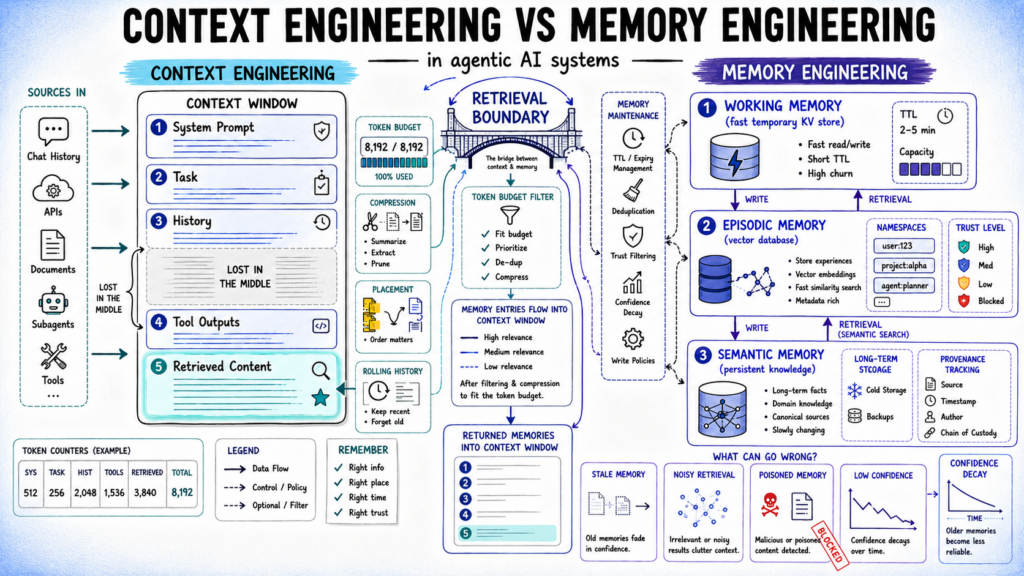
Contextual Framework: Understanding Context and Memory Engineering in Agentic AI Systems In the domain of Applied Machine Learning, particularly in the deployment of agentic AI systems, the interplay between context engineering and memory engineering is vital. These two disciplines address distinct yet interconnected challenges that arise as AI agents navigate complex workflows and multi-session tasks. Context engineering focuses on what information is utilized during a specific inference call, while memory engineering pertains to the mechanisms that ensure relevant information is retained and accessible across multiple interactions. This article delves into the nuances of these engineering disciplines, elucidating their respective roles in enhancing the efficacy of AI systems. Key topics include: The principles of context engineering, encompassing selective inclusion, structural placement, and compression, and their implications for reasoning quality. The fundamentals of memory engineering, covering write policy design, storage layer selection, retrieval strategies, and maintenance, which collectively shape long-term reliability. The intersection of memory and context engineering at the retrieval boundary, highlighting common failure modes when this boundary is not effectively managed. Introduction As AI agents become integral to increasingly intricate workflows, challenges such as information leakage, task constraints, and context confusion emerge. These issues often stem from the lack of clarity in the roles of context engineering and memory engineering, which, although related, fail in unique ways. Understanding the distinctions and interactions between these disciplines is critical for ensuring AI systems perform reliably throughout real-world applications. Main Goal and Achievements The primary goal of aligning context and memory engineering practices is to ensure that AI agents have access to the right information at the right time. Achieving this involves meticulous management of what information enters the context window during inference and what is preserved in memory for future interactions. The objective is to create a seamless integration where memory serves as a foundation for context, allowing the AI to leverage past knowledge effectively while maintaining the relevance and clarity of current tasks. Advantages of Effective Context and Memory Engineering Enhanced Reasoning Quality: Proper context engineering leads to improved inference outcomes by ensuring that only relevant, high-quality information is included in the context window. Increased Long-Term Reliability: Memory engineering facilitates the systematic storage and retrieval of critical information, which enhances the reliability of AI systems over extended periods. Optimized Resource Utilization: By implementing selective inclusion and compression strategies, AI systems can operate more efficiently, thereby reducing computational overhead and resource consumption. Improved User Interaction: Clear memory and context management enhances user experiences through more coherent and contextually aware AI interactions, leading to higher user satisfaction. Scalability: Well-defined engineering practices allow AI systems to scale effectively, managing more extensive datasets and complex workflows without loss of performance. However, these advantages come with caveats. Mismanagement of context and memory can lead to issues such as information overload, retrieval misses, and degraded system performance. Thus, careful design and implementation are essential to mitigate these risks. Future Implications The evolution of AI technologies and methodologies will profoundly affect the landscape of context and memory engineering. As AI systems become increasingly sophisticated, the demand for robust memory architectures and adaptive context engineering will grow. Future advancements may lead to more intelligent, self-optimizing systems capable of dynamically adjusting their memory and context strategies based on real-time feedback and performance metrics. Moreover, the integration of more advanced neural architectures and algorithms will likely enhance the ability of AI agents to understand and manage complex dependencies between context and memory, thereby improving their overall functionality and reliability. As these developments unfold, the potential for AI applications in various sectors, including healthcare, finance, and customer service, will expand significantly, further highlighting the importance of effective context and memory engineering. Conclusion In conclusion, the relationship between context and memory engineering is fundamental to the success of agentic AI systems. By understanding and optimizing these two layers of engineering, practitioners in the field of Applied Machine Learning can build more effective, reliable, and user-friendly AI solutions. The future of AI will undoubtedly necessitate a deeper exploration into these disciplines, ensuring that AI systems not only learn from the past but also act intelligently in the present. Disclaimer The content on this site is generated using AI technology that analyzes publicly available blog posts to extract and present key takeaways. We do not own, endorse, or claim intellectual property rights to the original blog content. Full credit is given to original authors and sources where applicable. Our summaries are intended solely for informational and educational purposes, offering AI-generated insights in a condensed format. They are not meant to substitute or replicate the full context of the original material. If you are a content owner and wish to request changes or removal, please contact us directly. Source link : Click Here

Introduction The advent of advanced artificial intelligence (AI) systems has revolutionized various domains, particularly in Natural Language Understanding (NLU) and Language Understanding. A key player in this transformation is the Claude API, which enables developers to integrate sophisticated language models into their applications. This blog post aims to elucidate the steps necessary for utilizing the Claude API within a Python environment, focusing on practical considerations such as response object interpretation, streaming outputs, and effective prompt structuring. These skills are essential for Natural Language Understanding scientists and developers seeking to enhance their applications with AI-driven capabilities. Establishing a Foundation To begin leveraging the Claude API, developers must first meet specific prerequisites, including the installation of Python 3.9 or higher, as well as the creation of a free Claude Console account that provides access to an API key. The significance of utilizing the Claude Python SDK cannot be overstated, as it streamlines API interactions by offering typed response objects, built-in retry mechanisms, and a user-friendly interface. This foundational setup is pivotal for ensuring seamless communication with the Claude API, thereby facilitating the effective integration of language understanding functionalities into applications. Main Goals of Using the Claude API The primary objective of this blog post is to guide users through the process of making their first API call and interpreting the subsequent outputs. Achieving this goal involves a series of methodical steps: Installation of the Claude SDK and proper API key management. Execution of an API call to retrieve meaningful responses from the language model. Understanding the structure of the response object to extract relevant information. Utilizing system prompts to dictate the behavior of the AI in conversations. Implementing streaming responses to enhance user experience during interactions. Advantages of Utilizing the Claude API The Claude API offers several advantages that can significantly benefit developers and NLU scientists: Ease of Integration: The SDK simplifies API interactions, allowing developers to focus on application logic instead of API intricacies. Structured Responses: The API returns structured response objects, making it easier to extract and utilize data effectively. System Prompts: Users can set persistent roles and constraints across conversations, enhancing the contextual relevance of interactions. Streaming Capabilities: Real-time output streaming improves user engagement by providing immediate feedback rather than waiting for complete responses. However, it is essential to recognize limitations, such as the necessity for careful token management to avoid exceeding the model’s context limits and the potential for responses to be cut off if the max_tokens parameter is not adequately set. Future Implications of AI Developments in NLU The implications of ongoing advancements in AI and NLU are profound. As language models like Claude continue to evolve, we can anticipate enhancements in understanding context, sentiment, and even nuances in human communication. These improvements will empower developers to create more sophisticated applications capable of handling complex interactions. Moreover, as the technology matures, we may witness further integration of AI in various sectors, such as education, customer service, and healthcare, transforming how we interact with technology and each other. The future landscape of NLU promises to be dynamic and increasingly intertwined with everyday life, making it essential for professionals in this field to stay informed and adaptable. Disclaimer The content on this site is generated using AI technology that analyzes publicly available blog posts to extract and present key takeaways. We do not own, endorse, or claim intellectual property rights to the original blog content. Full credit is given to original authors and sources where applicable. Our summaries are intended solely for informational and educational purposes, offering AI-generated insights in a condensed format. They are not meant to substitute or replicate the full context of the original material. If you are a content owner and wish to request changes or removal, please contact us directly. Source link : Click Here
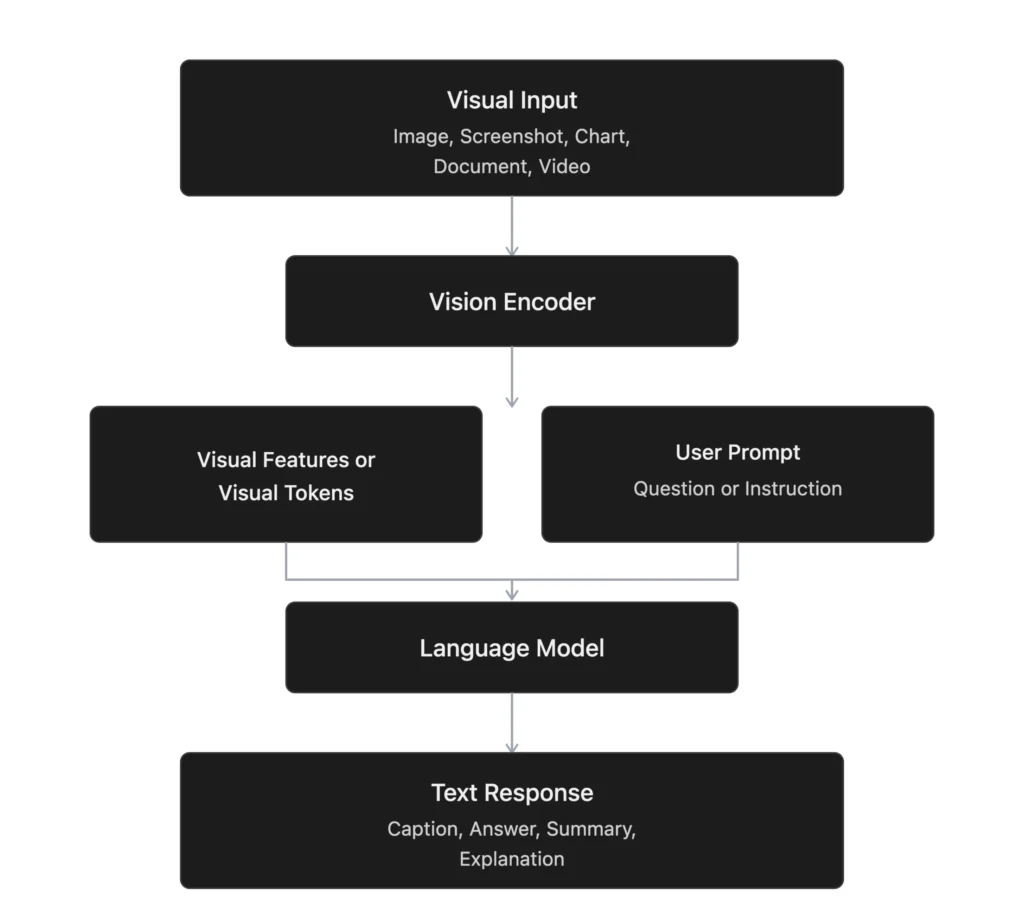
Context Vision Language Models (VLMs) represent a significant advancement in artificial intelligence, uniquely capable of interpreting both visual and textual information. Unlike their predecessors, such as CLIP and BLIP, which primarily bridged images and text, modern VLMs extend their capabilities to encompass complex tasks, including image analysis, document comprehension, chart interpretation, and interactive multimodal engagements. This evolution has made VLMs indispensable across various sectors including education, healthcare, business, automation, and accessibility, enhancing the practical applications of visual AI in real-world scenarios. What Are Modern Vision Language Models? Modern Vision Language Models are sophisticated AI systems engineered to process and understand visual content alongside language. These models are not limited to object recognition; they can articulate contextual narratives, respond to inquiries, read textual data within images, interpret layouts, and perform comparative analyses of visual information. By integrating a vision system that translates images into actionable visual features and a large language model that leverages these features in response to user prompts, VLMs provide a comprehensive approach to understanding multimodal inputs. From CLIP and BLIP to Modern VLMs While CLIP and BLIP laid the groundwork for early VLM development by demonstrating the potential for mapping images and text, modern VLMs have evolved to function as comprehensive multimodal assistants. They possess the capability to execute instructions, engage in dialogue, analyze documents, and reason through visual details. This transition marks a paradigm shift, transforming VLMs from mere image-text models into versatile tools that facilitate user action based on visual context interpretation. Understanding the Functionality of Leading VLMs Key examples of modern VLMs, such as GPT-4o, Gemini, Claude Vision, and Qwen-VL, exemplify the remarkable capabilities of contemporary AI technology. Each model showcases unique strengths: GPT-4o excels in real-time multimodal interaction, seamlessly integrating text, images, audio, and video to create an interactive user experience. Gemini leverages strong reasoning abilities across diverse information types, making it particularly effective for detailed analyses involving long documents, videos, and complex charts. Claude Vision focuses on meticulous visual understanding, providing clear explanations and summaries of complex visual content. Qwen-VL specializes in reading textual information from images and performing advanced document parsing, which is especially useful in Optical Character Recognition (OCR) scenarios. Key Differences Between Modern VLMs The primary distinctions among these models lie in their unique strengths and ideal use cases. For instance, GPT-4o is tailored for interactive user assistance, while Gemini is adept at comprehensive analysis. Conversely, Claude Vision is designed for precise visual communication, and Qwen-VL focuses on structured visual understanding. These differences underscore the importance of selecting the appropriate VLM based on the specific requirements of a task. Strengths and Limitations of Modern VLMs Strengths of Modern VLMs Limitations of Modern VLMs Ability to understand and articulate visual content in natural language. Potential to overlook subtle details or misinterpret unclear images. User-friendly compared to traditional computer vision systems. May present confident but inaccurate answers. Capable of diverse tasks such as summarizing documents and supporting multimodal conversations. Challenges with complex visuals, low-quality images, and contextually rich tasks. Facilitates faster understanding of intricate information. Requires substantial computational resources for effectiveness. Future Implications The ongoing advancements in VLM technology hold significant implications for various sectors. As these models improve in their ability to interpret visual data and provide contextually relevant insights, they will increasingly influence how professionals engage with visual information. For data engineers and analysts, the integration of VLMs into data workflows can enhance efficiency, reduce manual data processing, and facilitate deeper insights into complex datasets. However, as VLMs become more prevalent, the importance of human oversight will remain critical, particularly in sensitive areas such as healthcare and finance, where nuanced understanding is paramount. Conclusion Modern Vision Language Models mark a pivotal development in AI, bridging the gap between visual and linguistic understanding. The transition from earlier models to contemporary VLMs like GPT-4o, Gemini, Claude Vision, and Qwen-VL exemplifies the growing sophistication of AI technologies. While these models offer impressive capabilities across multiple industries, careful consideration of their limitations and the necessity for human oversight will be essential as their applications expand. Frequently Asked Questions Q1. What are modern Vision Language Models? A. Modern Vision Language Models are AI systems that understand and process images and text together, enabling them to describe visuals, read documents, and answer visual questions. Q2. How are modern VLMs different from CLIP and BLIP? A. CLIP and BLIP focused on matching images with text, while modern VLMs can execute complex tasks such as analyzing documents and engaging in conversations. Q3. What are the main limitations of modern VLMs? A. Modern VLMs may miss intricate details, misinterpret unclear visuals, and require significant computational power for optimal performance. Disclaimer The content on this site is generated using AI technology that analyzes publicly available blog posts to extract and present key takeaways. We do not own, endorse, or claim intellectual property rights to the original blog content. Full credit is given to original authors and sources where applicable. Our summaries are intended solely for informational and educational purposes, offering AI-generated insights in a condensed format. They are not meant to substitute or replicate the full context of the original material. If you are a content owner and wish to request changes or removal, please contact us directly. Source link : Click Here

Context As the gaming landscape continues to evolve, cloud gaming platforms such as GeForce NOW play a pivotal role in shaping player experiences. In July, GeForce NOW introduces an exciting array of games, including the innovative Monopoly: Star Wars Heroes vs. Villains, alongside twelve additional titles. This serves not only to enhance entertainment but also to stimulate engagement among diverse player demographics. Furthermore, the platform is offering significant savings on membership subscriptions, thereby making high-performance gaming more accessible to a broader audience. Main Goal The primary objective outlined in the original post is to promote GeForce NOW’s extensive gaming offerings while encouraging users to take advantage of limited-time membership discounts. Achieving this goal involves creating awareness about the new game releases and the promotional offers available, which can enhance user engagement and retention. By effectively communicating these incentives, GeForce NOW aims to sustain and grow its user base in a competitive gaming market. Advantages and Evidence Accessibility Across Devices: GeForce NOW allows users to play high-quality games on various devices, including low-powered PCs, Macs, and mobile devices. This flexibility enables gamers to enjoy their favorite titles without the need for high-end hardware, as evidenced by the platform’s emphasis on cross-device functionality. Cost-Effective Gaming Solutions: The current membership discounts offer substantial savings, making premium gaming experiences more affordable. For instance, users can save $35 on a 12-month Performance membership, illustrating GeForce NOW’s commitment to providing value. Diverse Game Library: With the addition of numerous titles each month, including popular franchises, GeForce NOW ensures that players have access to a wide array of gaming experiences. This strategy not only attracts new users but also retains existing ones through continuous engagement. Community Feedback: The community engagement highlighted in the original post, where users express satisfaction with the value offered during sales, underscores the importance of user feedback in shaping service offerings. Positive testimonials can act as a form of social proof, enhancing trust and credibility. Future Implications The advancement of artificial intelligence (AI) technologies is poised to significantly impact the cloud gaming sector. As generative AI models evolve, they could enhance game design, create personalized gaming experiences, and optimize server performance. Moreover, AI-driven data analytics can provide deeper insights into user behavior, allowing companies like GeForce NOW to refine their marketing strategies and tailor content to meet the preferences of their user base. The implications extend beyond mere gaming; as AI continues to integrate into various facets of technology, the potential for innovative features and user experiences in cloud gaming will likely expand, further enriching the gaming ecosystem. Disclaimer The content on this site is generated using AI technology that analyzes publicly available blog posts to extract and present key takeaways. We do not own, endorse, or claim intellectual property rights to the original blog content. Full credit is given to original authors and sources where applicable. Our summaries are intended solely for informational and educational purposes, offering AI-generated insights in a condensed format. They are not meant to substitute or replicate the full context of the original material. If you are a content owner and wish to request changes or removal, please contact us directly. Source link : Click Here

Contextual Overview of Emojico’s Recent Legal Challenges The recent legal proceedings involving Emojico, primarily concerning the enforcement of its Standardized Anti-Counterfeiting Design (SAD) Scheme, have garnered attention within both the legal and commercial sectors. This case exemplifies the challenges faced by trademark holders in substantiating claims of infringement, particularly in a digital marketplace characterized by a diverse range of product offerings. Emojico’s assertion that all defendants within the case are counterfeiters—leading to an assumption of infringement—was swiftly rejected by the court. The judge articulated that the plaintiff failed to demonstrate sufficient similarity between the marks in question, thereby negating the basis for a temporary restraining order (TRO). Main Goals and Achievements of the Legal Proceedings The primary objective of Emojico in pursuing this litigation was to secure a TRO against alleged infringers, thereby preventing further distribution of products deemed counterfeited. However, the court’s dismissal of this motion highlights the necessity for plaintiffs to present compelling evidence of similarity and potential consumer confusion. This case underscores the importance of rigorous legal standards in trademark disputes and suggests that plaintiffs must construct a more robust legal argument to achieve favorable outcomes. Advantages of a Rigorously Constructed Legal Argument Clarity in Legal Standards: The court’s rejection of Emojico’s claims illustrates the need for clear and distinct evidence of similarity between trademarks. Legal professionals can leverage this precedent to develop more focused arguments in future cases. Enhanced Consumer Protection: By maintaining high standards for establishing infringement, courts protect consumers from confusion, thereby promoting fair competition in the marketplace. Judicial Efficiency: The case demonstrates that courts are inclined to prioritize cases that adhere to established legal frameworks, which can streamline the judicial process and reduce frivolous litigation. Strategic Use of State Trademark Law: Although Emojico attempted to invoke state trademark law to bolster its claims, the absence of independent support for these claims serves as a cautionary tale. Legal practitioners must ensure that all avenues of legal recourse are substantiated with adequate evidence. Caveats and Limitations While the advantages mentioned above are significant, legal professionals must remain cognizant of the limitations inherent in trademark enforcement actions. The court’s critique of Emojico’s lengthy filings and lack of coherence serves as a reminder that excessive documentation may hinder rather than help a case. Moreover, the diversity of product categories associated with Emojico raises questions about the plausibility of universal claims of infringement across unrelated goods. Future Implications of AI in Legal Proceedings The evolving landscape of LegalTech and AI holds promise for enhancing the efficacy of trademark litigation. AI tools can assist legal professionals in analyzing vast datasets to identify patterns of trademark usage and consumer perception, thereby providing empirical support for claims of similarity or confusion. Furthermore, advancements in AI-driven legal research can streamline the process of constructing robust legal arguments, ensuring that practitioners remain compliant with judicial expectations. As AI technologies continue to advance, they may also facilitate better predictive modeling regarding the outcomes of trademark disputes, enabling firms to make more informed strategic decisions. However, it is imperative for legal professionals to critically evaluate the integration of AI within their practices, ensuring that such technologies complement, rather than replace, human judgment and legal acumen. Disclaimer The content on this site is generated using AI technology that analyzes publicly available blog posts to extract and present key takeaways. We do not own, endorse, or claim intellectual property rights to the original blog content. Full credit is given to original authors and sources where applicable. Our summaries are intended solely for informational and educational purposes, offering AI-generated insights in a condensed format. They are not meant to substitute or replicate the full context of the original material. If you are a content owner and wish to request changes or removal, please contact us directly. Source link : Click Here
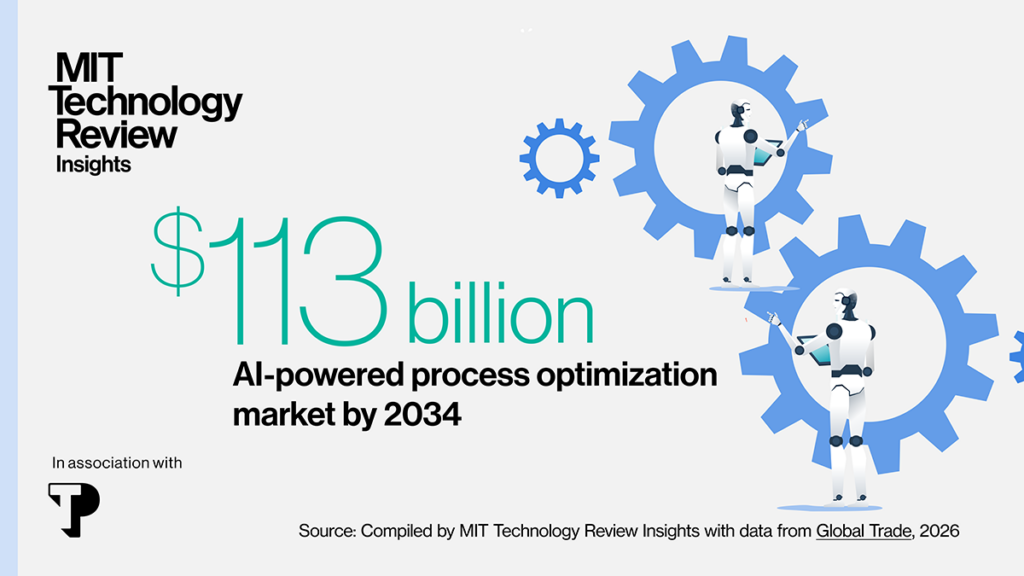
Context: The Intersection of AI and Operational Excellence The integration of artificial intelligence (AI) into organizational frameworks represents a transformative opportunity for enhancing operational efficiency. However, as highlighted in recent discussions on achieving operational excellence through AI, the potential benefits of such technologies can only be realized when they are anchored within robust operational structures. Organizations that prioritize process discipline are better equipped to leverage AI capabilities effectively, as they already employ data-driven decision-making protocols. This cultural readiness is essential for harnessing the full value of AI systems, creating a synergistic relationship between technology and established processes. The Goal of Achieving Operational Excellence with AI The principal objective of incorporating AI into operational frameworks is to enhance process efficiencies that ultimately lead to superior business outcomes. This goal can be achieved through a systematic approach that emphasizes the integration of AI technologies with existing operational protocols. Companies that have laid a solid foundation in process discipline can better channel AI tools, thereby fostering an environment where both technological advancements and operational strategies work in tandem. Advantages of Integrating AI with Established Operational Processes 1. **Enhanced Decision-Making**: Organizations that possess mature process disciplines are already familiar with data-driven methodologies. The integration of AI into these frameworks can refine decision-making processes, enabling faster and more accurate responses to market changes. 2. **Increased Efficiency**: AI can streamline operations by automating repetitive tasks and providing insights that help optimize workflows. This leads to significant time and cost savings, which can be reinvested into other areas of the business. 3. **Scalability**: Well-defined processes allow organizations to scale AI solutions effectively. When AI tools are embedded within existing operational systems, they can be expanded or adapted with greater ease, facilitating growth without compromising quality. 4. **Improved Collaboration**: The fusion of AI and established processes fosters a collaborative workplace culture. Teams can utilize AI-generated insights to work more cohesively, aligning their objectives and strategies seamlessly. 5. **Sustainable Innovation**: Organizations that successfully integrate AI with their operational frameworks cultivate an environment of continuous improvement. This positions them to adapt swiftly to technological advancements and market demands, ensuring long-term sustainability. Despite these advantages, there are caveats to consider. Organizations must ensure that their foundational processes are sufficiently robust to support the complexities introduced by AI. Failure to do so may result in operational disruptions or diminished returns on AI investments. Future Implications of AI Developments in Operational Excellence As AI technologies continue to evolve, their implications for operational excellence will expand significantly. Future advancements in AI capabilities—such as machine learning, natural language processing, and predictive analytics—will further enhance the ability of organizations to optimize their processes. The increasing sophistication of AI tools will likely lead to even more profound integrations with operational strategies, driving innovation and efficiency to unprecedented levels. However, as organizations embrace these advancements, they must remain vigilant in maintaining the integrity of their foundational processes. The success of AI integration hinges not only on the technologies themselves but also on the organizational culture that supports them. Companies that prioritize this holistic approach will be best positioned to navigate the complexities of the future business landscape. In conclusion, the interplay between AI and operational excellence is pivotal for organizations seeking to thrive in an increasingly competitive environment. By establishing a strong foundation built on process discipline, companies can unlock the transformative potential of AI, paving the way for sustainable growth and innovation. Disclaimer The content on this site is generated using AI technology that analyzes publicly available blog posts to extract and present key takeaways. We do not own, endorse, or claim intellectual property rights to the original blog content. Full credit is given to original authors and sources where applicable. Our summaries are intended solely for informational and educational purposes, offering AI-generated insights in a condensed format. They are not meant to substitute or replicate the full context of the original material. If you are a content owner and wish to request changes or removal, please contact us directly. Source link : Click Here

Contextual Overview of AI in Cybersecurity The integration of Artificial Intelligence (AI) into cybersecurity has emerged as a crucial development, particularly given the escalating sophistication of cyber threats. The role of AI in this domain is analogous to the way high-performance cameras, such as the GoPro Hero13 Black, enhance the quality of adventure documentation. Just as the GoPro captures high-resolution imagery to document experiences effectively, AI technologies, including machine learning and predictive analytics, serve to enhance the detection and mitigation of cyber threats, thereby safeguarding digital environments. This synergy is essential for cybersecurity experts who are tasked with the challenging responsibility of managing and fortifying organizational security against increasingly complex adversaries. Main Goal of AI in Cybersecurity The primary objective of implementing AI in cybersecurity is to enhance threat detection and response capabilities within organizations. AI systems can analyze vast datasets to identify patterns that may indicate potential security breaches, thereby allowing cybersecurity experts to preemptively address vulnerabilities. Achieving this goal involves the deployment of advanced algorithms capable of recognizing anomalous behavior in real-time, thus facilitating prompt incident response and minimizing damage. Advantages of AI Implementation in Cybersecurity 1. **Enhanced Threat Detection**: AI systems utilize machine learning algorithms to analyze network traffic and identify unusual patterns that may signify a breach or attack. This proactive identification of threats allows for faster mitigation. 2. **Automated Response Mechanisms**: AI can automate responses to common security incidents, thereby reducing the burden on cybersecurity teams. For example, an AI system may isolate affected systems upon detecting a breach, limiting the potential spread of malware. 3. **Predictive Analytics**: By leveraging historical data, AI can forecast potential security incidents before they occur, enabling organizations to bolster their defenses in anticipation of future attacks. 4. **Continuous Learning**: AI systems can adapt and learn from new threats and attack vectors, ensuring that they remain effective as cyber threats evolve. This characteristic is akin to continuous updates that enhance the performance of technological devices like action cameras. 5. **Cost Efficiency**: Implementing AI solutions can lead to significant cost savings by reducing the need for extensive human resources to monitor and respond to security threats. Caveats and Limitations While the advantages of AI in cybersecurity are substantial, there are notable caveats: – **False Positives**: AI systems may generate false alarms, leading to unnecessary investigations and potential resource wastage. – **Dependence on Data Quality**: The efficacy of AI in threat detection heavily relies on the quality and quantity of the data fed into the algorithms. Inadequate or biased data can lead to suboptimal decision-making. – **Complexity and Integration Issues**: Integrating AI systems into existing cybersecurity frameworks can be technically challenging, requiring specialized knowledge and resources. Future Implications of AI in Cybersecurity The future of AI in cybersecurity is poised for transformative developments. As AI technologies advance, they will enable even more sophisticated threat detection capabilities, harnessing the power of big data and IoT devices. Furthermore, the integration of AI with other emerging technologies, such as blockchain, may enhance data integrity and security protocols. Moreover, as cyber threats become more advanced, the reliance on AI for proactive defense strategies will likely increase. Cybersecurity experts will need to adapt to the evolving landscape, acquiring new skills to effectively leverage AI tools. This evolution will not only improve organizational security but also foster a more resilient digital infrastructure capable of withstanding future cyber adversities. In conclusion, the integration of AI into cybersecurity represents a pivotal shift in how organizations approach digital security. By understanding the potential advantages and limitations, cybersecurity experts can better navigate this landscape and implement effective strategies for safeguarding their assets against emerging threats. Disclaimer The content on this site is generated using AI technology that analyzes publicly available blog posts to extract and present key takeaways. We do not own, endorse, or claim intellectual property rights to the original blog content. Full credit is given to original authors and sources where applicable. Our summaries are intended solely for informational and educational purposes, offering AI-generated insights in a condensed format. They are not meant to substitute or replicate the full context of the original material. If you are a content owner and wish to request changes or removal, please contact us directly. Source link : Click Here


