
Introduction The integration of Continuous Integration (CI) workflows into software development, particularly within the Computer Vision and Image Processing domains, has become increasingly essential. As developers start contributing to open source projects, tools such as GitHub Actions can initially seem daunting. This feeling is not uncommon; many face challenges when first encountering automated workflows and the complexities they entail. However, overcoming these initial hurdles can lead to significant advancements in project development and collaboration. What I Worked On In my recent endeavors, I focused on implementing CI workflows using GitHub Actions across multiple repositories dedicated to image processing projects. The primary objectives of this implementation were: Incorporating automated testing protocols to ensure image processing algorithms function correctly under varying conditions. Integrating style checks and linting tools specific to programming languages used for image analysis, thereby enhancing code quality. Updating project documentation to reflect changes made during the CI integration process. What I Learned One of the most profound insights gained throughout this process was not merely technical; rather, it involved a crucial shift in mindset. Viewing failed workflows as constructive feedback, rather than setbacks, transformed my approach to development. Each error, whether related to coding standards or unit tests, provided an opportunity for refinement and growth, ultimately benefiting the project and the broader community. Looking Ahead Although substantial time was dedicated to enhancing my projects, the next steps involve extending these practices to collaborative open source contributions. By applying the knowledge acquired, I aim to enhance the efficacy of collaborative efforts in the Computer Vision community, ultimately contributing to the collective advancement of the field. The journey of mastering tools that underpin open source development can often be as valuable as making individual contributions, fostering a deeper understanding of the entire development ecosystem. Engagement Inquiry As professionals in the Computer Vision domain, we often encounter challenges when integrating CI/CD tools. What specific aspects of CI workflows or GitHub Actions did you find most complex during your initial experiences? For those who are just beginning their journey, what elements remain unclear? I welcome your insights and experiences in the comments. Transparency Note: This post benefited from AI editing to enhance clarity and structure. However, all technical content, findings, and conclusions are independently developed and have undergone thorough review. Disclaimer The content on this site is generated using AI technology that analyzes publicly available blog posts to extract and present key takeaways. We do not own, endorse, or claim intellectual property rights to the original blog content. Full credit is given to original authors and sources where applicable. Our summaries are intended solely for informational and educational purposes, offering AI-generated insights in a condensed format. They are not meant to substitute or replicate the full context of the original material. If you are a content owner and wish to request changes or removal, please contact us directly. Source link : Click Here
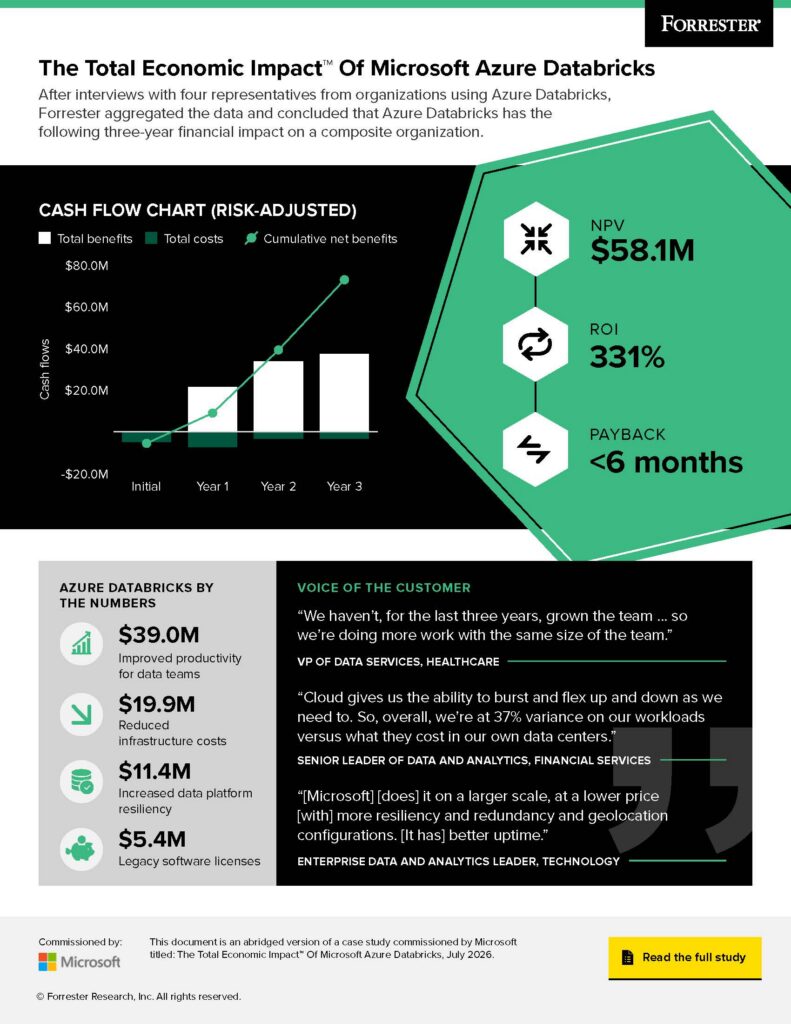
Context: Azure Databricks and Business Value Microsoft Azure Databricks stands at the forefront of data processing and analytics, delivering a first-party advantage that integrates seamlessly with the Microsoft ecosystem. This integration not only enhances the user experience for businesses already utilizing Microsoft tools but also promises measurable business outcomes. The collaboration between Microsoft and Databricks ensures that the service is co-engineered, allowing for a unified integration roadmap across the Microsoft data and AI stack. This synergy translates into reduced costs, diminished risks, and accelerated time-to-value for organizations leveraging these technologies. Main Goal: Understanding and Realizing Business Value The primary goal elucidated in the original content is to demonstrate the tangible business value derived from adopting Azure Databricks. This value is evidenced through measurable return on investment (ROI) metrics, specifically a reported 331% ROI over three years, alongside a net present value of $58.1 million and a payback period of less than six months. Such metrics illustrate how organizations can recover their investments swiftly while benefiting from enhanced efficiency and performance. Structured List of Advantages Increased Productivity of Data and Analytics Teams: Organizations reported significant productivity improvements, with data teams handling 15% to 25% more work without increasing headcount, thus maximizing resource efficiency. Reduced Infrastructure Costs: The transition to a flexible, pay-as-you-go computing model resulted in substantial savings, eliminating the costs associated with overprovisioned hardware. Enhanced Data Platform Resiliency: The managed operations of Azure Databricks reduced system outages and obviated the need for custom disaster recovery plans, leading to improved reliability. Cost Savings from Legacy Software Retirement: By consolidating databases and ETL tools, organizations could retire outdated software and reallocate database administrators to more strategic tasks, creating additional value. While these advantages are compelling, it is essential to note that actual results may vary based on the specific circumstances of each organization. The Forrester study highlights a composite organization’s experience, which may not be universally applicable. Future Implications of AI Developments Looking ahead, the evolution of artificial intelligence (AI) will significantly impact the data engineering landscape. As AI technologies become increasingly integrated into data processing frameworks like Azure Databricks, organizations can anticipate enhanced capabilities in data analytics, predictive modeling, and real-time decision-making. These advancements are likely to further streamline operations, reduce costs, and increase the speed of insights derived from large datasets. Additionally, the integration of AI tools will facilitate improved governance and compliance within organizations, enabling data engineers to maintain oversight while leveraging automated processes. Disclaimer The content on this site is generated using AI technology that analyzes publicly available blog posts to extract and present key takeaways. We do not own, endorse, or claim intellectual property rights to the original blog content. Full credit is given to original authors and sources where applicable. Our summaries are intended solely for informational and educational purposes, offering AI-generated insights in a condensed format. They are not meant to substitute or replicate the full context of the original material. If you are a content owner and wish to request changes or removal, please contact us directly. Source link : Click Here
Introduction The evolving landscape of digital marketing is being significantly reshaped by advancements in artificial intelligence (AI). A recent partnership between Yelp and OpenAI exemplifies this transformation, as Yelp licenses its extensive database of reviews, ratings, and local business information to be integrated into ChatGPT responses. This collaboration enhances the capabilities of AI-driven platforms, allowing them to provide more accurate and relevant local business recommendations. As AI assistants become increasingly competitive with traditional search engines, understanding this partnership’s implications is crucial for digital marketers. Main Goal and Achievement The primary objective of the Yelp and OpenAI partnership is to enrich ChatGPT with real-time, reliable local business information. By integrating Yelp’s content, ChatGPT can deliver comprehensive responses to user queries regarding local recommendations. This is achieved through the incorporation of Yelp’s reviews, ratings, and visual content, which enhances the quality of information presented to users. As a result, businesses leveraging this partnership can expect increased visibility and engagement in AI-generated recommendations. Advantages of the Partnership Enhanced Local Search Capabilities: With Yelp’s data integrated into ChatGPT, users receive more accurate local recommendations, improving the overall user experience. Increased Brand Visibility: Businesses featured in ChatGPT responses benefit from enhanced exposure, as Yelp’s branding and links accompany the information provided. Direct Engagement Opportunities: The planned integration of Yelp’s “Request a Quote” feature allows users to contact local service providers directly from ChatGPT, facilitating immediate customer engagement. Shift in Consumer Behavior: As consumers increasingly rely on AI for local searches, businesses must adapt by optimizing their presence on platforms like Yelp to align with changing discovery patterns. New Distribution Channels: This partnership creates additional avenues for businesses to distribute their content, enhancing their reach through AI platforms that aggregate trusted information. However, it is important to note that the financial specifics of the agreement were not disclosed, and the deal does not restrict Yelp from licensing its data to other AI entities. This flexibility may lead to increased competition among AI platforms for access to proprietary content. Future Implications for AI-Powered Marketing The partnership between Yelp and OpenAI signifies a pivotal moment in the evolution of AI-powered marketing. As AI technologies continue to advance, we can anticipate several key implications: Data-Driven Decision Making: Marketers will increasingly rely on AI insights drawn from aggregated data sources like Yelp to inform their strategies and campaigns. Integration of AI in Local Marketing: Local businesses will need to optimize their online presence across multiple platforms to maximize their visibility in AI-driven recommendations. Continued Evolution of Consumer Preferences: As users become more accustomed to AI-generated recommendations, businesses must adapt their marketing strategies to align with these preferences, ensuring relevancy and engagement. Expansion of Licensing Agreements: The model established by Yelp and OpenAI may inspire other companies to pursue similar partnerships, creating a more interconnected ecosystem of data sharing among AI platforms. In conclusion, the integration of Yelp’s local business data into ChatGPT represents a significant advancement in AI-powered marketing. As digital marketers navigate this new landscape, they must adapt their strategies to leverage AI technologies effectively, ensuring they remain competitive in an increasingly data-driven market. Disclaimer The content on this site is generated using AI technology that analyzes publicly available blog posts to extract and present key takeaways. We do not own, endorse, or claim intellectual property rights to the original blog content. Full credit is given to original authors and sources where applicable. Our summaries are intended solely for informational and educational purposes, offering AI-generated insights in a condensed format. They are not meant to substitute or replicate the full context of the original material. If you are a content owner and wish to request changes or removal, please contact us directly. Source link : Click Here

Contextual Overview In a significant development within the Smart Manufacturing and Robotics sector, GMEX Robotics Corp. has announced its acquisition of MediaMeta.ai, a company specializing in artificial intelligence (AI) and human behavioral modeling. This strategic move is aimed at enhancing GMEX’s automation portfolio by integrating advanced social intelligence capabilities. By leveraging MediaMeta’s expertise, GMEX seeks to bridge the gap between existing AI systems and effective human interaction, a crucial element for the development of service and social robots. Main Goal and Achievement Strategies The primary objective of this acquisition is to enrich GMEX’s robotics offerings with social intelligence, enabling machines to understand and respond to human behaviors and contexts more effectively. This goal can be achieved through the integration of MediaMeta’s AI-driven behavioral modeling technology, which equips GMEX’s robots with the ability to interpret social cues and environmental signals. This integration is expected to facilitate a more empathetic and context-aware interaction between robots and humans, thus enhancing the user experience across various sectors, including hospitality, healthcare, and education. Advantages of the Acquisition Enhanced Social Interaction: The incorporation of social intelligence into GMEX’s robots allows for more meaningful interactions with users, fostering trust and collaboration. This capability is particularly beneficial in environments where human-robot interaction is critical. Improved Contextual Understanding: MediaMeta’s technology enables robots to reason and respond based on cultural and behavioral contexts, making their operations more relevant and efficient in real-world settings. Expansion of Application Areas: GMEX plans to apply these advancements across diverse sectors, including healthcare, hospitality, and education, thereby broadening the market potential and use cases for their robotic systems. Strategic Positioning: By acquiring MediaMeta, GMEX positions itself as a leader in the robotics industry, emphasizing the importance of understanding human interaction in technological advancement. Caveats and Limitations While the acquisition presents numerous advantages, it is essential to consider potential limitations. The integration of new technology can be complex and may involve significant developmental, testing, and commercialization efforts. Additionally, the success of this integration hinges on the ability to meet defined revenue targets and performance benchmarks, which could impact long-term viability if not achieved. Future Implications of AI Developments The ongoing evolution of AI technologies promises to have profound implications for the Smart Manufacturing and Robotics industries. As AI systems become increasingly sophisticated in understanding human behavior, the potential for creating highly interactive and responsive robotic systems will expand. This trend indicates a shift towards more intuitive and human-centered robotic applications that can adapt to varied environments and user needs. Over time, such advancements could redefine the boundaries of automation, paving the way for a future where robots play an integral role in everyday life, enhancing productivity and quality of service across multiple domains. Disclaimer The content on this site is generated using AI technology that analyzes publicly available blog posts to extract and present key takeaways. We do not own, endorse, or claim intellectual property rights to the original blog content. Full credit is given to original authors and sources where applicable. Our summaries are intended solely for informational and educational purposes, offering AI-generated insights in a condensed format. They are not meant to substitute or replicate the full context of the original material. If you are a content owner and wish to request changes or removal, please contact us directly. Source link : Click Here

Context The contemporary landscape of artificial intelligence (AI) is increasingly dominated by the need for versatile and portable solutions that cater to a variety of applications across multiple industries. The NVIDIA Jetson platform epitomizes this evolution by offering a compact yet powerful solution for developers engaged in edge AI and robotics. As articulated by Sarah Guo, founder of the AI-native venture capital firm Conviction, the Jetson platform is not merely a technological marvel but a critical enabler for developers seeking to build practical AI applications that can be deployed in real-world settings. The integration of powerful AI capabilities within a portable framework allows developers to innovate and implement AI solutions swiftly, regardless of their location or environment. Main Goals and Achievements The primary objective of the NVIDIA Jetson platform is to facilitate the seamless integration of AI into diverse applications, thereby empowering developers to create robust, agentic-ready AI systems that address real-world challenges. Achieving this goal involves leveraging the platform’s advanced computational capabilities to support a wide range of AI functionalities, including computer vision and autonomous navigation. By doing so, developers can harness cutting-edge technology to craft intelligent systems that can operate effectively in various sectors, from education to industrial automation. Advantages of the NVIDIA Jetson Platform Compact Design: The Jetson modules and developer kits are designed for portability, allowing developers to transport powerful AI systems easily. This feature is particularly advantageous for educational institutions and research laboratories, where mobility can enhance collaborative learning and experimentation. High Performance: With capabilities such as 67 trillion operations per second (TOPS) for the Jetson Orin Nano Super and 275 TOPS for the Jetson AGX Orin, the platform provides the computational power necessary for complex AI tasks. This performance is essential for developing sophisticated models that can learn and adapt in real-time. Accessibility for All Users: The Jetson platform is designed to cater to a wide range of users, from students working on their first robotics projects to advanced researchers pushing the boundaries of autonomous systems. This inclusivity supports the democratization of AI, making advanced technologies accessible to diverse groups. Comprehensive Learning Resources: NVIDIA provides extensive documentation and community support, including the Jetson Device Skills and Jetson BSP Skills repositories. These resources enable developers to efficiently learn how to implement and optimize AI applications in a hands-on manner. Real-World Applications: The platform has been successfully utilized in various innovative projects, including the development of autonomous vehicles and interactive AI assistants. Such applications demonstrate the practical impact of AI across multiple domains, highlighting its transformative potential. Limitations and Caveats Despite its numerous advantages, the NVIDIA Jetson platform does have limitations. The need for developers to possess a certain level of technical expertise can pose a barrier, particularly for novice users who may find the learning curve steep. Additionally, while the portability of the Jetson modules is a significant advantage, their reliance on external power sources can limit deployment scenarios. Furthermore, the performance of the systems may vary based on the complexity of the AI tasks being executed and the specific configurations of the projects. Future Implications The advancements in AI technology, exemplified by platforms like NVIDIA Jetson, are poised to redefine numerous industries by making AI more accessible and applicable. As the demand for intelligent solutions continues to grow, the integration of AI into everyday devices and systems will likely accelerate. Future developments in generative AI models are expected to yield even more sophisticated applications, enabling enhanced functionalities such as real-time decision-making and complex data analysis. Consequently, the evolution of AI technologies will not only transform business practices but also reshape educational methodologies, fostering a new generation of AI-savvy professionals equipped to tackle the challenges of tomorrow. Disclaimer The content on this site is generated using AI technology that analyzes publicly available blog posts to extract and present key takeaways. We do not own, endorse, or claim intellectual property rights to the original blog content. Full credit is given to original authors and sources where applicable. Our summaries are intended solely for informational and educational purposes, offering AI-generated insights in a condensed format. They are not meant to substitute or replicate the full context of the original material. If you are a content owner and wish to request changes or removal, please contact us directly. Source link : Click Here

Contextualizing LegalTech Innovation In the evolving landscape of LegalTech, the introduction of DingDuff, a free connector for Claude, marks a significant advancement for legal professionals. Developed by two practicing lawyers, Kyle Dingman and Stephanie Duff-O’Bryan, DingDuff provides direct access to a wealth of legal resources, including millions of court opinions, statutes, and regulations. Their ambition was not to compete with established legal research giants like Westlaw, but to create a tool that enhances their own legal practices. The tool utilizes the Model Context Protocol (MCP), allowing a seamless interaction with legal data sources without the need for additional applications. Main Goals and Their Achievements The primary goal articulated by DingDuff’s founders is to democratize access to legal research tools, making advanced AI-driven legal research available to all practitioners, irrespective of their firm’s resources. This objective can be achieved by providing a free and efficient platform that allows lawyers to generate high-quality research memos that are comparable to, or even exceed, those produced by commercial platforms. In their testing, DingDuff consistently outperformed their subscriptions to Westlaw, indicating a successful realization of their goal. Advantages of DingDuff: A Structured Overview Cost-Effectiveness: DingDuff is offered at no cost, removing financial barriers that often restrict access to quality legal research tools. This is particularly advantageous for solo practitioners and small firms. Direct Access to Primary Sources: By connecting Claude directly to primary legal sources, DingDuff enables lawyers to generate accurate citations and conduct thorough legal research without intermediary processes. User-Friendly Design: The tool’s design philosophy focuses on minimizing complexity, allowing lawyers to engage with AI technology intuitively and efficiently during their research activities. Iterative Interaction with AI: Unlike traditional platforms that dictate the research process, DingDuff allows lawyers to interact dynamically with the AI, refining their inquiries and exploring legal nuances effectively. Comprehensive Coverage: DingDuff integrates valuable statutory data alongside case law, enhancing the depth and accuracy of legal research outputs. Caveats and Limitations While DingDuff presents numerous advantages, it is essential to acknowledge certain limitations. The founders admit that the tool may occasionally produce errors akin to those made by human researchers, emphasizing the importance of attorney oversight in verifying AI-generated outputs. Furthermore, as a relatively new entrant in the market, it lacks the extensive benchmarking and user reviews that established platforms possess, which may affect user confidence in its reliability. Future Implications of AI in Legal Research The continuous advancement of AI technology is poised to reshape the legal research landscape significantly. As AI models become increasingly sophisticated, their ability to analyze complex legal issues and provide accurate insights will enhance legal practice efficiency. The success of DingDuff may encourage further innovations within the LegalTech sector, prompting established companies to adopt more user-centric approaches. This evolution could lead to a more equitable distribution of legal research resources, potentially leveling the playing field for smaller firms and solo practitioners against larger firms with substantial research budgets. Disclaimer The content on this site is generated using AI technology that analyzes publicly available blog posts to extract and present key takeaways. We do not own, endorse, or claim intellectual property rights to the original blog content. Full credit is given to original authors and sources where applicable. Our summaries are intended solely for informational and educational purposes, offering AI-generated insights in a condensed format. They are not meant to substitute or replicate the full context of the original material. If you are a content owner and wish to request changes or removal, please contact us directly. Source link : Click Here

Contextual Framework In the realm of modern technology, the evolution of threats necessitates a reevaluation of traditional radar and electronic warfare (EW) systems. Conventional systems, which depend heavily on static threat libraries, are increasingly susceptible to vulnerabilities presented by mode-agile emitters. These emitters operate in non-traditional modes that often evade recognition by predefined databases. To address this pressing challenge, cognitive radio frequency (RF) systems leverage advancements in artificial intelligence (AI) and machine learning (ML). By enabling autonomous perception, reasoning, and response capabilities, cognitive RF systems are poised to enhance the detection and mitigation of unknown threats within the RF spectrum. This transformation calls for a comprehensive understanding of cognitive AI/ML radar and EW systems, including their architectural components and the methodologies required for effective training and validation. Main Goal and Achievement Strategies The primary objective of enhancing cognitive radar and electronic warfare systems is to develop frameworks that can autonomously identify and respond to unrecognized threats in real-time. Achieving this goal involves the integration of AI-driven processes that facilitate advanced RF acquisition, analysis, and waveform synthesis. Furthermore, the implementation of iterative closed-loop testbeds is essential for the continuous improvement of AI/ML algorithms. These testbeds allow for the rigorous validation of system performance through hardware-in-the-loop (HIL) and system-in-the-loop (SIL) testing. By continuously refining the algorithms through real-world and simulated datasets, the systems can adapt to evolving threats, thereby significantly increasing their operational efficacy. Advantages of Cognitive Radar and EW Systems Enhanced Threat Detection: The integration of AI and ML allows these systems to detect mode-agile emitters that traditional systems would miss, thereby providing a crucial advantage in diverse operational environments. Autonomous Decision-Making: Cognitive systems can autonomously analyze incoming signals and make informed decisions without human intervention, leading to faster and more effective responses to threats. Iterative Learning and Adaptation: Through closed-loop testing, cognitive radar systems can learn from previous encounters with threats, allowing for continuous algorithm improvement and adaptation to new tactics employed by adversaries. Resource Efficiency: By automating threat assessment and response processes, cognitive systems free up valuable human resources, enabling personnel to focus on higher-level strategic tasks. However, it is essential to note that the reliance on AI/ML technologies also introduces challenges, such as the need for extensive training datasets and computational resources. Additionally, the systems’ effectiveness may be contingent upon the quality of the algorithms and their training processes. Future Implications of AI Developments The future of cognitive radar and electronic warfare systems is closely tied to the ongoing advancements in AI technologies. As AI algorithms continue to evolve, they will become increasingly adept at handling complex and dynamic threat environments. Future developments may lead to systems that not only identify threats but also predict potential attack vectors based on historical data and behavioral analysis. Furthermore, as the integration of cognitive systems becomes more widespread, there is the potential for collaboration across various sectors, including defense, telecommunications, and smart farming, thereby fostering innovations that enhance overall security and operational capabilities. Ultimately, the trajectory of AI in this field suggests a significant shift towards more autonomous, intelligent, and responsive defense mechanisms, ensuring preparedness against emerging threats in an increasingly complex technological landscape. Disclaimer The content on this site is generated using AI technology that analyzes publicly available blog posts to extract and present key takeaways. We do not own, endorse, or claim intellectual property rights to the original blog content. Full credit is given to original authors and sources where applicable. Our summaries are intended solely for informational and educational purposes, offering AI-generated insights in a condensed format. They are not meant to substitute or replicate the full context of the original material. If you are a content owner and wish to request changes or removal, please contact us directly. Source link : Click Here

Context and Overview of AgTech Investments In the second quarter of 2026, the AgTech landscape witnessed significant activity, with 158 startups collectively securing $2 billion in venture capital funding. This signifies a 6% increase in investment compared to the previous quarter, albeit with a slight decline in deal volume by 3%. Notably, a single deal involving ICEYE, a Finnish operator of a radar-satellite constellation, accounted for over 25% of the total capital raised. This phenomenon highlights a trend of stability in the AgTech investment sector, where funding has consistently averaged around $1.5 billion across 182 deals per quarter over the past 14 quarters. Such consistency marks a departure from the volatility experienced during the investment cycles of 2021–2022, suggesting a maturation of the market. AgTech in the Broader Venture Capital Landscape To contextualize the AgTech investment figures within the broader venture capital environment, CB Insights reported that $212.9 billion was deployed globally in Q2 2026 across approximately 7,086 deals. The first half of 2026 has set an unprecedented record for global venture investments, surpassing the previous high of $375 billion set during the peak of the last bull market in 2021 by over $135 billion. However, it is noteworthy that approximately 81% of this capital was channeled into mega-rounds—deals exceeding $100 million—leaving early-stage startups facing a challenging fundraising climate characterized by longer cycles and reduced capital availability. Main Goal and Achievements The primary goal of this continued investment activity in AgTech is to foster innovation and scalability within the agricultural technology sector. Achieving this objective necessitates a focus on attracting more diversified investments across various AgTech domains rather than relying heavily on few high-value deals. As the sector stabilizes, it can create a more conducive environment for early-stage ventures, encouraging the development of pioneering solutions that address pressing agricultural challenges. Advantages of Recent Investment Trends Increased Funding Stability: The steady average of $1.5 billion in funding per quarter over 14 quarters indicates a robust investment climate that can help AgTech startups maintain operational continuity. Diverse Sector Growth: The breakdown of investments across various sectors, such as climate monitoring and digital agronomy, points to a comprehensive approach to agricultural innovation. Encouragement of M&A Activity: The 15 AgTech exits recorded last quarter, all through mergers and acquisitions (M&A), emphasize healthy market dynamics that can lead to further investment and consolidation in the sector. Long-term Growth Potential: The historical performance of the AgTech sector, which had its highest exit rates in the last decade, suggests a trajectory for sustained growth and profitability for investors and startups alike. Limitations and Caveats Despite the positive trends, there are limitations to consider. The reliance on mega-rounds for a substantial portion of capital deployment may create disparities, leaving early-stage startups at a disadvantage. Furthermore, the declining deal volume could indicate potential market saturation or investor fatigue in certain segments of AgTech. Future Implications and the Role of AI As we look to the future, the integration of artificial intelligence (AI) in AgTech is poised to revolutionize the sector. AI technologies can enhance precision agriculture, improving crop yield and resource efficiency by analyzing vast datasets for actionable insights. Innovations in AI-driven analytics and machine learning could lead to the development of smarter farming techniques, optimizing supply chains, and enabling predictive modeling for better decision-making. This evolution will not only streamline operations but also address critical global challenges such as food security and sustainability, further attracting investment and fostering growth in the AgTech ecosystem. Disclaimer The content on this site is generated using AI technology that analyzes publicly available blog posts to extract and present key takeaways. We do not own, endorse, or claim intellectual property rights to the original blog content. Full credit is given to original authors and sources where applicable. Our summaries are intended solely for informational and educational purposes, offering AI-generated insights in a condensed format. They are not meant to substitute or replicate the full context of the original material. If you are a content owner and wish to request changes or removal, please contact us directly. Source link : Click Here

Introduction Blockchain technology has emerged as a transformative force across various industries, notably influencing the realm of Applied Machine Learning (ML). As organizations increasingly seek efficient and secure methods to manage data, understanding blockchain’s capabilities becomes essential for ML practitioners. This article aims to elucidate the core principles of blockchain technology and its implications for the ML field, providing insights that are accessible to both technical and non-technical readers. Understanding the Core Principles of Blockchain At its essence, blockchain is a distributed digital ledger that records transactions across multiple computers, ensuring that data integrity is maintained without the need for a central authority. Each transaction is grouped into a block, which is then linked to previous blocks, creating an immutable chain. This decentralization enhances security, as the network’s consensus mechanism verifies transactions, reducing the risk of fraud or data tampering. For ML practitioners, this presents an opportunity to leverage a reliable source of data for training models, as blockchain guarantees data authenticity and traceability. Main Goals and Achievements of Blockchain in ML The primary goal of integrating blockchain technology into the ML ecosystem is to enhance data security and integrity. By utilizing a decentralized framework, ML practitioners can ensure that the data used for model training and evaluation remains unaltered and verifiable. Achieving this goal involves several steps: implementing blockchain protocols for data storage, ensuring that transaction validation processes are robust, and fostering collaboration among stakeholders to adopt blockchain solutions effectively. Advantages of Blockchain for Machine Learning Practitioners Data Integrity: Blockchain’s immutable nature ensures that once data is recorded, it cannot be altered. This is crucial for ML models that rely on accurate historical data for training. Enhanced Security: The decentralized architecture reduces the likelihood of data breaches, as compromise of one node does not affect the entire network. Transparency: All transactions are visible to network participants, fostering trust among stakeholders and allowing for better compliance with data governance regulations. Traceability: Blockchain enables the tracking of data provenance, allowing ML practitioners to verify the source and lifecycle of the data, which is essential in regulated industries. Automation through Smart Contracts: Smart contracts can automate processes within ML workflows, such as data sharing agreements, thus streamlining operations. Limitations and Caveats Despite its advantages, blockchain technology presents certain limitations. The scalability of blockchain solutions can be a challenge, particularly when dealing with high-volume data transactions, which are common in ML applications. Additionally, the regulatory landscape surrounding blockchain is continually evolving, posing potential compliance issues for organizations looking to integrate this technology. Finally, while blockchain enhances security, it does not eliminate the risk of illicit activities, necessitating a cautious approach to its implementation. Future Implications of Blockchain and AI Developments The intersection of blockchain technology and artificial intelligence (AI) promises to revolutionize the data management landscape further. As AI developments progress, we can anticipate enhanced capabilities in data processing and analysis, which, when combined with the robust security and integrity provided by blockchain, will yield more reliable and efficient ML systems. Additionally, innovations in federated learning, where models are trained across decentralized data sources without direct access to the data itself, could see significant advancements with the adoption of blockchain protocols. Conclusion In summary, the integration of blockchain technology within the Applied Machine Learning domain presents numerous benefits, including improved data integrity, security, and transparency. While challenges remain, the potential for future advancements and the impact of AI developments on this technology are profound. For ML practitioners, embracing blockchain could lead to more trustworthy and efficient systems, ultimately enhancing the capabilities of machine learning applications across various sectors. Disclaimer The content on this site is generated using AI technology that analyzes publicly available blog posts to extract and present key takeaways. We do not own, endorse, or claim intellectual property rights to the original blog content. Full credit is given to original authors and sources where applicable. Our summaries are intended solely for informational and educational purposes, offering AI-generated insights in a condensed format. They are not meant to substitute or replicate the full context of the original material. If you are a content owner and wish to request changes or removal, please contact us directly. Source link : Click Here
Introduction In the rapidly evolving landscape of data science and artificial intelligence (AI), the paradigms of interaction are shifting away from traditional large language models (LLMs) that primarily serve as reactive systems. The focus is now on AI orchestration, which empowers these models with the capability to autonomously execute intricate workflows. This transformation was significantly propelled by the introduction of OpenClaw, a pioneering open-source framework that allows AI assistants to operate directly on user hardware, executing system-level commands autonomously. However, the management of such locally run autonomous agents poses significant challenges, including the necessity for technical expertise and dedicated hardware. The advent of KimiClaw, a cloud-based platform from Moonshot AI, presents a solution by simplifying access to these powerful tools without the burdens of local infrastructure. This blog post aims to analyze KimiClaw’s architecture, capabilities, and the advantages it offers, particularly for professionals in the field of Natural Language Understanding (NLU). Understanding KimiClaw’s Capabilities KimiClaw operates as a Software-as-a-Service (SaaS) product, enhancing the functionalities of OpenClaw while alleviating the technical hurdles associated with local deployments. By leveraging cloud infrastructure, KimiClaw maintains the core orchestration capabilities of OpenClaw while providing several key advantages: 1. Simplified Technical Setup KimiClaw eliminates the complexities of local setups, allowing users to initiate and manage their AI agents via a browser or mobile device. This ease of access makes powerful automation tools available to a broader audience, including those without extensive technical backgrounds. 2. Continuous Operation and Reliability As KimiClaw operates on managed servers, it offers guaranteed uptime. Users can rely on the platform to execute scheduled tasks without the interruptions caused by local hardware failures or connectivity issues. This is particularly advantageous for professionals who depend on consistent data automation and extraction processes. 3. Integrated Skill Marketplace (ClawHub) The platform provides access to a cloud-hosted marketplace, ClawHub, which contains a wealth of community-built skills. This integration facilitates the seamless assignment of complex tasks without the need for manual installation and conflict resolution, enhancing productivity and efficiency for data professionals. 4. Unified Cloud-Based Memory and Storage KimiClaw’s centralized workspace accommodates 40 GB of cloud storage, providing a cohesive environment for managing files, datasets, and logs generated by the AI agent. This organization is essential for maintaining a persistent memory that reinforces the workflows and preferences established by users. 5. Enhanced Mobile and Visual Device Interaction With its mobile capabilities, KimiClaw can autonomously navigate applications on Android devices, performing interactions that were previously unattainable with traditional setups. This feature significantly broadens the scope of automation, allowing for cross-application data management directly from mobile interfaces. Evaluating the Trade-Offs While KimiClaw offers numerous benefits, it is crucial to consider some limitations that may impact certain user groups: 1. Local Access Limitations KimiClaw’s cloud-based nature means it cannot directly control local applications or access files stored on personal devices unless they are uploaded to its workspace. This limitation may hinder users who require direct interaction with local resources. 2. Data Privacy Concerns The reliance on cloud storage raises potential data privacy issues, particularly for enterprises handling sensitive or proprietary information. Users must be aware of the implications of storing their data on external servers. 3. Integration with Existing Ecosystems KimiClaw operates through third-party messaging platforms, which may not integrate seamlessly with systems deeply embedded in specific ecosystems, such as Apple’s native applications. This limitation could affect usability for users reliant on those frameworks. Future Implications for Natural Language Understanding Scientists The developments surrounding KimiClaw and similar platforms signal a transformative shift in how NLU scientists can leverage AI technologies. The future landscape may see: Increased accessibility to advanced AI tools, allowing professionals to focus on higher-level analytical tasks rather than technical setup and maintenance. Enhanced collaboration opportunities, as cloud solutions facilitate easier sharing and management of resources across teams and organizations. Broader adoption of proactive AI assistants, leading to more sophisticated and integrated automation workflows that can adapt to user preferences and operational needs. The Conclusion KimiClaw exemplifies a significant advancement in the accessibility of AI orchestration tools, particularly for professionals engaged in NLU and related fields. By mitigating the technical complexities associated with local deployments, it enhances the ability to automate workflows and manage data efficiently. While it is essential to weigh the trade-offs, such as local access limitations and data privacy concerns, the overall value proposition it offers makes it a compelling choice for many users striving for efficiency and innovation in their workflows. Disclaimer The content on this site is generated using AI technology that analyzes publicly available blog posts to extract and present key takeaways. We do not own, endorse, or claim intellectual property rights to the original blog content. Full credit is given to original authors and sources where applicable. Our summaries are intended solely for informational and educational purposes, offering AI-generated insights in a condensed format. They are not meant to substitute or replicate the full context of the original material. If you are a content owner and wish to request changes or removal, please contact us directly. Source link : Click Here


