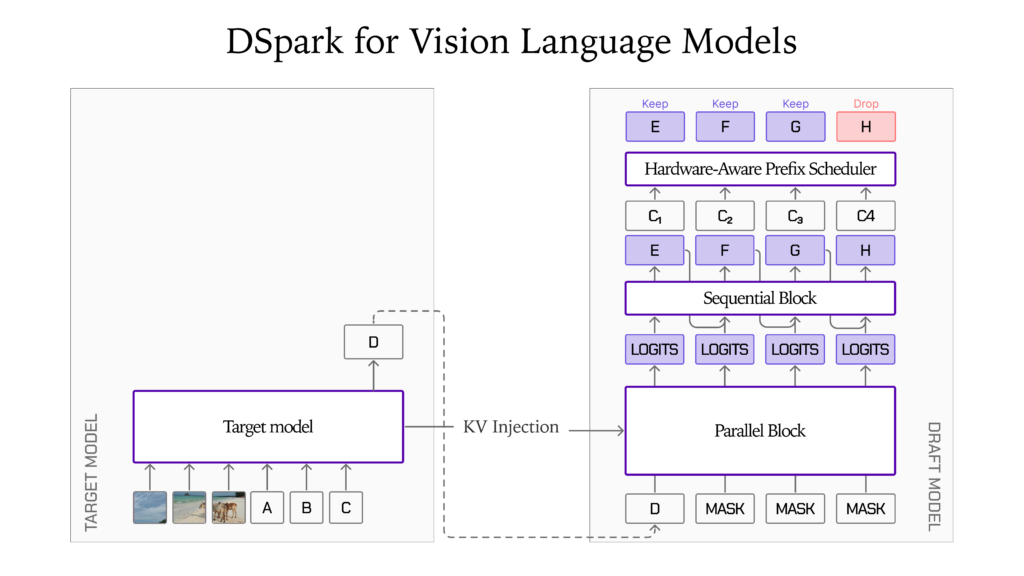
Context The recent introduction of the DSpark draft model for the vision-language model (VLM) LFM2.5-VL-3B marks a significant advancement in the field of generative AI. This model implements a speculative decoding path that enhances inference speeds while maintaining output quality, thereby addressing the increasing demand for efficient AI applications across various platforms. Specifically, the model showcases notable performance improvements with decode speedups of up to 3.13x on device and 2.66x on advanced hardware like the H100, all while adding a negligible memory footprint of 280M parameters, which equates to an 8.9% increase over the base model. Main Goal and Achievement The primary objective of the DSpark model is to accelerate the processing capabilities of vision-language models, thereby enhancing their applicability in real-time and resource-constrained environments. This goal is achieved through the implementation of a speculative decoding strategy, where the model predicts multiple candidate tokens simultaneously. This innovative approach allows for faster decision-making without compromising the integrity and accuracy of outputs. By leveraging the existing architecture of the LFM2.5-DSpark models, the new draft model successfully integrates this mechanism, offering a significant leap in performance for AI-driven applications. Advantages of the DSpark Model Increased Inference Speed: The model demonstrates substantial gains in decoding speed—up to 3.13x on-device and 2.66x on advanced GPUs. This enhancement is crucial for applications requiring real-time processing. Minimal Memory Overhead: By introducing just 280M additional parameters, the model maintains an efficient memory profile, making it suitable for deployment in resource-constrained environments. Compatibility and Support: Day-one integration with popular frameworks such as llama.cpp, MLX-VLM, and SGLang ensures that users can leverage the model’s capabilities immediately. Robust Performance Across Tasks: The model’s effectiveness spans various vision-based tasks, including visual question answering and image captioning, as verified through diverse benchmarking. However, it is essential to note the limitations associated with speculative decoding; while it significantly enhances decoding speed, it does not reduce the time taken for vision encoding or prefill processes. This limitation can restrict overall speed improvements, particularly in scenarios where prefill constitutes a larger portion of latency. Future Implications The advancements represented by the LFM2.5-VL-DSpark model have far-reaching implications for the generative AI landscape. As AI technologies continue to evolve, the integration of faster and more efficient models will likely spur innovation in various applications, from autonomous systems to interactive AI interfaces. The ability to process visual and textual information concurrently at an accelerated rate opens up new possibilities for developing more sophisticated AI solutions. Furthermore, as models like DSpark become more prevalent, we can expect enhancements in accessibility and usability for AI developers, thereby democratizing AI technology and widening its application spectrum. Disclaimer The content on this site is generated using AI technology that analyzes publicly available blog posts to extract and present key takeaways. We do not own, endorse, or claim intellectual property rights to the original blog content. Full credit is given to original authors and sources where applicable. Our summaries are intended solely for informational and educational purposes, offering AI-generated insights in a condensed format. They are not meant to substitute or replicate the full context of the original material. If you are a content owner and wish to request changes or removal, please contact us directly. Source link : Click Here
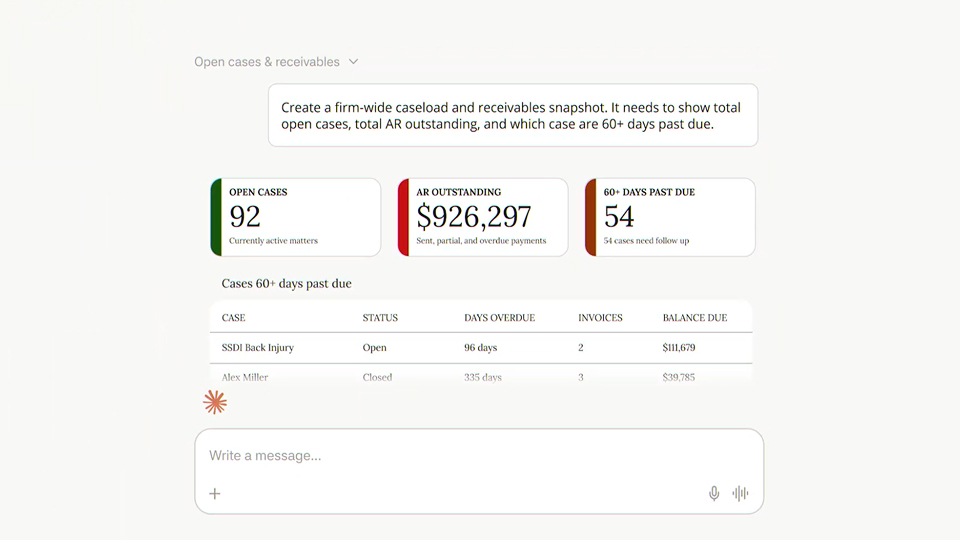
Introduction The recent announcements made by 8am at their second-annual Kaleidoscope customer conference in Las Vegas mark a significant advancement in the integration of artificial intelligence (AI) into legal practice management. 8am, the parent company of MyCase, CasePEER, and DocketWise, unveiled a series of innovative tools designed to streamline legal workflows and enhance financial management for law firms. These developments not only reflect the ongoing evolution of LegalTech but also underscore the potential of AI to transform legal operations fundamentally. Main Objectives and Achievements The primary goal of the 8am announcements is to enhance the functionality of MyCase through the introduction of new generative AI tools and a Claude MCP connector. The integration of these technologies aims to simplify administrative tasks, improve data accessibility, and facilitate more efficient legal processes. By enabling legal professionals to engage in natural language conversations with their case management systems, 8am seeks to reduce the time spent on administrative duties and empower users to focus on substantive legal work. Advantages of the New Developments Enhanced Efficiency: The MyCase MCP connector supports 73 distinct actions across various legal tasks, allowing users to retrieve information such as case summaries and outstanding invoices through conversational prompts. This reduces the time spent navigating complex software interfaces. Improved Data Utilization: The 8am IQ Firm Agent enables users to query their entire MyCase data set, facilitating access to crucial information across different cases and financial records. This holistic view can enhance decision-making processes for law firm leaders. Streamlined Document Creation: The 8am IQ Draft feature automates the generation of document templates and fills them with case-specific information, thus minimizing the time and effort required for document preparation. Financial Insight and Management: The introduction of Smart Spend Intelligence aids firms in categorizing expenses related to cases, thereby reducing unreimbursed expenses and providing clearer financial insights. Accessible Funding Options: The 8am Capital program allows law firms to secure financing based on their payment history, thus simplifying the funding process and enabling firms to invest in growth without traditional lending complexities. While these advancements present numerous advantages, it is essential to consider the limitations. For instance, the MCP connector’s effectiveness may vary based on the user’s subscription tier, potentially restricting access to certain data. Additionally, the new tools’ integration into existing workflows may require a learning curve for legal professionals accustomed to traditional practices. Future Implications The rapid pace of AI development in LegalTech indicates a transformative future for legal professionals. As firms increasingly adopt AI-driven tools, we can anticipate several implications: Increased Adoption of AI Tools: The legal industry is likely to see a wider adoption of AI solutions that enhance efficiency and reduce operational costs, leading to a more competitive landscape among firms. Shift in Legal Work Dynamics: As administrative tasks become more automated, legal professionals may shift their focus toward higher-value activities, such as strategic planning and client engagement. Continuous Improvement of AI Capabilities: Ongoing developments in AI technology will likely yield even more sophisticated tools, enhancing the capabilities of legal practice management software and enabling deeper data analysis. Ethical Considerations: The integration of AI in legal practices will necessitate discussions around ethical implications, including data privacy, bias in AI algorithms, and the potential impact on legal employment. Conclusion The announcements from 8am signify a pivotal moment in the LegalTech landscape, showcasing how AI can address the unique challenges faced by law firms today. By introducing innovative tools designed to enhance productivity and streamline financial management, 8am is not only setting a new standard for practice management software but also paving the way for the future of legal work. As the industry continues to evolve, legal professionals must remain adaptable to harness the full potential of these technological advancements. Disclaimer The content on this site is generated using AI technology that analyzes publicly available blog posts to extract and present key takeaways. We do not own, endorse, or claim intellectual property rights to the original blog content. Full credit is given to original authors and sources where applicable. Our summaries are intended solely for informational and educational purposes, offering AI-generated insights in a condensed format. They are not meant to substitute or replicate the full context of the original material. If you are a content owner and wish to request changes or removal, please contact us directly. Source link : Click Here