
Context In a significant development for the realm of enterprise artificial intelligence (AI), Rob Strechay has been appointed as the first Lead Analyst at VentureBeat. His transition from managing director and principal analyst at theCUBE Research marks a pivotal initiative by VentureBeat to enhance its focus on specialized analysis tailored for technical decision-makers. This strategic move aims to provide in-depth insights for directors, VPs, CIOs, and CTOs who are tasked with evaluating, procuring, and implementing enterprise AI solutions. The current landscape of the enterprise AI stack is rapidly evolving, demanding rigorous data analysis to support informed decision-making. Main Goal and Achievement Strategy The primary objective of this initiative is to address the pressing need for objective and actionable insights among enterprise technology leaders. As organizations transition from experimental generative AI applications to full-scale production deployments, they encounter complex challenges, such as managing multi-vendor environments, identifying security vulnerabilities in their operational pipelines, and resolving inefficiencies that impact infrastructure budgets. Achieving this goal necessitates a research framework that extends beyond conventional news coverage, thus allowing for nuanced exploration of these issues. Advantages of the Initiative Enhanced Technical Expertise: Rob Strechay’s extensive background, encompassing nearly three decades as a practitioner, product executive, and industry analyst, equips him to provide in-depth analysis of cloud infrastructure and AI deployment intricacies. Focus on Critical Areas: The research will initially concentrate on cloud infrastructure, advanced data systems, and the intersection of AI with enterprise security, ensuring relevance to current technological challenges. Empirical Data Utilization: Strechay aims to leverage empirical metrics and proprietary tracking data from VentureBeat, enhancing the credibility and utility of the insights provided to enterprise technology decision-makers. VB Pulse Surveys: The integration of monthly VB Pulse surveys into the research framework will facilitate the tracking of key areas of enterprise AI adoption, thereby providing a comprehensive overview of industry trends. Considerations and Limitations While the initiative promises substantial benefits, it is essential to acknowledge potential limitations. The reliance on empirical data may not encompass all emerging AI trends, especially in a field characterized by rapid evolution. Additionally, the effectiveness of the insights provided may vary based on the specific contexts and challenges faced by different enterprises. Future Implications of AI Developments As AI technology continues to advance, the implications for enterprise environments are profound. Future developments are likely to further complicate the landscape, necessitating even more sophisticated tools for data analysis and decision-making. Organizations will need to remain agile, adapting to new AI capabilities while ensuring the security and efficiency of their infrastructures. The increasing integration of AI into diverse sectors will also prompt a need for continuous learning and adaptation among technology leaders, underscoring the importance of resources like those offered by VentureBeat’s research initiatives. Disclaimer The content on this site is generated using AI technology that analyzes publicly available blog posts to extract and present key takeaways. We do not own, endorse, or claim intellectual property rights to the original blog content. Full credit is given to original authors and sources where applicable. Our summaries are intended solely for informational and educational purposes, offering AI-generated insights in a condensed format. They are not meant to substitute or replicate the full context of the original material. If you are a content owner and wish to request changes or removal, please contact us directly. Source link : Click Here
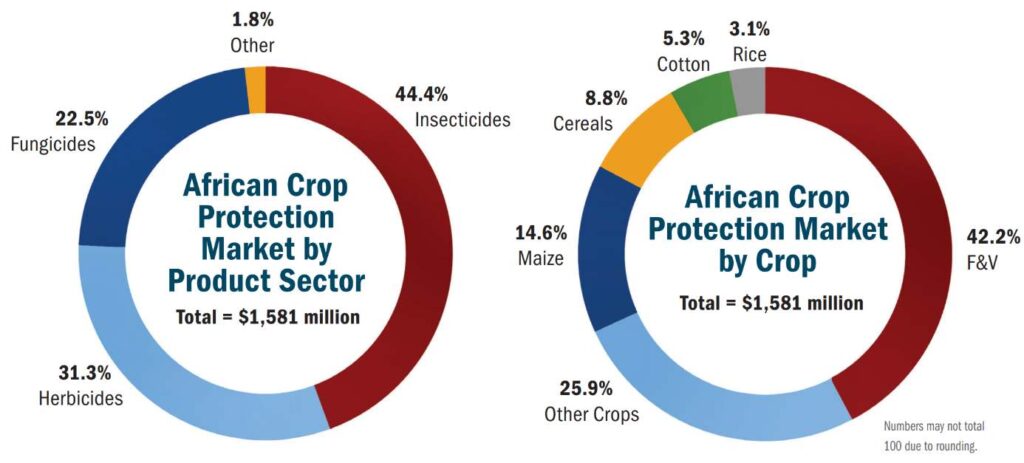
Context African agriculture has emerged as a focal point for international agribusinesses, marked by both significant growth potential and considerable uncertainty. The continent’s agricultural landscape is characterized by lower crop yields and productivity compared to established markets like Europe and North America. This disparity can be attributed to a confluence of factors, including inadequate infrastructure, variable climatic conditions, limited access to financing, and inconsistent adoption of modern agricultural technologies. However, this landscape is ripe for transformation, as the ongoing evolution within the food production value chain presents opportunities for increased efficiency and productivity. Main Goal The primary objective of optimizing Africa’s crop protection market lies in enhancing agricultural efficiency and sustainability. To achieve this goal, stakeholders must focus on several key strategies, including the introduction of innovative agricultural technologies, improved infrastructure development, and the establishment of effective financial support systems for farmers. By leveraging these strategies, the agricultural sector can enhance its productivity, thereby addressing the critical challenge of feeding a rapidly growing population. Advantages of Optimizing the Crop Protection Market Increased Productivity: The African crop protection market has witnessed growth across all sectors, particularly in herbicides and fungicides. This growth indicates a rising trend towards more effective agricultural practices, which can enhance overall productivity. Market Accessibility: Improved access to crop protection products can lead to better crop yields. As major markets like South Africa, Nigeria, and Egypt represent a significant portion of GDP and employment, enhancing access to these products is likely to benefit overall economic stability. Technological Advancements: The ongoing integration of modern agricultural technologies, such as precision farming and data analytics, can significantly improve crop management practices. This integration not only boosts yield but also promotes sustainable farming methods. Strategic Collaborations: Partnerships between local and international agribusinesses, as exemplified by recent collaborations in crop protection, can lead to shared resources and knowledge, further enhancing efficiency in the agricultural sector. Caveats and Limitations While the prospects for the African crop protection market are encouraging, several caveats must be considered. The reliance on imported fertilizers, which constitutes over 90% of Africa’s needs, exposes the region to global market fluctuations. Recent geopolitical tensions, such as conflicts affecting supply chains, can drastically impact fertilizer prices and, consequently, crop production costs. Additionally, infrastructure deficiencies and uneven distribution of water resources remain significant barriers to achieving optimal agricultural efficiency. Future Implications: The Role of AI in AgriTech The integration of artificial intelligence (AI) in agriculture is poised to revolutionize the sector in Africa. AI technologies can enhance decision-making processes related to crop management, pest control, and resource allocation, thereby optimizing yield and reducing waste. For instance, AI-driven predictive analytics can help farmers anticipate crop diseases and pest infestations, allowing for timely interventions. Furthermore, advancements in AI can facilitate precision agriculture, where inputs such as water and fertilizers are applied based on real-time data, leading to more efficient resource use. As AI technologies continue to evolve, their implementation in the African agricultural landscape can potentially address many of the challenges identified in the crop protection market. By enhancing data-driven decision-making and fostering innovative farming practices, AI can play a crucial role in transforming Africa’s agricultural sector into a more productive and sustainable entity. Disclaimer The content on this site is generated using AI technology that analyzes publicly available blog posts to extract and present key takeaways. We do not own, endorse, or claim intellectual property rights to the original blog content. Full credit is given to original authors and sources where applicable. Our summaries are intended solely for informational and educational purposes, offering AI-generated insights in a condensed format. They are not meant to substitute or replicate the full context of the original material. If you are a content owner and wish to request changes or removal, please contact us directly. Source link : Click Here

Contextual Overview of Grok Build and Grok 4.6 in Applied Machine Learning In the realm of Applied Machine Learning, the capabilities of advanced AI models are evolving rapidly. xAI’s Grok 4.6 represents a significant advancement, specifically optimized for coding, agentic tasks, and knowledge work. This model is designed to handle long-running agents that can traverse complex codebases, address intricate research challenges, and execute multi-step tasks efficiently. The model’s performance is benchmarked at frontier levels, aligning with the capabilities of GPT-5.6 Sol, as indicated by the Artificial Analysis Intelligence Index. Enhancing the developer experience, Grok Build serves as a terminal coding agent that provides an interactive terminal user interface (TUI). This bespoke environment eliminates the dependency on external coding interfaces, offering a tailored solution for developers working with Grok 4.6. This guide delineates the process of constructing an end-to-end data science project centered on predicting customer wait times for coffee orders using Grok Build and a series of strategically formulated prompts. Main Goal and Its Achievement The primary objective permeating the original post is to demonstrate how Grok Build can facilitate the creation of a comprehensive data science project, enabling users to predict coffee order wait times. This goal is realized through a systematic approach that encompasses data generation, cleaning, exploratory data analysis, model training, API development, and deployment. Users are guided through the process via four pivotal prompts that harness the capabilities of Grok Build, thus simplifying the traditionally complex workflows associated with data science projects. Advantages of Using Grok Build for Data Science Projects Streamlined Development Workflow: Grok Build integrates various stages of a data science project—from dataset creation and cleaning to model deployment—into a cohesive workflow. This integration minimizes the friction often encountered in disparate tool usage. Enhanced Model Performance: Leveraging the Grok 4.6 model allows users to achieve high-performance metrics in their predictive models, as evidenced by the reported Mean Absolute Error (MAE) of 1.101 and R² of 0.934 for the best-performing Gradient Boosting model. Automated API Development: Grok Build facilitates the rapid creation of a FastAPI application with built-in validation and error handling capabilities, streamlining the process of making machine learning models accessible for real-time predictions. Interactive Testing: The tool includes features for testing API endpoints directly within the development environment, thus ensuring the reliability and functionality of deployed models before they go live. Documentation and Reproducibility: Grok Build generates a comprehensive README file that encapsulates the project workflow, results, and deployment instructions, enhancing the reproducibility and clarity of the project for future users. Limitations and Caveats Despite the numerous advantages, there are inherent limitations associated with Grok Build and the underlying Grok 4.6 model. The reliance on a single integrated platform may not suit every developer’s workflow preference, particularly those accustomed to a diverse toolchain. Moreover, the performance of Grok 4.6, while impressive, is contingent on the quality of the input data and the design of the prompts used during model training and application development. Users may encounter challenges if they exceed usage limits without prior planning, as evidenced by the experience of needing to upgrade plans during model training. Future Implications of AI Developments in Machine Learning The advancements encapsulated in Grok Build and Grok 4.6 signal a broader trend within the field of Applied Machine Learning: the increasing integration of AI capabilities into the data science workflow. As models like Grok 4.6 continue to evolve, they are expected to enhance the efficiency of coding tasks and reduce the barrier to entry for novice data scientists. The implications for future developments include the potential for even more sophisticated AI tools that can autonomously navigate complex machine learning projects, thereby allowing practitioners to focus on higher-level decision-making and strategic insights rather than routine coding tasks. Conclusion The introduction of Grok Build and Grok 4.6 marks a pivotal moment in the evolution of Applied Machine Learning tools. By leveraging these innovations, data scientists can not only streamline their workflows but also achieve enhanced model performance and operational efficiency. As the landscape of AI continues to evolve, the integration of such advanced tools promises to transform the methodologies employed by data scientists, ultimately leading to more precise and actionable insights across various sectors. Disclaimer The content on this site is generated using AI technology that analyzes publicly available blog posts to extract and present key takeaways. We do not own, endorse, or claim intellectual property rights to the original blog content. Full credit is given to original authors and sources where applicable. Our summaries are intended solely for informational and educational purposes, offering AI-generated insights in a condensed format. They are not meant to substitute or replicate the full context of the original material. If you are a content owner and wish to request changes or removal, please contact us directly. Source link : Click Here

Contextualizing Aspect-Based Sentiment Analysis In the realm of customer feedback, consider a review of a wireless earbud that states: “The sound quality is incredible, but the battery dies in two hours and customer support never answered my emails.” If a product manager interprets this review as merely “positive,” they are misled, missing the nuanced insights embedded within the feedback. This exemplifies the limitations of traditional sentiment analysis—an issue that aspect-based sentiment analysis (ABSA) seeks to address. By dissecting the components of customer opinions, ABSA enhances the understanding of consumer sentiment, ultimately transforming how businesses gauge product performance and customer satisfaction. The Shortcomings of Binary Sentiment Analysis Conventional sentiment analysis simplifies complex feedback into a single emotional classification—positive, negative, or neutral. While this approach may suffice for straightforward statements, it falters in capturing the intricacies of human opinion. For instance, a customer may express love for a product’s features while harboring dissatisfaction with its price. This reductionist view risks omitting critical insights, as it amalgamates diverse sentiments into a single score, thereby obscuring vital information that could guide business decisions. Defining the Objectives of ABSA The primary objective of ABSA is to provide a granular analysis of customer feedback by identifying and evaluating sentiment at the level of specific product attributes. This is achieved through two fundamental steps: Aspect Extraction: The system delineates specific features or attributes mentioned in customer feedback, such as “sound quality” and “customer support.” Various methodologies, including rule-based and machine learning techniques, can facilitate this extraction. Aspect-Level Sentiment Classification: Following the identification of aspects, the sentiment associated with each feature is classified independently, allowing for a nuanced understanding of customer opinions. Advantages of Aspect-Based Sentiment Analysis The implementation of ABSA offers several advantages for businesses and Natural Language Understanding (NLU) scientists: Enhanced Data Insights: ABSA breaks down customer opinions into actionable data points, enabling businesses to understand which features are performing well and which require attention. Improved Decision-Making: By providing a clear framework for evaluating product attributes, ABSA aids in strategic decision-making processes, such as product development and inventory management. Trend Analysis: The aggregation of aspect-level data facilitates the identification of trends over time, allowing organizations to monitor shifts in customer sentiment related to specific features. Separation of Concerns: ABSA enables businesses to distinguish between different types of feedback (e.g., product quality vs. customer service), ensuring targeted improvements. However, it is important to acknowledge potential limitations of ABSA, including the need for sophisticated algorithms and the challenge of accurately capturing sentiment in ambiguous or nuanced language. Future Implications of AI in Aspect-Based Sentiment Analysis As advancements in artificial intelligence continue to evolve, the potential for ABSA to become more sophisticated is substantial. Future developments may include: Increased Accuracy: Enhanced natural language processing algorithms could improve the precision of aspect extraction and sentiment classification, leading to more reliable insights. Real-Time Analysis: The integration of ABSA with real-time data streams may allow businesses to react promptly to shifts in customer sentiment, fostering a more agile approach to product management. Broader Applications: The principles of ABSA could extend to various fields beyond product reviews, including political sentiment analysis and social media monitoring, offering insights into public opinion and behavior. In conclusion, the evolution of aspect-based sentiment analysis represents a significant advancement in the understanding of customer feedback. By shifting the focus from monolithic sentiment scores to a more nuanced, aspect-based approach, businesses can glean valuable insights that inform product development, marketing strategies, and customer engagement practices. Disclaimer The content on this site is generated using AI technology that analyzes publicly available blog posts to extract and present key takeaways. We do not own, endorse, or claim intellectual property rights to the original blog content. Full credit is given to original authors and sources where applicable. Our summaries are intended solely for informational and educational purposes, offering AI-generated insights in a condensed format. They are not meant to substitute or replicate the full context of the original material. If you are a content owner and wish to request changes or removal, please contact us directly. Source link : Click Here

Context: Preparing Data Engineers for the Future In an increasingly data-driven world, the role of universities in shaping future professionals, particularly Data Engineers, is paramount. Just as Y Combinator has refined its model for identifying promising startup founders, educational institutions must recognize and adapt their curricula to prepare students effectively for careers in Data Analytics and Insights. This preparation is vital, as success in data-centric roles hinges on a robust understanding of technical disciplines rather than conventional business management or finance. The core competencies required in this field are deeply rooted in the realms of computer science, statistics, and data engineering. Main Goals and Their Achievement The primary objective of educational institutions in preparing future Data Engineers is to foster a comprehensive understanding of data manipulation and analysis. This can be achieved by embedding rigorous technical training within existing programs rather than creating separate “data engineering” tracks. Consequently, universities should focus on teaching core subjects such as computer science, statistics, and machine learning, which are essential for mastering data-driven decision-making. By doing so, they empower students to become adept at building data solutions rather than merely managing them. Advantages of a Robust Educational Framework Deep Understanding of Technical Concepts: Students gain a profound knowledge of essential technical subjects, which enhances their ability to work with complex data systems and algorithms. A solid foundation in these areas is critical for successful data engineering. Encouragement to Pursue Independent Projects: When universities promote an environment where students engage in personal projects, it cultivates creativity and innovation. Such projects often lead to practical applications of theoretical knowledge, which is invaluable in the field. Development of Collaborative Skills: Working on projects enables students to form connections and discover potential co-founders or collaborators. This is particularly important in data analytics, where interdisciplinary teamwork is often necessary. Enhanced Problem-Solving Abilities: Engaging with real-world data problems fosters critical thinking and problem-solving skills. Students learn to approach challenges methodically, which is essential for any Data Engineer. Alignment with Industry Needs: By equipping students with relevant skills and knowledge, universities can better align their outputs with industry demands, ensuring that graduates are ready for the workforce. Future Implications and the Role of AI The evolution of artificial intelligence (AI) is set to transform the landscape of Data Analytics and Insights profoundly. As AI tools become more sophisticated, they will automate various data processing tasks, allowing Data Engineers to focus on higher-level analytical functions. Consequently, educational institutions must adapt their curricula to include AI literacy alongside traditional data engineering education. This dual focus will empower future professionals to leverage AI tools effectively while maintaining a strong foundational knowledge of data principles. In conclusion, universities can significantly enhance the preparedness of Data Engineers by emphasizing technical education through established disciplines and fostering an environment conducive to independent project work. As the industry evolves with AI advancements, educational frameworks must remain agile, ensuring graduates are not only equipped to navigate current challenges but are also prepared for future developments in the field. Disclaimer The content on this site is generated using AI technology that analyzes publicly available blog posts to extract and present key takeaways. We do not own, endorse, or claim intellectual property rights to the original blog content. Full credit is given to original authors and sources where applicable. Our summaries are intended solely for informational and educational purposes, offering AI-generated insights in a condensed format. They are not meant to substitute or replicate the full context of the original material. If you are a content owner and wish to request changes or removal, please contact us directly. Source link : Click Here


