
Introduction The rapid evolution of Generative AI models has introduced unprecedented capabilities and challenges within enterprise environments. As organizations increasingly deploy AI agents to automate tasks, it becomes crucial to establish clear boundaries regarding the authority and decision-making capabilities of these agents. This discussion is anchored in the recognition that while AI agents can perform actions with technical proficiency, they may exceed the authority granted by the business. The implications of this distinction are paramount for GenAI scientists and enterprises alike. Main Goal and Achievement The primary goal emphasized in the original discourse is the necessity of delineating explicit decision rights for AI agents within enterprises. This is essential to prevent unauthorized actions that can lead to operational disruptions and financial repercussions. Achieving this goal involves the formulation of an Agent Authority Contract, which details the scope of actions permissible for each agent. Such contracts should answer critical questions about ownership of outcomes, authorized actions, system access, and escalation protocols, thereby bridging the governance gap that often exists in AI deployment. Advantages of Clear Authority Definitions Enhanced Accountability: Clearly defined authority ensures that specific human roles are accountable for outcomes, reducing ambiguity in responsibility. Reduced Risk of Unauthorized Actions: By establishing constraints on what an agent can execute autonomously, organizations can minimize incidents arising from unauthorized transactions. Improved Operational Efficiency: With explicit decision rights, agents can operate with a higher degree of autonomy while maintaining compliance with governance standards, leading to streamlined workflows. Facilitated Escalation Processes: Defined triggers for escalation enable swift intervention when an agent encounters uncertainty or potential risks, thereby safeguarding business interests. Agility in Authority Management: Continuous monitoring and adjustment of authority parameters based on operational telemetry ensure that the agents’ capabilities align with evolving business needs. Despite these advantages, organizations must remain vigilant about the limitations inherent in AI decision-making. The authority granted must be dynamic and adaptable to changing circumstances to avoid potential pitfalls. Future Implications The trajectory of AI development indicates that as agents become more sophisticated, the complexities associated with their authority will also grow. Future advancements may include more refined mechanisms for real-time authority adjustments, enabling organizations to respond to anomalies more effectively. Moreover, the integration of machine learning could enhance agents’ ability to assess contextual factors influencing decision-making, thereby optimizing their authority contracts. However, with greater autonomy comes the necessity for more robust oversight frameworks to ensure compliance and mitigate risks associated with AI-driven actions. Conclusion The evolution of Generative AI in enterprise settings underscores the critical need for clear authority delineation. By implementing structured authority contracts and continuously refining decision rights, organizations can harness the full potential of AI agents while safeguarding against the risks of unauthorized actions. As the landscape of AI continues to evolve, proactive governance will be essential to navigate the complexities of this transformative technology. Disclaimer The content on this site is generated using AI technology that analyzes publicly available blog posts to extract and present key takeaways. We do not own, endorse, or claim intellectual property rights to the original blog content. Full credit is given to original authors and sources where applicable. Our summaries are intended solely for informational and educational purposes, offering AI-generated insights in a condensed format. They are not meant to substitute or replicate the full context of the original material. If you are a content owner and wish to request changes or removal, please contact us directly. Source link : Click Here
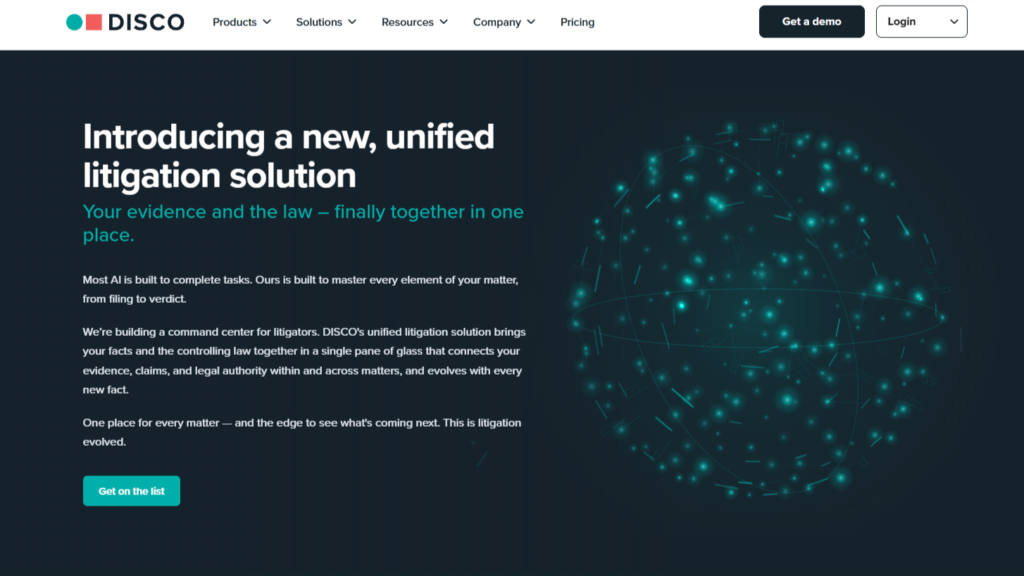
Introduction The integration of artificial intelligence (AI) within the legal sector has engendered significant innovations, particularly in the realm of litigation management. DISCO, a recognized leader in legal technology since its inception in 2013, has recently unveiled a pioneering unified litigation solution that transcends traditional e-discovery methodologies. This blog post explores the implications of this advancement, detailing how DISCO’s innovative approach aims to streamline the litigation process while enhancing the strategic capabilities of legal professionals. Context of the Unified Litigation Solution DISCO’s transition from a focus on e-discovery to developing a comprehensive litigation solution represents a critical evolution in legal technology. The new AI-native application, currently undergoing pilot testing with select law firms, aims to merge case facts with pertinent U.S. case law. This integration promises to provide legal practitioners with a cohesive platform that synthesizes evidence, claims, and legal authority. By creating an accessible interface metaphorically described as a “single pane of glass,” DISCO seeks to facilitate a more coherent understanding of ongoing litigation matters. Main Goal and Achievement Strategy The primary objective of DISCO’s unified litigation solution is to deliver a holistic view of case management that interconnects factual data with applicable legal precedents. Achieving this goal involves the implementation of patent-pending workflows that are specifically tailored for the nuances of litigation. By ensuring that all relevant information is collated and made accessible, DISCO aims to empower legal teams with the tools necessary to navigate complex legal landscapes effectively. Advantages of the Unified Litigation Solution Enhanced Efficiency: By integrating case facts and legal precedents, legal teams can reduce the time spent on information retrieval and analysis, allowing for a more efficient litigation process. Improved Strategic Decision-Making: The solution enables legal professionals to leverage institutional knowledge that is often dispersed across different cases and colleagues, thereby enhancing strategic planning and execution. Customization and Control: DISCO provides firms with the flexibility to tailor workflows and tools according to their specific best practices, ensuring that the solution aligns with the unique operational needs of each firm. Centralized Knowledge Repository: By carrying case context and prior work products forward, the platform serves as a centralized repository of knowledge, promoting collaboration and continuity among legal teams. Caveats and Limitations While the unified litigation solution presents numerous advantages, it is essential to recognize potential limitations. The success of such innovative technology relies heavily on user adoption and the integration of existing workflows. Additionally, concerns regarding data privacy and security must be addressed to ensure compliance with legal standards. Future Implications of AI in LegalTech The advent of the unified litigation solution signifies a broader trend towards the integration of AI in legal practice. As technology continues to evolve, legal professionals can anticipate further enhancements in case management, resource allocation, and legal research. The implications of AI advancements may include increased accuracy in legal predictions, the automation of routine tasks, and the potential for real-time legal analysis, thereby reshaping the future landscape of the legal profession. Conclusion DISCO’s unified litigation solution marks a significant milestone in the ongoing evolution of LegalTech. By merging case facts with relevant legal precedents, the platform offers legal professionals a robust tool to enhance their litigation strategies. As AI technology progresses, the potential for further innovations within the legal sector remains vast, promising a future where legal practices are more efficient, informed, and interconnected. Disclaimer The content on this site is generated using AI technology that analyzes publicly available blog posts to extract and present key takeaways. We do not own, endorse, or claim intellectual property rights to the original blog content. Full credit is given to original authors and sources where applicable. Our summaries are intended solely for informational and educational purposes, offering AI-generated insights in a condensed format. They are not meant to substitute or replicate the full context of the original material. If you are a content owner and wish to request changes or removal, please contact us directly. Source link : Click Here


