
Contextual Framework The legacy of Mel Olken, the first executive director of the IEEE Power & Energy Society (PES), serves as an important case study in the evolution of professional organizations within the technology sector. Olken’s career trajectory, marked by his instrumental role in the establishment of PES and his editorial leadership at Power & Energy Magazine, underscores the significance of professional engagement and innovation in the field of power engineering. His contributions reflect a broader narrative concerning the integration of technology and engineering practices, particularly as they pertain to large-scale energy systems. Furthermore, the recent passing of another notable figure, Stephanie A. Huguenin, illuminates the diverse pathways through which professionals in the technology sector can impact their fields through volunteerism and research. Main Goal and Achievement Pathway The primary goal articulated through the remembrance of Olken is the necessity of fostering community and collaboration within technical disciplines. By emphasizing the importance of professional societies like IEEE PES, individuals are encouraged to engage actively in their fields, thereby enhancing both personal and collective knowledge bases. This can be achieved through various means, including participation in conferences, contributing to publications, and volunteering for leadership positions within these organizations. Such engagement not only elevates the individual’s career but also advances the discipline as a whole. Structured Advantages of Professional Engagement Networking Opportunities: Active participation in professional societies fosters connections with peers and industry leaders, facilitating knowledge exchange and potential collaborations. Access to Resources: Membership often includes access to exclusive publications, research findings, and educational resources that can enhance professional development. Recognition and Credibility: Contributions to professional organizations can enhance one’s reputation within the field, leading to recognition such as fellowships and awards, as evidenced by Olken’s IEEE Fellow status. Professional Growth: Engagement in committees or leadership roles within these societies provides invaluable experience in project management and strategic planning, essential skills in any technical career. Contribution to Advancement of the Discipline: Active involvement helps shape the future directions of the field, ensuring that the community remains at the forefront of innovation. However, it is important to note that the benefits of professional engagement may vary based on individual commitment levels and the specific structure of the organization, which can sometimes become bureaucratic. Future Implications of AI Developments Looking ahead, the integration of artificial intelligence (AI) within the technology sector is poised to transform the landscape of professional engagement. As AI technologies become more prevalent, they will likely enhance communication and collaboration among professionals, enabling more efficient project management and resource allocation. Additionally, AI-driven analytics could provide insights into emerging trends and challenges in the field, allowing organizations to respond proactively. However, these advancements also come with challenges, such as the need for continuous learning and adaptation to new tools, which professionals must embrace to remain competitive. Disclaimer The content on this site is generated using AI technology that analyzes publicly available blog posts to extract and present key takeaways. We do not own, endorse, or claim intellectual property rights to the original blog content. Full credit is given to original authors and sources where applicable. Our summaries are intended solely for informational and educational purposes, offering AI-generated insights in a condensed format. They are not meant to substitute or replicate the full context of the original material. If you are a content owner and wish to request changes or removal, please contact us directly. Source link : Click Here
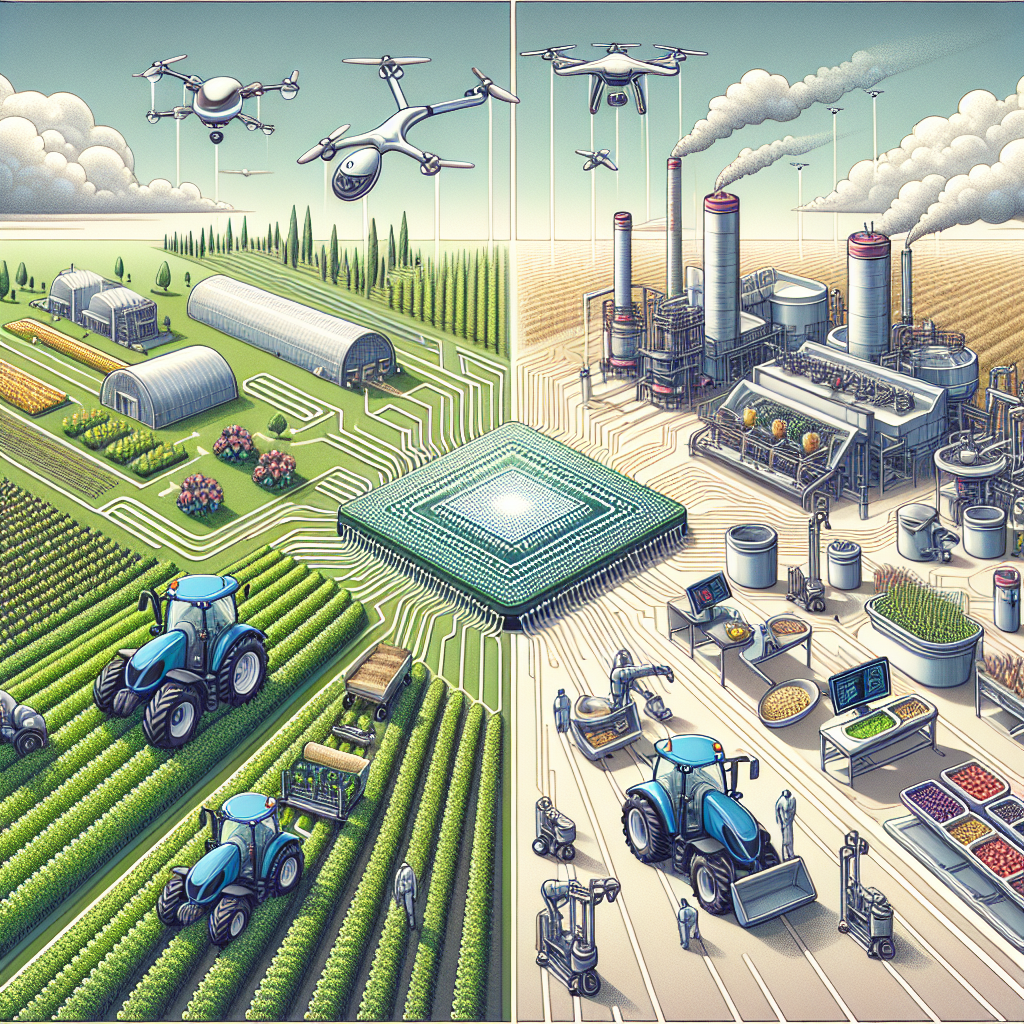
Context of Investor Insights in AgriTech Recent dialogues at prominent events like the World Agri-Tech and Future Food-Tech in San Francisco have underscored a pivotal shift in the investment landscape within the AgriTech sector. Investors have articulated a clear message: the mere act of storytelling in pitches is no longer sufficient. Startups must now demonstrate tangible solutions to genuine problems faced by real customers. This necessitates a relentless focus on capital efficiency and early validation of technology through partnerships with strategic entities. Over the past six to seven years, significant capital influxes into foodtech ventures have occurred without adequate consideration of revenue pathways. This trend is shifting, as investors increasingly emphasize the importance of margins and sustainable business models. Consequently, the current investment climate reflects a tightening of available capital, driven by a scarcity of successful exits and the resultant hesitance from limited partners (LPs) to invest in a sector marked by weak returns. Main Goals for AgriTech Startups The primary goal articulated by investors is the necessity for AgriTech startups to align their innovations with real market needs, thereby ensuring that their solutions are not only innovative but also commercially viable. This can be achieved through several key strategies: 1. **Identifying Genuine Market Needs**: Startups must engage with potential customers to understand their needs and challenges, ensuring that their solutions are relevant and timely. 2. **Capital Efficiency**: Emphasis should be placed on developing business models that require less capital for scaling, thus enhancing the likelihood of sustainable operations. 3. **Strategic Partnerships**: Early-stage companies should proactively seek partnerships with established firms to validate their technologies and gain market traction. Advantages of Adopting Investor Recommendations Implementing the strategies outlined by investors can yield significant benefits for AgriTech innovators: – **Increased Viability**: Startups that focus on solving real problems for customers are more likely to attract investment and achieve market success. Evidence from the original discussions highlights that companies with clearer revenue pathways and margin considerations are favored. – **Enhanced Capital Efficiency**: By maintaining a lean operational model, companies can extend their runway and reduce the risk of financial distress. Investors are increasingly assessing portfolio companies for capital efficiency, as noted by SOSV’s Pae Wu, who stated that margin discussions are now central to investment decisions. – **Improved Partnership Potential**: Collaborating with strategic partners can provide startups with not only funding but also market access and credibility. The insights shared by Lisa Feria from Stray Dog Capital emphasize the transformative potential of successful partnerships. – **Adaptability to Market Changes**: Startups that remain focused on niche areas and adapt their offerings based on market feedback can better navigate the evolving AgriTech landscape. While these advantages are compelling, it is essential to recognize that there are limitations. Startups must be vigilant in selecting partners to avoid pitfalls, such as being neglected post-partnership, as noted by Lisa Feria’s observations. Future Implications of AI Developments in AgriTech Artificial Intelligence (AI) is poised to significantly shape the future of AgriTech, offering numerous advancements that can streamline operations and enhance productivity. The integration of AI technologies can optimize research and development timelines, improve supply chain efficiencies, and facilitate the discovery of high-value ingredients in agricultural waste streams. As highlighted by investors, AI applications in fields such as precision fermentation and robotics are already transforming processes within the sector. Companies that leverage AI effectively can position themselves at the forefront of innovation, potentially leading to greater profitability and market leadership. However, caution is warranted in the reliance on AI-generated presentations and strategies. Investors, such as Pae Wu, caution against over-dependence on AI in pitch decks, suggesting that authenticity and genuine understanding of the market remain crucial. In conclusion, the landscape of AgriTech innovation is evolving, driven by a more discerning investment community advocating for practical solutions to real-world problems. By embracing these insights, AgriTech startups can enhance their prospects for success in a competitive marketplace. Disclaimer The content on this site is generated using AI technology that analyzes publicly available blog posts to extract and present key takeaways. We do not own, endorse, or claim intellectual property rights to the original blog content. Full credit is given to original authors and sources where applicable. Our summaries are intended solely for informational and educational purposes, offering AI-generated insights in a condensed format. They are not meant to substitute or replicate the full context of the original material. If you are a content owner and wish to request changes or removal, please contact us directly. Source link : Click Here

Introduction Python is widely recognized as an accessible programming language for beginners, particularly in fields such as Applied Machine Learning (ML). However, practitioners often encounter performance bottlenecks, particularly when dealing with extensive datasets or complex algorithms. Inefficient code can lead to increased processing times and resource consumption, limiting the effectiveness of machine learning models. This blog post outlines essential strategies for optimizing Python code, enabling ML practitioners to enhance performance even with minimal programming experience. Main Goals of Optimization The primary goal of optimizing Python code is to reduce execution time and resource usage, ultimately leading to more efficient data processing and model training. This can be achieved through several practical techniques, which include: Measuring performance to identify bottlenecks. Utilizing built-in functions and standard library tools for efficiency. Avoiding repeated calculations within loops. Selecting appropriate data structures based on use case. Employing vectorization strategies for numerical data processing. By adopting these practices, ML practitioners can significantly improve the performance of their code without requiring advanced programming skills. Advantages of Optimizing Python Code Implementing optimization techniques yields several benefits, particularly in the context of Applied Machine Learning: Enhanced Performance: Optimized code can execute tasks in a fraction of the time compared to unoptimized versions. For instance, using built-in functions instead of manual loops can lead to substantial time savings—often on the order of several times faster. Reduced Resource Consumption: Efficient code minimizes the memory footprint, which is critical when working with large datasets. This allows practitioners to work with larger datasets or more complex models without running into resource limitations. Increased Code Clarity: Leveraging built-in functions and vectorization leads to cleaner and more maintainable code. This is especially beneficial for collaboration in team settings, where code readability can significantly affect productivity. Scalability: Optimized code can handle larger datasets and more complex operations, which is vital as machine learning projects grow in scope and complexity. While these advantages are compelling, it is essential to recognize potential limitations. Optimization techniques may not yield significant improvements in every scenario, particularly if the code is already efficient. Additionally, some methods may increase code complexity, making it less accessible for beginners. Future Implications in the Context of AI Developments The field of Artificial Intelligence (AI) is rapidly evolving, with advancements in algorithms and computational power. As AI technologies become more prevalent, the demand for efficient data processing will only increase. This will necessitate ongoing optimization efforts to ensure that Python code remains performant and scalable. Furthermore, the emergence of technologies such as distributed computing and enhanced hardware capabilities will provide new avenues for optimization, enabling practitioners to harness the full potential of their machine learning models. Conclusion In summary, optimizing Python code is crucial for enhancing performance in Applied Machine Learning. By focusing on measurement, using built-in functions, avoiding redundant calculations, selecting appropriate data structures, and employing vectorization, practitioners can significantly improve their code’s efficiency. As the field of AI continues to advance, staying abreast of optimization techniques will be essential for maintaining effective and scalable machine learning solutions. Disclaimer The content on this site is generated using AI technology that analyzes publicly available blog posts to extract and present key takeaways. We do not own, endorse, or claim intellectual property rights to the original blog content. Full credit is given to original authors and sources where applicable. Our summaries are intended solely for informational and educational purposes, offering AI-generated insights in a condensed format. They are not meant to substitute or replicate the full context of the original material. If you are a content owner and wish to request changes or removal, please contact us directly. Source link : Click Here

Introduction The rapid evolution of artificial intelligence (AI), particularly in the realm of large language models (LLMs), poses significant challenges for both traditional media and academic institutions. As LLMs continue to demonstrate unprecedented advancements in reasoning, efficiency, and autonomous capabilities, the volume of information disseminated through social media platforms, particularly X (formerly Twitter), has surged. This environment necessitates a discerning approach to sourcing high-quality information, especially for professionals in the Natural Language Understanding (NLU) field. Given the overwhelming influx of content, it is imperative for NLU scientists to engage with authoritative voices within the AI community. Identifying and following key accounts on X that consistently provide valuable insights, research updates, and practical applications of LLMs can significantly enhance one’s capacity to remain informed and effective in their work. This article aims to delineate the principal goal of curating a focused list of influential accounts, demonstrating how such a strategy can be practically achieved. Main Goal and Achievement Strategy The primary objective of curating a selection of high-quality Twitter accounts is to facilitate access to reliable information regarding LLM advancements. By strategically following these accounts, NLU scientists can filter through the noise of social media and hone in on content that offers substantive knowledge and insights pertinent to their field. This can be accomplished by identifying accounts that specialize in LLM updates, tutorials, practical applications, and theoretical discussions. Advantages of Following Curated Accounts Access to Quality Research: Following accounts like DAIR.AI and alphaXiv allows NLU scientists to stay abreast of cutting-edge research and developments in LLMs. These accounts provide summaries and discussions of relevant academic papers, making complex information more digestible. Deepened Understanding of Fundamentals: Accounts such as Andrej Karpathy’s offer insights into foundational concepts in deep learning and LLMs, which can enhance a scientist’s comprehension and approach to their work. Practical Implementation Insights: Following experts like Sebastian Raschka and Simon Willison equips practitioners with hands-on tutorials and implementation details. This practical knowledge is essential for those looking to apply LLMs in real-world scenarios. Timely News and Updates: High-volume news accounts like The Rundown AI and Matt Wolfe provide real-time updates regarding product launches, funding opportunities, and model releases, which are crucial for professionals who need to adapt quickly to industry changes. Infrastructure and Systems Knowledge: Experts like Ahmad Osman focus on the hardware requirements and infrastructure necessary for running LLMs efficiently, which is critical for organizations planning to implement these technologies. Impact Assessment: Following commentators like Ethan Mollick helps NLU scientists understand the broader implications of LLM advancements on work, education, and society, fostering a more comprehensive view of their impact. Future Implications As AI continues to evolve, the implications for the field of Natural Language Understanding are profound. The ongoing advancements in LLMs will likely lead to more sophisticated applications in various sectors, including healthcare, finance, and education. Consequently, NLU scientists will need to remain agile, adapting their skills and knowledge to leverage new tools and methodologies effectively. By engaging with curated, insightful voices on platforms like X, they can ensure that they are not just passive consumers of information but active contributors to the discourse surrounding AI developments. This proactive engagement will be essential for fostering innovation and ensuring ethical considerations are prioritized in the deployment of AI technologies. Conclusion In summary, following a carefully curated list of influential accounts on X can greatly enhance the knowledge and effectiveness of Natural Language Understanding scientists. By focusing on reputable sources that offer research insights, practical applications, and theoretical discussions, professionals can cut through the noise of social media and gain access to the information that matters most. As AI technology continues to advance, maintaining an informed perspective will be vital for navigating the evolving landscape of Natural Language Understanding. Disclaimer The content on this site is generated using AI technology that analyzes publicly available blog posts to extract and present key takeaways. We do not own, endorse, or claim intellectual property rights to the original blog content. Full credit is given to original authors and sources where applicable. Our summaries are intended solely for informational and educational purposes, offering AI-generated insights in a condensed format. They are not meant to substitute or replicate the full context of the original material. If you are a content owner and wish to request changes or removal, please contact us directly. Source link : Click Here

Context: The Introduction of ChatGPT Library The recent rollout of the ‘Library’ feature by OpenAI for ChatGPT represents a significant enhancement in the functionality of AI-driven conversational agents. This new feature allows users to store personal files and images securely within OpenAI’s cloud infrastructure. Targeted towards users with Plus, Pro, and Business subscriptions, the Library is currently available globally, with the exception of regions including the European Economic Area, Switzerland, and the United Kingdom. This capability not only streamlines the user experience by providing easy access to stored files but also integrates seamlessly into the workflow of professionals, particularly in the realm of Data Analytics and Insights. Main Goal and Achievements The primary goal of the ChatGPT Library is to facilitate the storage and retrieval of user-uploaded files, enhancing the interaction between the user and the AI. By default, files uploaded to the Library are stored securely, allowing for easy access in future interactions. This automated file-saving mechanism provides an essential resource for users who rely on AI to assist with data-driven tasks, enabling more informed decision-making and efficient workflows. The feature is designed to support various file types, including documents, spreadsheets, and images, thereby broadening its utility across different applications. Advantages of the ChatGPT Library Enhanced Accessibility: The Library allows users to access their uploaded files easily, which is essential for professionals needing quick reference during data analysis or presentations. Automatic File Saving: The automatic saving of files ensures that users do not lose important data, fostering a reliable environment for data management. Improved Collaboration: By enabling the sharing of files within the ChatGPT interface, collaboration among team members is simplified, which can enhance project outcomes in data-driven environments. Secure Storage: The dedicated, secure location for file storage offers peace of mind for users concerned about data privacy and security. Future-Proofing: As AI technologies evolve, the Library feature positions users to leverage emerging capabilities more effectively, ensuring that they remain competitive in a data-centric landscape. Caveats and Limitations While the ChatGPT Library presents several advantages, it is important to acknowledge certain limitations. For instance, files stored in the Library remain until manually deleted, which may lead to clutter if not managed properly. Furthermore, the deletion process is not immediate, as OpenAI retains deleted files for 30 days, potentially raising concerns regarding data governance and compliance with privacy regulations. These factors necessitate careful consideration by users, especially in highly regulated industries. Future Implications of AI Developments The introduction of the ChatGPT Library is indicative of a broader trend towards integrating AI solutions into everyday business processes. As AI technology continues to advance, we can expect further enhancements that will augment data storage and retrieval capabilities. Future iterations may include more sophisticated data management features, such as advanced search functionalities, automated organization of files, and enhanced collaborative tools. This will likely transform how Data Engineers and other professionals interact with data, making it increasingly easier to derive insights and make informed decisions based on real-time data analysis. Disclaimer The content on this site is generated using AI technology that analyzes publicly available blog posts to extract and present key takeaways. We do not own, endorse, or claim intellectual property rights to the original blog content. Full credit is given to original authors and sources where applicable. Our summaries are intended solely for informational and educational purposes, offering AI-generated insights in a condensed format. They are not meant to substitute or replicate the full context of the original material. If you are a content owner and wish to request changes or removal, please contact us directly. Source link : Click Here


