
Contextualizing Vectors in Artificial Intelligence In contemporary discussions surrounding artificial intelligence (AI), it is common to hear assertions about AI’s capability to “understand” various forms of data, including text, images, and user intent. However, this perceived understanding is underpinned by a mathematical framework that is crucial for operationalizing AI systems: vectors. Vectors serve as fundamental building blocks in AI, providing a structured representation of features, semantics, context, and similarities, thereby enabling machines to perform complex comparisons. Vectors are ubiquitous in modern AI applications, influencing areas such as semantic search, recommendation systems, and context retrieval. Their significance extends particularly to the fields of Computer Vision and Image Processing, where the representation of visual data as vectors facilitates advanced analysis and interpretation. Main Goal and Achieving Understanding of Vectors The primary objective of exploring the concept of vectors in AI is to establish a clear and intuitive mental model for understanding how machines process and interpret data. By elucidating the role of vectors, we aim to foster a deeper comprehension of associated terms like embeddings and vector databases, which are instrumental in enhancing the performance of AI systems. Achieving this understanding involves breaking down complex ideas into accessible concepts that maintain their technical rigor. Advantages of Utilizing Vectors in AI and Computer Vision Enhanced Data Representation: Vectors enable a more nuanced representation of data features, which is crucial in applications such as image recognition and natural language processing. This representation allows for improved accuracy in AI predictions and classifications. Facilitated Similarity Matching: By representing data in vector form, AI systems can efficiently compute similarities across various modalities—text, images, audio—thereby enhancing capabilities in multi-modal learning. Improved Contextual Understanding: Vectors provide contextually rich representations that allow AI systems to consider relationships between different data points, leading to more relevant search results and recommendations. Scalability in Data Processing: The mathematical nature of vectors supports scalable algorithms, which can handle large datasets commonly encountered in Computer Vision tasks. While the use of vectors presents numerous advantages, it is important to acknowledge some caveats. For instance, the effectiveness of vector representations can be influenced by the quality of data and the algorithms employed. Additionally, the interpretability of vector-based models can pose challenges in understanding the decision-making processes of AI systems. Future Implications of Vectors in AI and Computer Vision The ongoing advancements in AI are poised to significantly impact the field of Computer Vision and Image Processing. As research progresses, we can expect the development of more sophisticated vector representations that capture even richer semantics and context. This could lead to breakthroughs in areas such as real-time image analysis, autonomous systems, and enhanced human-computer interaction. Furthermore, the integration of vectors with emerging technologies, such as quantum computing and federated learning, may redefine the capabilities of AI, making it more efficient and effective in processing visual data. As these developments unfold, the role of vectors will remain pivotal, shaping the future landscape of artificial intelligence and its applications in vision science. Disclaimer The content on this site is generated using AI technology that analyzes publicly available blog posts to extract and present key takeaways. We do not own, endorse, or claim intellectual property rights to the original blog content. Full credit is given to original authors and sources where applicable. Our summaries are intended solely for informational and educational purposes, offering AI-generated insights in a condensed format. They are not meant to substitute or replicate the full context of the original material. If you are a content owner and wish to request changes or removal, please contact us directly. Source link : Click Here

Context In recent years, the advent of artificial intelligence (AI) has fundamentally transformed various industries, including Big Data Engineering. As data practitioners increasingly rely on AI tools to streamline processes, the mentorship dynamics within open source projects may require a reevaluation. Consider a scenario where a data engineer submits a pull request that initially appears polished. As the reviewer delves deeper, inconsistencies emerge—often stemming from the ease with which AI tools can generate seemingly competent code. This phenomenon raises concerns about the depth of understanding contributors possess, highlighting the need for effective mentorship frameworks that can adapt to the evolving landscape of contribution signals. The surge in contributions facilitated by AI tools has created an environment reminiscent of the “Eternal September” in open source communities—a continuous influx of submissions that can overwhelm existing mentorship structures. As the volume of contributions rises, the established signals that once indicated a contributor’s readiness to engage meaningfully with a project have become less reliable. This shift necessitates a strategic approach to mentorship in the context of Big Data Engineering, where maintaining the integrity of contributions is paramount. Main Goal and Achievement The primary objective of rethinking mentorship in the AI era is to ensure that open source communities can effectively scale while preserving the quality of contributions. This can be achieved through the implementation of structured mentorship frameworks that assess contributors based on three critical dimensions: Comprehension, Context, and Continuity—collectively referred to as the “3 Cs.” By employing these criteria, mentors can identify potential contributors who demonstrate a fundamental understanding of the problems at hand, provide the necessary context for effective code review, and exhibit persistence in their contributions. Advantages of the 3 Cs Framework 1. **Enhanced Contribution Quality**: By filtering contributions through the lens of the 3 Cs, maintainers can prioritize submissions that reflect a deeper understanding of project goals. Comprehension checks ensure that contributors grasp the underlying issues before proposing changes. 2. **Informed Code Reviews**: Contextual awareness is crucial for effective code reviews. When contributors provide relevant information—such as links to related issues or disclosures about AI assistance—maintainers can better evaluate the trade-offs involved in proposed changes. 3. **Sustainable Mentorship**: Continuity in engagement allows mentors to invest time and resources into contributors who demonstrate commitment. This strategic mentorship fosters a more robust community and minimizes burnout among maintainers. 4. **Equitable Mentorship Opportunities**: The structured approach of the 3 Cs reduces bias in mentorship selection. Clear criteria shift the focus from subjective preferences to objective measures, ensuring that diverse contributors receive fair opportunities for guidance. Despite these advantages, it is essential to recognize potential limitations. The reliance on AI-generated contributions may inadvertently obscure the need for human insight and critical thinking within the development process. Furthermore, the framework’s effectiveness hinges on the willingness of maintainers to embrace and implement these strategies consistently. Future Implications As AI technologies continue to evolve, their impact on Big Data Engineering is poised to grow. The increasing sophistication of AI-assisted coding tools will likely result in a higher volume of contributions, further complicating the mentorship landscape. Consequently, the role of maintainers will become even more critical in discerning valuable contributions from those that lack depth. To remain effective, mentorship practices must evolve alongside these advancements. The integration of AI tools presents an opportunity to enhance mentorship by automating certain aspects—such as initial comprehension checks—while preserving the human element essential for fostering growth and knowledge transfer. In summary, adapting mentorship strategies to the realities of AI contributions is imperative for the future of Big Data Engineering. By leveraging the 3 Cs framework, communities can maintain the integrity of their projects and foster a sustainable environment that nurtures both new and experienced contributors. Disclaimer The content on this site is generated using AI technology that analyzes publicly available blog posts to extract and present key takeaways. We do not own, endorse, or claim intellectual property rights to the original blog content. Full credit is given to original authors and sources where applicable. Our summaries are intended solely for informational and educational purposes, offering AI-generated insights in a condensed format. They are not meant to substitute or replicate the full context of the original material. If you are a content owner and wish to request changes or removal, please contact us directly. Source link : Click Here

Introduction The evolution of digital marketing has reached an unprecedented turning point, primarily driven by advancements in artificial intelligence (AI). This transformative technology is not only enhancing marketing strategies but also redefining the roles and responsibilities of entry-level marketers. The integration of AI tools has streamlined numerous tasks that were previously time-consuming and labor-intensive, prompting a shift in expectations for new entrants into the marketing field. Understanding the Shift in Entry-Level Marketing Roles As AI technologies become increasingly sophisticated, the landscape of entry-level marketing positions is undergoing significant changes. Traditionally, roles such as digital marketing specialist or SEO analyst involved repetitive tasks and manual data collection. However, with AI’s ability to conduct comprehensive audience assessments, map competitive landscapes, and identify SEO content gaps in a fraction of the time, the nature of these positions is evolving. For marketing directors, this development is advantageous, as it accelerates the time-to-insight from days to mere minutes. Conversely, many aspiring marketers express concern about job security, fearing that automation may diminish their prospects even before they graduate. Recent studies indicate that a substantial percentage of college seniors harbor pessimism about their career opportunities due to the perceived encroachment of AI in their future roles. Main Goal: Embracing AI as a Collaborative Tool The primary objective of this new paradigm is to reframe the role of entry-level marketers from executing routine tasks to overseeing and validating AI-generated outputs. By embracing AI as a collaborative tool, organizations can enhance efficiency while simultaneously fostering the development of critical skills in junior staff. This transition can be achieved by restructuring existing roles to incorporate elements of AI oversight and strategic thinking. Advantages of AI Integration in Entry-Level Marketing Roles Enhanced Efficiency: AI tools can perform complex data analyses and generate insights in minutes, freeing entry-level marketers from routine tasks and enabling them to focus on higher-level strategic thinking. Skill Development: As entry-level marketers transition into roles that require critical reasoning and oversight, they will cultivate essential skills such as data interpretation and strategic analysis, thereby increasing their value in the marketplace. Improved Decision-Making: AI can highlight emerging trends and identify competitive gaps, allowing marketers to make informed decisions based on data rather than intuition. Reduction of Bias and Error: Human oversight is crucial in validating AI outputs, ensuring that marketers can leverage AI’s capabilities while minimizing the risks associated with misinformation or bias. Adaptability to Changing Markets: AI’s ability to analyze large datasets allows marketers to respond swiftly to market changes, ensuring that strategies remain relevant and effective. Caveats and Limitations Despite the numerous advantages, there are inherent limitations to consider. AI systems are not infallible; they can produce incorrect information and may perpetuate biases present in their training data. Therefore, rigorous human verification is essential in the utilization of AI-generated insights. Furthermore, the rapid pace of technological change may outstrip the ability of educational institutions to adapt their curricula, potentially leaving new graduates underprepared for the evolving demands of the industry. Future Implications: The Road Ahead for AI in Marketing Looking forward, the continued development of AI technologies is likely to further transform the marketing landscape. As AI capabilities expand, we can anticipate a greater emphasis on human-AI collaboration, wherein entry-level marketers will be equipped to take on more strategic roles that involve guiding AI outputs rather than merely executing tasks. This evolution will necessitate a shift in hiring practices, with employers placing a premium on candidates who exhibit strong analytical and critical thinking skills. In conclusion, the integration of AI into digital marketing is reshaping the expectations of entry-level roles, presenting both challenges and opportunities. By adapting to this new paradigm and prioritizing the development of higher-order cognitive skills, organizations can harness the full potential of AI while empowering the next generation of marketing professionals. Disclaimer The content on this site is generated using AI technology that analyzes publicly available blog posts to extract and present key takeaways. We do not own, endorse, or claim intellectual property rights to the original blog content. Full credit is given to original authors and sources where applicable. Our summaries are intended solely for informational and educational purposes, offering AI-generated insights in a condensed format. They are not meant to substitute or replicate the full context of the original material. If you are a content owner and wish to request changes or removal, please contact us directly. Source link : Click Here

Contextual Overview The recent developments in the geopolitical landscape, specifically the ongoing tensions surrounding Iran and its energy sector, have significant implications for global oil prices and, by extension, the financial markets. Reports indicate that U.S. Treasury Secretary Scott Bessent has suggested the potential lifting of sanctions on approximately 140 million barrels of Iranian crude oil currently stored on tankers. This strategic maneuver aims to alleviate price pressures exacerbated by recent Iranian military actions and the subsequent closure of the Strait of Hormuz. Such geopolitical dynamics underscore the importance of understanding the relationship between energy markets and financial stability. Main Goal and Its Achievement The primary objective articulated in the original content is to potentially stabilize the global oil market by reintroducing sanctioned Iranian crude into circulation. This goal can be achieved through strategic policy decisions by the U.S. government, which can effectively broaden the supply of oil available in the market. By increasing supply, the intention is to curb the upward pressure on oil prices that has been intensified by geopolitical conflicts. Such measures could lead to a more balanced supply-demand scenario in the oil sector, with immediate effects on prices. Advantages of Lifting Sanctions on Iranian Crude Price Stabilization: The influx of 140 million barrels of Iranian crude could help mitigate the rapid increase in oil prices, which recently saw Brent crude prices soar to $106 per barrel. Increased Global Supply: Reintroducing Iranian crude would enhance the overall supply in the global market, potentially leading to lower prices and greater accessibility for consumers and businesses alike. Enhanced Market Confidence: By signaling a commitment to managing supply disruptions, U.S. actions may restore confidence among investors and stakeholders in the oil markets. Broader Economic Impacts: Lower oil prices can lead to reduced transportation costs, which may positively impact various sectors, including logistics, manufacturing, and consumer goods. However, it is essential to consider potential limitations and caveats. The geopolitical landscape is highly volatile, and the actual impact of lifting sanctions may depend on various factors, including compliance by Iran and reactions from other oil-producing nations. Future Implications of AI in Finance and Energy Markets Looking forward, the integration of artificial intelligence (AI) in finance and energy markets is poised to revolutionize how financial professionals approach market analysis and risk management. AI applications can enhance predictive analytics, enabling professionals to anticipate market movements based on real-time data and geopolitical events. For instance, AI algorithms can analyze vast amounts of data from social media, news reports, and economic indicators to provide insights into market sentiment and potential price fluctuations. Moreover, as AI technologies become more sophisticated, they will facilitate more accurate modeling of supply and demand dynamics, helping financial analysts make informed decisions regarding investments in energy commodities. The convergence of AI and finance will undoubtedly create new paradigms for risk assessment, particularly in the context of fluctuating oil prices influenced by geopolitical events. Disclaimer The content on this site is generated using AI technology that analyzes publicly available blog posts to extract and present key takeaways. We do not own, endorse, or claim intellectual property rights to the original blog content. Full credit is given to original authors and sources where applicable. Our summaries are intended solely for informational and educational purposes, offering AI-generated insights in a condensed format. They are not meant to substitute or replicate the full context of the original material. If you are a content owner and wish to request changes or removal, please contact us directly. Source link : Click Here

Contextual Overview In the realm of competitive sports, few events evoke the same level of excitement and unpredictability as March Madness. The 2026 tournament has already showcased an astonishing upset, with High Point University, a No. 12 seed, overcoming the No. 5 seed Wisconsin Badgers in a nail-biting 83-82 victory. The game, held at the Moda Center in Portland, Oregon, was characterized by its back-and-forth nature and dramatic moments, particularly the late-game heroics of Chase Johnston, whose clutch layup clinched the win. This victory, marked by Johnston’s unexpected performance, highlights the significant role of data analytics and AI in understanding and predicting outcomes in sports. Main Goals and Achievements The primary objective illustrated through this March Madness upset is the effective utilization of sports analytics, particularly AI, to enhance performance predictions and game strategies. By leveraging data-driven insights, teams like High Point can optimize their offensive and defensive strategies, leading to unexpected outcomes against higher-seeded opponents. AI technologies can analyze vast datasets to identify patterns in player performances, coaching strategies, and even real-time game dynamics, enabling teams to make informed decisions that can turn the tide of a game. Advantages of AI in Sports Analytics Enhanced Performance Insights: AI applications provide deep insights into player statistics, enabling teams to assess strengths and weaknesses effectively. For instance, High Point’s adept three-point shooting, as evidenced by their 15 successful attempts against Wisconsin, demonstrates the efficacy of tailored training regimens informed by data analytics. Real-time Strategy Adjustments: AI systems can analyze game footage and player movements in real-time, allowing coaches to adjust strategies during the game. High Point’s ability to exploit Wisconsin’s defensive lapses can be attributed to such analytical capabilities. Player Health and Injury Prevention: By monitoring player data, AI helps in predicting and preventing injuries, thus maintaining optimal team performance throughout the season. The reliance on key players like Johnston and Martin underscores the importance of player health in achieving success. Fan Engagement and Experience: Enhanced analytics improve fan experiences through better engagement strategies. Understanding fan preferences can lead to more tailored marketing and game-day experiences, contributing to the overall atmosphere of events like March Madness. Future Implications of AI in Sports Analytics As technology continues to advance, the integration of AI in sports analytics is expected to deepen. Future developments may include more sophisticated predictive models that not only analyze past performances but also incorporate psychological factors, team dynamics, and external conditions such as weather. Such advancements could lead to more nuanced strategies that can anticipate and counteract opponents’ moves, making upsets like High Point’s victory more prevalent. Furthermore, as AI tools become increasingly accessible to smaller programs, the competitive landscape of college sports may shift, leading to a more diverse range of outcomes in tournaments. Disclaimer The content on this site is generated using AI technology that analyzes publicly available blog posts to extract and present key takeaways. We do not own, endorse, or claim intellectual property rights to the original blog content. Full credit is given to original authors and sources where applicable. Our summaries are intended solely for informational and educational purposes, offering AI-generated insights in a condensed format. They are not meant to substitute or replicate the full context of the original material. If you are a content owner and wish to request changes or removal, please contact us directly. Source link : Click Here

Context: Advancements in Cloud-Based Virtual Reality Recent developments in cloud computing have transformed the landscape of gaming, particularly in virtual reality (VR). The latest updates from GeForce NOW, NVIDIA’s cloud gaming service, exemplify this evolution by offering enhanced streaming capabilities at 90 frames per second (fps) for supported VR headsets. These advancements promise to enhance user experience through improved visual fidelity and responsiveness, enabling gamers to immerse themselves in expansive virtual environments. Main Goal and Achievements The primary objective highlighted in the original content is the integration of high-performance streaming capabilities into cloud-based VR gaming. By enabling streaming at 90 fps, GeForce NOW aims to provide a seamless and immersive gaming experience. This goal is achieved through technological upgrades that leverage NVIDIA’s powerful cloud infrastructure, thereby allowing users to access high-quality gaming experiences without the need for high-end hardware. The introduction of support for devices such as Apple Vision Pro and Meta Quest serves to widen the accessibility of these enhanced features. Advantages of Enhanced Cloud-Based VR Gaming Smoother Gameplay Experience: The upgrade to 90 fps significantly enhances the fluidity of motion and interaction within VR environments, leading to a more engaging user experience. Accessibility: Users can enjoy high-performance gaming on lower-spec devices, as the heavy computational load is managed by the cloud. This democratizes access to advanced gaming technologies. Improved Visual Quality: With the integration of NVIDIA RTX and DLSS technologies, users can experience enhanced graphics and performance, further elevating the immersive qualities of VR gaming. Expansive Game Library: The availability of popular titles, such as the newly launched Crimson Desert, showcases the potential for a diverse gaming experience that can be accessed via cloud platforms. Community Engagement: The implementation of community-driven events and giveaways encourages user interaction and fosters a sense of belonging among gamers. Limitations and Caveats Despite the numerous advantages, some limitations exist. The requirement for a stable and high-speed internet connection is critical for optimal performance. Furthermore, while premium features enhance the experience, they may not be accessible to all users, particularly those on free tiers, which may limit engagement with certain high-demand titles. Future Implications of AI in Cloud-Based Virtual Reality The ongoing development of artificial intelligence (AI) is poised to further revolutionize cloud-based VR gaming. As AI technologies advance, they will likely enhance game design, enabling more dynamic and responsive environments. Machine learning algorithms could also optimize streaming quality in real-time based on user network conditions, ensuring that even those with less than ideal internet connections can still enjoy high-quality experiences. Additionally, AI-driven analytics may provide game developers with insights into user behavior, allowing for tailored content that maximizes engagement and satisfaction. Disclaimer The content on this site is generated using AI technology that analyzes publicly available blog posts to extract and present key takeaways. We do not own, endorse, or claim intellectual property rights to the original blog content. Full credit is given to original authors and sources where applicable. Our summaries are intended solely for informational and educational purposes, offering AI-generated insights in a condensed format. They are not meant to substitute or replicate the full context of the original material. If you are a content owner and wish to request changes or removal, please contact us directly. Source link : Click Here

Introduction In the rapidly evolving domains of Smart Manufacturing and Robotics, the need for precise predictions of cellular responses to chemical perturbations has become increasingly paramount. The original research centered around PrePR-CT (Predicting Perturbation Responses in Cell Types), a graph-based deep learning method, illustrates a pioneering approach integrating cell-type-specific co-expression networks with single-nucleus RNA sequencing data. This innovative model aims to predict transcriptional responses to previously unencountered chemical perturbations. As industrial technologists seek to leverage data-driven insights from cellular behavior to optimize manufacturing processes, understanding such predictive methodologies becomes essential. Main Goals and Achievements The primary goal of the PrePR-CT model is to accurately forecast the transcriptional responses of various cell types when subjected to chemical perturbations, particularly in scenarios characterized by limited data availability. By employing inductive biases derived from cell-type-specific co-expression patterns, PrePR-CT enhances its generalizability to unseen cell types. This is achieved through the construction of cell-type feature vectors using Graph Attention Networks (GATs), allowing for the integration of diverse datasets and the extraction of meaningful biological insights. Advantages of PrePR-CT High Prediction Accuracy: PrePR-CT demonstrates robust prediction capabilities, achieving a coefficient of determination (R2) greater than 0.90 in estimating mean expression levels across multiple datasets. Generalization to Unseen Cell Types: The model’s ability to predict responses in previously unseen cell types signifies its potential applicability across various biological contexts, a crucial factor in industrial applications where diverse cellular environments may be encountered. Integration of Chemical Structure Information: By incorporating chemical structure embeddings, PrePR-CT enhances its predictive accuracy, establishing a direct relationship between chemical characteristics and transcriptional responses. Robustness in Small-Data Regimes: The model successfully operates even with limited datasets, which is particularly beneficial for industries facing constraints in data acquisition. Attention to Key Biological Features: GATs facilitate the identification of high-attention genes (HAGs) that are critical for understanding cellular responses, providing valuable insights for refining manufacturing processes. Caveats and Limitations While PrePR-CT exhibits numerous advantages, it is essential to acknowledge certain limitations. The model’s performance can become variable when predicting responses to drugs inducing significant transcriptional shifts. Additionally, the requirement for high-quality training data remains a pivotal factor influencing prediction accuracy. Thus, continuous refinement and validation with diverse datasets are necessary to uphold predictive reliability. Future Implications The advancements in artificial intelligence, particularly in the realm of machine learning and deep learning, are poised to revolutionize the landscape of Smart Manufacturing and Robotics. As models like PrePR-CT evolve, their integration into manufacturing workflows could lead to enhanced process efficiencies, reduced time in drug development, and improved overall system performance. Furthermore, the ability to predict cellular responses accurately will empower industrial technologists to make informed decisions, ultimately contributing to the development of more responsive and adaptable manufacturing systems. Conclusion In summary, the PrePR-CT model represents a significant step forward in predicting cell-type-specific drug responses, with implications that extend into the realms of Smart Manufacturing and Robotics. By leveraging advanced machine learning techniques, industrial technologists can harness these insights to optimize processes, navigate challenges posed by limited data, and foster innovation in cellular modeling. Disclaimer The content on this site is generated using AI technology that analyzes publicly available blog posts to extract and present key takeaways. We do not own, endorse, or claim intellectual property rights to the original blog content. Full credit is given to original authors and sources where applicable. Our summaries are intended solely for informational and educational purposes, offering AI-generated insights in a condensed format. They are not meant to substitute or replicate the full context of the original material. If you are a content owner and wish to request changes or removal, please contact us directly. Source link : Click Here
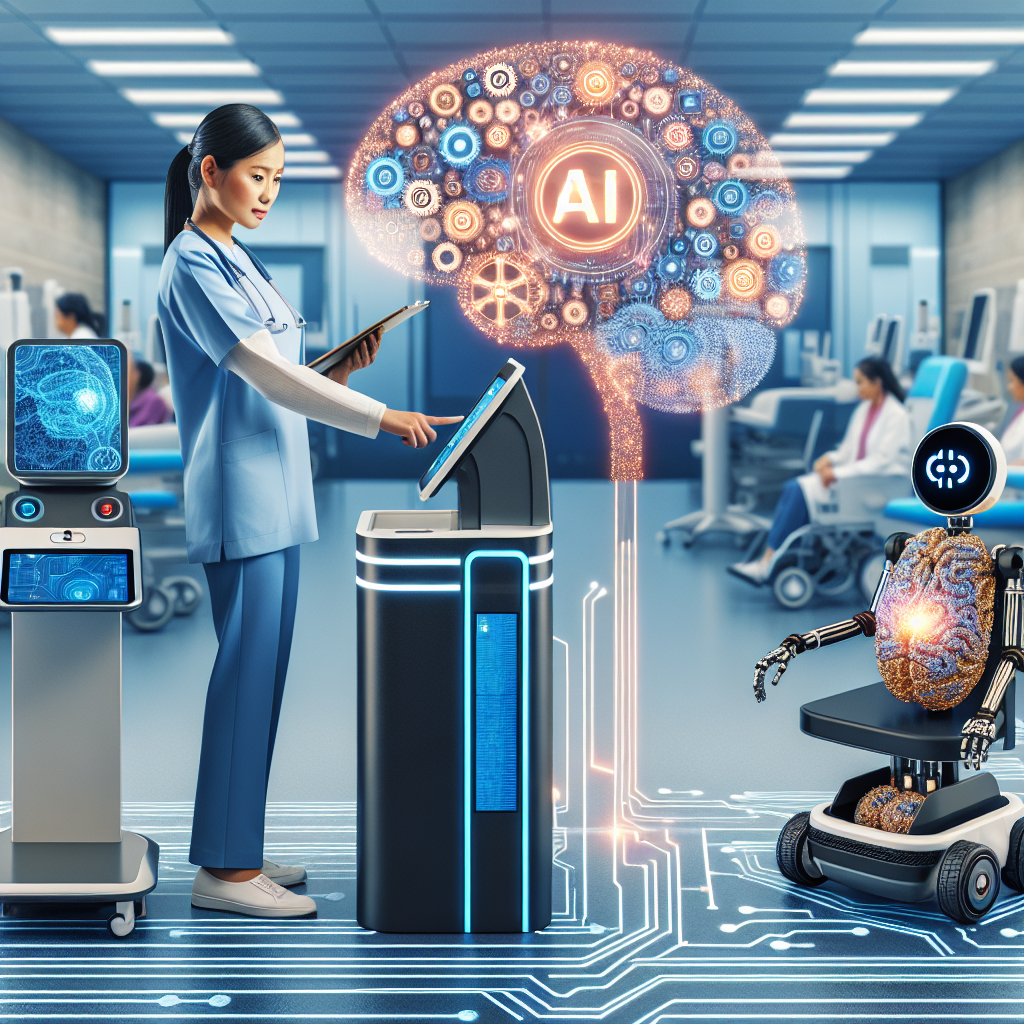
Context and Current Landscape of AI in Healthcare Intake The healthcare industry is increasingly under pressure to harness artificial intelligence (AI) to enhance operational efficiency and improve patient outcomes. Despite the potential benefits, many healthcare organizations encounter significant challenges in providing the clean, structured data necessary for AI systems to function optimally. A prevalent issue is the phenomenon of the “automation plateau,” which occurs when workflows are accelerated but remain disjointed, thus limiting the overall impact of new technologies. As a response, innovative organizations are modernizing their document intake processes to facilitate better data utilization and workflow integration. Main Goal and Methodology for Transformation The primary objective of adopting AI-driven intelligent intake solutions is to transition from rudimentary digitization to a more sophisticated approach that leverages AI algorithms and generative AI (GenAI). This transformation aims to convert complex documents and unstructured data into actionable insights, ultimately enhancing decision-making processes within healthcare organizations. To achieve this, organizations must invest in intelligent intake solutions that not only streamline data acquisition but also facilitate real-time insights, thereby creating seamless experiences for both healthcare providers and patients. Advantages of AI-Driven Intelligent Intake Enhanced Data Accuracy: AI-driven solutions significantly improve claims accuracy and compliance readiness. By automating data entry and verification, organizations reduce human error, which is crucial for maintaining regulatory standards. Improved Operational Efficiency: Intelligent intake solutions streamline workflows, making the data intake process faster and more efficient. This allows healthcare professionals to focus on patient care rather than administrative burdens. Real-Time Insights: By transforming unstructured content into structured data, organizations can derive real-time insights that facilitate informed decision-making. This capability supports proactive rather than reactive management approaches. Connected Ecosystems: Moving towards a connected ecosystem reduces fragmentation in workflows, enabling scalable and trustworthy AI applications across the organization. This interconnectedness fosters a more integrated approach to healthcare delivery. Caveats and Limitations While the advantages of AI-driven solutions in healthcare intake are compelling, there are notable caveats. The successful implementation of these technologies requires a foundational level of data cleanliness and organization, which may not be present in all organizations. Additionally, the initial investment and ongoing maintenance of AI systems can be substantial, posing a barrier for smaller healthcare providers. Furthermore, there is a need for continuous training and adaptation of staff to effectively utilize these advanced technologies, which may require significant time and resources. Future Implications of AI in Healthcare Intake The future of AI in healthcare intake holds significant promise as technology continues to advance. As AI algorithms become increasingly sophisticated, we can expect improvements in predictive analytics that will further enhance decision-making capabilities. Additionally, as the integration of AI becomes more prevalent, healthcare organizations will likely experience enhanced patient engagement through personalized care pathways driven by data insights. The ongoing evolution of AI technologies will also facilitate greater interoperability between different healthcare systems, leading to a more cohesive healthcare ecosystem. As these advancements unfold, it will be imperative for healthcare professionals to remain agile and adaptable to leverage the full potential of AI in transforming healthcare delivery. Disclaimer The content on this site is generated using AI technology that analyzes publicly available blog posts to extract and present key takeaways. We do not own, endorse, or claim intellectual property rights to the original blog content. Full credit is given to original authors and sources where applicable. Our summaries are intended solely for informational and educational purposes, offering AI-generated insights in a condensed format. They are not meant to substitute or replicate the full context of the original material. If you are a content owner and wish to request changes or removal, please contact us directly. Source link : Click Here

Einführung In den letzten Wochen hat die Legal-Tech-Branche signifikante Fortschritte in der Einführung kollaborativer Arbeitsmethoden gemacht. Führende Anbieter von Legal-AI-Lösungen, die zuvor vor allem auf die Optimierung interner Kanzleiprozesse fokussiert waren, haben innovative Funktionen entwickelt, die die Zusammenarbeit zwischen Kanzleien, internen Rechtsteams und Mandanten erheblich vereinfachen. Diese neuen Technologien könnten den Auftakt zu einer digitalisierten, gemeinschaftlich getragenen Arbeitskultur im Rechtssektor markieren. Hauptziel der Innovationen Das primäre Ziel dieser Entwicklungen ist die Schaffung eines nahtlosen und sicheren Arbeitsumfelds, das die Effizienz der Zusammenarbeit zwischen juristischen Fachleuten und ihren Klienten verbessert. Dies kann durch die Implementierung spezialisierter Plattformen erreicht werden, die zentrale Arbeitsräume bieten, in denen Dokumente, Workflows und juristisches Fachwissen strukturiert und zugänglich gemacht werden. Die neuen Lösungen von Legora und Harvey demonstrieren, dass durch den Einsatz von Technologie der traditionelle Austausch per E-Mail, der oft ineffizient war, überflüssig gemacht werden kann. Vorteile der kollaborativen Arbeitsweise Erhöhte Effizienz: Die neuen Plattformen ermöglichen eine schnellere Kommunikation und einen einfacheren Zugang zu Dokumenten, was die Bearbeitungszeit von Aufgaben reduziert. Transparenz: Durch zentrale Arbeitsräume wird der Zugang zu Informationen für alle Beteiligten verbessert, was die Nachverfolgbarkeit und Verantwortlichkeit erhöht. Skalierbarkeit: Juristisches Fachwissen kann in wiederverwendbarer Form bereitgestellt werden, was die Effizienz bei der Bearbeitung ähnlicher Fälle erhöht. Kontrolle über Daten: Anwälte behalten die Kontrolle über Zugriffsrechte und die Integrität ihrer Daten, was essenziell für die Wahrung der Vertraulichkeit ist. Es gilt jedoch zu beachten, dass die Einführung neuer Technologien auch Herausforderungen mit sich bringen kann, insbesondere im Hinblick auf die Schulung von Mitarbeitern und die Anpassung bestehender Prozesse an die neuen Systeme. Zukünftige Implikationen Die Entwicklungen im Bereich der kollaborativen Arbeitsmethoden deuten auf eine tiefgreifende Transformation der juristischen Praxis hin. Mit der fortschreitenden Integration von Künstlicher Intelligenz in die täglichen Arbeitsabläufe wird erwartet, dass der juristische Sektor zunehmend auf datenbasierte Entscheidungen setzt. Diese Evolution könnte nicht nur die Effizienz der Dienstleistungen weiter steigern, sondern auch die Art und Weise, wie juristische Fachleute mit ihren Klienten interagieren, grundlegend verändern. Der Trend zu zentralisierten, sicheren digitalen Arbeitsräumen wird voraussichtlich anhalten, was eine kontinuierliche Anpassung der rechtlichen Infrastruktur und der damit verbundenen Praktiken erforderlich macht. Disclaimer The content on this site is generated using AI technology that analyzes publicly available blog posts to extract and present key takeaways. We do not own, endorse, or claim intellectual property rights to the original blog content. Full credit is given to original authors and sources where applicable. Our summaries are intended solely for informational and educational purposes, offering AI-generated insights in a condensed format. They are not meant to substitute or replicate the full context of the original material. If you are a content owner and wish to request changes or removal, please contact us directly. Source link : Click Here


