
Context The political landscape in the United States is continuously evolving, particularly in light of recent events surrounding former President Donald Trump. His indictments have drawn significant attention, paralleling the dynamic nature of sports analytics, where data and performance analysis are crucial for decision-making. In the realm of sports, the adoption of Artificial Intelligence (AI) is transforming how data is processed and interpreted, providing a wealth of information to coaches, analysts, and enthusiasts. This blog post aims to explore the implications of AI in sports analytics and its relevance to sports data enthusiasts, drawing parallels with the shifts in support observed in Trump’s GOP primary campaign. Main Goal and Its Achievement The primary objective of analyzing the fluctuations in Trump’s support is to understand how significant events, such as indictments, can influence public perception and voter behavior. In a similar vein, the incorporation of AI in sports analytics seeks to enhance the accuracy of performance predictions and game strategies, ultimately leading to improved outcomes for teams and athletes. Achieving this goal requires a robust framework that employs advanced data algorithms and machine learning techniques to process vast amounts of sports data effectively. Advantages of AI in Sports Analytics Enhanced Data Processing: AI systems can analyze extensive datasets rapidly, identifying patterns and trends that human analysts might overlook. This capability allows teams to make data-driven decisions based on real-time performance metrics. Predictive Analytics: Through machine learning algorithms, AI can forecast future performance based on historical data. This predictive capability can guide training regimens and game strategies, optimizing team performance during competitions. Injury Prevention: AI can analyze player movements and biometrics to detect potential injury risks. By focusing on these indicators, organizations can implement preventive measures to reduce injury rates among athletes. Fan Engagement: AI-driven analytics can also enhance fan experiences by providing insights into player performances and game statistics, fostering deeper connections between fans and their teams. Better Recruitment: AI tools can assist in scouting potential talent by evaluating player performance metrics across various leagues, ensuring teams make informed recruitment decisions. Caveats and Limitations Despite the numerous advantages, there are caveats associated with the implementation of AI in sports analytics. Data quality is paramount; inaccurate or incomplete data can lead to erroneous conclusions. Furthermore, the reliance on AI may inadvertently reduce the human element in coaching and management, leading to potential oversights in strategy that require nuanced understanding beyond mere numbers. Future Implications The future of AI in sports analytics appears promising, with ongoing advancements in technology likely to further enhance its capabilities. As machine learning algorithms become more sophisticated, the integration of AI will likely lead to even more precise predictions and insights. Moreover, as sports organizations increasingly adopt AI, the competitive landscape will shift, necessitating that teams not only adopt these technologies but also innovate continuously to maintain their competitive edge. This evolution will not only impact team dynamics and performance but will also influence how fans engage with their favorite sports and athletes. Disclaimer The content on this site is generated using AI technology that analyzes publicly available blog posts to extract and present key takeaways. We do not own, endorse, or claim intellectual property rights to the original blog content. Full credit is given to original authors and sources where applicable. Our summaries are intended solely for informational and educational purposes, offering AI-generated insights in a condensed format. They are not meant to substitute or replicate the full context of the original material. If you are a content owner and wish to request changes or removal, please contact us directly. Source link : Click Here

OpenCV.js, a JavaScript/WebAssembly port of the OpenCV library, is revolutionizing the way computer vision applications are built and deployed, particularly in the context of real-time webcam filters. By leveraging WebAssembly, OpenCV.js enables robust visual processing directly in the browser, eliminating the need for complex installations or native dependencies. This capability allows for a wide range of visual effects, from face blurring to artistic transformations, facilitating a seamless user experience across various devices. The following sections will delve into the significance of OpenCV.js in the domain of computer vision and image processing while addressing its applications and implications for vision scientists. 1. Understanding OpenCV.js OpenCV.js serves as a bridge between traditional computer vision techniques and modern web technologies. By compiling the OpenCV library into WebAssembly, it allows for advanced operations such as image filtering, matrix manipulations, and video capture to be executed in the browser environment. This innovation has the potential to democratize access to sophisticated computer vision applications, making them available to a broader audience. 2. The Importance of Real-Time Processing Prior to the advent of OpenCV.js, many computer vision tasks were constrained to backend environments, typically requiring languages like Python or C++. This limitation not only introduced latency but also posed challenges for real-time interaction. In contrast, OpenCV.js facilitates instant image and video processing directly within the browser, thereby enhancing user engagement and interaction. This immediate processing capability is particularly beneficial for applications in fields such as teleconferencing, gaming, and online education, where real-time feedback is essential. 3. Key Advantages of OpenCV.js Cross-Platform Compatibility: OpenCV.js operates across all modern browsers that support WebAssembly, ensuring accessibility and ease of use regardless of the underlying operating system. Real-Time Performance: The integration of WebAssembly enables near-native execution speeds, allowing for smooth and efficient processing of complex visual transformations at high frame rates. User-Friendly Deployment: By running entirely in the browser, OpenCV.js eliminates the need for extensive installation processes, thereby simplifying deployment for end-users and developers alike. Enhanced Interactivity: The framework integrates seamlessly with HTML and Canvas elements, promoting the development of interactive user interfaces that can respond dynamically to user inputs. However, it is crucial to acknowledge certain limitations. Performance can vary significantly depending on the device and browser in use. Additionally, certain advanced features available in native OpenCV may be absent in the JavaScript version, and WebAssembly may struggle on lower-end hardware. 4. Future Implications of AI Developments The intersection of OpenCV.js with burgeoning AI technologies heralds a transformative era for computer vision applications. As AI continues to evolve, the integration of deep learning models into web-based platforms will enhance the capabilities of real-time image processing. For instance, incorporating neural networks for object detection and recognition will enable more sophisticated filtering effects and user interactions. Furthermore, advancements in AI will likely lead to more optimized algorithms, improving the performance and responsiveness of real-time applications. 5. Conclusion OpenCV.js stands at the forefront of the computer vision revolution, offering powerful tools for real-time image processing directly within web browsers. By making advanced visual effects accessible without the need for extensive setups or installations, it paves the way for innovation in various industries. As developments in AI continue to shape this landscape, the potential for even more sophisticated applications will expand, providing exciting opportunities for vision scientists and developers alike. Disclaimer The content on this site is generated using AI technology that analyzes publicly available blog posts to extract and present key takeaways. We do not own, endorse, or claim intellectual property rights to the original blog content. Full credit is given to original authors and sources where applicable. Our summaries are intended solely for informational and educational purposes, offering AI-generated insights in a condensed format. They are not meant to substitute or replicate the full context of the original material. If you are a content owner and wish to request changes or removal, please contact us directly. Source link : Click Here

Context of Production-Ready Data Applications Building production-ready data applications poses significant challenges, particularly due to the complexity of managing multiple tools involved in hosting the application, managing the database, and facilitating data movement across various systems. Each of these components introduces additional overhead in terms of setup, maintenance, and deployment. Databricks addresses these challenges by providing a unified platform that integrates these functionalities. This consolidation is achieved through the Databricks Data Intelligence Platform, which encompasses Databricks Apps for running web applications on serverless compute, Lakebase for managed PostgreSQL database solutions, and the capability to use Databricks Asset Bundles (DABs) for streamlined deployment processes. The synergy between these components allows for the building and deployment of data applications that can seamlessly sync data from Unity Catalog to Lakebase, thereby enabling efficient and rapid access to governed data. Main Goals and Achievements The primary goal articulated in the original blog post is to simplify the process of building and deploying data applications. This is accomplished through the integration of Databricks Apps, Lakebase, and DABs, which collectively reduce the complexities associated with separate toolsets. By consolidating these functionalities, organizations can achieve a streamlined development process that facilitates rapid iteration and deployment without the cumbersome overhead typically involved in managing disparate systems. Advantages of Using Databricks for Data Applications 1. **Unified Platform**: The integration of hosting, database management, and data movement into a single platform minimizes the complications usually associated with deploying data applications. This reduces the need for multiple tools and the resultant complexity. 2. **Serverless Compute**: Databricks Apps enable the deployment of web applications without the need to manage the underlying infrastructure, allowing developers to focus on application development rather than operational concerns. 3. **Managed Database Solutions**: Lakebase offers a fully managed PostgreSQL database that syncs with Unity Catalog, ensuring that applications have rapid access to up-to-date and governed data. 4. **Streamlined Deployment with DABs**: The use of Databricks Asset Bundles allows for the packaging of application code, infrastructure, and data pipelines, which can be deployed with a single command. This reduces deployment times and enhances consistency across development, staging, and production environments. 5. **Real-Time Data Synchronization**: The automatic syncing of tables between Unity Catalog and Lakebase ensures that applications can access live data without the need for custom Extract, Transform, Load (ETL) processes, thereby enhancing data freshness and accessibility. 6. **Version Control**: DABs facilitate version-controlled deployments, allowing teams to manage changes effectively and reduce the risk of errors during deployment. Considerations and Limitations While the advantages are compelling, certain considerations must be taken into account: – **Cost Management**: Utilizing serverless architecture and a managed database may incur costs that require careful monitoring to avoid overspending, particularly in high-demand scenarios. – **Complexity of Migration**: Transitioning existing applications to the Databricks platform may involve significant effort, particularly for legacy systems that require re-engineering. – **Training Requirements**: Teams may need to undergo training to effectively leverage the Databricks ecosystem, which could introduce initial delays. Future Implications and AI Developments As artificial intelligence (AI) continues to evolve, its integration within data applications is poised to enhance the capabilities of platforms like Databricks. Future advancements in AI may lead to: – **Automated Data Management**: AI-driven tools could automate the monitoring and optimization of data flows, further reducing the need for manual intervention and enhancing operational efficiency. – **Predictive Analytics**: Enhanced analytics capabilities could enable organizations to derive insights and predictions from data in real-time, fostering more informed decision-making. – **Natural Language Processing (NLP)**: AI advancements in NLP could allow non-technical users to interact with data through conversational interfaces, democratizing data access and usability. In conclusion, the landscape of data application development is rapidly evolving, with platforms like Databricks leading the charge in simplifying complexities and enhancing productivity. As the integration of AI progresses, the potential to further streamline processes and elevate the capabilities of data applications will be significant, positioning organizations to leverage their data assets more effectively. Disclaimer The content on this site is generated using AI technology that analyzes publicly available blog posts to extract and present key takeaways. We do not own, endorse, or claim intellectual property rights to the original blog content. Full credit is given to original authors and sources where applicable. Our summaries are intended solely for informational and educational purposes, offering AI-generated insights in a condensed format. They are not meant to substitute or replicate the full context of the original material. If you are a content owner and wish to request changes or removal, please contact us directly. Source link : Click Here

Context: The Intersection of Marketing, Engineering, and AI The traditional landscape of marketing has long been characterized by creativity, intuition, and a seemingly instinctual connection with target audiences. Marketing campaigns were often the result of brainstorming sessions, executed over extended timelines, and evaluated only after results were obtained. However, the advent of digital transformation has fundamentally altered this paradigm. The shift towards a more data-driven approach has given rise to a new marketing model, which integrates engineering principles and artificial intelligence (AI) into its core functions. This evolution is framed within the concept of “The Digital Helix,” which illustrates modern businesses as adaptive systems driven by continuous data flow and customer feedback. Main Goal: Transitioning to a Data-Driven Marketing Model The primary objective of this transformation is to shift marketing from a series of isolated campaigns to a continuous, data-driven engine of growth. This new model emphasizes the importance of real-time data analysis and customer signals, enabling marketing teams to respond dynamically to consumer behaviors and preferences. Achieving this goal requires adopting engineering practices, such as continuous integration and agile methodologies, which enhance the adaptability and effectiveness of marketing efforts. Advantages of an Engineering Mindset in Marketing 1. Enhanced Data Utilization: Marketing operates on the premise that data is the fundamental material for decision-making. By leveraging real-time data analytics, marketers can tailor their strategies to meet evolving consumer demands and preferences. This enables the creation of highly personalized experiences that resonate with audiences. 2. Modular, Reusable Assets: The adoption of modular design principles allows marketers to create reusable content components that can be quickly deployed across various campaigns. This efficiency not only saves time but also enhances brand consistency, as assets can be easily adapted to different contexts. 3. Agility in Marketing Operations: Embracing agile methodologies fosters a culture of rapid experimentation and iterative learning. Marketing teams can pivot quickly in response to performance data, refining messages and strategies on-the-fly rather than adhering to rigid planning cycles. 4. Dynamic Customer Journeys: The focus on experience architecture enables marketers to create interconnected pathways that evolve based on user interactions. This approach allows for real-time adjustments, ensuring that customer experiences are seamless and relevant. 5. Integration of AI and Automation: The implementation of AI-driven tools and automation frameworks streamlines marketing processes and enhances the efficiency of campaign execution. This enables marketers to focus on strategic decision-making while routine tasks are managed by intelligent systems. While these advantages are compelling, it is important to note that the successful transition to this new marketing model requires careful consideration of several caveats. Organizations must invest in the necessary technology and training to ensure that their teams are equipped to utilize these new tools effectively. Furthermore, there is a risk that an over-reliance on data may overshadow the essential human elements of empathy and creativity that are vital to effective marketing. Future Implications: The Role of AI in Marketing Looking ahead, the continued development of AI technologies will significantly influence the future of marketing. As AI systems become more sophisticated, they will enable deeper insights into consumer behavior, allowing for even more personalized and predictive marketing strategies. The rise of agent-based marketing, where intelligent agents autonomously manage customer interactions, is likely to change the landscape further, creating opportunities for marketers to enhance efficiency and effectiveness. Moreover, the integration of AI and automation will necessitate a reevaluation of traditional marketing roles. Marketers will need to evolve into hybrid professionals, embodying both creative and technical skills, which will be essential for navigating this new marketing ecosystem. This evolution underscores the importance of continuous learning and adaptability in the face of rapid technological advancements. Conclusion In summary, the future of marketing is increasingly intertwined with engineering principles and AI technologies. By embracing a data-driven, agile approach, marketers can enhance their effectiveness and responsiveness to consumer needs. While the journey towards this new model presents challenges, the advantages it offers make it a necessary evolution in the marketing landscape. As AI continues to develop, marketers must prepare to adapt and thrive in an ever-changing environment, ensuring that they maintain the human connection that is crucial to building lasting customer relationships. Disclaimer The content on this site is generated using AI technology that analyzes publicly available blog posts to extract and present key takeaways. We do not own, endorse, or claim intellectual property rights to the original blog content. Full credit is given to original authors and sources where applicable. Our summaries are intended solely for informational and educational purposes, offering AI-generated insights in a condensed format. They are not meant to substitute or replicate the full context of the original material. If you are a content owner and wish to request changes or removal, please contact us directly. Source link : Click Here
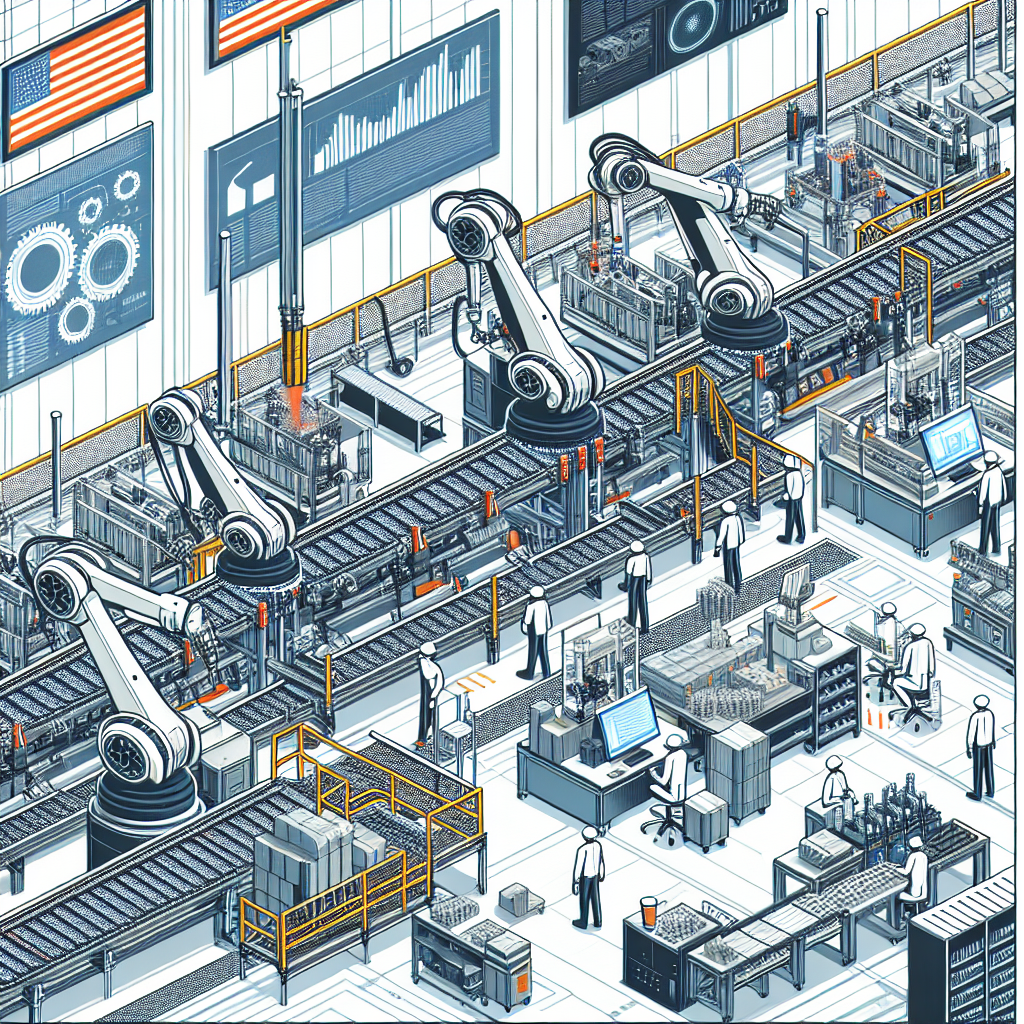
Contextualizing the Partnership between Foxconn and Intrinsic The recent collaboration between Foxconn, a leading contract manufacturer, and Intrinsic, an Alphabet subsidiary focused on robotics development tools, represents a significant advancement in the realm of Smart Manufacturing and Robotics. Announced during Foxconn’s Hon Hai Tech Day in Taipei, this partnership seeks to revolutionize manufacturing processes in the United States by integrating artificial intelligence (AI), robotics, and digital twin technologies into modular automation systems. The aim is to transition Foxconn’s operations from rigid automation paradigms to more flexible, adaptable robotics capable of performing a variety of tasks, including assembly, inspection, machine tending, and logistics. Main Goal and Its Achievability The primary objective of this alliance is to enhance the efficiency and flexibility of manufacturing operations by deploying AI-driven robotics solutions. Achieving this goal involves the development of modular, AI-enabled robotic workcells tailored to Foxconn’s specific production needs. By leveraging Intrinsic’s advanced robotics software and Foxconn’s extensive manufacturing expertise, the partnership aims to facilitate the rapid deployment of intelligent automation across Foxconn’s facilities. This integration is expected to yield significant improvements in operational efficiency, ultimately enabling high-mix, high-volume production models that are both economically and technically viable. Advantages of the Foxconn-Intrinsic Collaboration Enhanced Operational Efficiency: By utilizing AI-driven robotics, the partnership aims to significantly reduce production time and costs, streamlining various manufacturing processes. Increased Flexibility: The modular nature of the proposed robotic systems allows for rapid reconfiguration to meet changing production demands, which is critical in today’s fast-paced manufacturing environment. Cost Reduction: Intrinsic’s advanced AI Vision Model (IVM) is anticipated to lower hardware costs by five to twenty times compared to traditional depth-sensing technologies, thereby improving the overall economics of robotic systems. Scalability: The collaboration is expected to enable scalable solutions that can be adapted across various production lines and facilities, enhancing Foxconn’s manufacturing capabilities. Innovation in Robotics: The integration of AI technologies will likely lead to more sophisticated robotic functionalities, including enhanced motion planning and object detection, which are vital for complex manufacturing tasks. Limitations and Caveats While the partnership holds substantial promise, several limitations must be acknowledged. The complexity of integrating advanced AI systems with existing manufacturing processes poses challenges that could hinder the speed of implementation. Additionally, reliance on a single technology platform may create vulnerabilities in operational resilience should any unforeseen issues arise with the AI models. Furthermore, the initial investment in developing these advanced robotics systems may be considerable, potentially limiting accessibility for smaller manufacturers. Future Implications of AI Developments in Manufacturing The implications of ongoing advancements in AI for the manufacturing sector are profound. As AI technologies continue to evolve, the capabilities of robotic systems will expand, enabling more intricate and precise operations that were previously unattainable. These advancements could lead to a paradigm shift in manufacturing, with AI becoming integral to every aspect of production—from design and prototyping to manufacturing and supply chain management. Moreover, as AI systems become more adept at handling complex tasks, the demand for skilled Industrial Technologists will increase, necessitating ongoing education and training in AI and robotics to ensure workforce readiness for the factory of the future. Disclaimer The content on this site is generated using AI technology that analyzes publicly available blog posts to extract and present key takeaways. We do not own, endorse, or claim intellectual property rights to the original blog content. Full credit is given to original authors and sources where applicable. Our summaries are intended solely for informational and educational purposes, offering AI-generated insights in a condensed format. They are not meant to substitute or replicate the full context of the original material. If you are a content owner and wish to request changes or removal, please contact us directly. Source link : Click Here

Contextualizing Current Federal Reserve Policy Recent remarks by Beth Hammack, President of the Cleveland Federal Reserve, underscore the significance of maintaining interest rates at their current “barely restrictive” levels. Hammack has indicated that the Federal Reserve is potentially nearing the conclusion of a brief rate-cutting cycle. This assertion comes at a critical juncture where policymakers are grappling with the dual challenges of inflation and labor market dynamics. The prevailing interest rate, targeted within the range of 3.75% to 4%, is perceived by Hammack as nearly neutral, suggesting minimal need for further reductions. The concept of restrictiveness in monetary policy is pivotal for Federal Reserve officials, who remain divided on prioritizing inflation control versus addressing labor market weaknesses. Hammack aligns more closely with the hawkish perspective, advocating for sustained higher rates to mitigate inflationary pressures. Main Goals of Monetary Policy and Their Achievement The primary goal articulated by Hammack revolves around the necessity of retaining a modestly restrictive monetary policy to guide inflation back toward the Federal Reserve’s 2% target. This objective can be achieved through careful monitoring of economic indicators and strategic decision-making by the Federal Open Market Committee (FOMC). By sustaining current interest rates, the Federal Reserve aims to curtail excessive inflation while ensuring economic stability. Furthermore, Hammack’s remarks highlight the importance of understanding local economic conditions based on insights gathered from regional interviews. This qualitative data complements quantitative analysis, enabling a more nuanced approach to policy formulation. Advantages of Maintaining Current Interest Rates 1. **Inflation Control**: By keeping rates moderately high, the Federal Reserve aims to combat inflation. Hammack emphasizes the importance of this strategy, as inflation remains a pressing concern for households, where rising prices have substantially diminished purchasing power. 2. **Economic Stability**: A modestly restrictive policy fosters a stable economic environment, which is crucial for long-term growth. By avoiding drastic cuts, the Fed can mitigate risks that may arise from sudden policy shifts. 3. **Labor Market Insights**: Hammack’s approach incorporates qualitative feedback from local workers, revealing the ongoing struggles they face with cost-of-living increases. This perspective allows for more informed decision-making that considers the real-world implications of monetary policy. 4. **Confidence in Policy Direction**: Maintaining a clear stance on interest rates instills confidence among financial professionals and market participants, reinforcing expectations around future economic conditions. 5. **Adaptability to Economic Shifts**: By positioning rates at a neutral level, the Federal Reserve retains the flexibility to respond to changing economic conditions without resorting to abrupt policy changes. While these advantages are compelling, caveats exist, including the potential for prolonged inflationary pressures and the risk of stifling economic growth if rates remain too high for too long. Future Implications of AI in Finance and FinTech The integration of artificial intelligence (AI) in finance and FinTech is poised to significantly impact the landscape of monetary policy and economic analysis. As AI technologies evolve, they will enhance the ability of financial professionals to analyze vast datasets, leading to more precise forecasting and real-time economic assessments. In particular, AI can facilitate more effective monitoring of inflationary trends and labor market conditions, allowing policymakers to make data-driven decisions that are responsive to emerging economic realities. Furthermore, AI’s predictive capabilities may enable the Federal Reserve to simulate various economic scenarios, optimizing their responses to potential inflationary threats. Moreover, as financial services increasingly leverage AI for operational efficiencies, there will be a shift in focus toward compliance and regulatory implications. Financial professionals will need to navigate these developments, ensuring that AI systems align with the regulatory frameworks governing monetary policy. In conclusion, the future of monetary policy will likely be characterized by an interplay between traditional economic strategies and innovative AI technologies, fostering a more resilient and adaptive financial ecosystem. Disclaimer The content on this site is generated using AI technology that analyzes publicly available blog posts to extract and present key takeaways. We do not own, endorse, or claim intellectual property rights to the original blog content. Full credit is given to original authors and sources where applicable. Our summaries are intended solely for informational and educational purposes, offering AI-generated insights in a condensed format. They are not meant to substitute or replicate the full context of the original material. If you are a content owner and wish to request changes or removal, please contact us directly. Source link : Click Here

Introduction The emergence of Lightfield, an AI-native customer relationship management (CRM) platform, represents a significant pivot in the approach to managing customer interactions. Initially developed from a viral presentation application that gained 20 million users, Lightfield’s evolution underscores the growing recognition of the limitations inherent in traditional CRM architectures. This shift is particularly relevant for professionals in the Generative AI Models & Applications industry, as it exemplifies how AI-driven solutions can fundamentally transform business practices. Understanding the Main Goal The primary goal of Lightfield is to redefine customer relationship management by leveraging artificial intelligence to automatically capture and organize customer interactions. This approach seeks to eliminate the cumbersome manual data entry processes that have traditionally defined CRM systems. By utilizing AI to analyze unstructured data from various customer interactions, Lightfield aims to enhance the quality of insights that sales teams can derive from their customer engagement efforts. Advantages of AI-Native CRMs Automation of Data Capture: Lightfield’s architecture allows for the automatic recording and organization of customer interactions. This capability reduces the reliance on manual data entry, thereby increasing efficiency and minimizing errors. Contextual Understanding: By capturing complete conversations and customer behaviors, Lightfield provides sales teams with a comprehensive understanding of their customer dynamics. This contrasts sharply with traditional CRMs, which often compress rich interactions into predefined fields. Dynamic Data Management: The platform’s ability to evolve its data schemas in real-time allows organizations to adapt their data models without extensive rework, facilitating agile responses to changing business needs. Enhanced Communication Efficiency: Users report significant improvements in response times to customer inquiries, with automation tools assisting in follow-up communications and meeting preparations. This capability allows sales teams to focus on closing deals rather than administrative tasks. Cost-Effectiveness for Startups: Lightfield’s pricing structure, which eliminates per-seat fees, makes it an attractive option for startups, particularly those in the early stages of growth. This model allows them to consolidate multiple tools into one platform, minimizing costs associated with maintaining disparate systems. Considerations and Limitations While the benefits of AI-native CRMs such as Lightfield are apparent, there are caveats worth considering. The reliance on AI models introduces risks related to data privacy and accuracy. Storing comprehensive interaction histories raises privacy concerns, while AI-generated insights may occasionally suffer from inaccuracies, referred to as “hallucinations” in AI terminology. As such, businesses must implement robust oversight mechanisms to ensure that human judgment complements AI capabilities, particularly in customer-facing interactions. Future Implications for AI in CRM The implications of the advancements in AI-native CRM systems extend beyond mere operational efficiency. As organizations increasingly adopt AI technologies, there will likely be a shift in how sales teams perceive their tools—from viewing CRMs as burdensome to recognizing them as strategic assets. This transition will necessitate a reevaluation of existing CRM architectures, with potential ramifications for established players like Salesforce and HubSpot, who may struggle to adapt their legacy systems to meet modern demands. Furthermore, as Generative AI continues to evolve, the capabilities of platforms like Lightfield could expand to encompass broader functions, such as customer intelligence and product development insights. This evolution signals a transformative period for enterprise software, where AI not only augments existing processes but also reshapes the foundational structures of customer relationship management. Conclusion Lightfield exemplifies a paradigm shift in the CRM landscape, driven by the integration of Generative AI technologies. As businesses increasingly embrace these innovations, the potential for enhanced customer engagement and operational efficiency will redefine the role of sales teams, ultimately shaping the future of enterprise software. Disclaimer The content on this site is generated using AI technology that analyzes publicly available blog posts to extract and present key takeaways. We do not own, endorse, or claim intellectual property rights to the original blog content. Full credit is given to original authors and sources where applicable. Our summaries are intended solely for informational and educational purposes, offering AI-generated insights in a condensed format. They are not meant to substitute or replicate the full context of the original material. If you are a content owner and wish to request changes or removal, please contact us directly. Source link : Click Here


